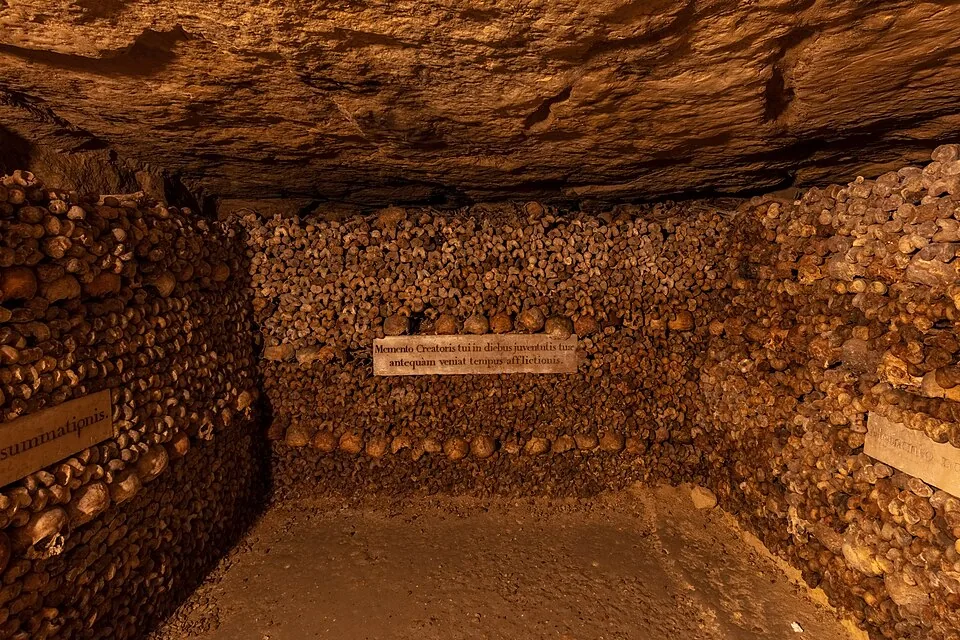
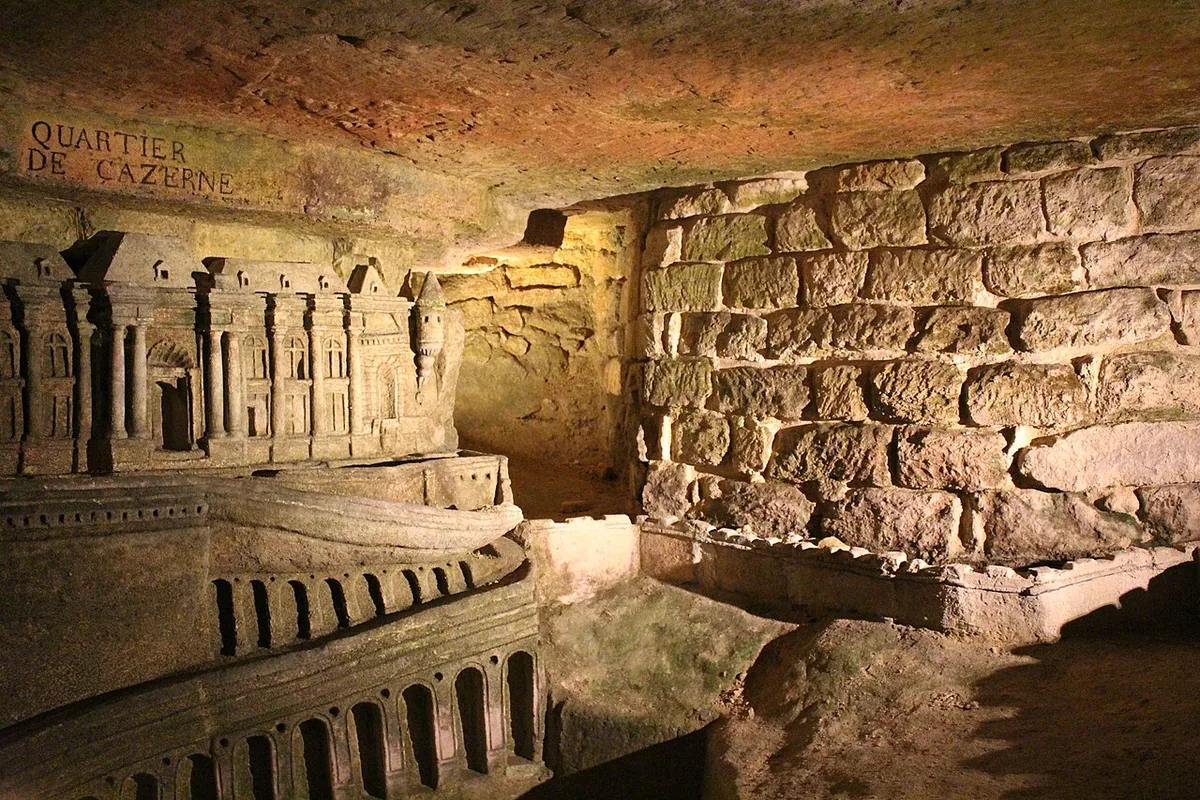
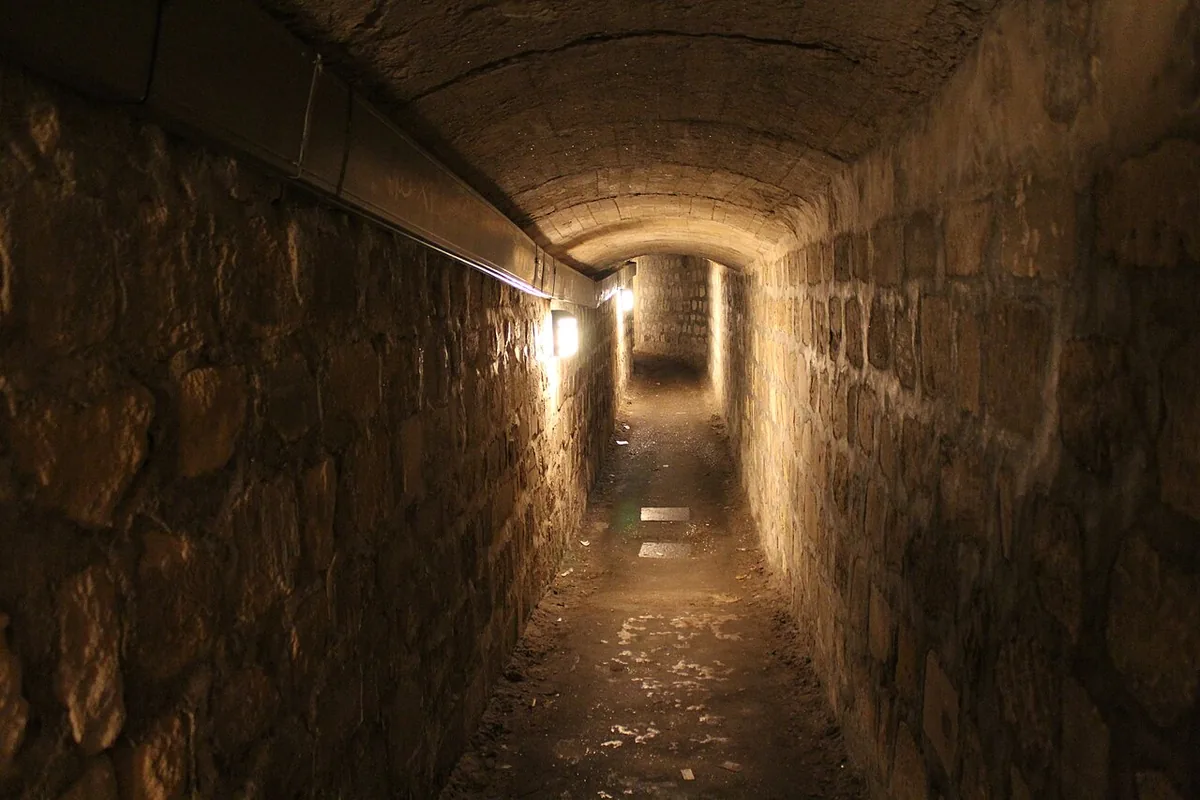
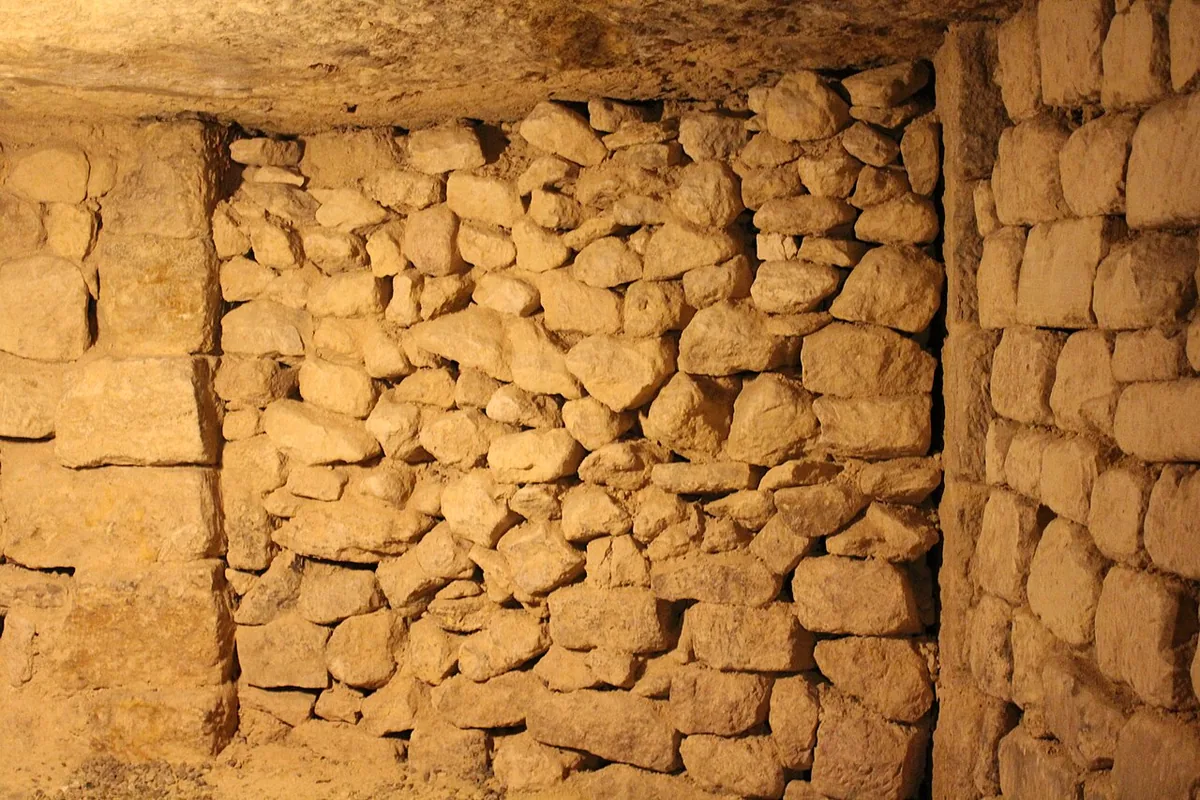
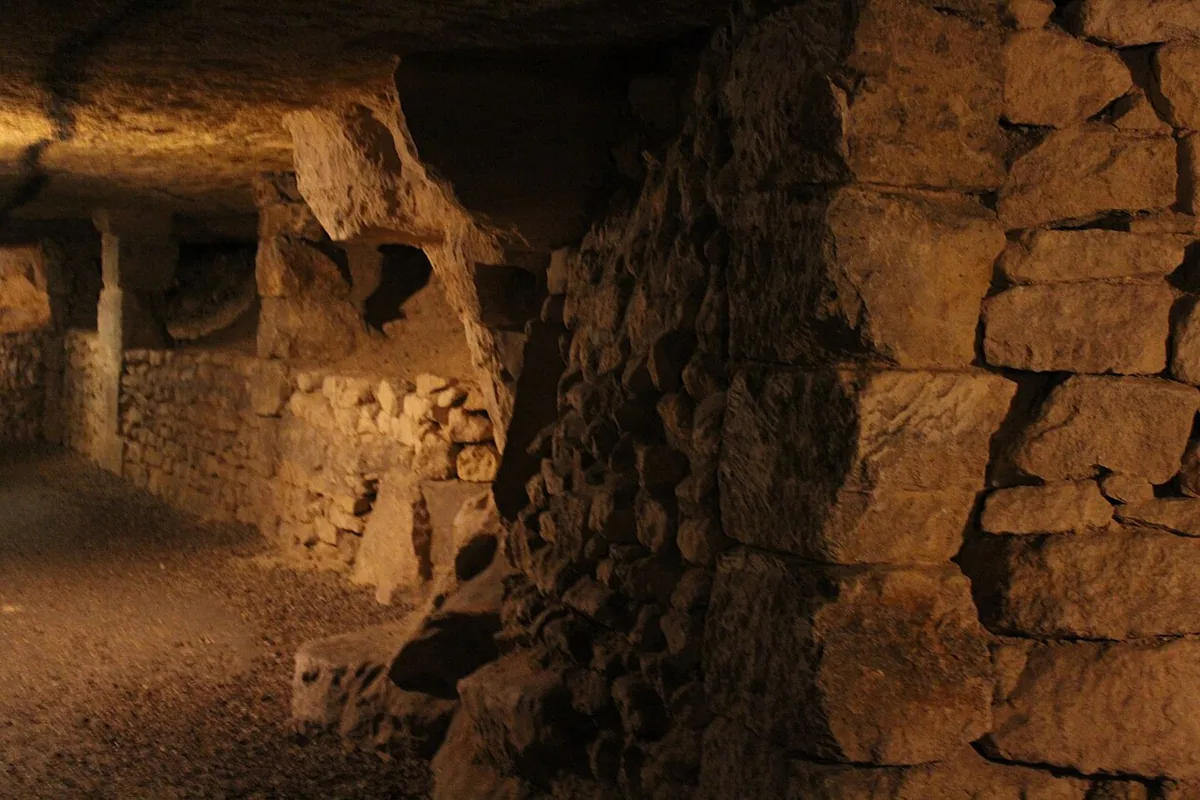
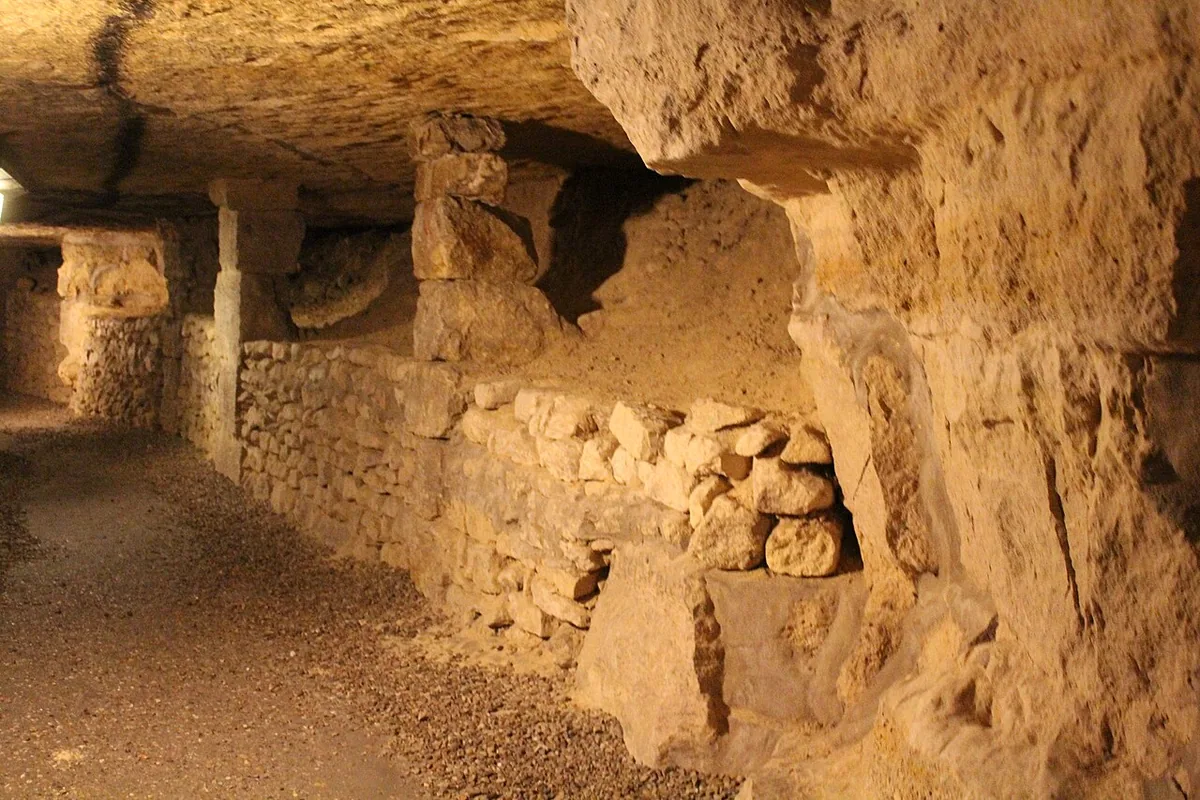
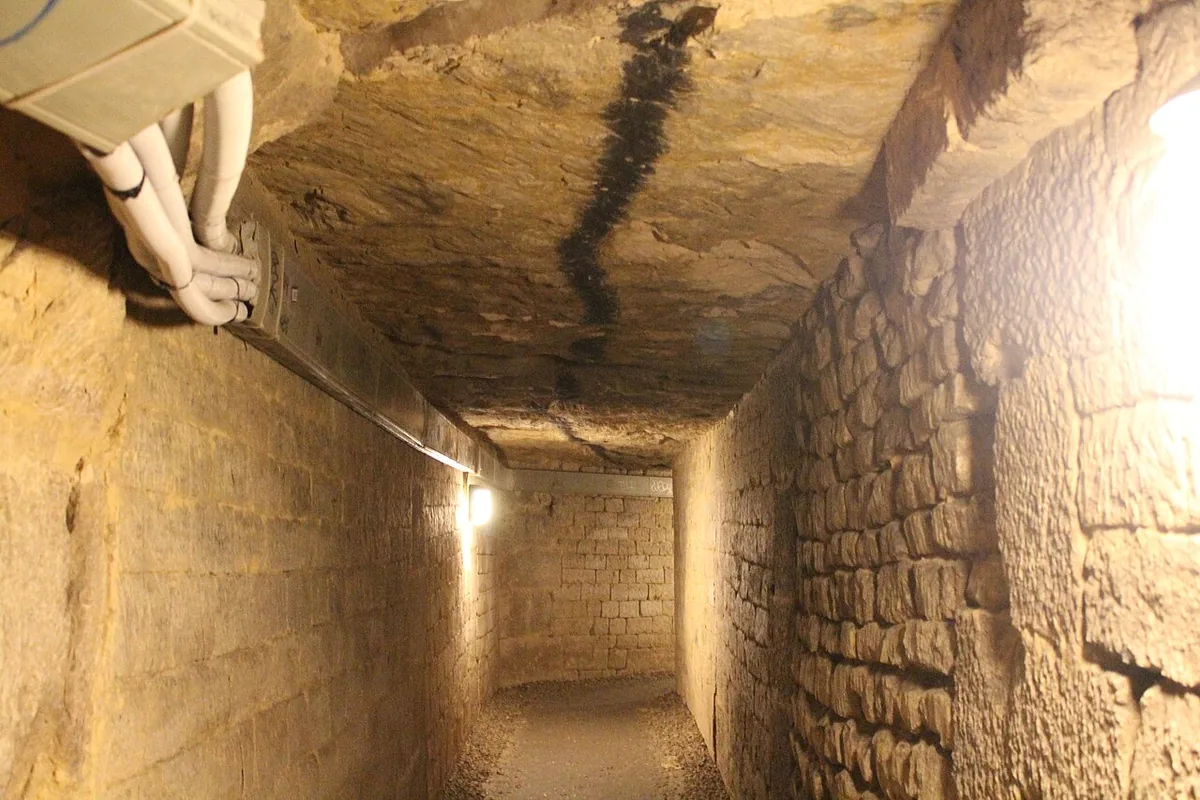
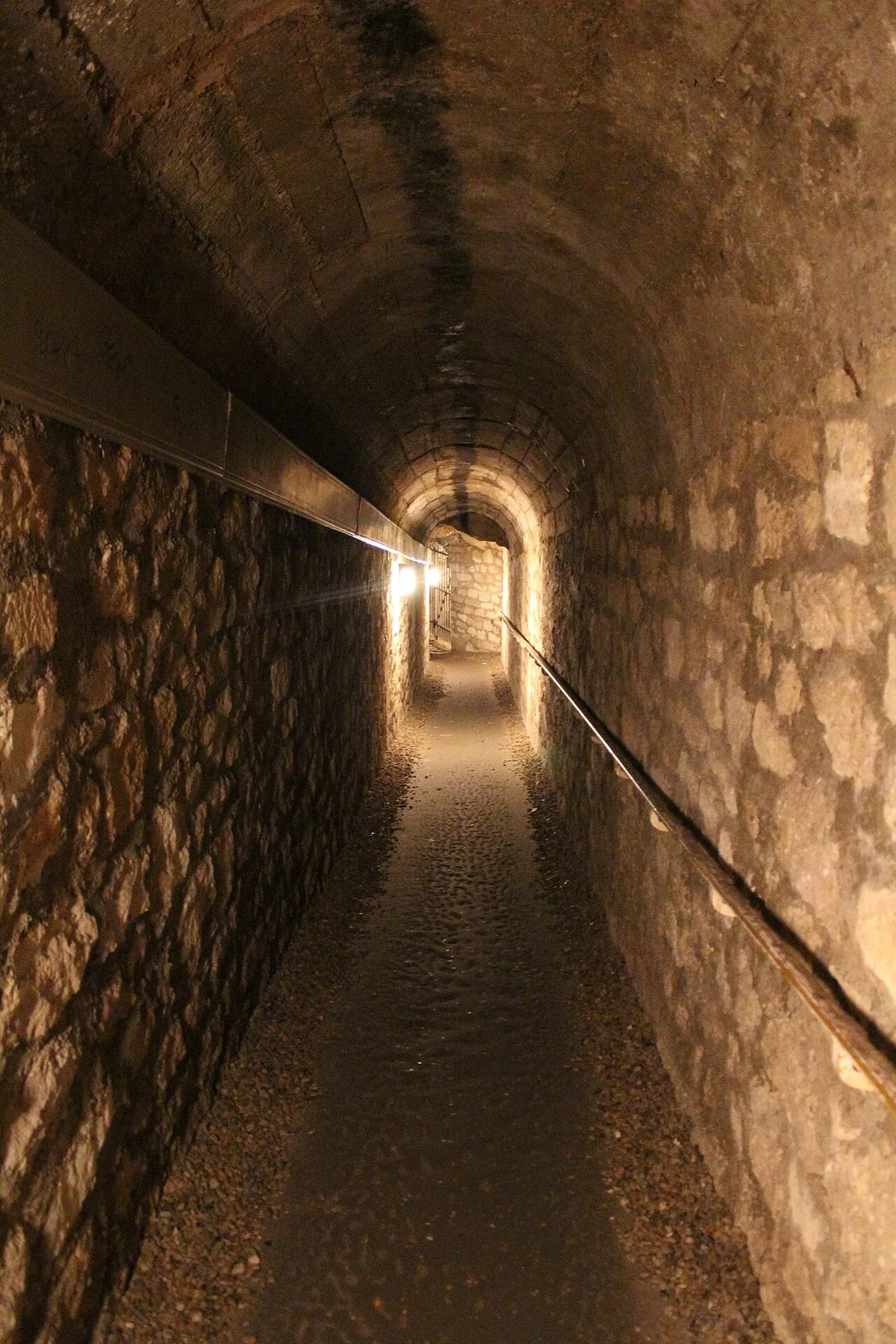
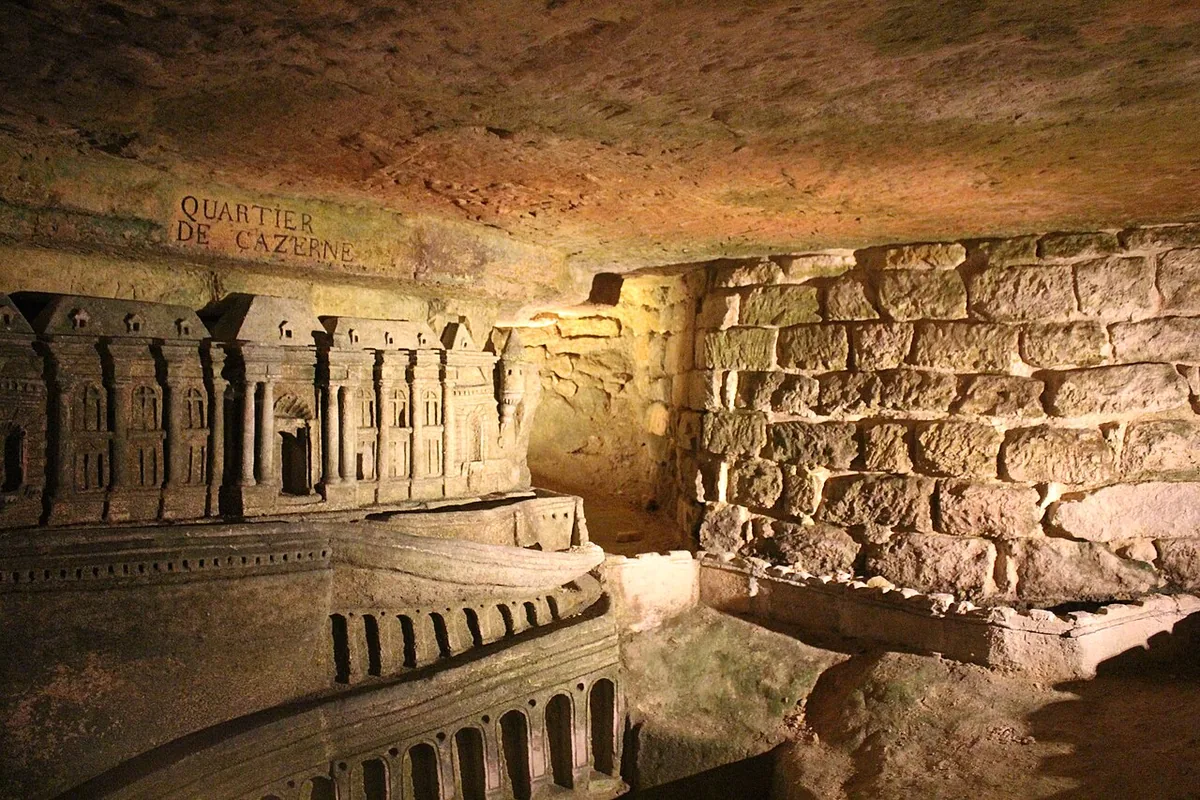
The Catacombs of Paris are a municipal ossuary within former limestone quarries, holding remains transferred from the city’s overcrowded cemeteries. Its arranged galleries connect a public health crisis with quarry engineering, scientific curiosity and remembrance.
Quick facts
The Paris Municipal Ossuary was consecrated on April 7, 1786, in former Tombe-Issoire quarries.
Transfers began with bones from the Saints-Innocents cemetery in 1785 and continued from other Paris cemeteries into the nineteenth century.
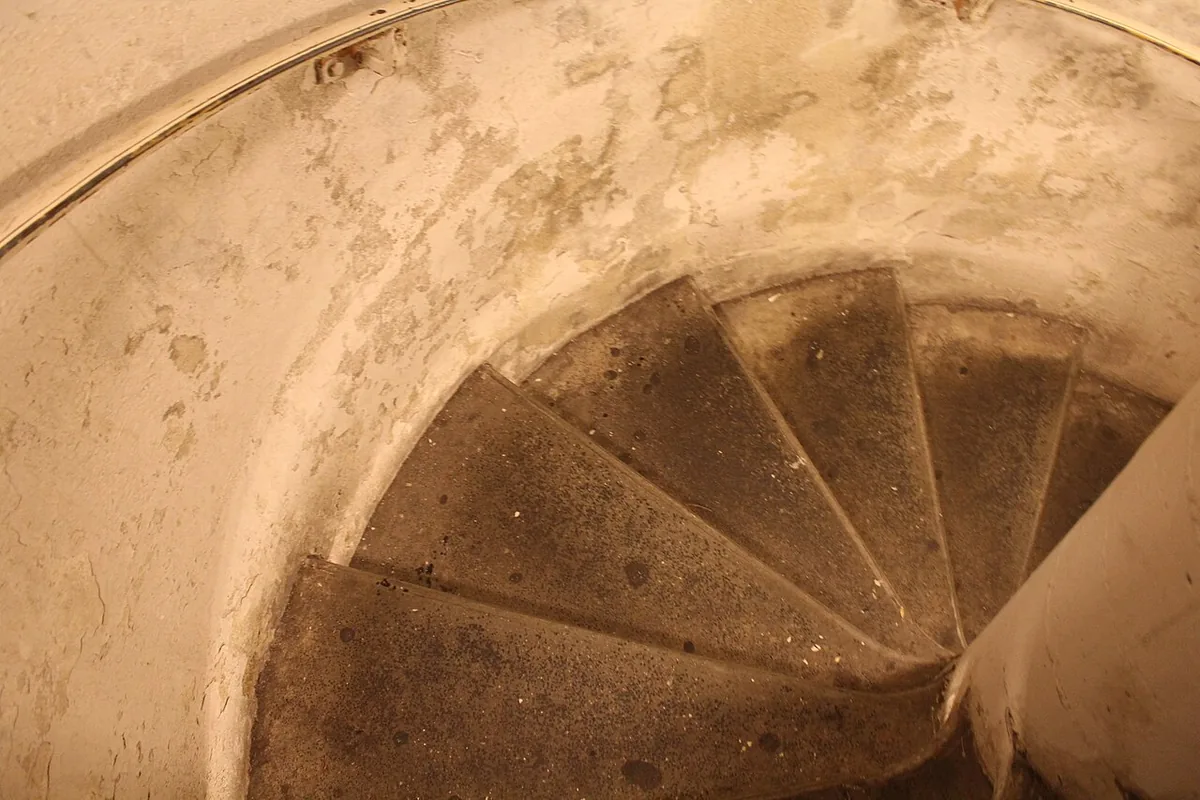
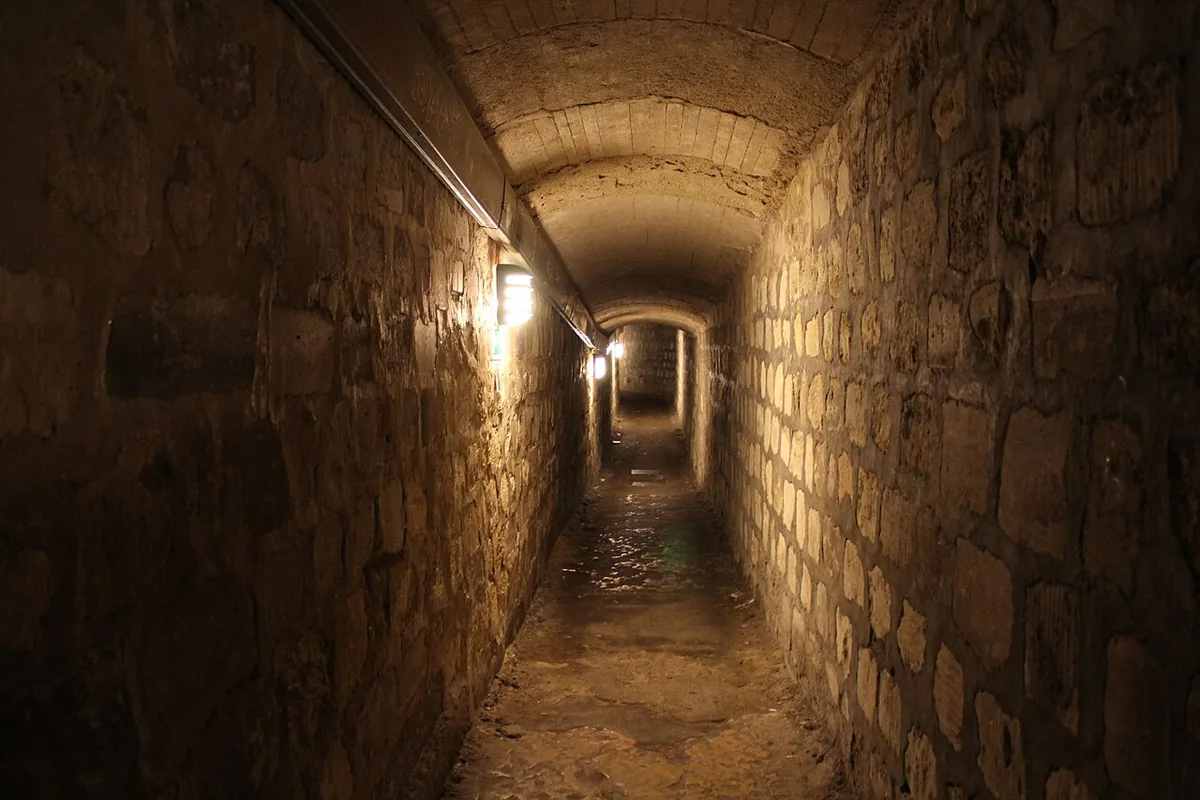
The public Catacombs visit is a one-way route of about 1.5 kilometres; the current official visitor guidance lists 131 steps down and 112 up.
Get directions to Catacombs of Paris. Confirm the visitor entrance and current access with the venue before travelling.
Audio guide
Listen to this place’s guide.
Guide
At Place Denfert-Rochereau, the entrance leads down into a specific, managed site: the Paris Municipal Ossuary, housed in former limestone quarries. “Catacombs” is often used loosely for the vast quarry network beneath Paris, but the public route is only one small section. This distinction matters. These passages are both an underground industrial landscape and a burial place for the remains of millions of Parisians.
Continue exploring
Discover the full story
Keep reading with a travel pass and explore every full guide and tour.
UpgradeMore places in Paris
Luxembourg Gardens
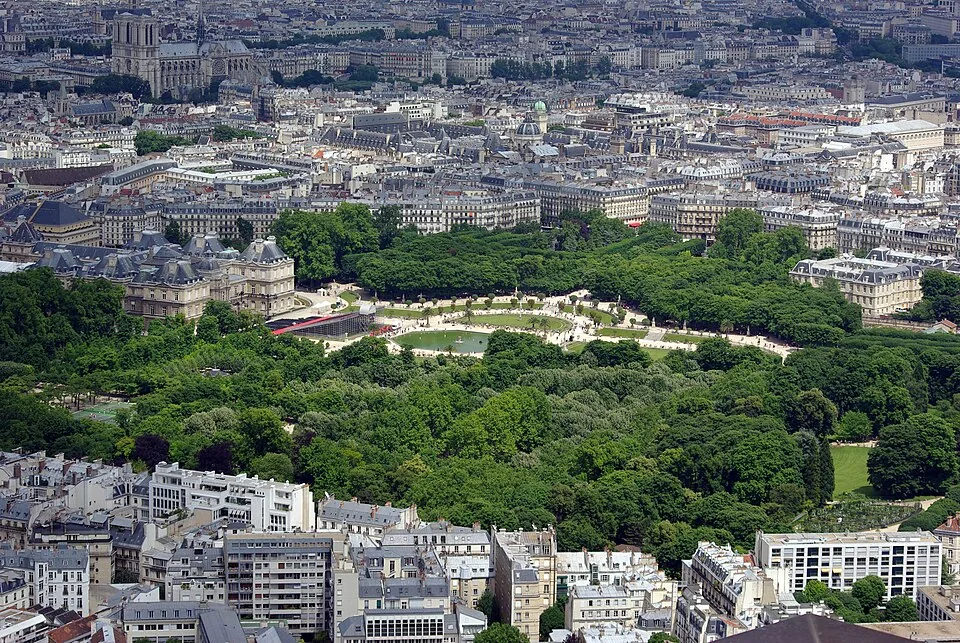
Luxembourg Gardens pair formal parterres, fountains and shaded paths with the French Senate’s palace. Marie de Médicis began shaping the estate in the early seventeenth century; later political upheavals and Haussmann’s streets reshaped its boundaries.
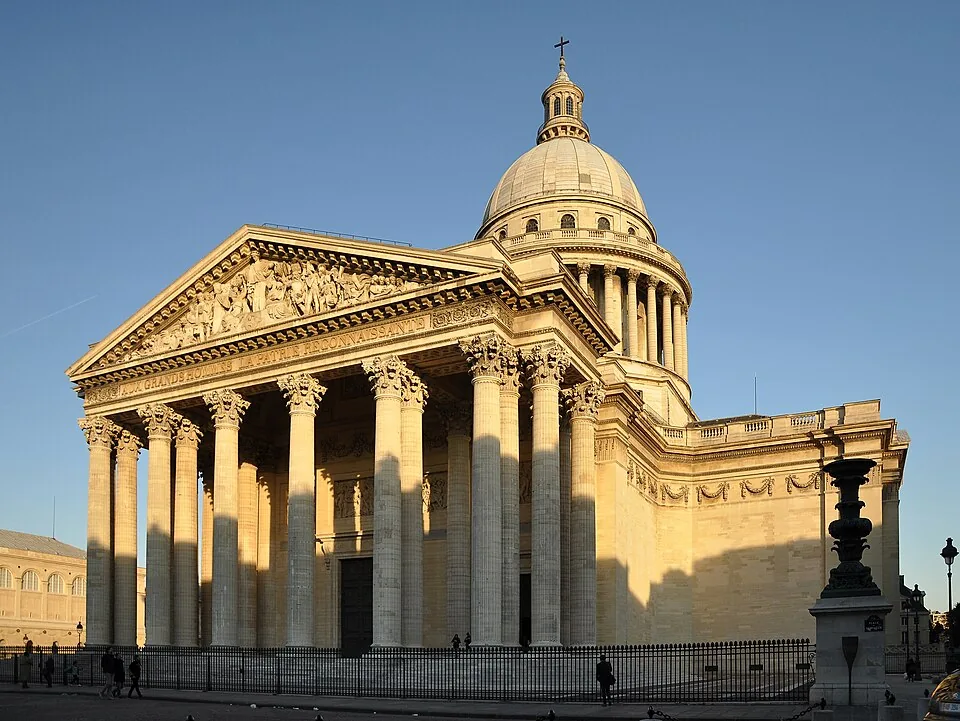
Panthéon
The Panthéon began as a church dedicated to Saint Geneviève and became a national mausoleum during the Revolution. Its neoclassical dome and portico now frame an evolving memorial to people whom France chooses to honor.
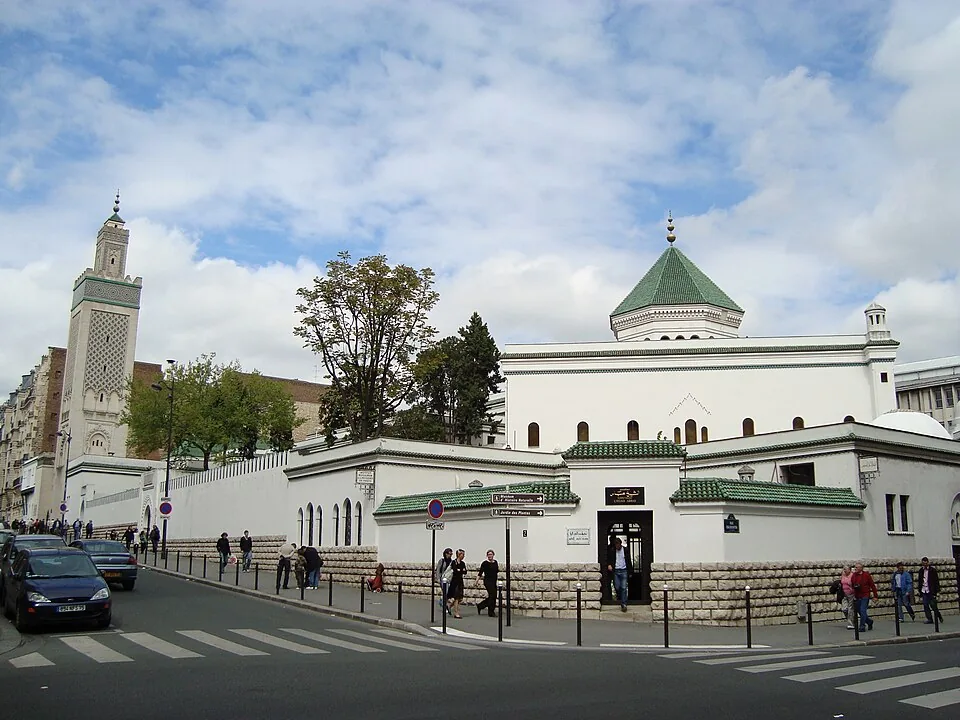
Grande Mosquée de Paris
An active mosque and cultural institution in Paris’s 5th arrondissement, the Grande Mosquée was built after the First World War to honor Muslim soldiers who died for France. Its North African crafts, garden, memorials, and colonial-era origins give the complex a layered story.
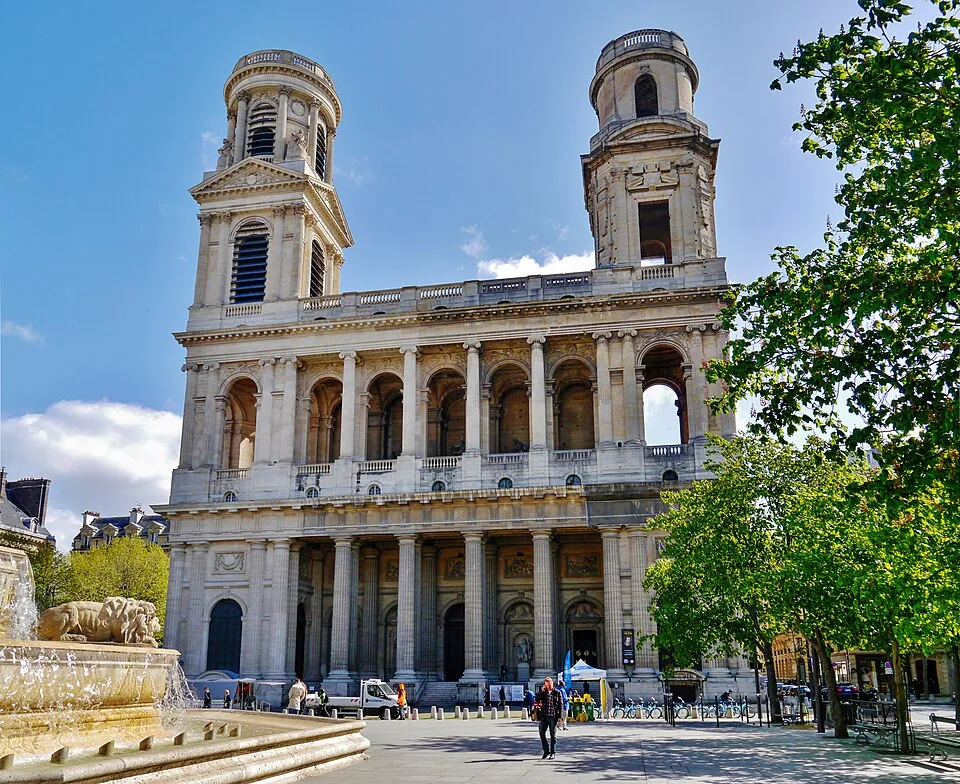
Saint-Sulpice Church
Saint-Sulpice’s broad façade and unfinished-looking towers frame one of Paris’s largest church interiors. Built over centuries, the church gathers architectural styles, Delacroix murals, a monumental organ, and a scientific gnomon beneath a single roof.
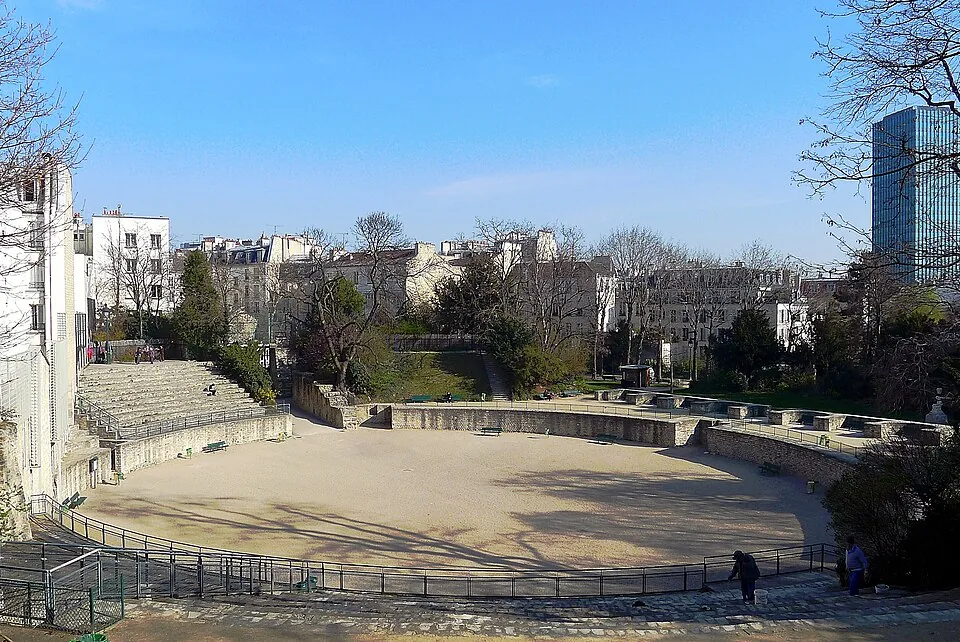
Arènes de Lutèce
Paris’s Arènes de Lutèce joined a Roman arena and theatre stage in one Gallo-Roman monument. Excavation, demolition, public campaigning and reconstruction shaped the ruins now shared as a neighborhood garden.
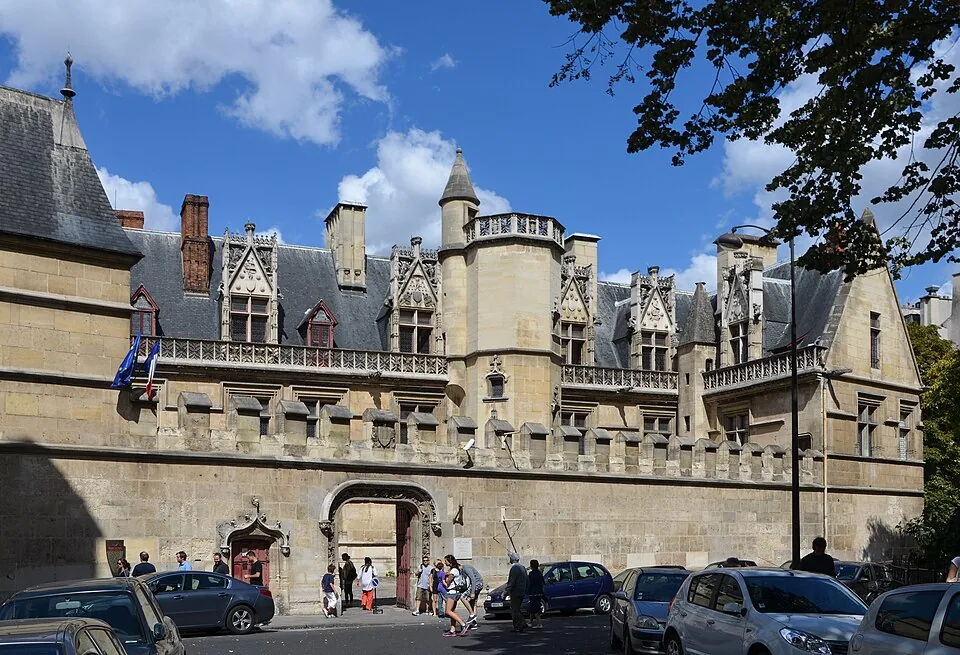
Musée de Cluny
The Musée de Cluny joins a late-medieval abbots’ residence with the remains of Roman baths. Its unusual juxtaposition makes the site itself the exhibit: successive buildings rose over ancient structures, preserving fragments of Paris across nearly two millennia.