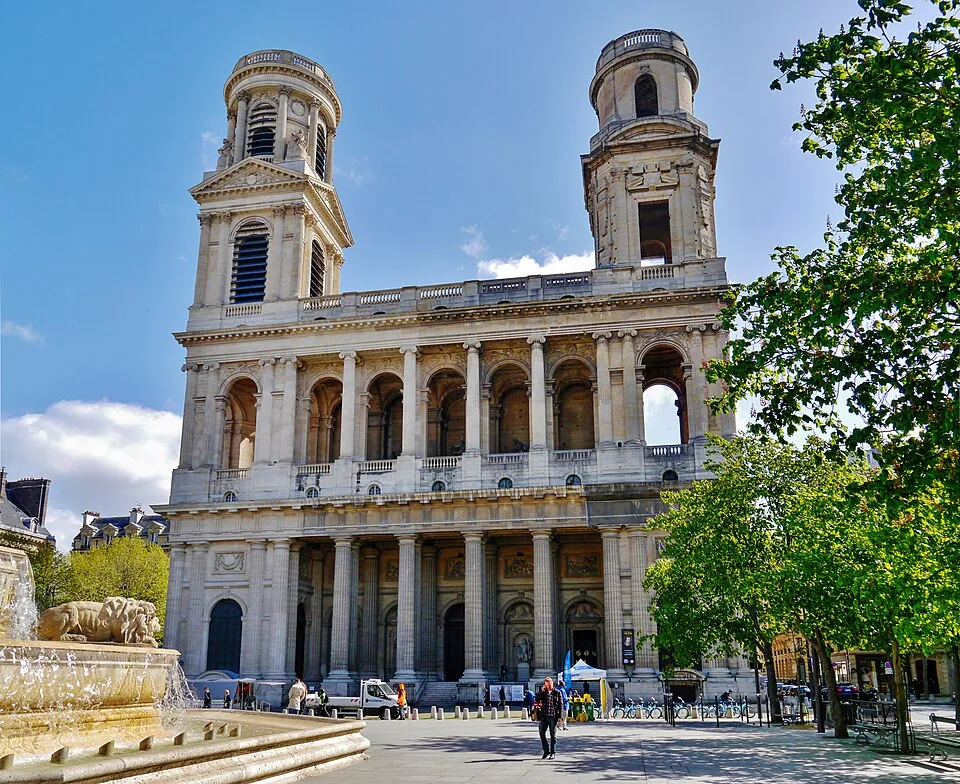
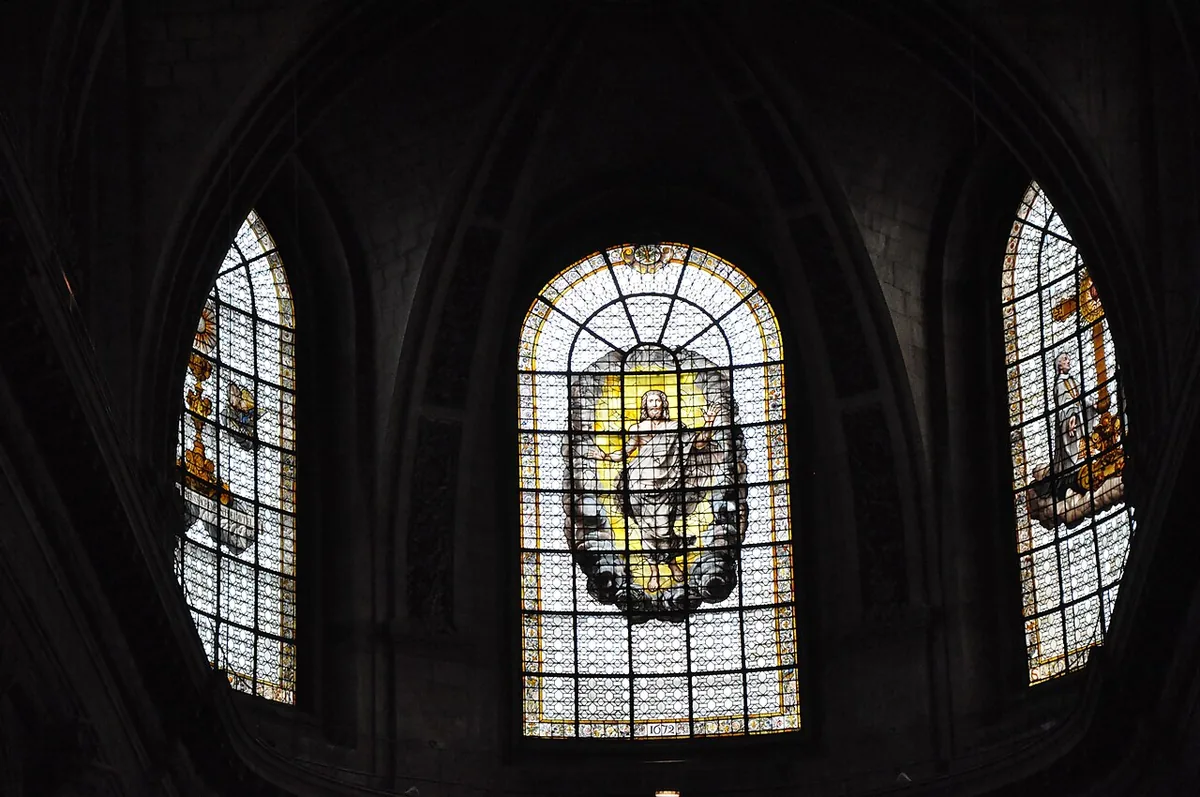
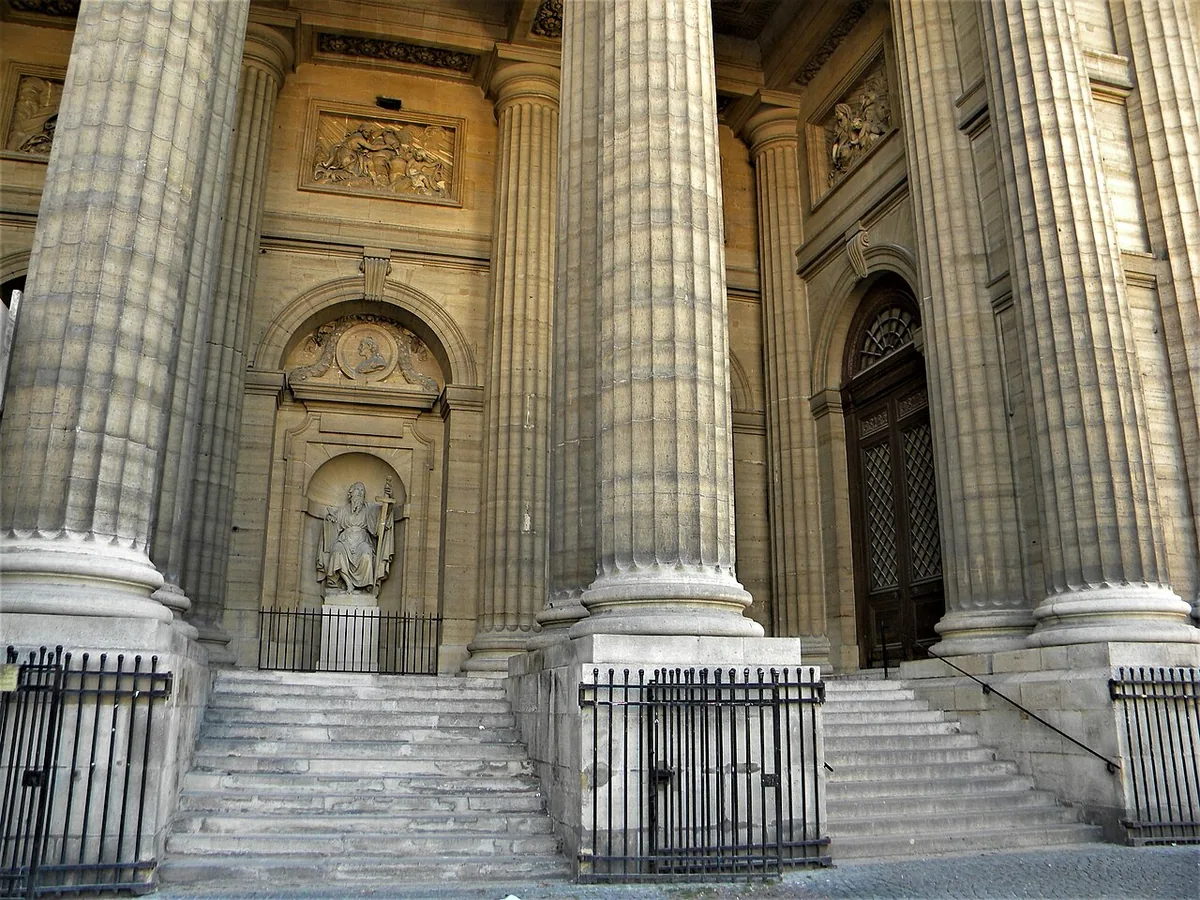
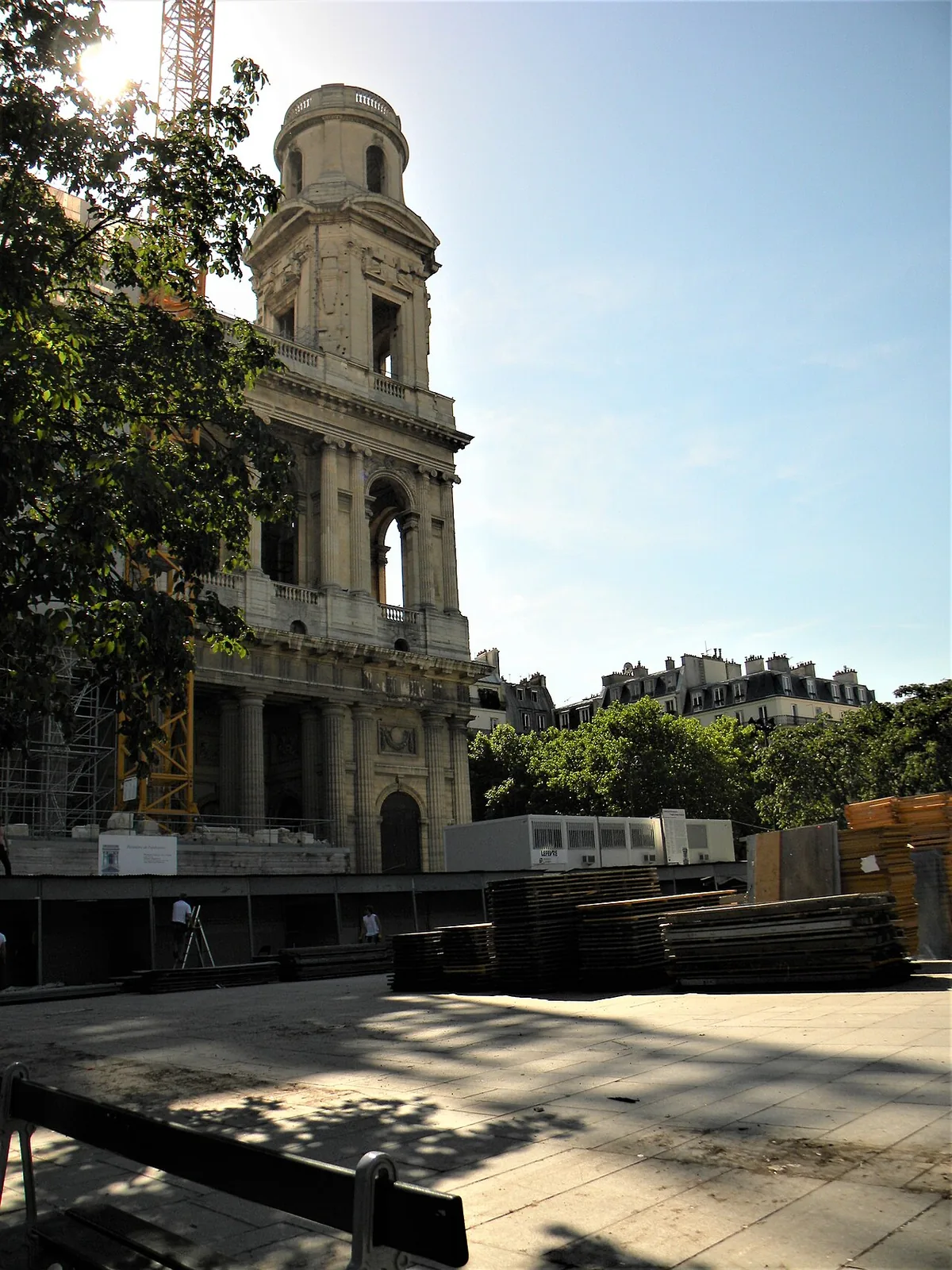
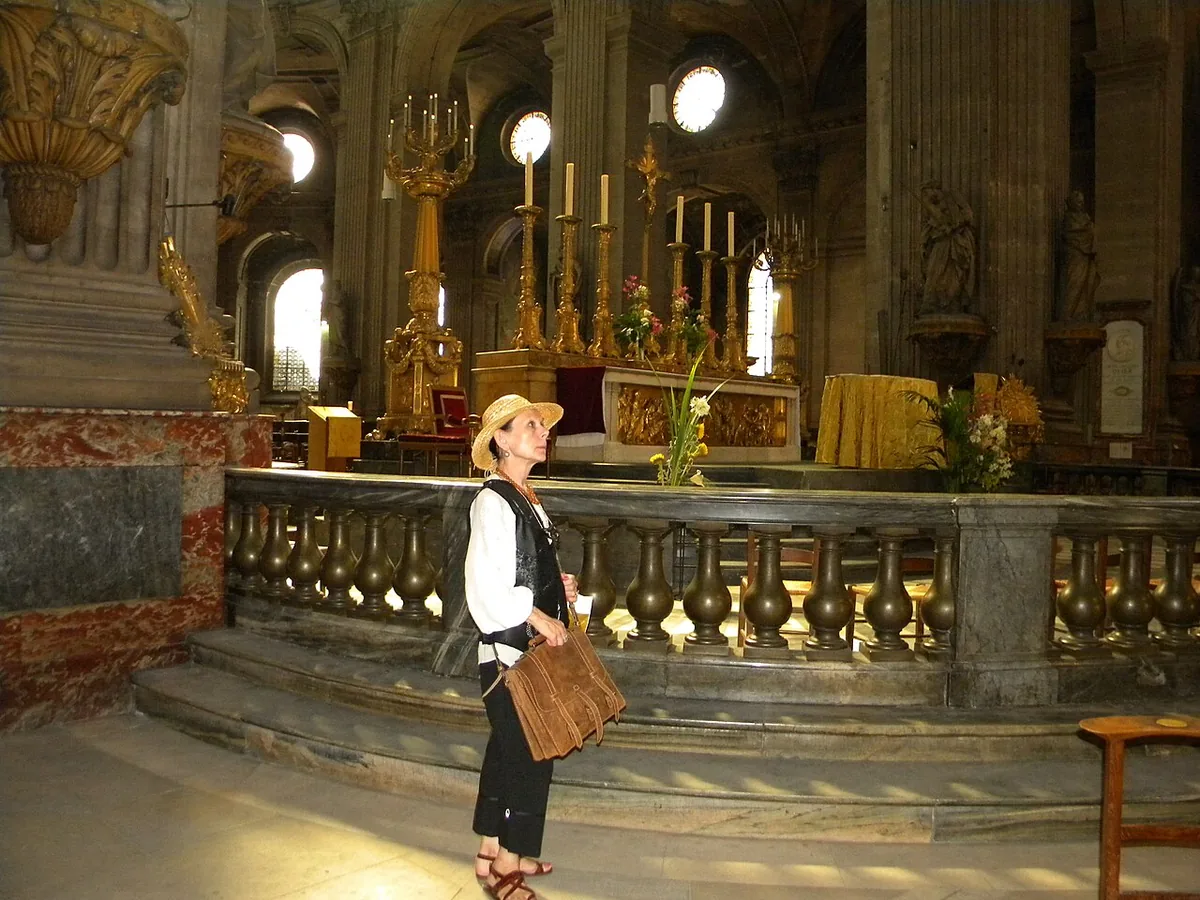
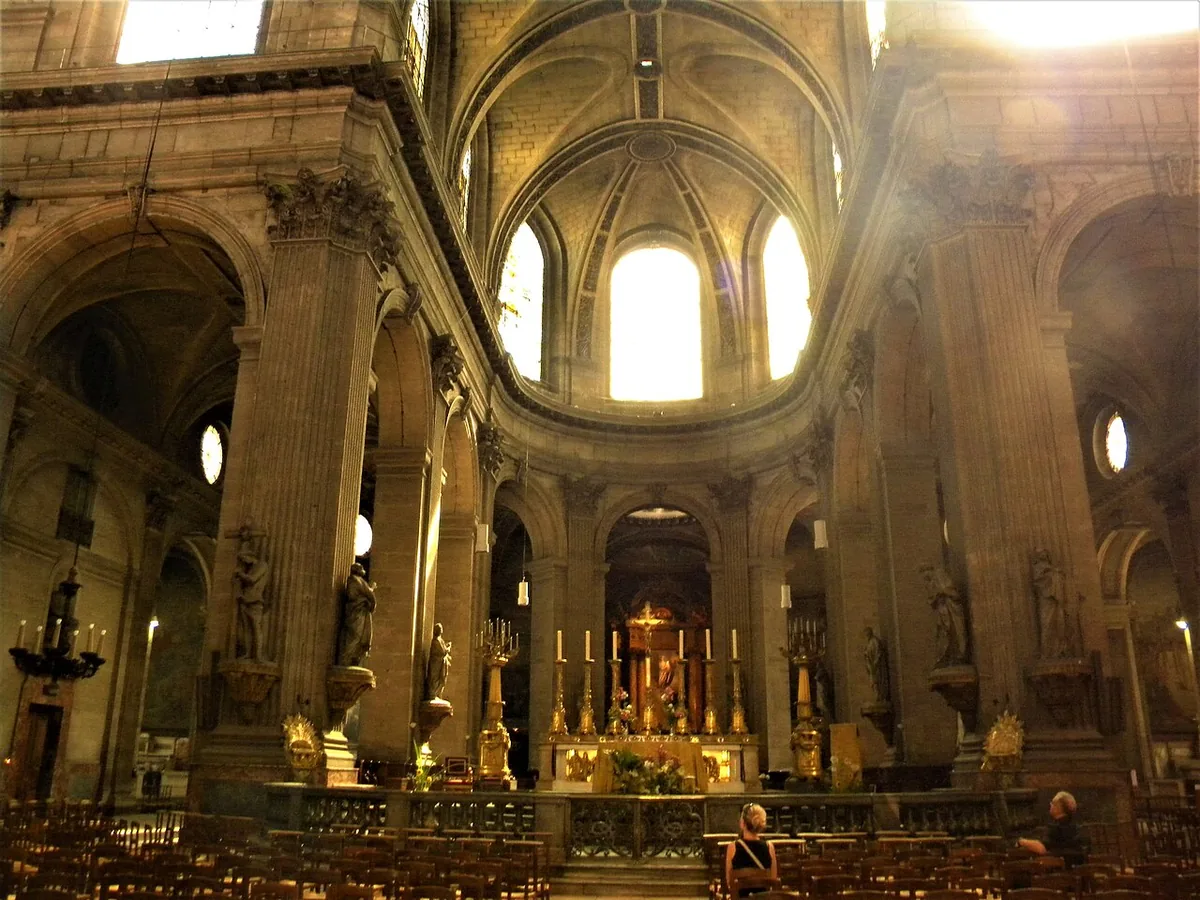
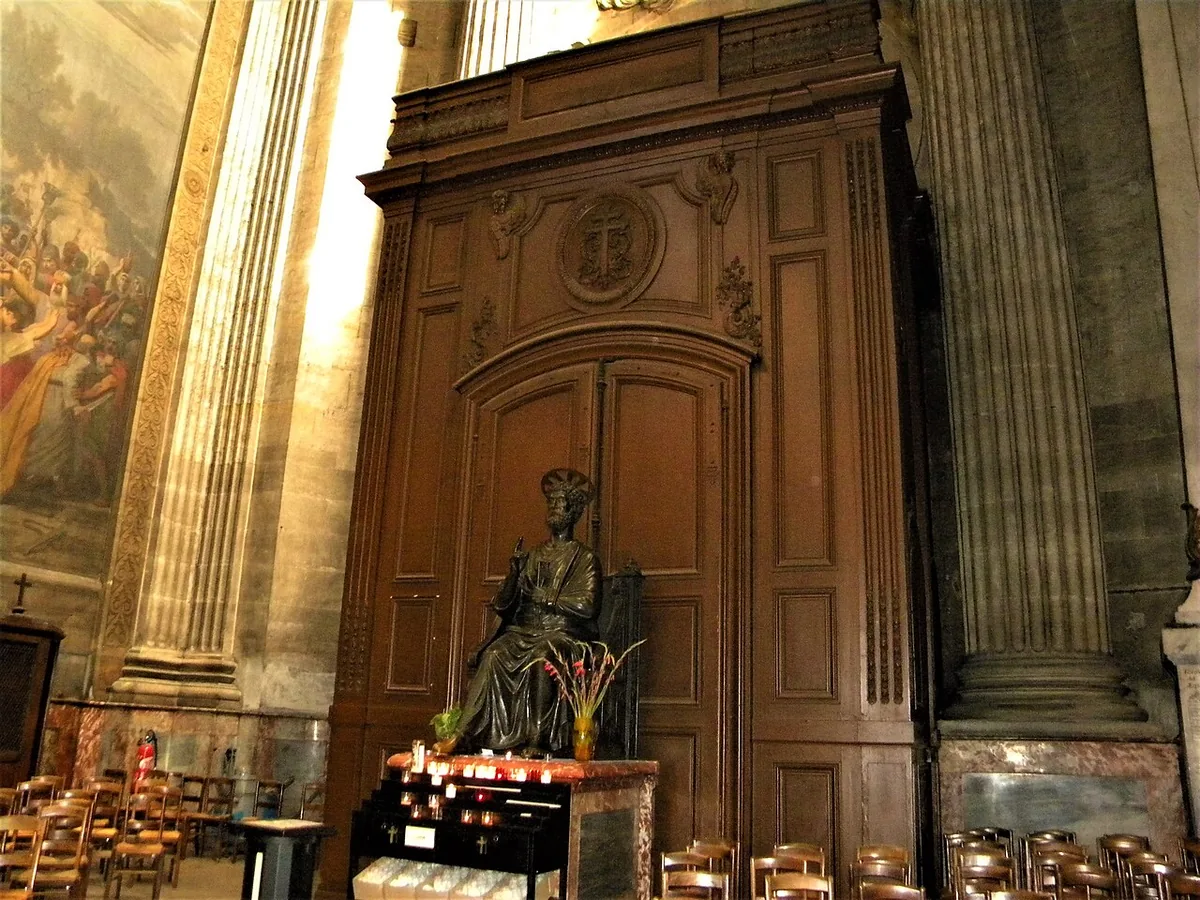
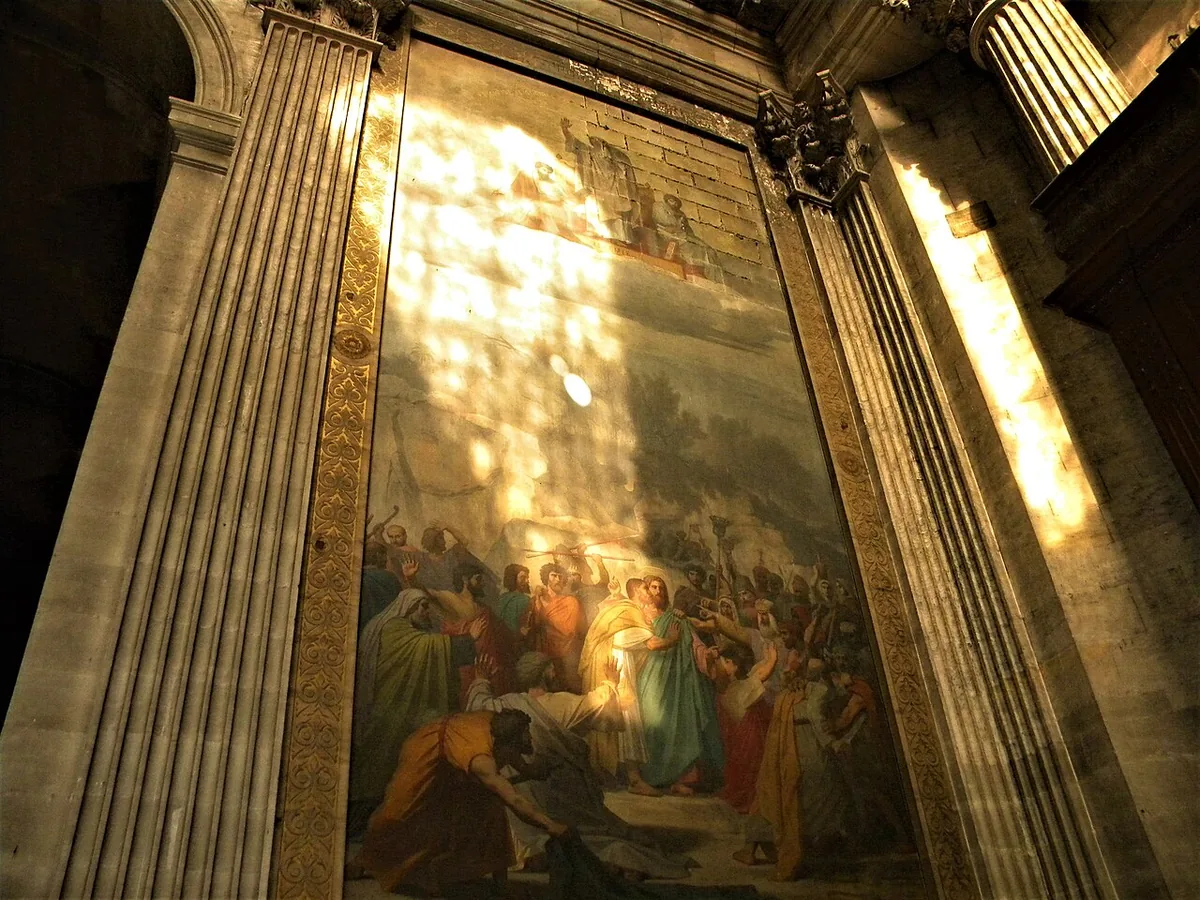
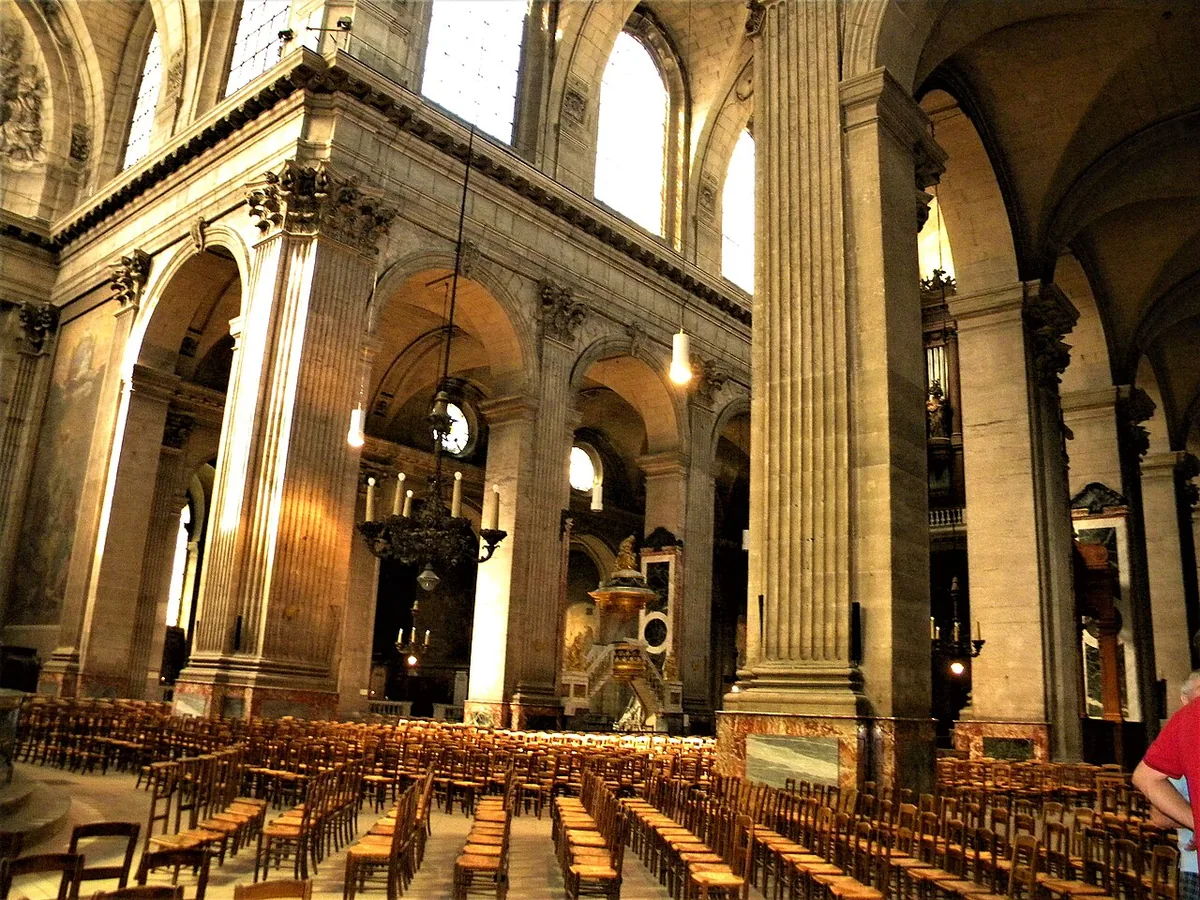
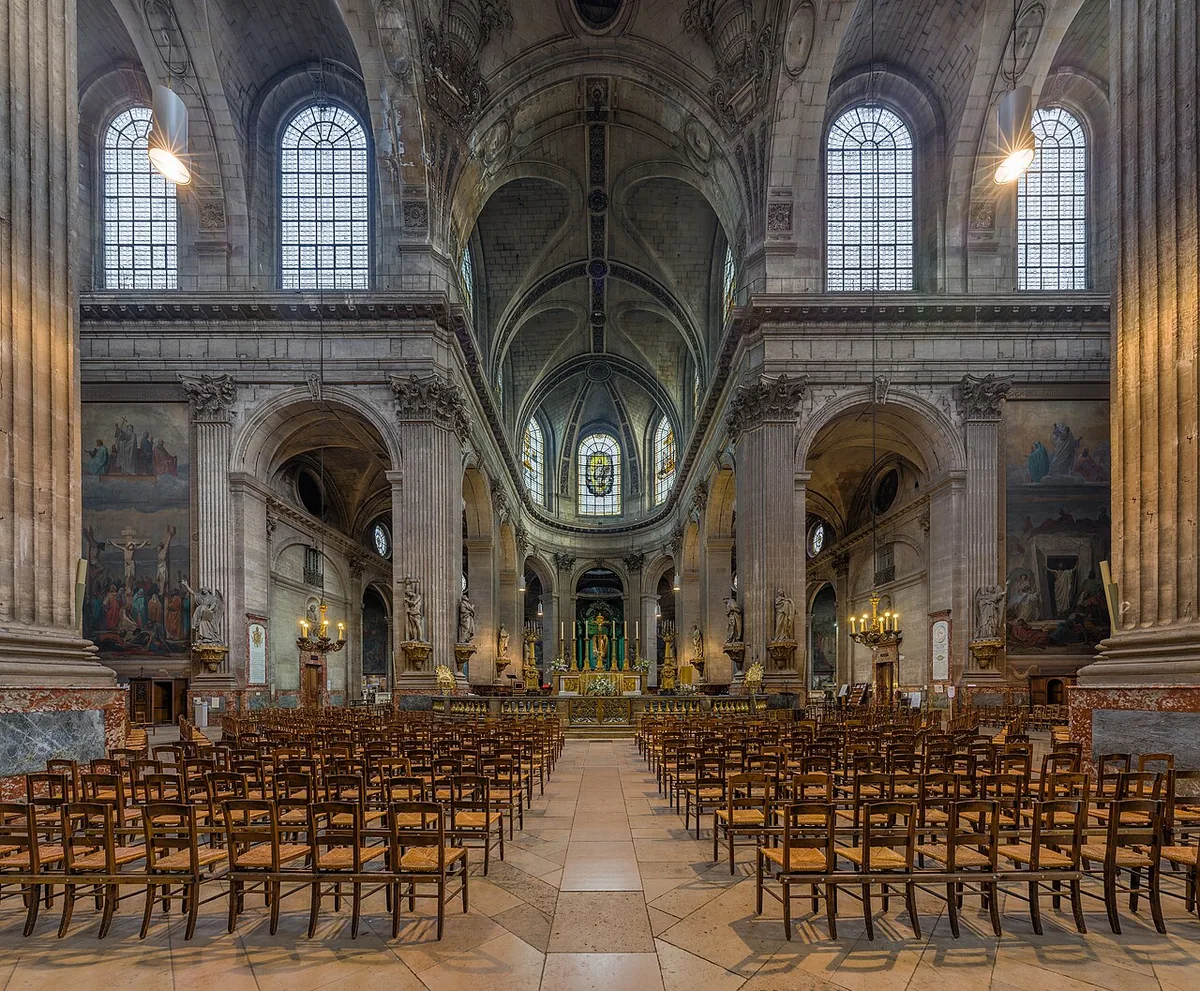
Saint-Sulpice’s broad façade and unfinished-looking towers frame one of Paris’s largest church interiors. Built over centuries, the church gathers architectural styles, Delacroix murals, a monumental organ, and a scientific gnomon beneath a single roof.
Quick facts
The current church’s first stone was laid in 1646 by Anne of Austria.
Its foundations reach back to the twelfth century.
The gnomon’s brass meridian line was used for astronomical observations.
Get directions to Saint-Sulpice Church. Confirm the visitor entrance and current access with the venue before travelling.
Audio guide
Listen to this place’s guide.
Guide
At Saint-Sulpice, a brass line crosses the floor and climbs an obelisk on the north transept wall. It is not a secret boundary or the Paris Meridian: it belongs to an astronomical instrument commissioned for this church. That meeting of faith, science and long parish life is a fitting way into one of Paris’s largest churches.
Continue exploring
Discover the full story
Keep reading with a travel pass and explore every full guide and tour.
UpgradeMore places in Paris
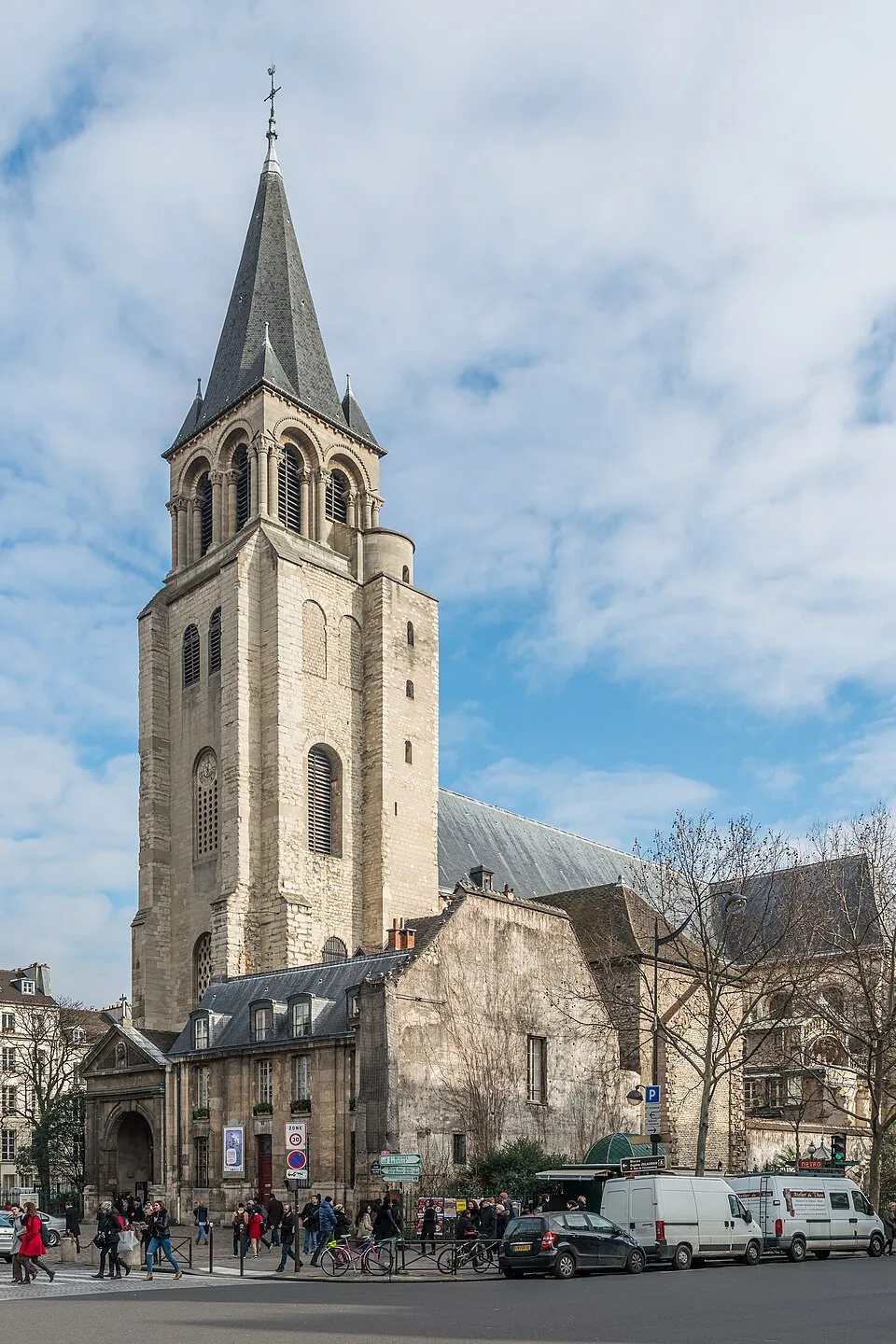
Saint-Germain-des-Prés
Saint-Germain-des-Prés grew around a sixth-century abbey outside Paris’s early walls. Its medieval church, former fairground, scholarly monasteries, and postwar cafés trace a neighborhood shaped by pilgrimage, performance, study, and everyday gathering.
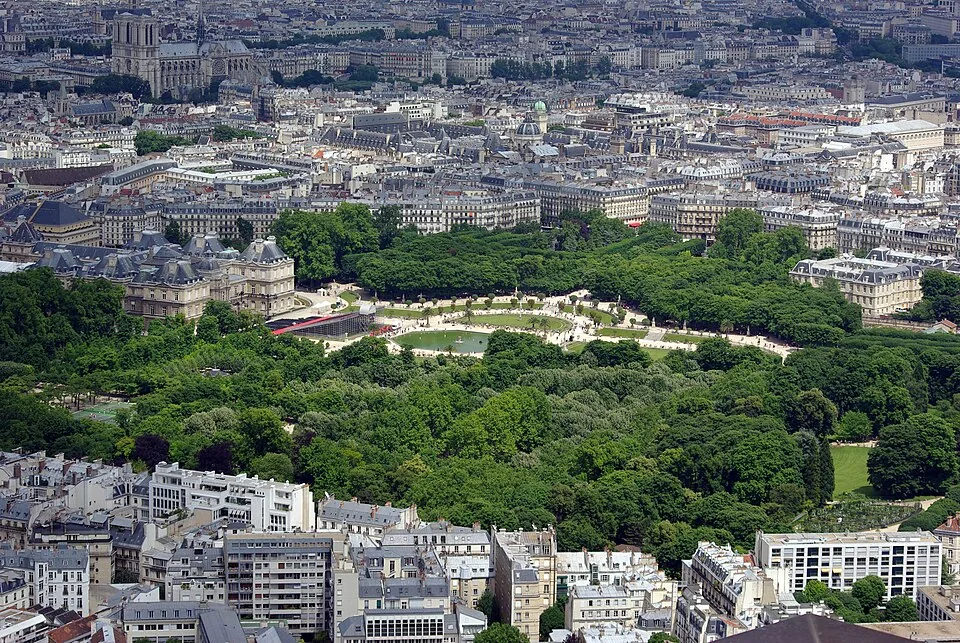
Luxembourg Gardens
Luxembourg Gardens pair formal parterres, fountains and shaded paths with the French Senate’s palace. Marie de Médicis began shaping the estate in the early seventeenth century; later political upheavals and Haussmann’s streets reshaped its boundaries.
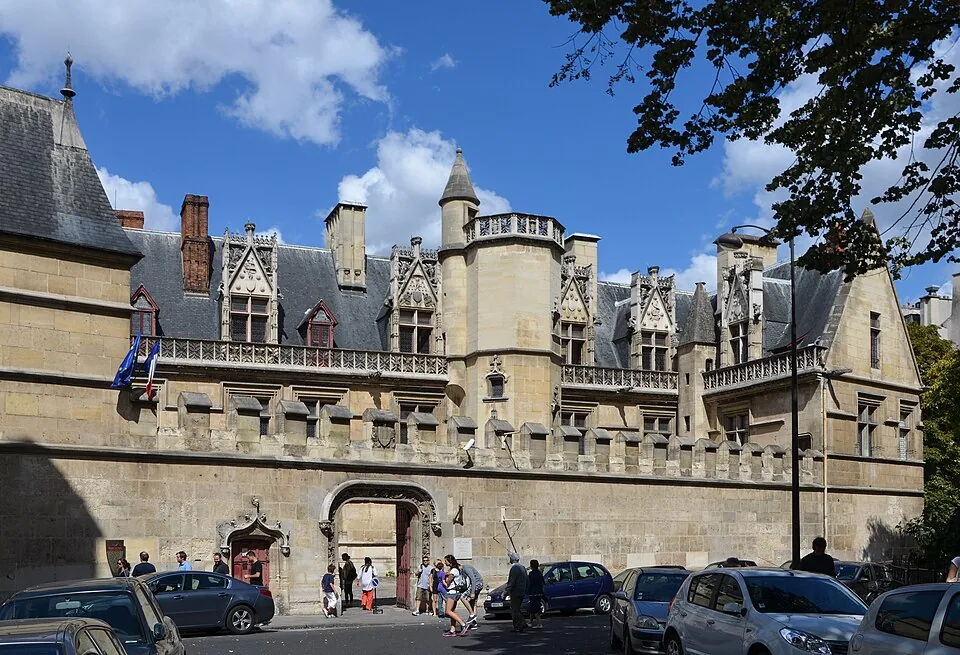
Musée de Cluny
The Musée de Cluny joins a late-medieval abbots’ residence with the remains of Roman baths. Its unusual juxtaposition makes the site itself the exhibit: successive buildings rose over ancient structures, preserving fragments of Paris across nearly two millennia.
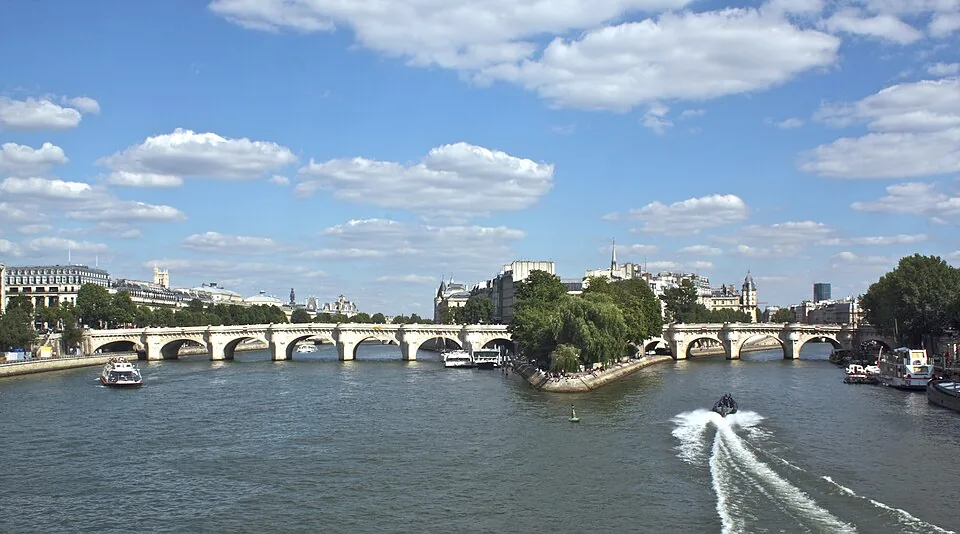
Pont Neuf
Pont Neuf is paradoxically the oldest surviving bridge in Paris. Its late sixteenth-century design introduced stone construction without houses on the bridge, leaving it open as a public route and viewpoint over the Seine.
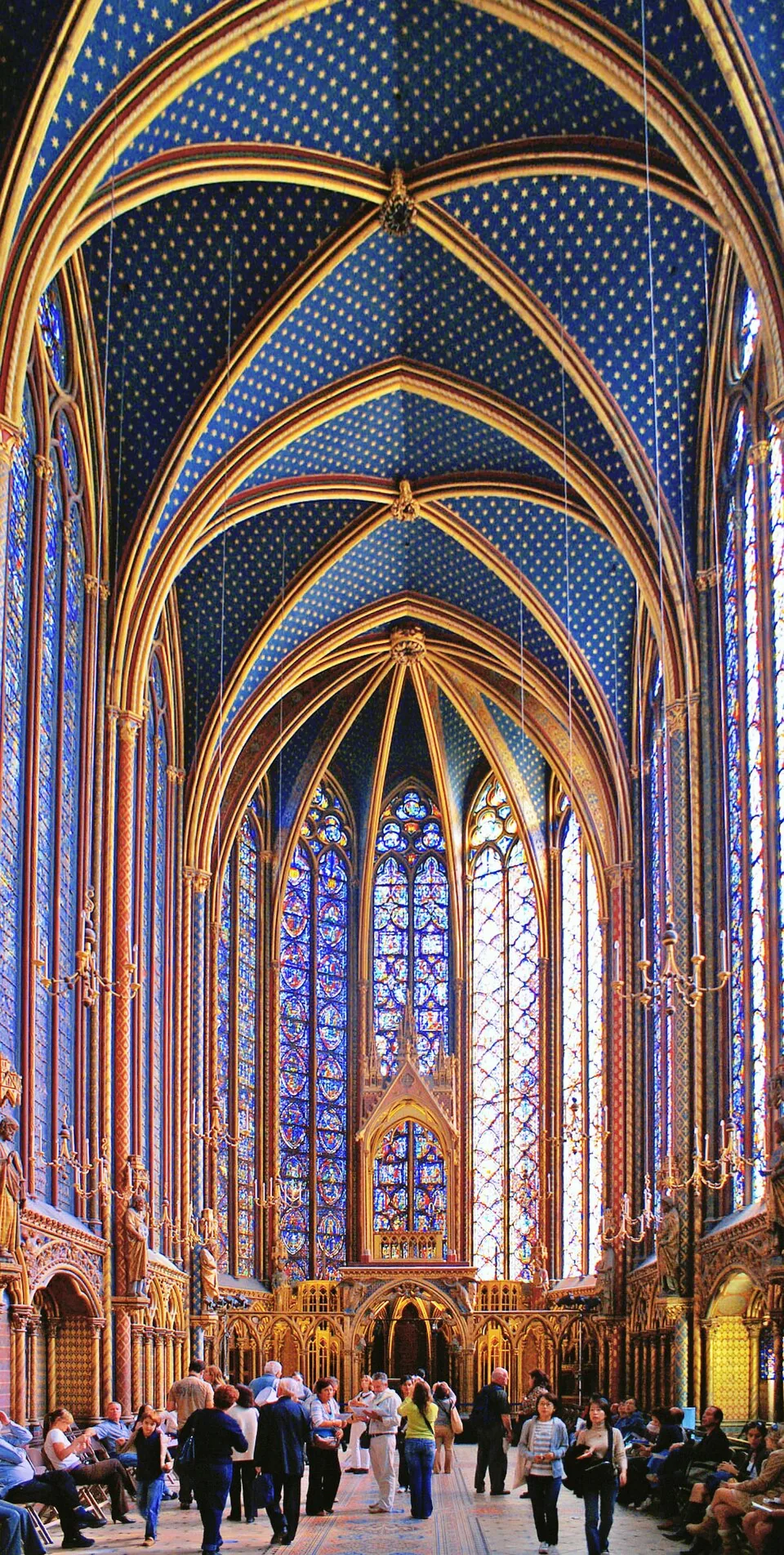
Sainte-Chapelle
Built for Louis IX inside the former Palais de la Cité, Sainte-Chapelle was a royal sanctuary for Passion relics. Its two stacked chapels culminate in an upper room of stained glass, where biblical history, royal imagery and sacred light meet.
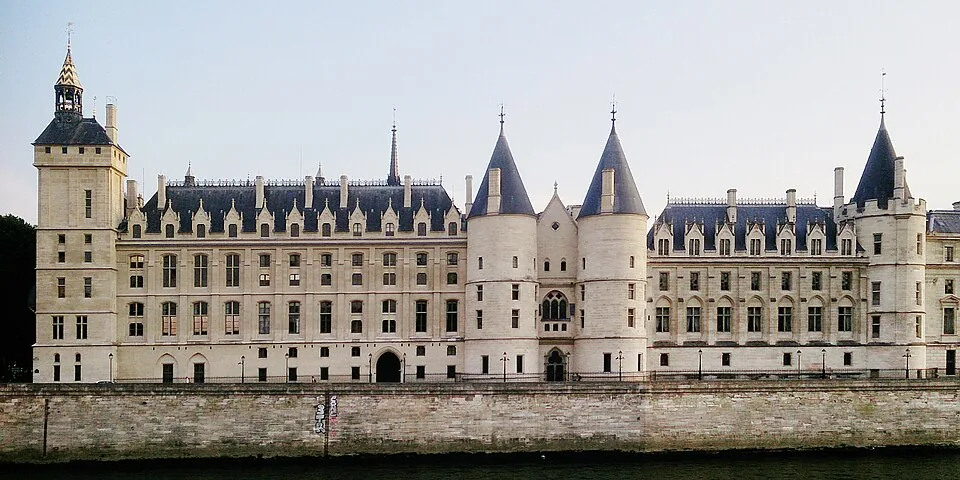
Conciergerie
The Conciergerie preserves part of the medieval Palais de la Cité, once the residence and seat of French royal power. Later converted into a prison, it became closely associated with the Revolutionary Tribunal and the confinement of Marie-Antoinette.