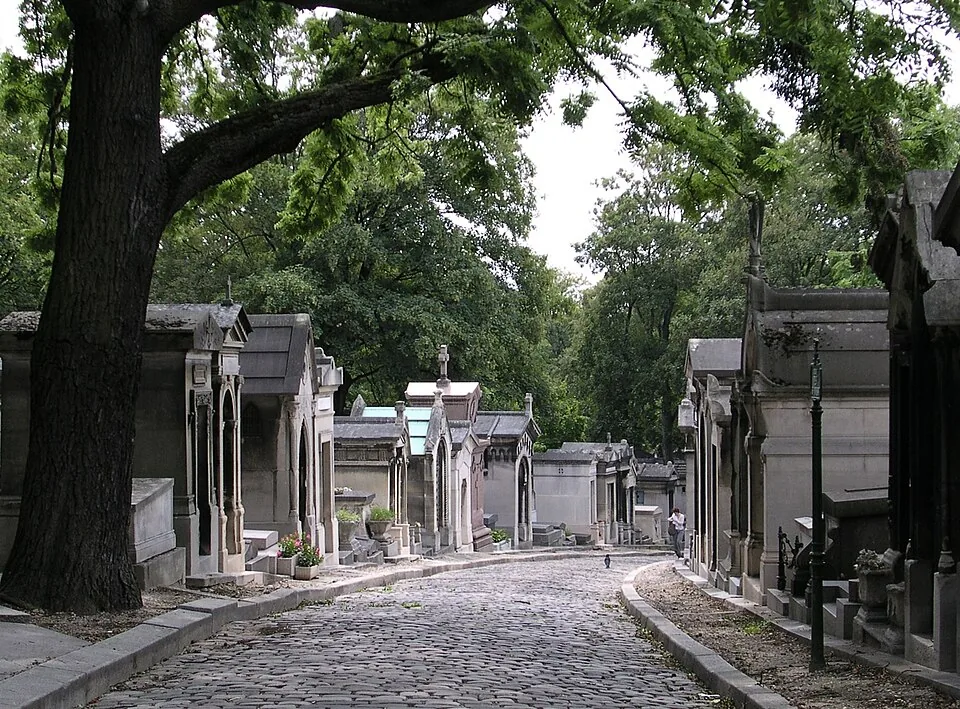
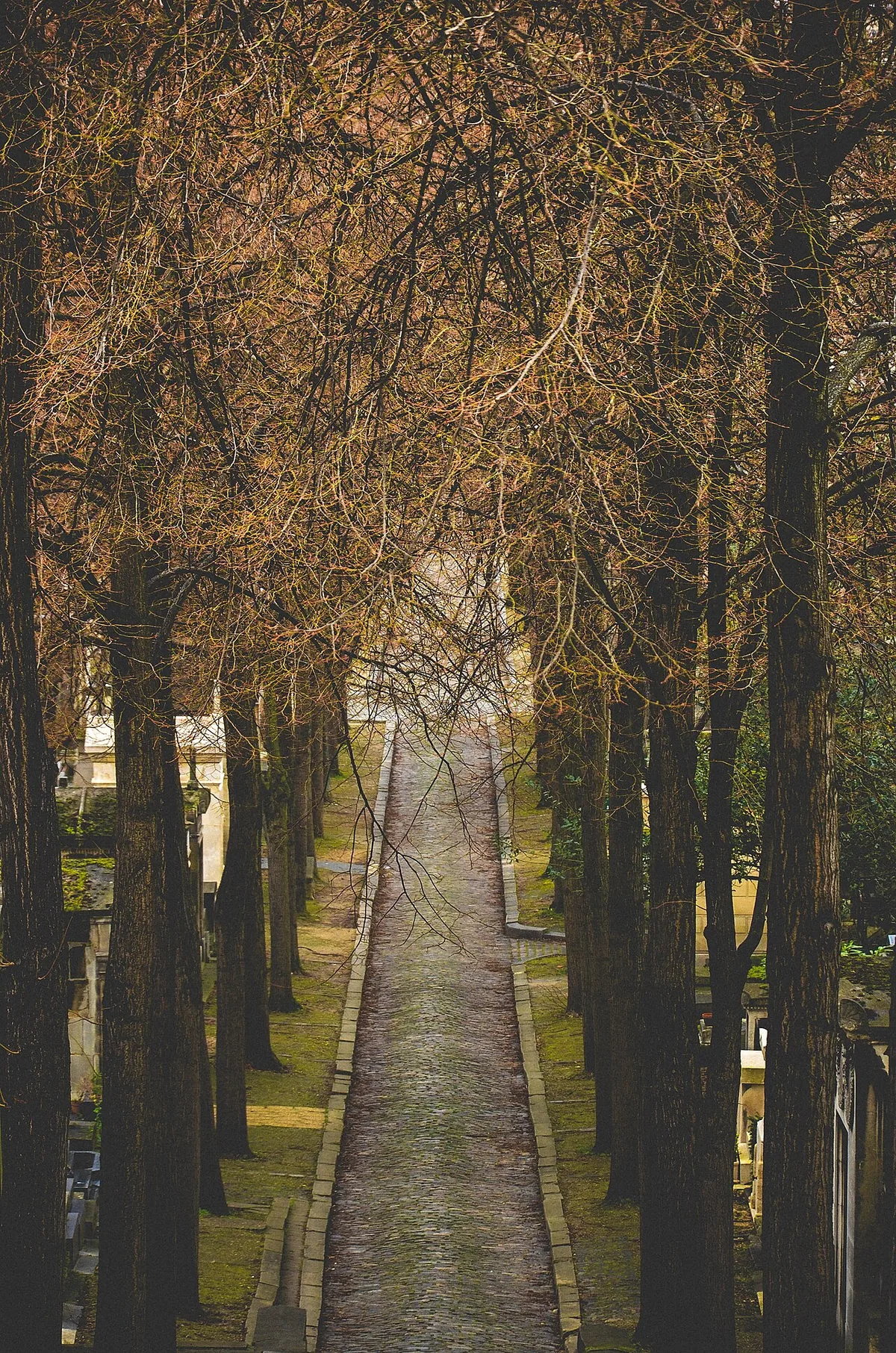
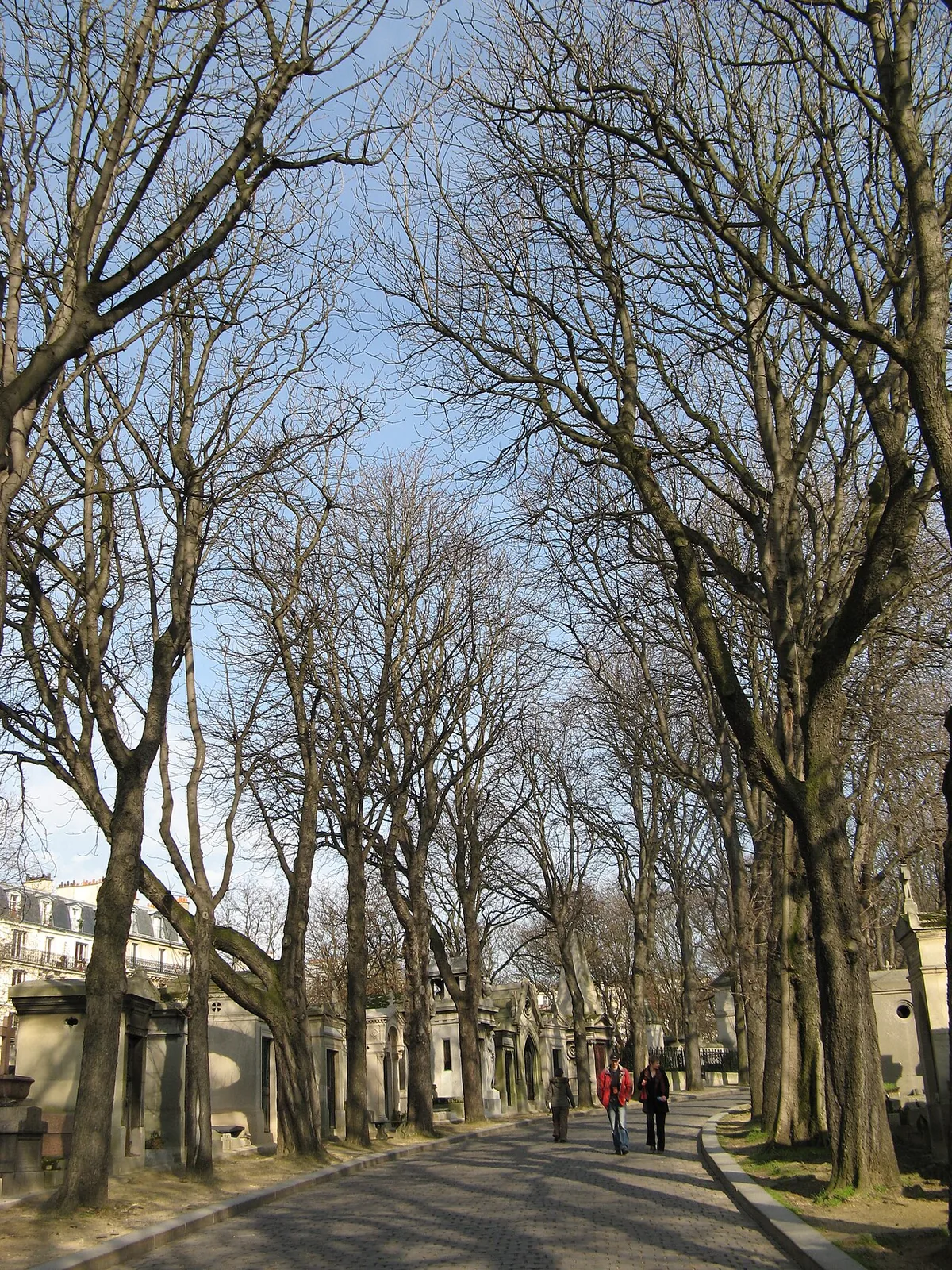
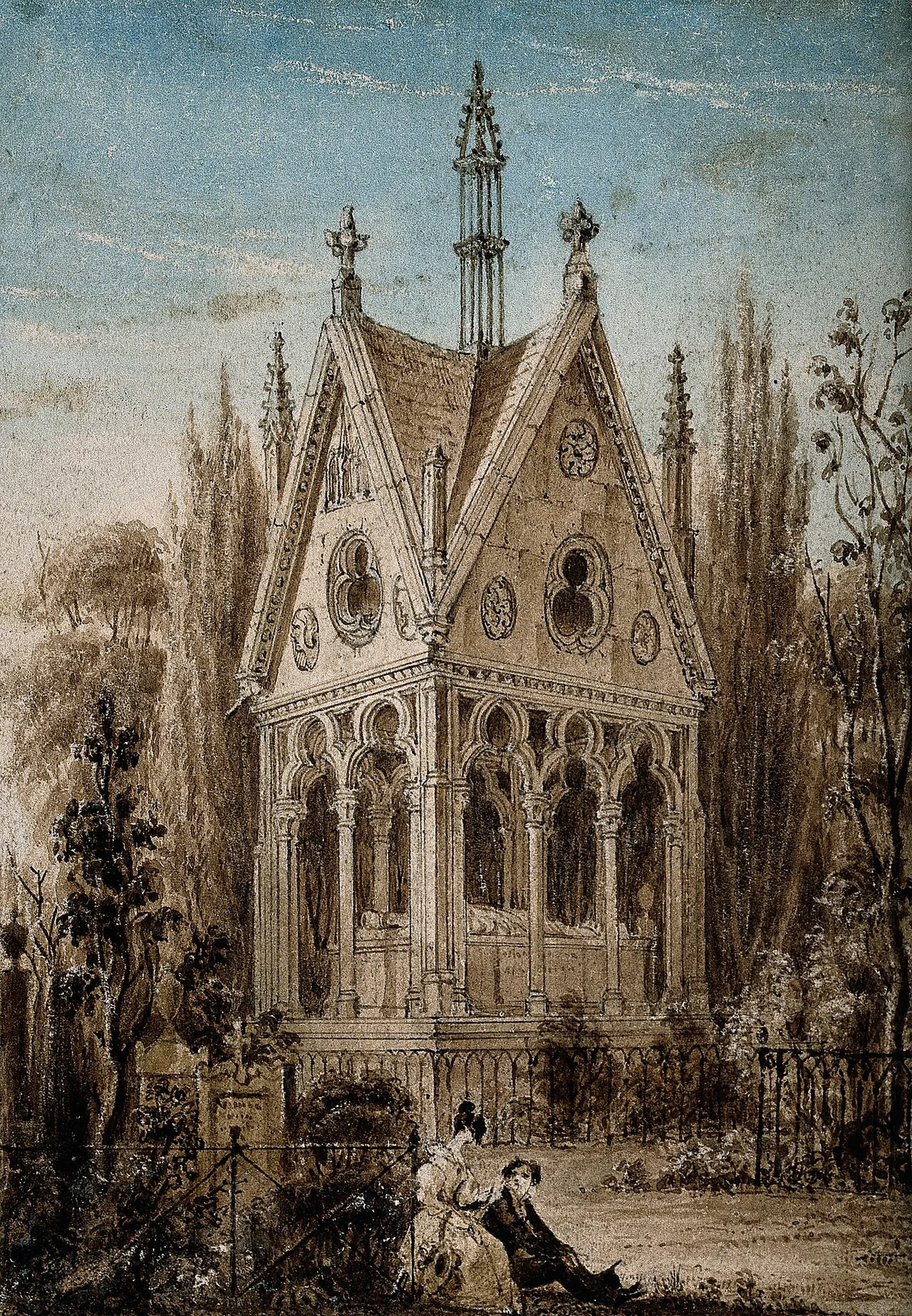
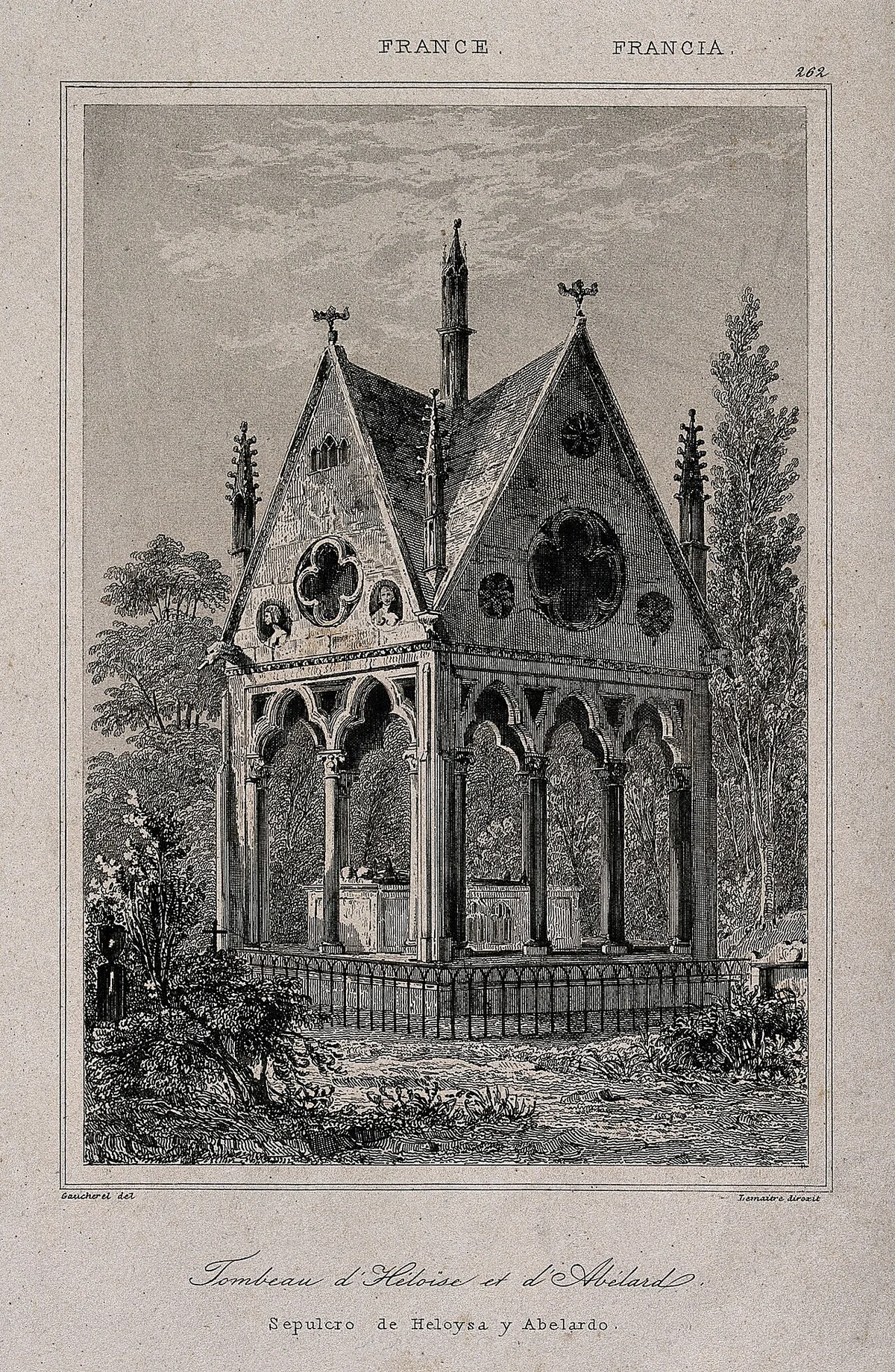
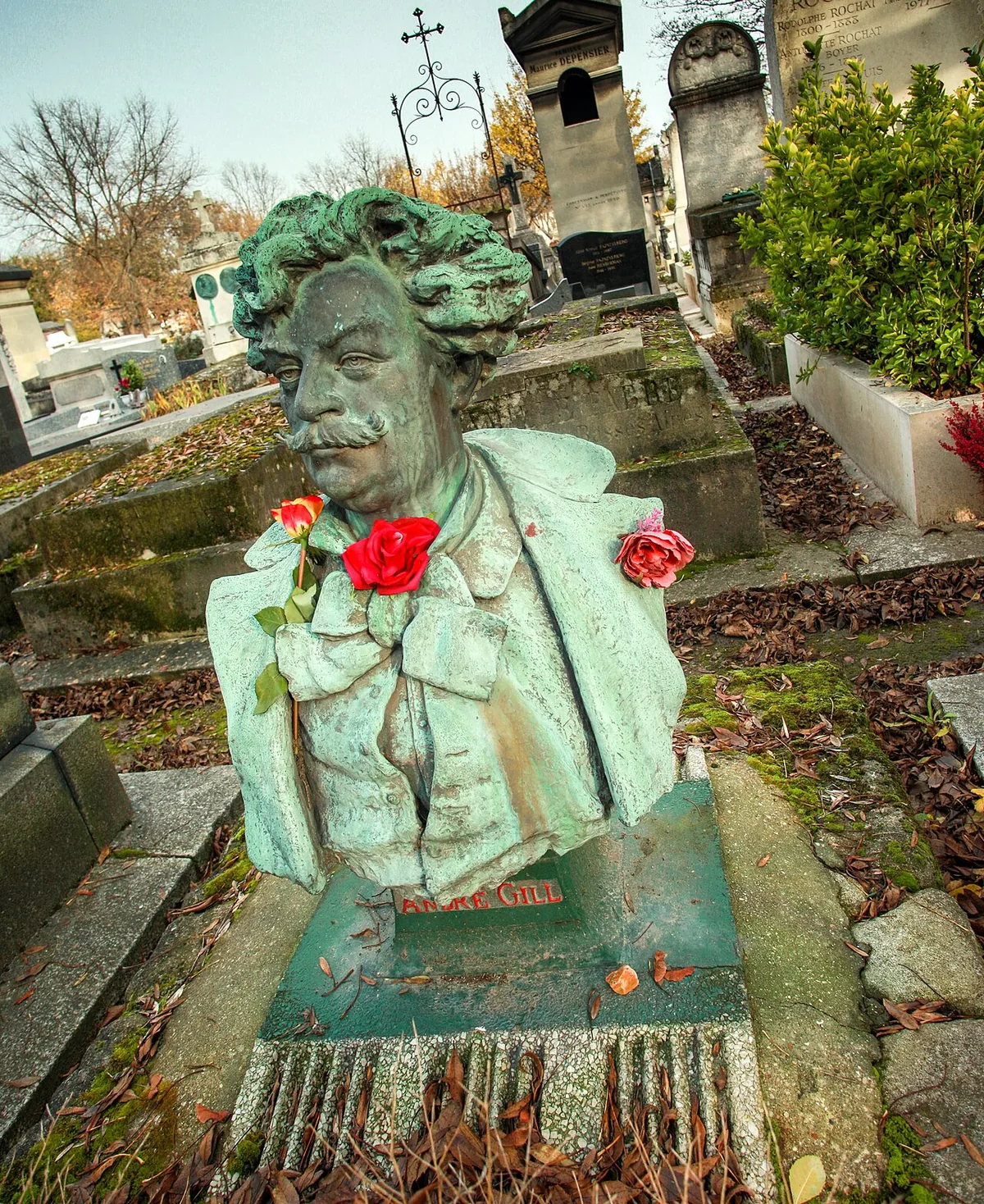
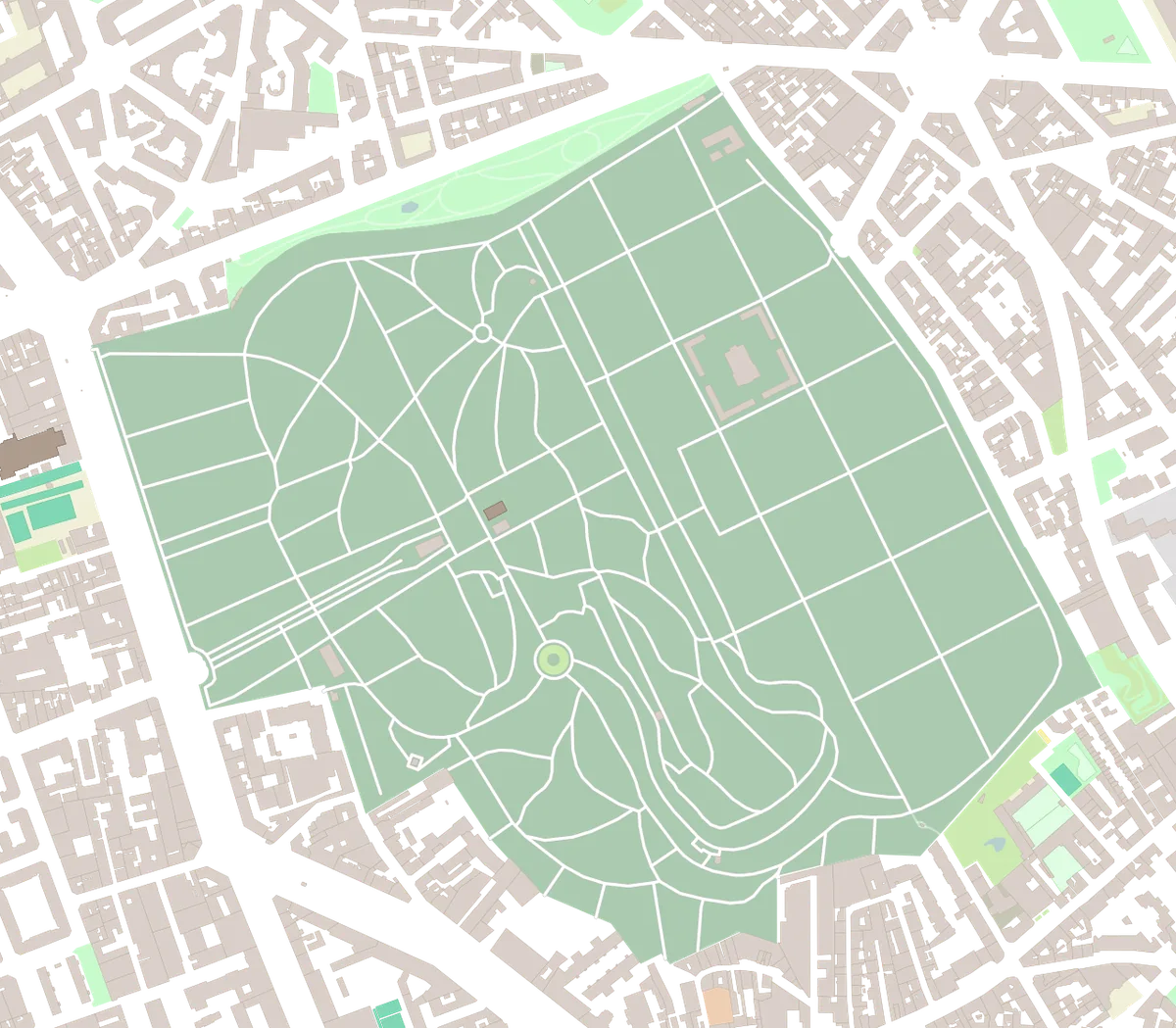
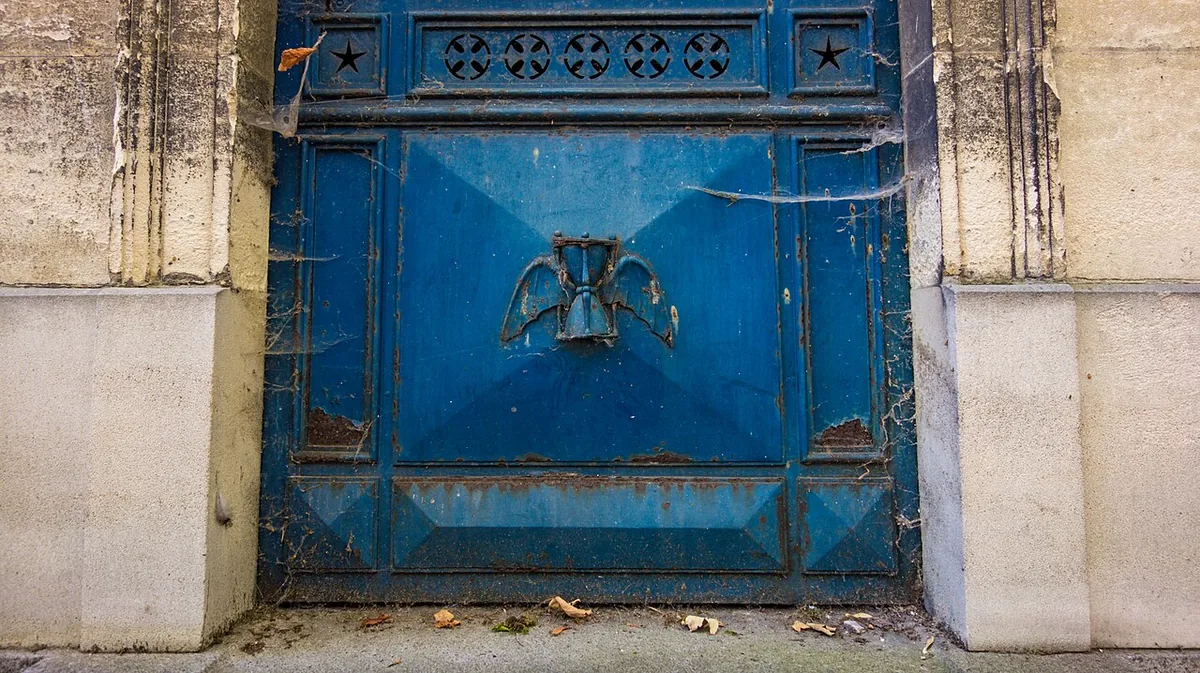
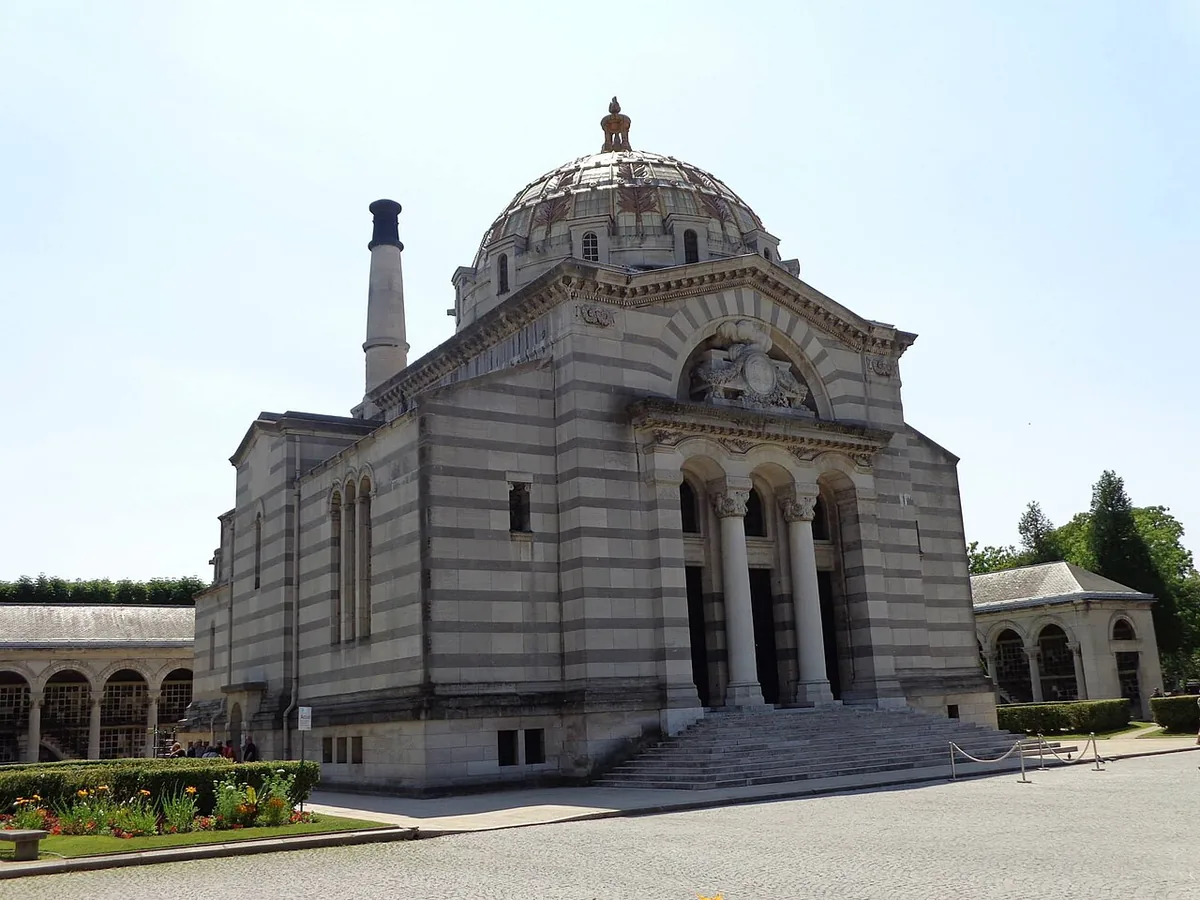
Opened in 1804 on a former Jesuit estate, Père Lachaise became a landscaped cemetery where winding paths, family tombs, and public memorials trace Parisian life and loss. It remains an active burial ground in the 20th arrondissement, so visits call for quiet and respect.
Quick facts
Paris opened the Cemetery of the East in 1804 on a former Jesuit estate called Mont-Louis.
Architect Alexandre-Théodore Brongniart designed planted processional avenues, wooded groves, and monumental crossroads for the cemetery.
The City of Paris records 147 Communards executed at the cemetery wall on 28 May 1871; the wall became a major site of remembrance.
Get directions to Père Lachaise Cemetery. Confirm the visitor entrance and current access with the venue before travelling.
Audio guide
Listen to this place’s guide.
Guide
Père Lachaise is both a place of burial and one of Paris’s most revealing public landscapes. Its shaded lanes, family chapels, and crowded memorial avenue can look like a park, but funerals still take place here every day. That double purpose began with a practical urban problem: after Paris decided in 1801 to create larger cemeteries beyond its dense center, the city acquired the wooded Mont-Louis estate in January 1804 and opened the Cemetery of the East.
Continue exploring
Discover the full story
Keep reading with a travel pass and explore every full guide and tour.
UpgradeMore places in Paris
Place des Vosges
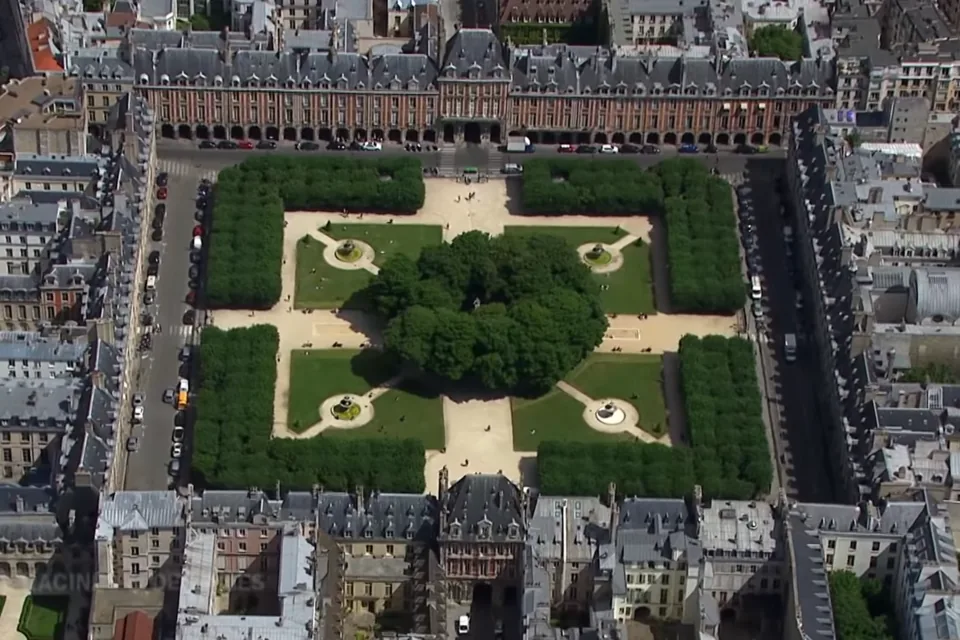
Place des Vosges is a planned square of brick-and-stone façades, arcades, and a central garden. Begun under Henri IV in 1605 and completed in 1612, it has served as royal stage, revolutionary landmark, writers’ address, and public city garden.
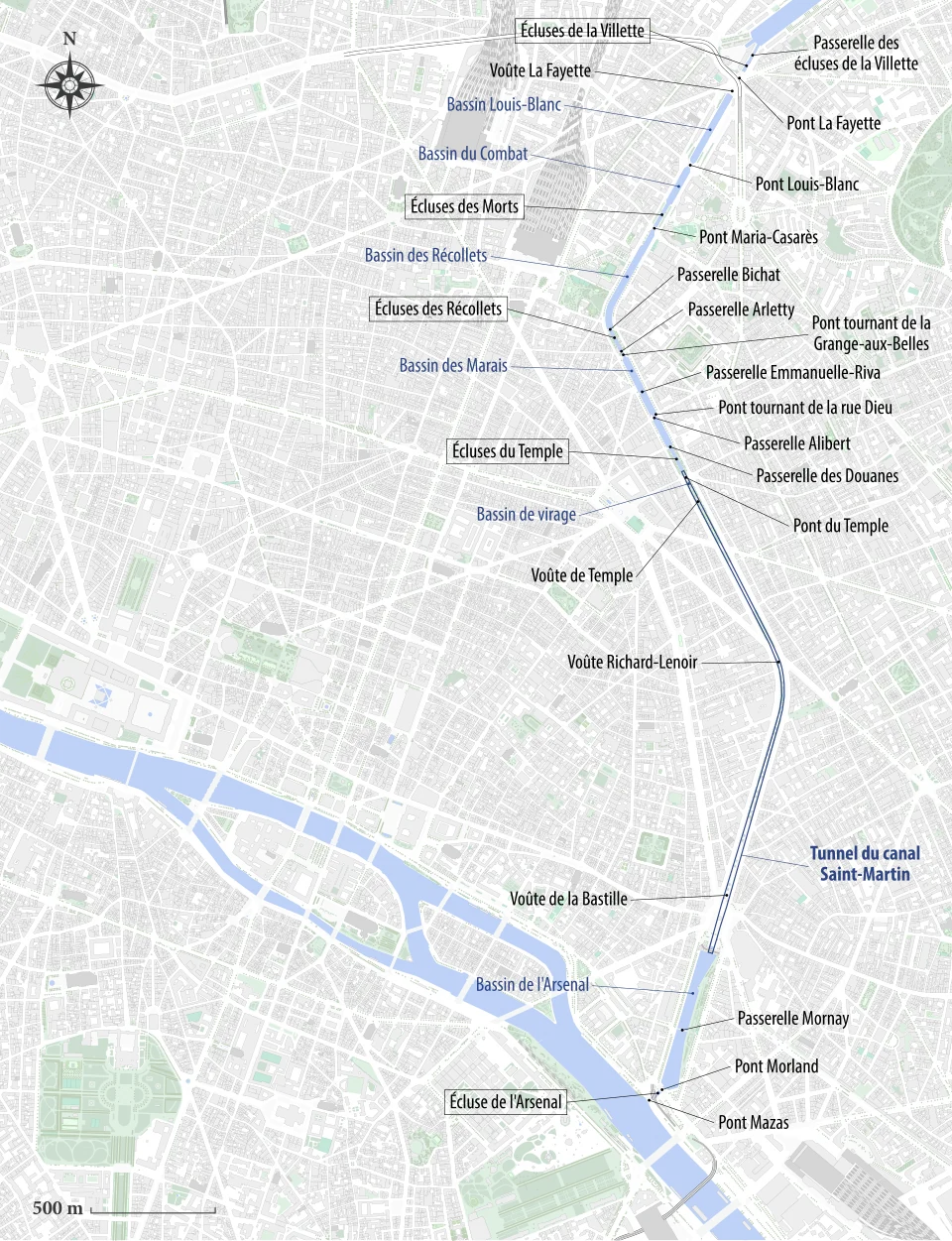
Canal Saint-Martin
An urban waterway of nine locks, iron footbridges and hidden vaults, Canal Saint-Martin links the Bassin de la Villette with the Seine. Built for water supply and freight, it became a neighborhood promenade after an expressway plan was abandoned in 1971.
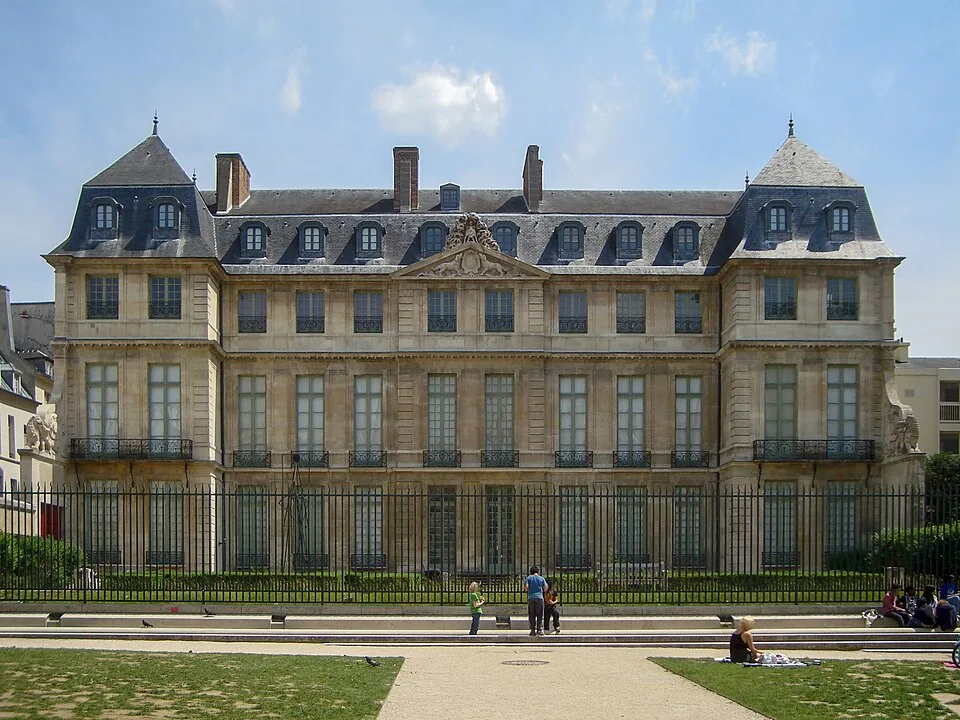
Musée Picasso
Musée Picasso occupies Hôtel Salé, a seventeenth-century mansion whose rooms now hold an unusually broad record of Picasso’s work and creative process. The museum’s collection came together through donations and state acquisitions after the artist’s death.
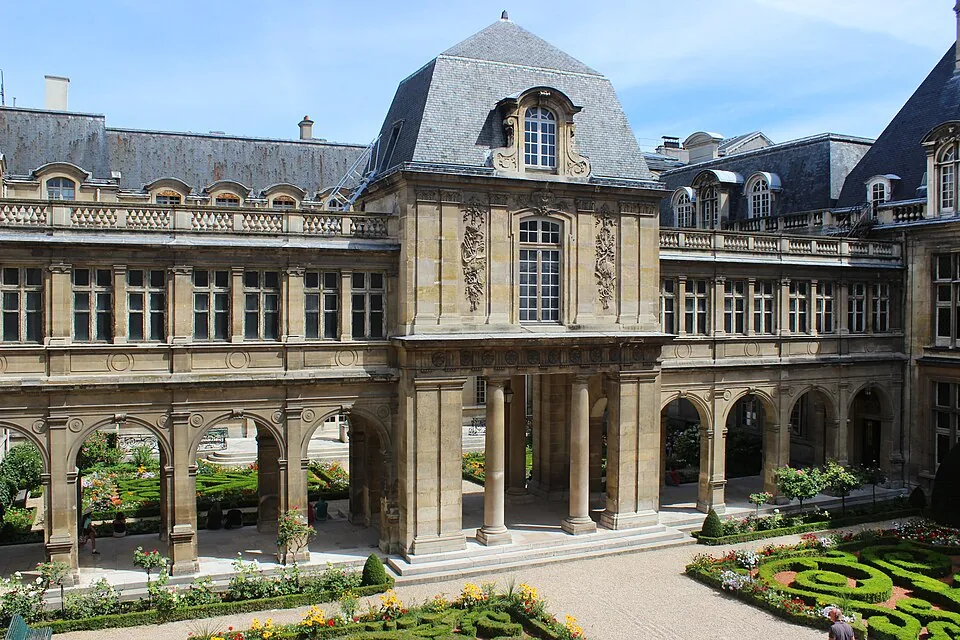
Musée Carnavalet
Two adjoining Marais mansions house a museum devoted to Paris itself. Renaissance courtyards, historic interiors brought from other addresses, and objects spanning prehistory to the present make the buildings part of the city story.
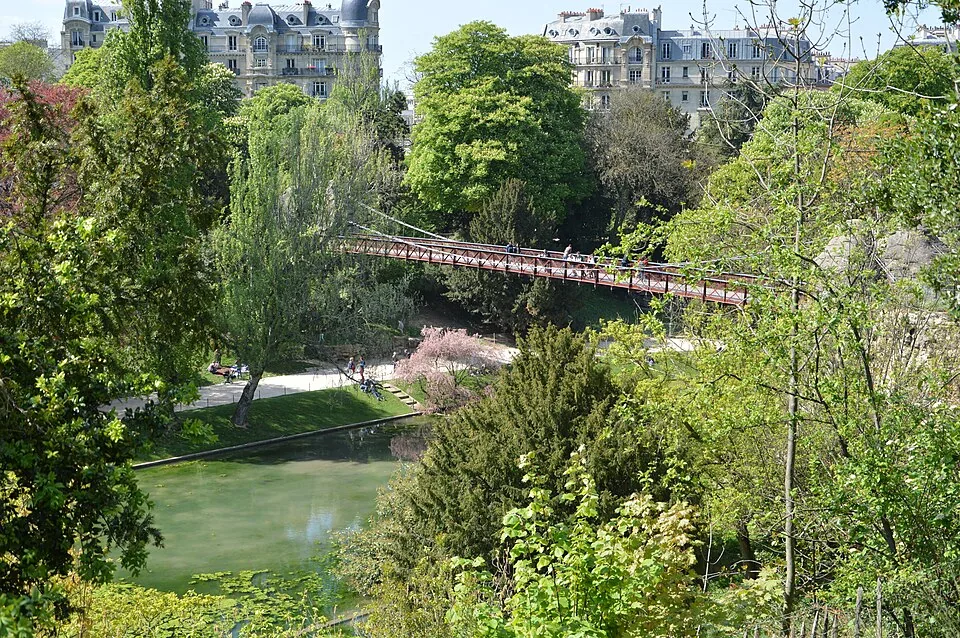
Parc des Buttes-Chaumont
Steep paths, a lake, and a temple perched on a rocky island give Buttes-Chaumont the feel of a countryside landscape inside Paris. That scenery was engineered on the site of a gypsum quarry, making the park’s natural-looking forms a feat of urban design.
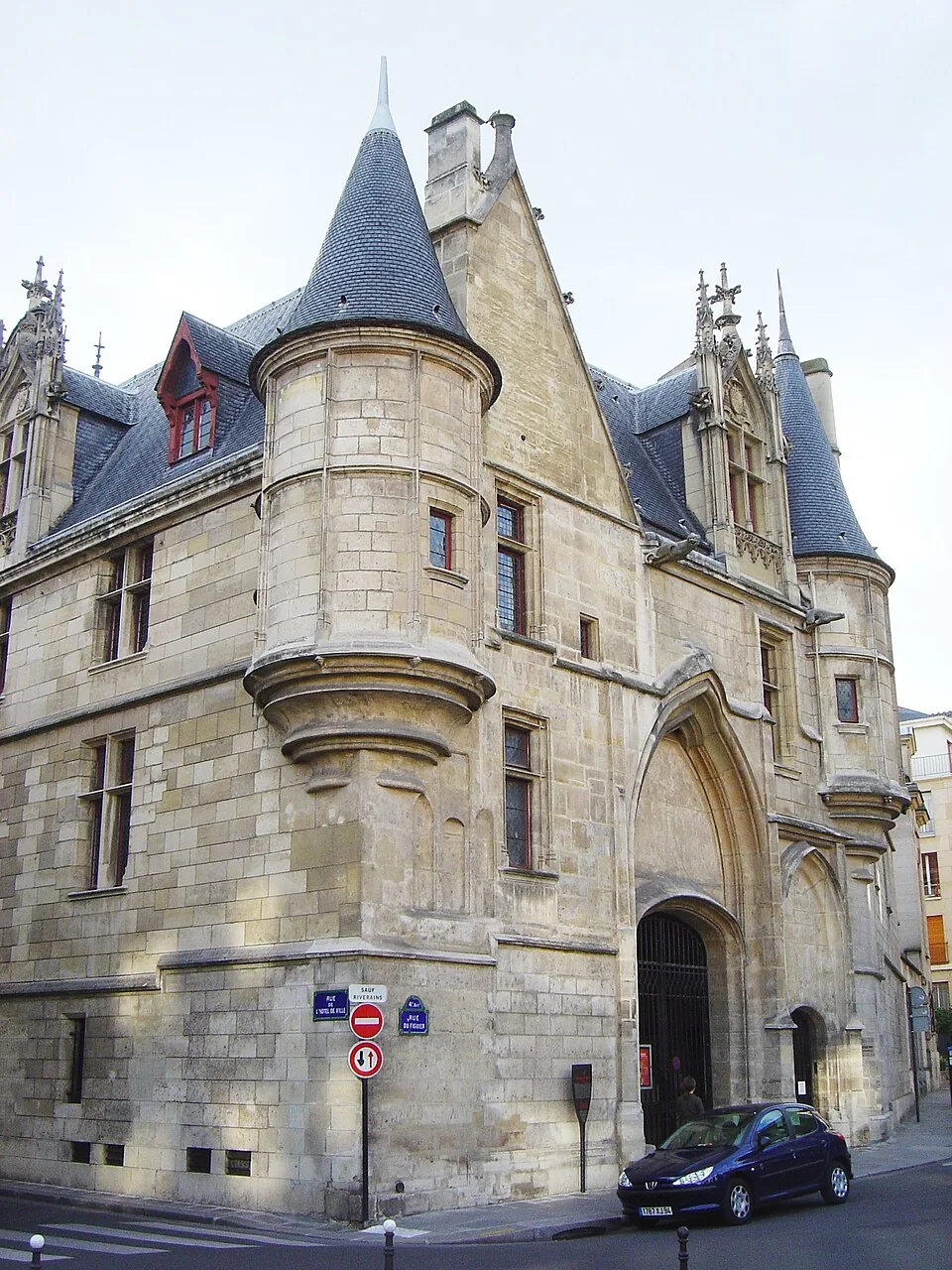
Le Marais
Le Marais is a historic district where medieval street patterns meet aristocratic hôtels particuliers and later cultural institutions. Its survival owes much to preservation policies that began in the 1960s after long periods of neglect.