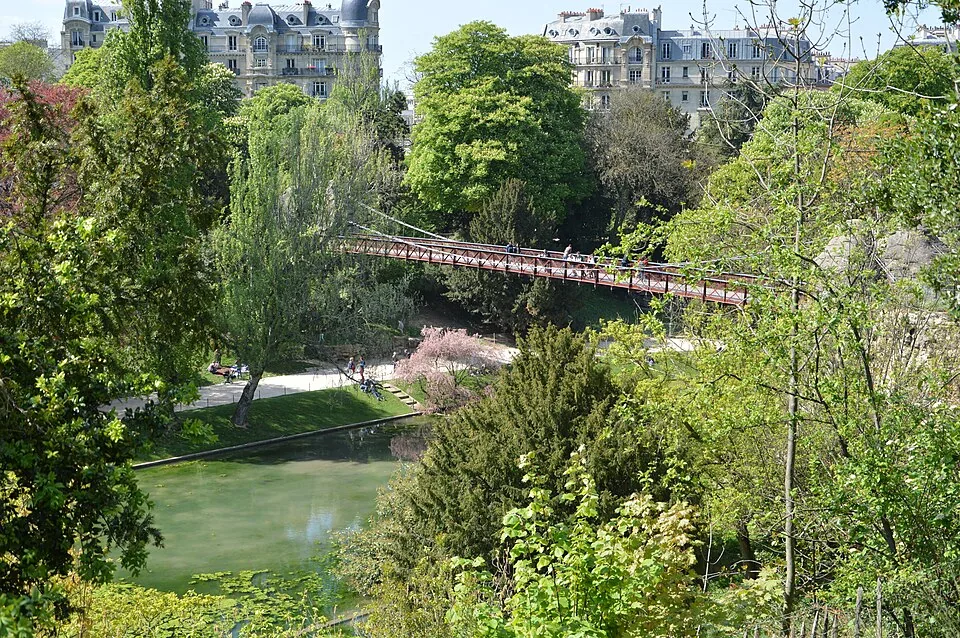
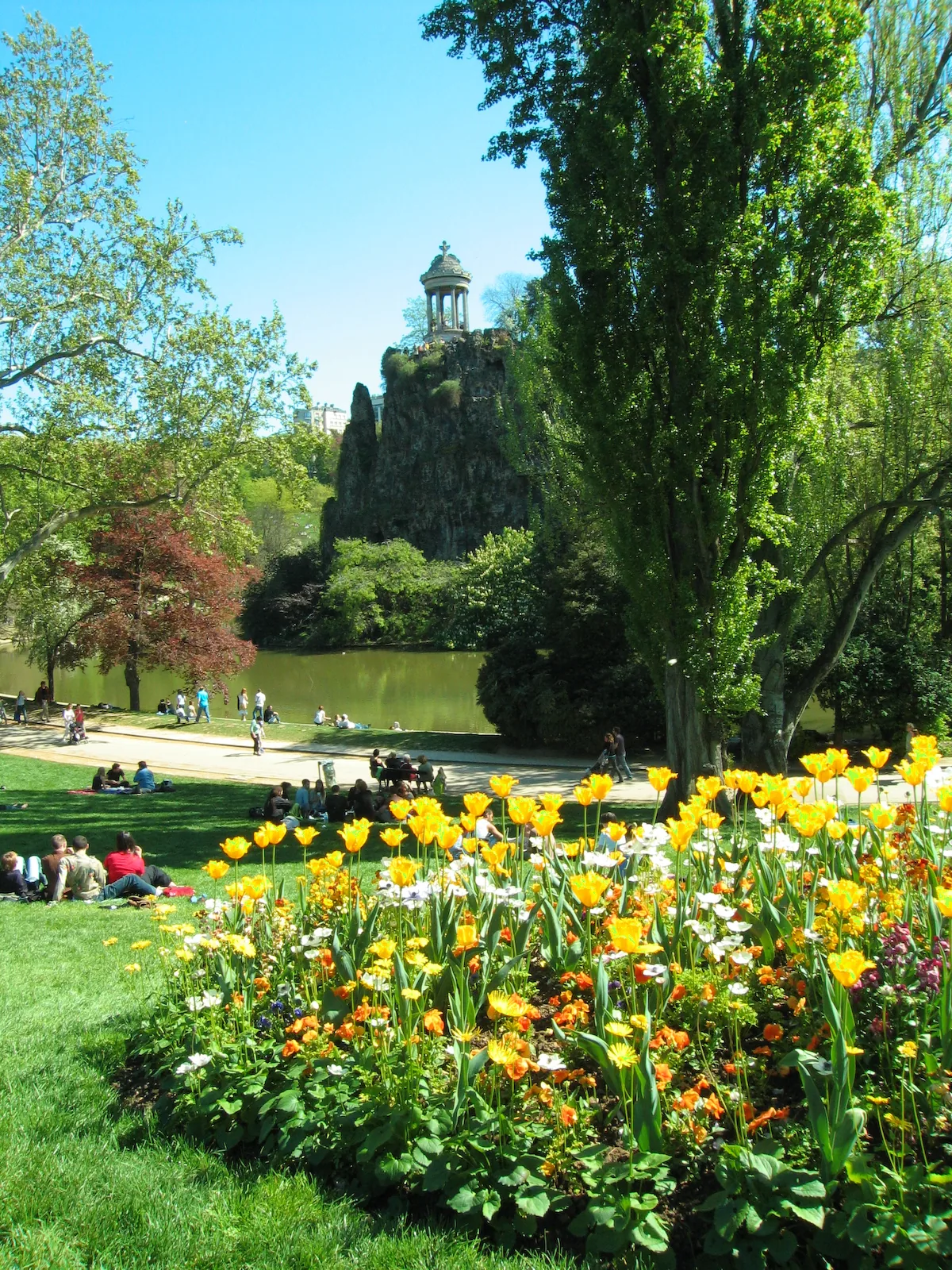
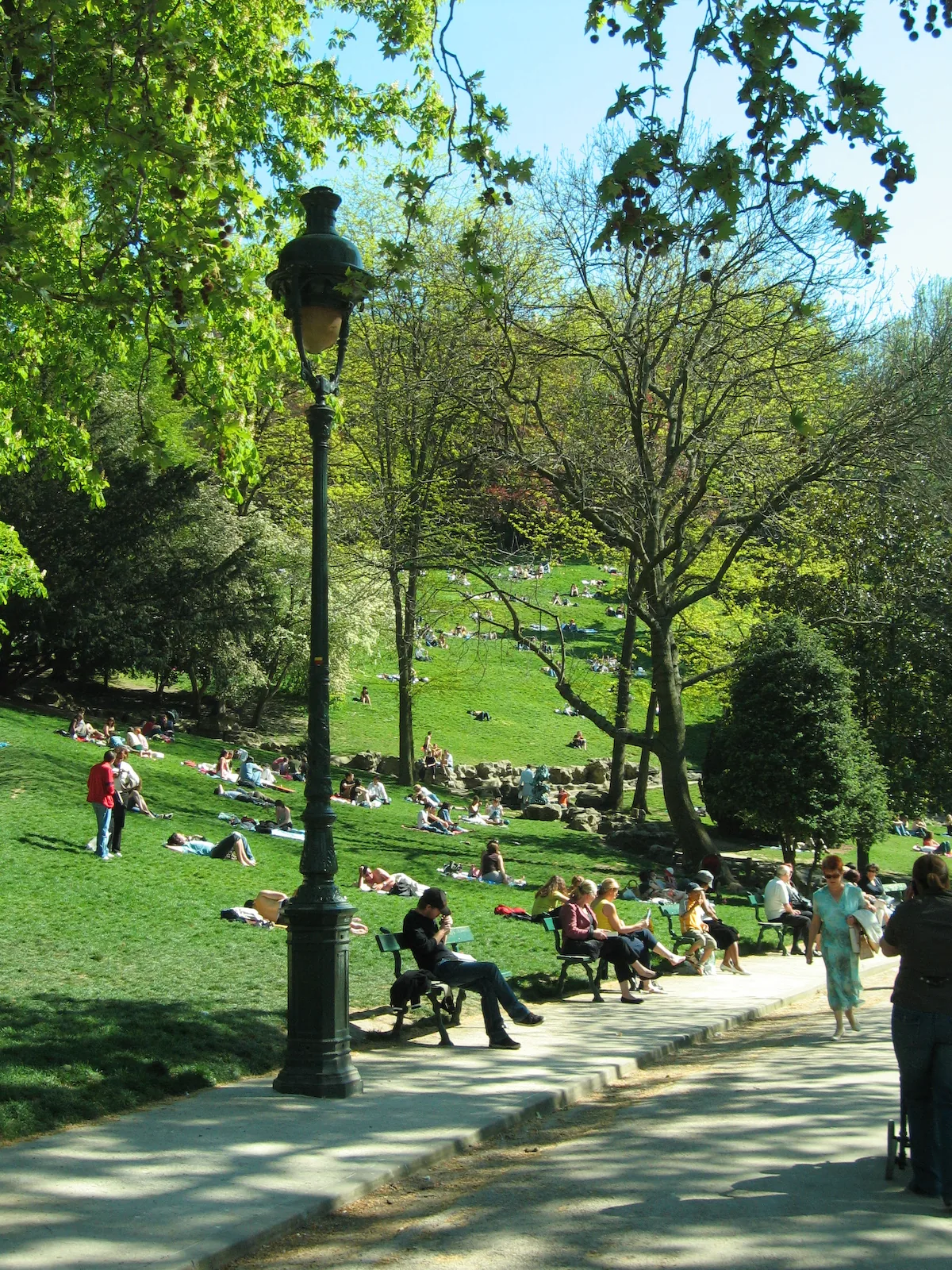
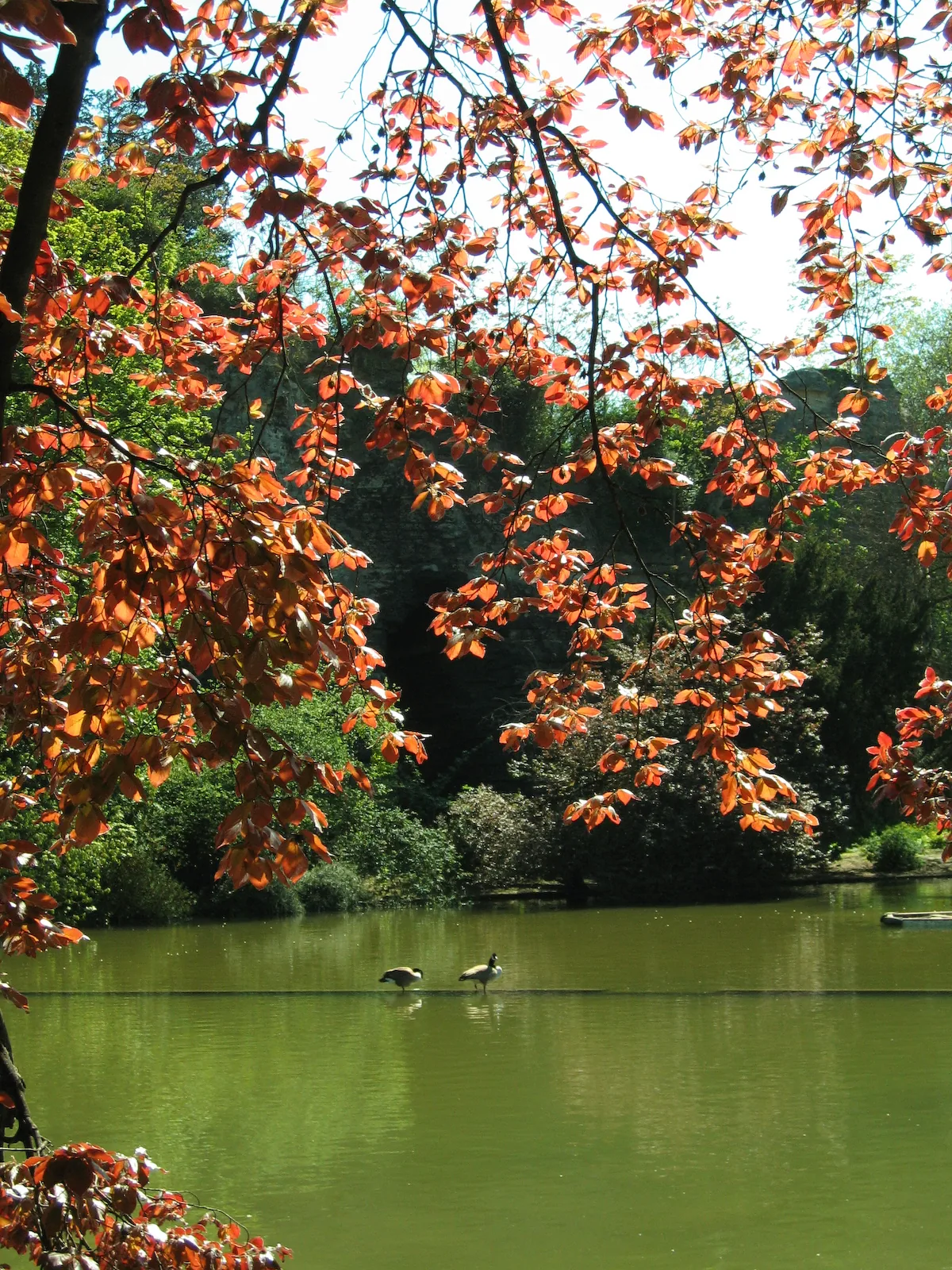
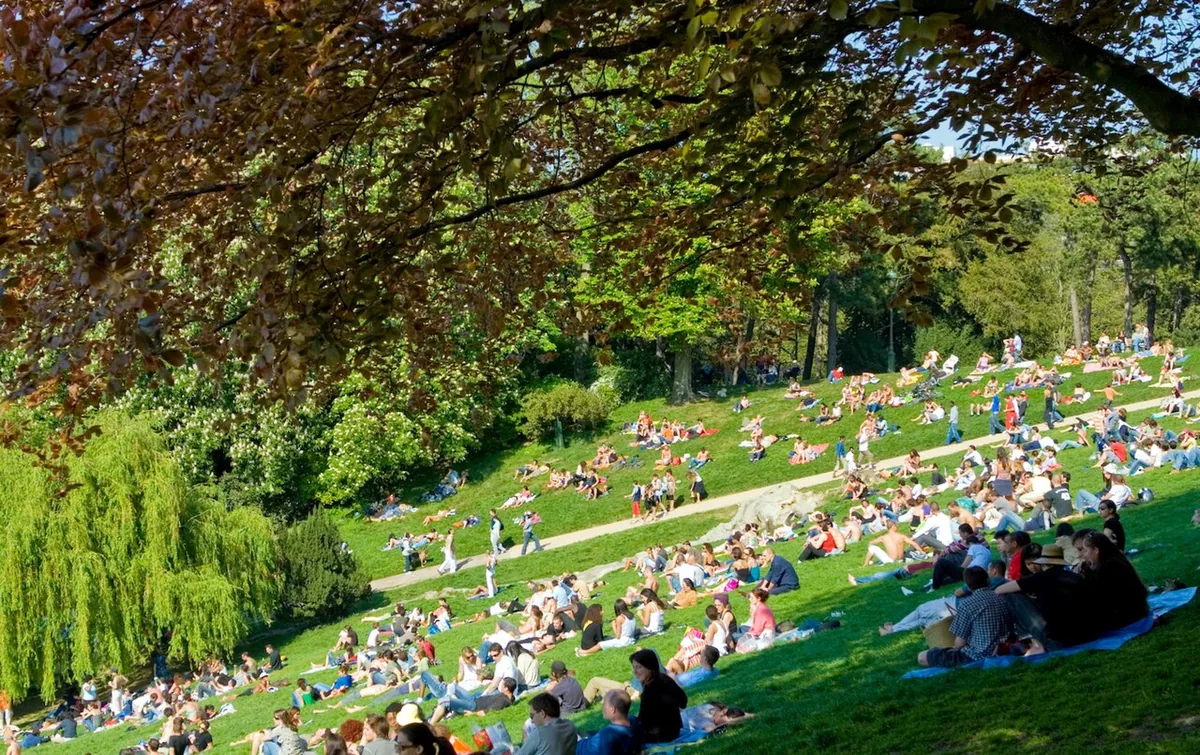
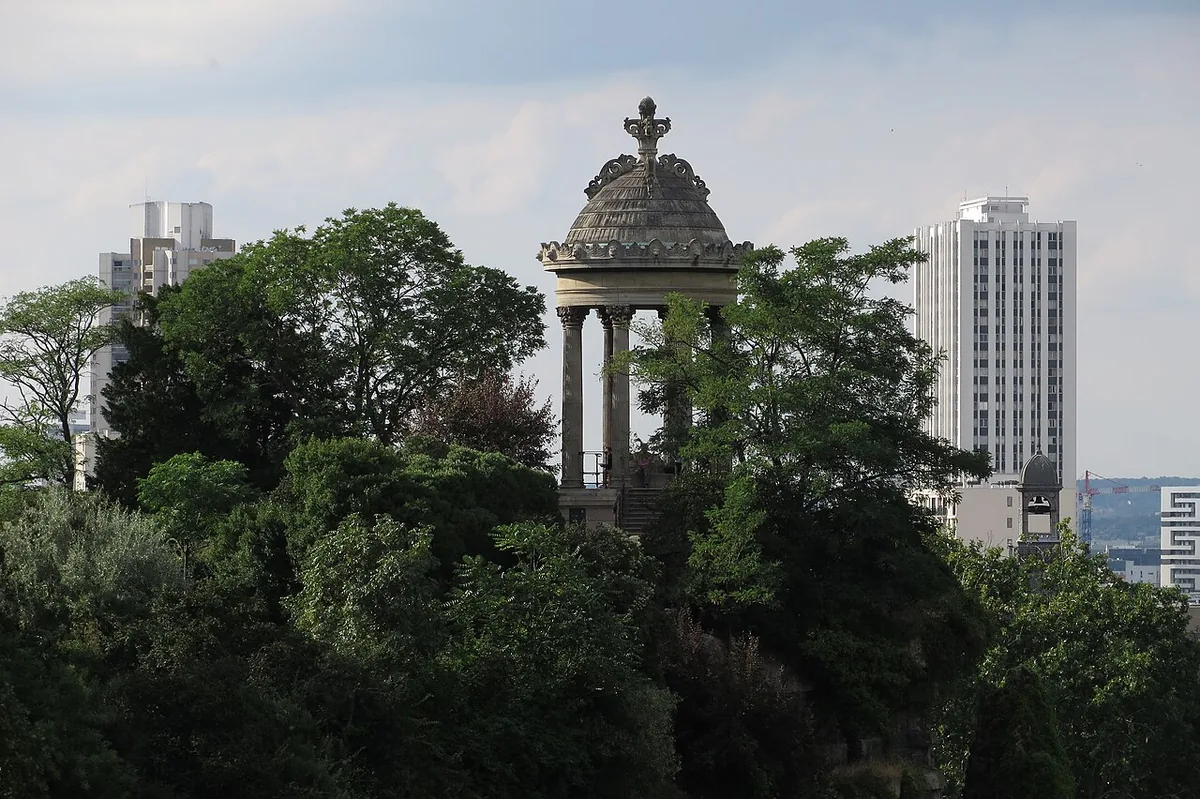
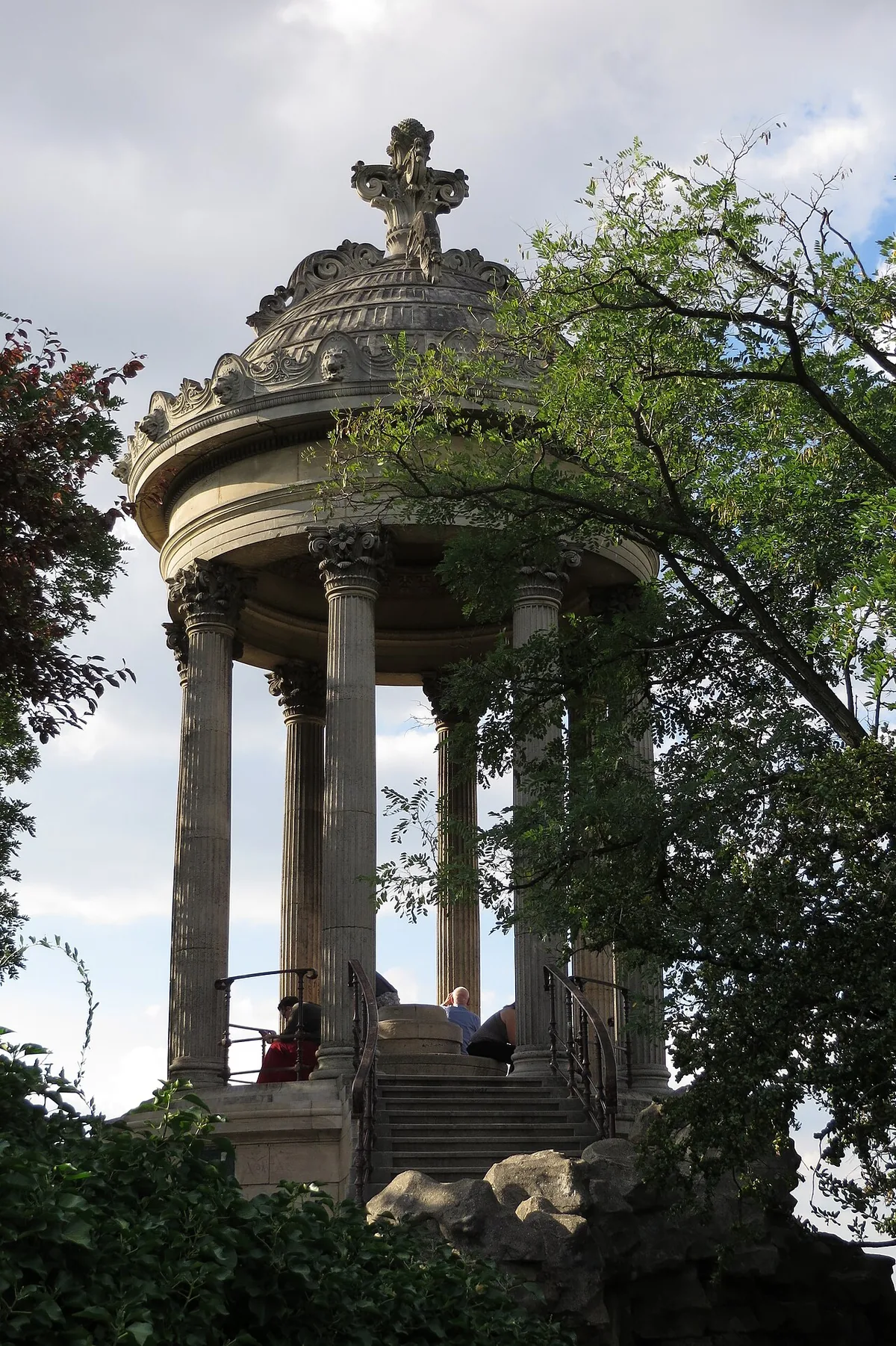
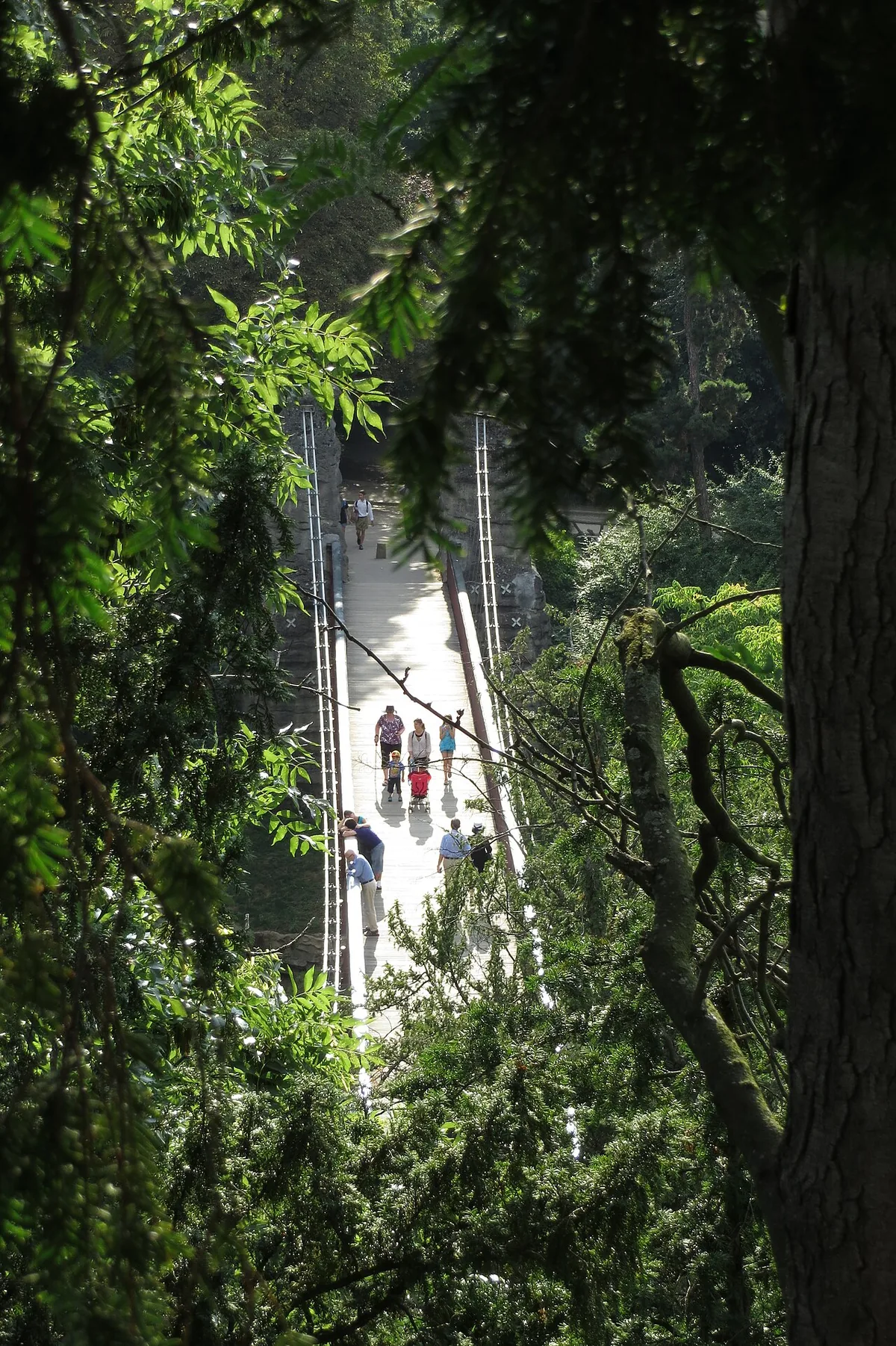
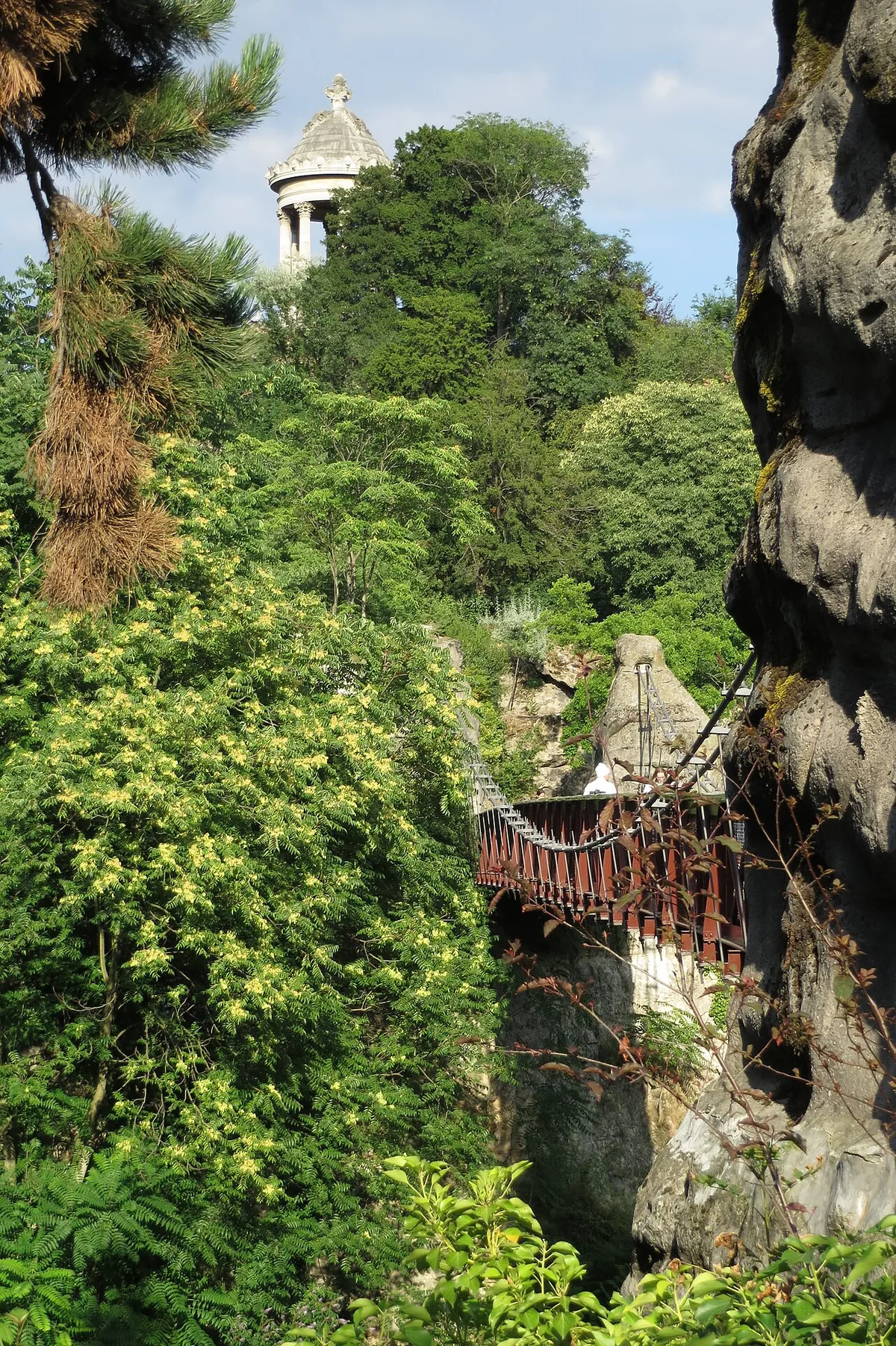
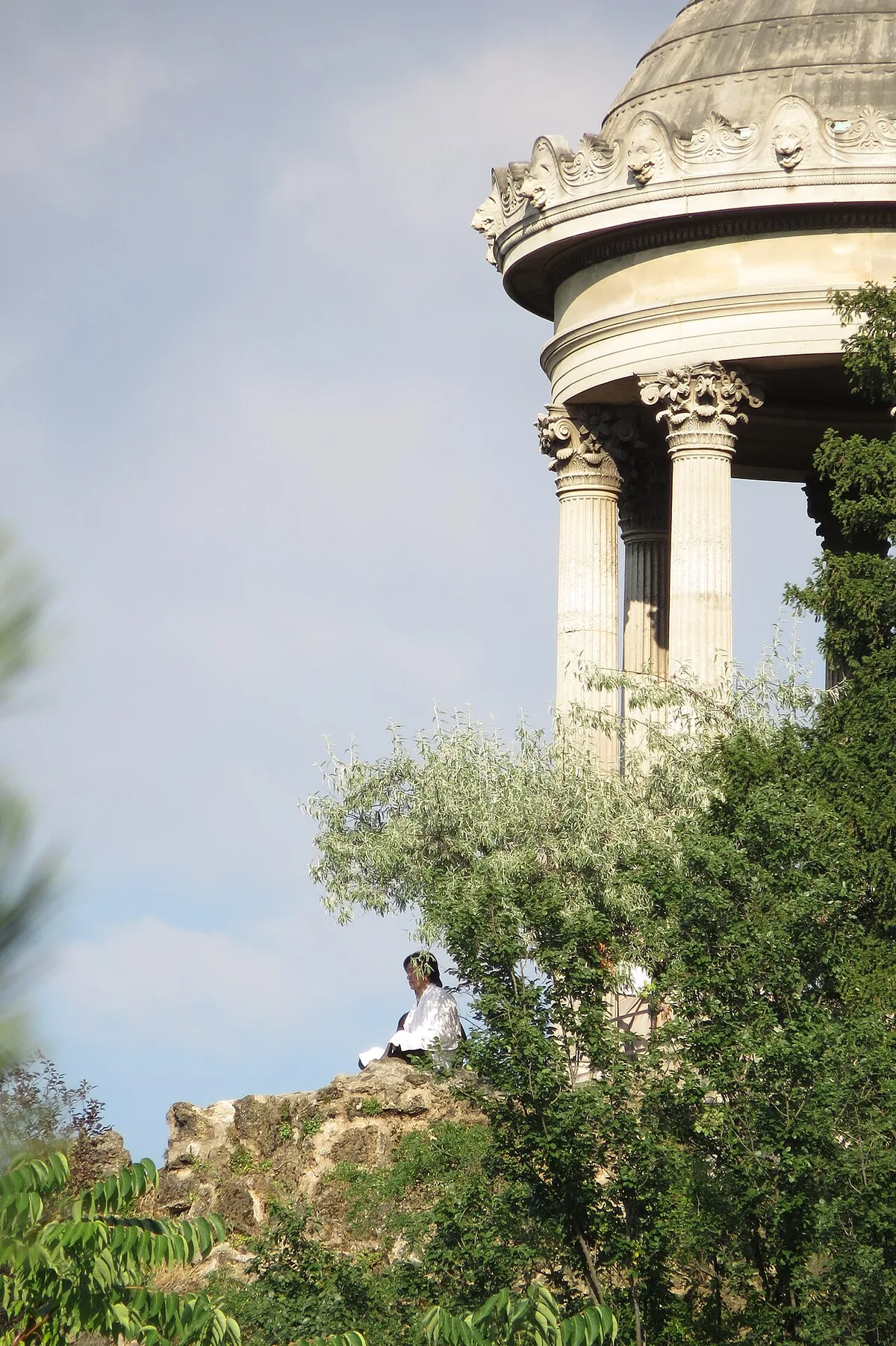
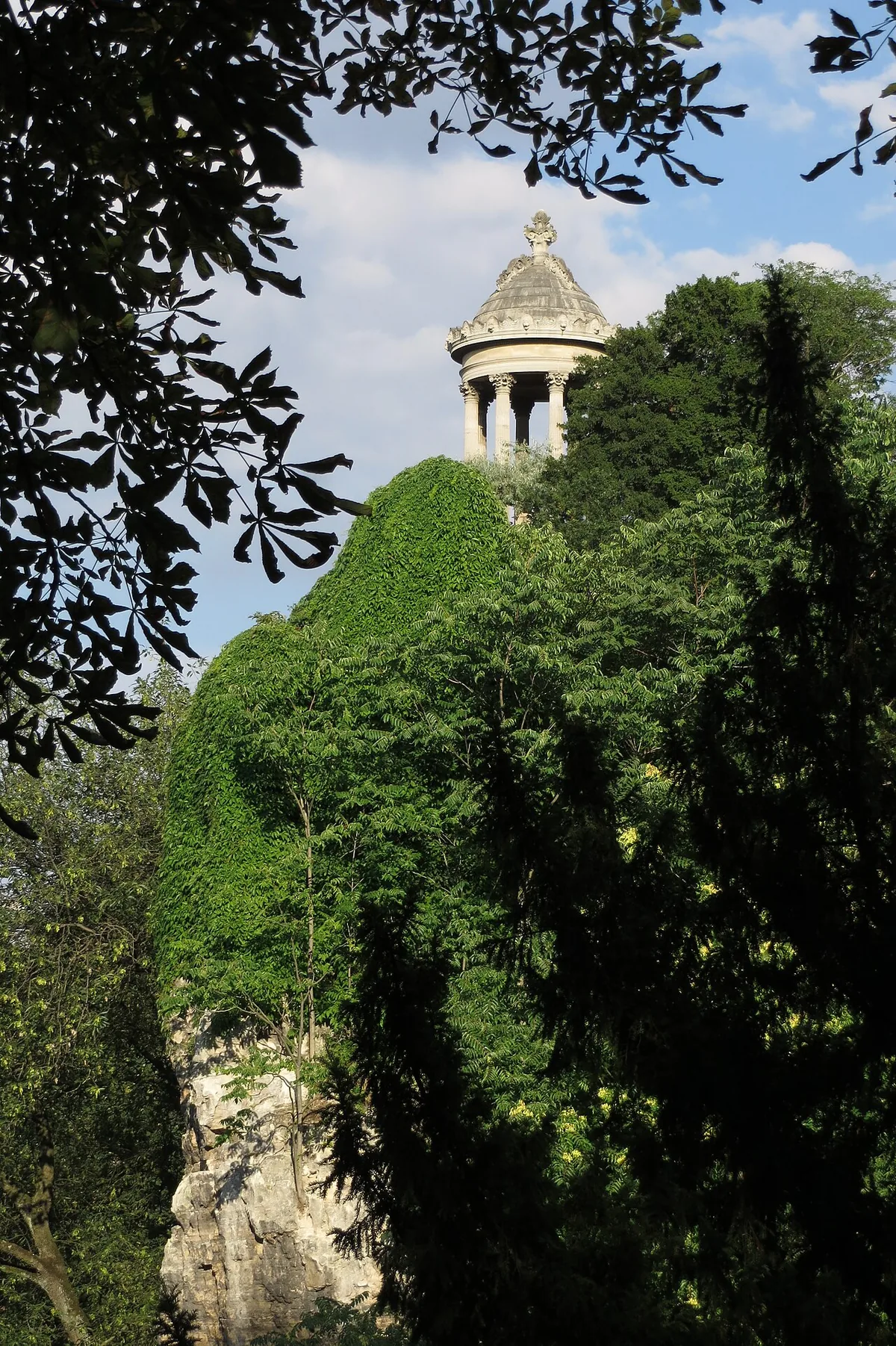
Steep paths, a lake, and a temple perched on a rocky island give Buttes-Chaumont the feel of a countryside landscape inside Paris. That scenery was engineered on the site of a gypsum quarry, making the park’s natural-looking forms a feat of urban design.
Quick facts
The park was inaugurated on 1 April 1867 for the Paris Universal Exposition, on the site of former gypsum and millstone quarries.
The City of Paris restoration dossier says the quarries employed up to 800 workers before the gypsum resource was exhausted around 1860.
As of 6 November 2026, the City of Paris lists the park’s central area, including the island and Temple de la Sibylle, as closed during renovation work.
Get directions to Parc des Buttes-Chaumont. Confirm the visitor entrance and current access with the venue before travelling.
Audio guide
Listen to this place’s guide.
Guide
Parc des Buttes-Chaumont, in Paris’s 19th arrondissement, asks you to read a landscape twice: first as a dramatic natural scene, then as a feat of engineering. Its cliffs, grotto, lake and steep paths were composed on ground already hollowed by extraction. The park opened to the public on 1 April 1867, during the Paris Universal Exposition, on the site of former gypsum and millstone quarries.
Continue exploring
Discover the full story
Keep reading with a travel pass and explore every full guide and tour.
UpgradeMore places in Paris
La Villette
La Villette turns a former slaughterhouse and livestock-market district into a broad cultural landscape. The surviving Grande Halle and Bernard Tschumi’s red folies make the park’s transformation visible: industrial infrastructure became a framework for public gathering and discovery.
Canal Saint-Martin
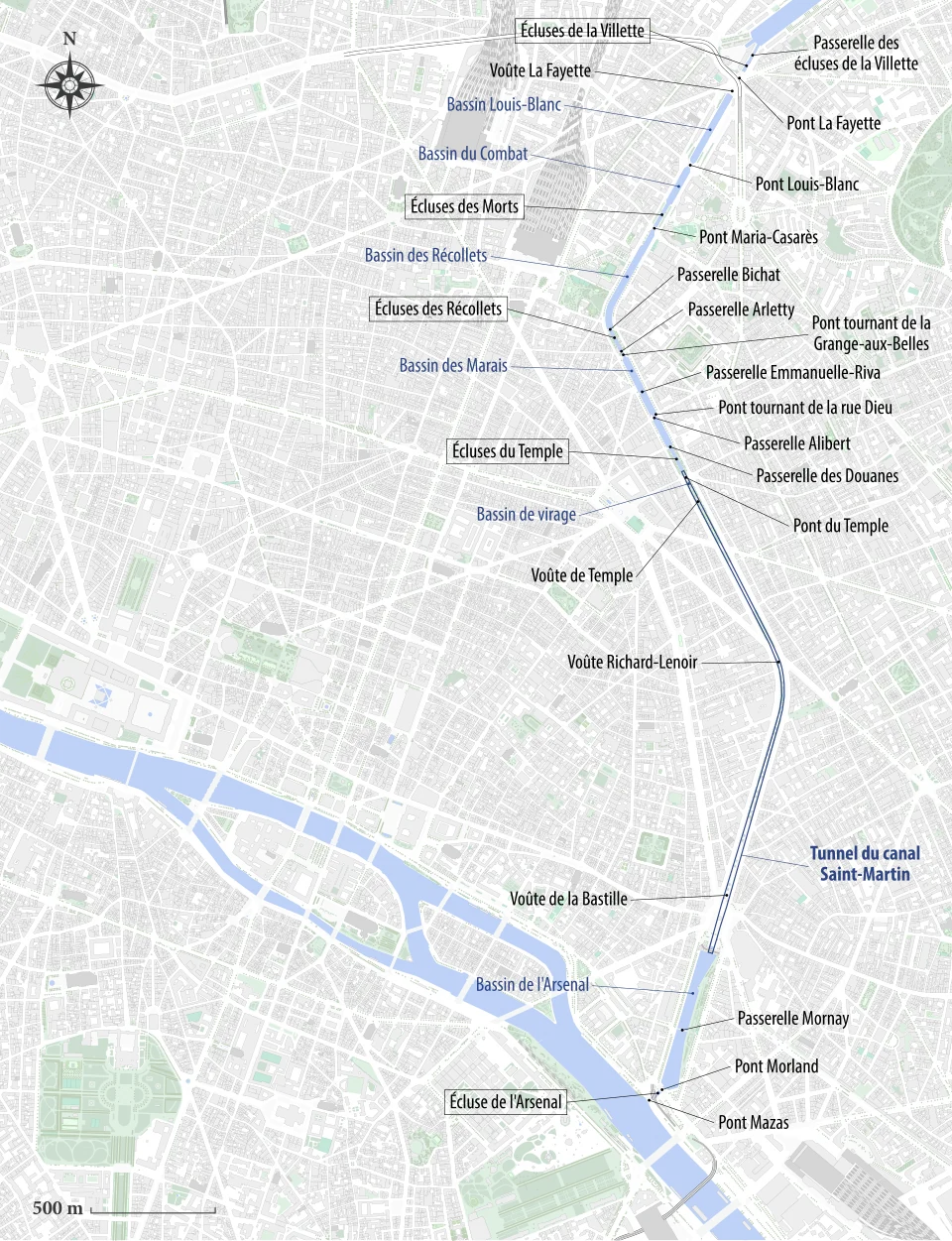
An urban waterway of nine locks, iron footbridges and hidden vaults, Canal Saint-Martin links the Bassin de la Villette with the Seine. Built for water supply and freight, it became a neighborhood promenade after an expressway plan was abandoned in 1971.
Père Lachaise Cemetery
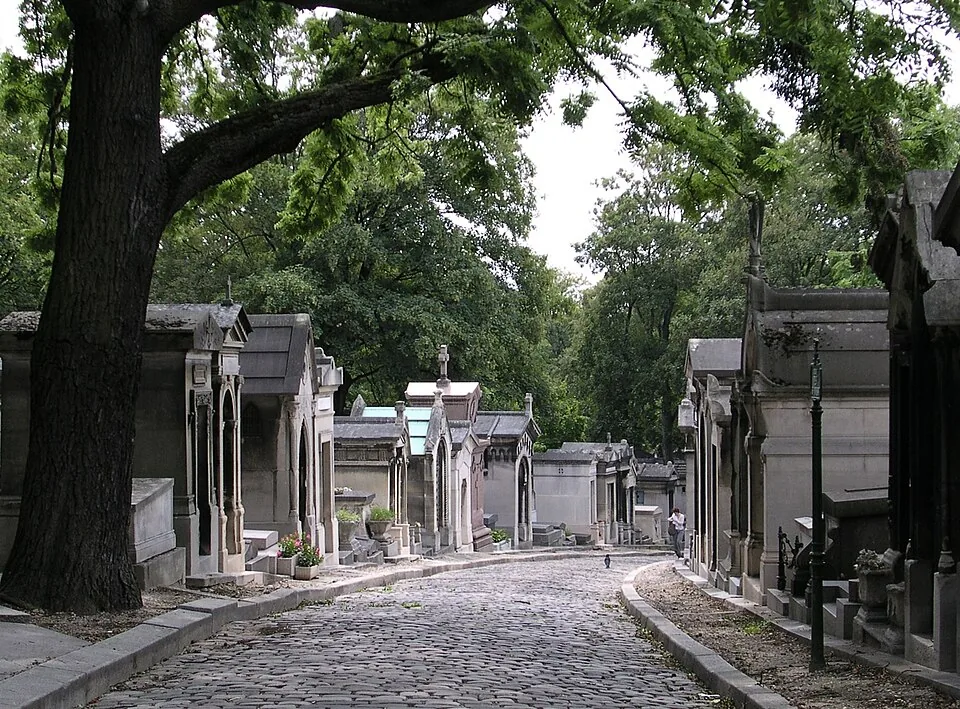
Opened in 1804 on a former Jesuit estate, Père Lachaise became a landscaped cemetery where winding paths, family tombs, and public memorials trace Parisian life and loss. It remains an active burial ground in the 20th arrondissement, so visits call for quiet and respect.
Musée des Arts et Métiers
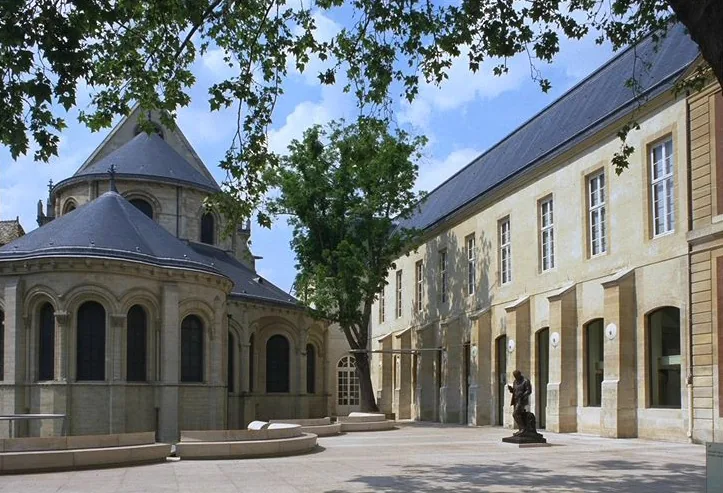
In the former priory of Saint-Martin-des-Champs, ingenious machines and scientific instruments occupy a historic religious complex. The museum grew from a Revolutionary-era mission to gather useful inventions, turning technical objects into tools for public learning.
Musée Picasso
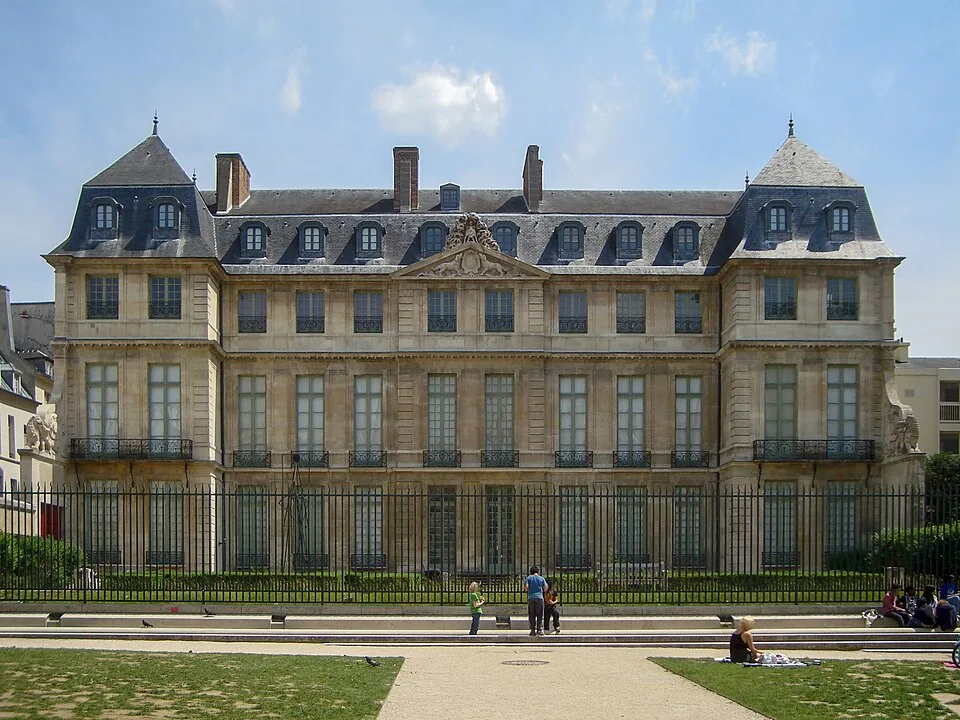
Musée Picasso occupies Hôtel Salé, a seventeenth-century mansion whose rooms now hold an unusually broad record of Picasso’s work and creative process. The museum’s collection came together through donations and state acquisitions after the artist’s death.
Musée de la Chasse et de la Nature
In two restored Marais townhouses, the Musée de la Chasse et de la Nature sets historic hunting art beside taxidermy, curious objects and contemporary installations. Its intimate rooms turn a collection into an ongoing question about how people represent, use and live alongside animals.