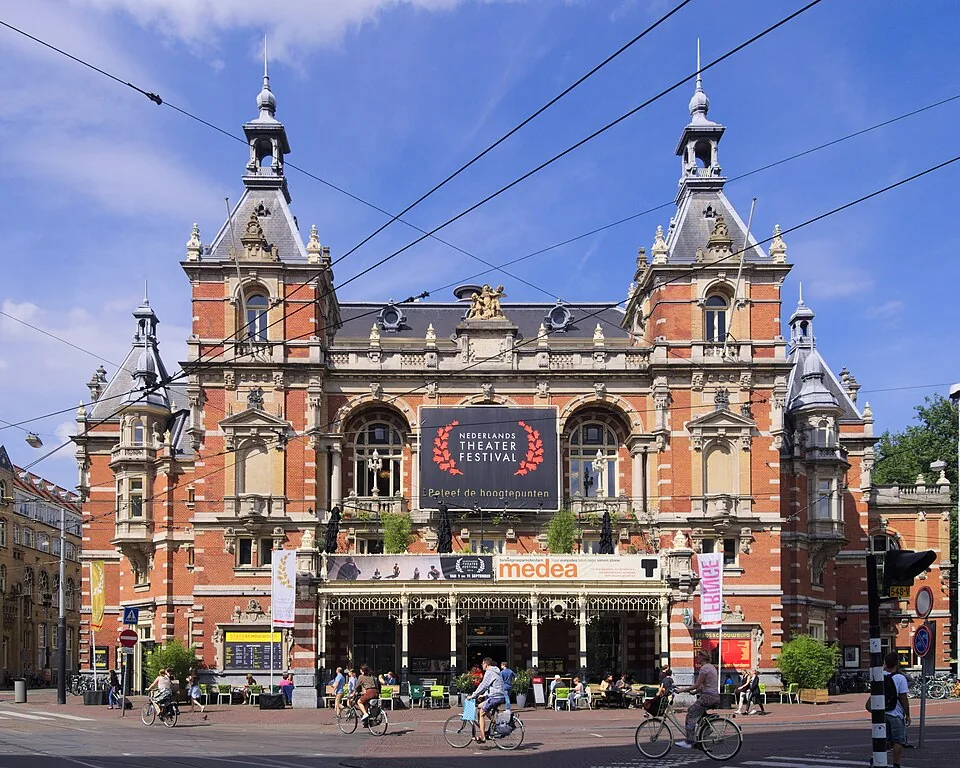
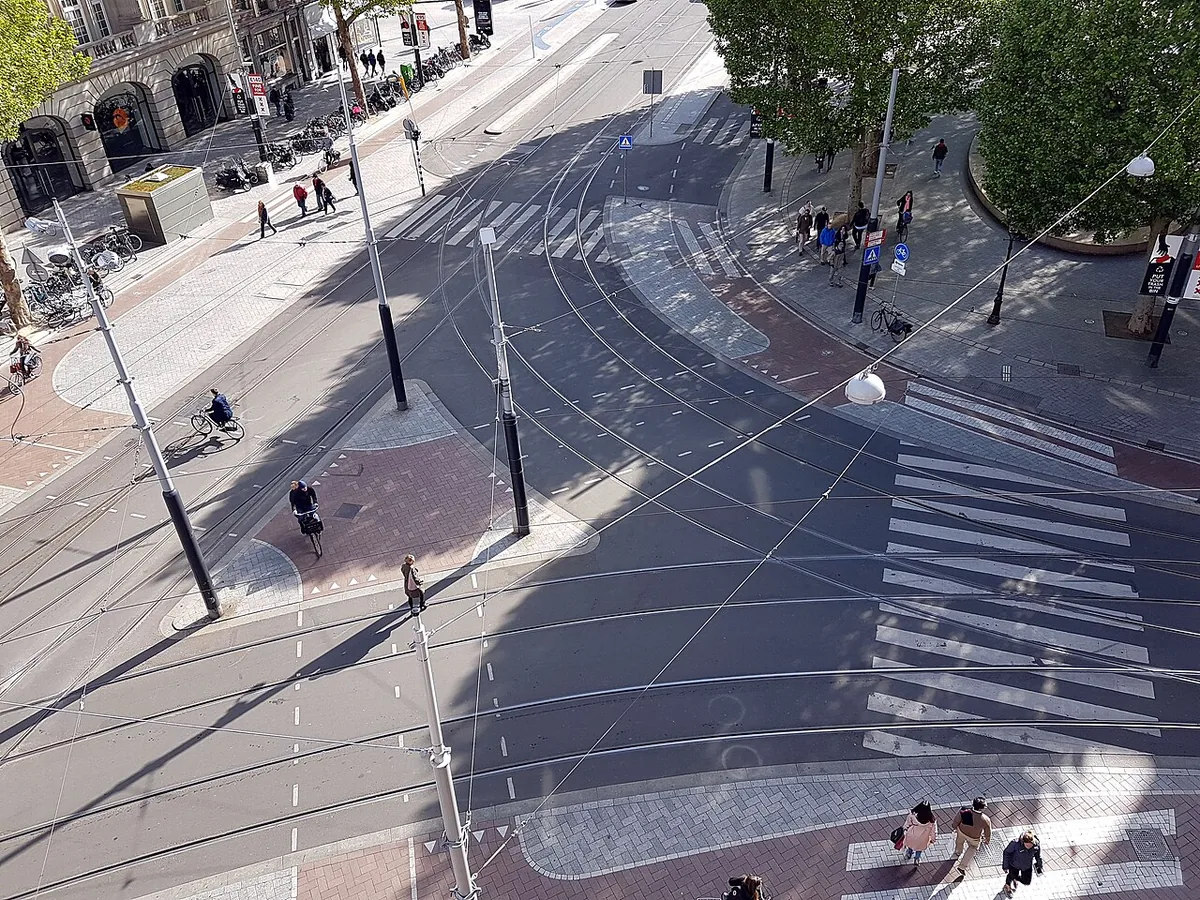
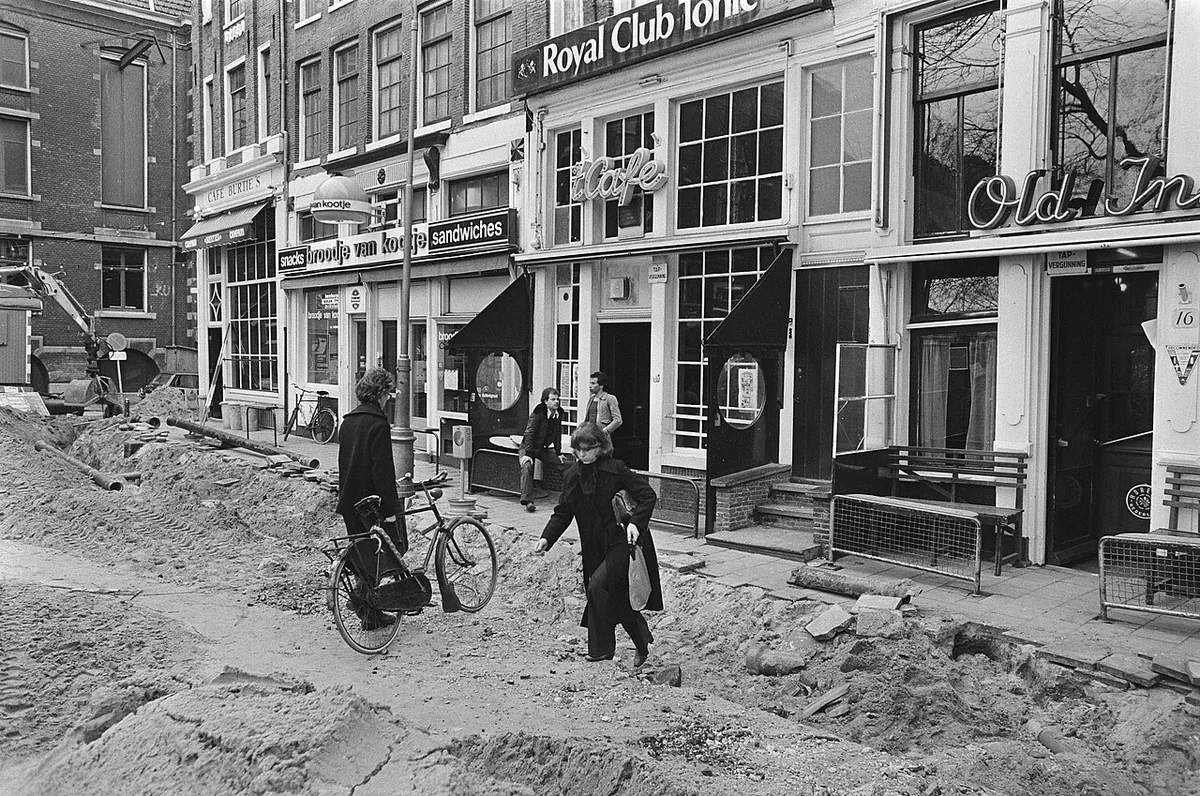
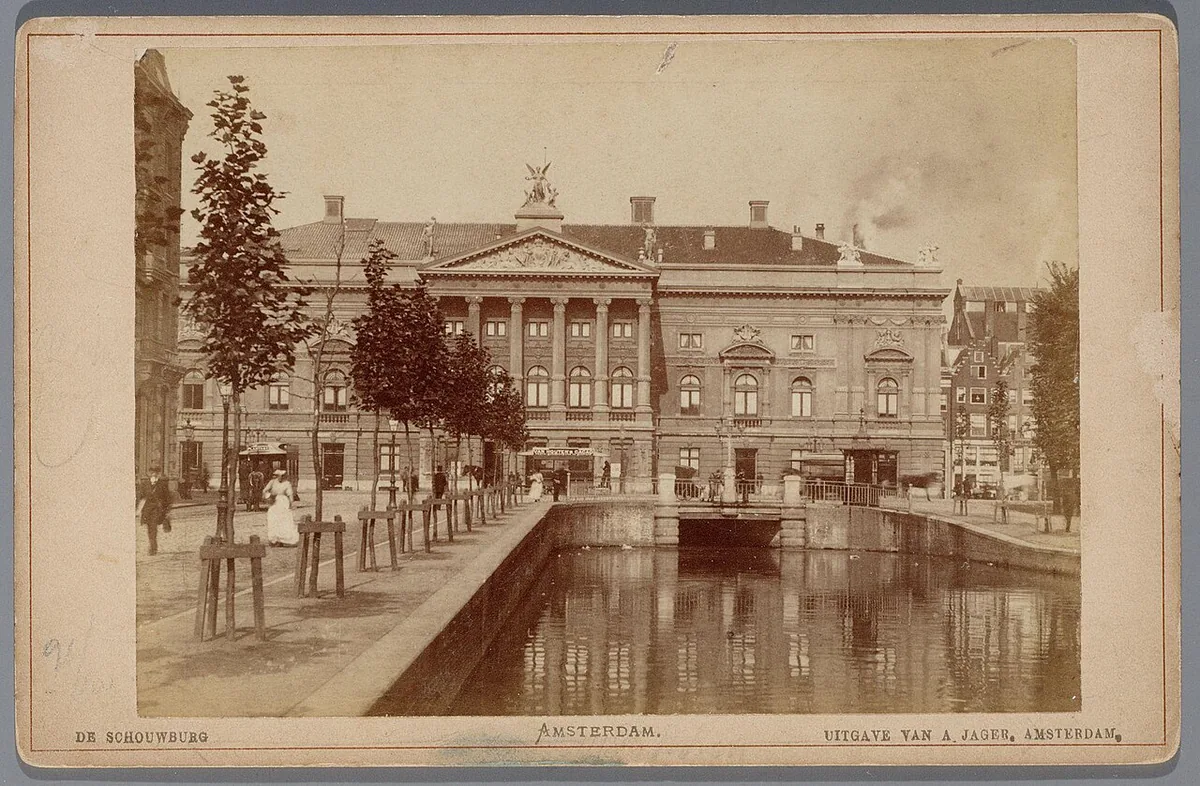
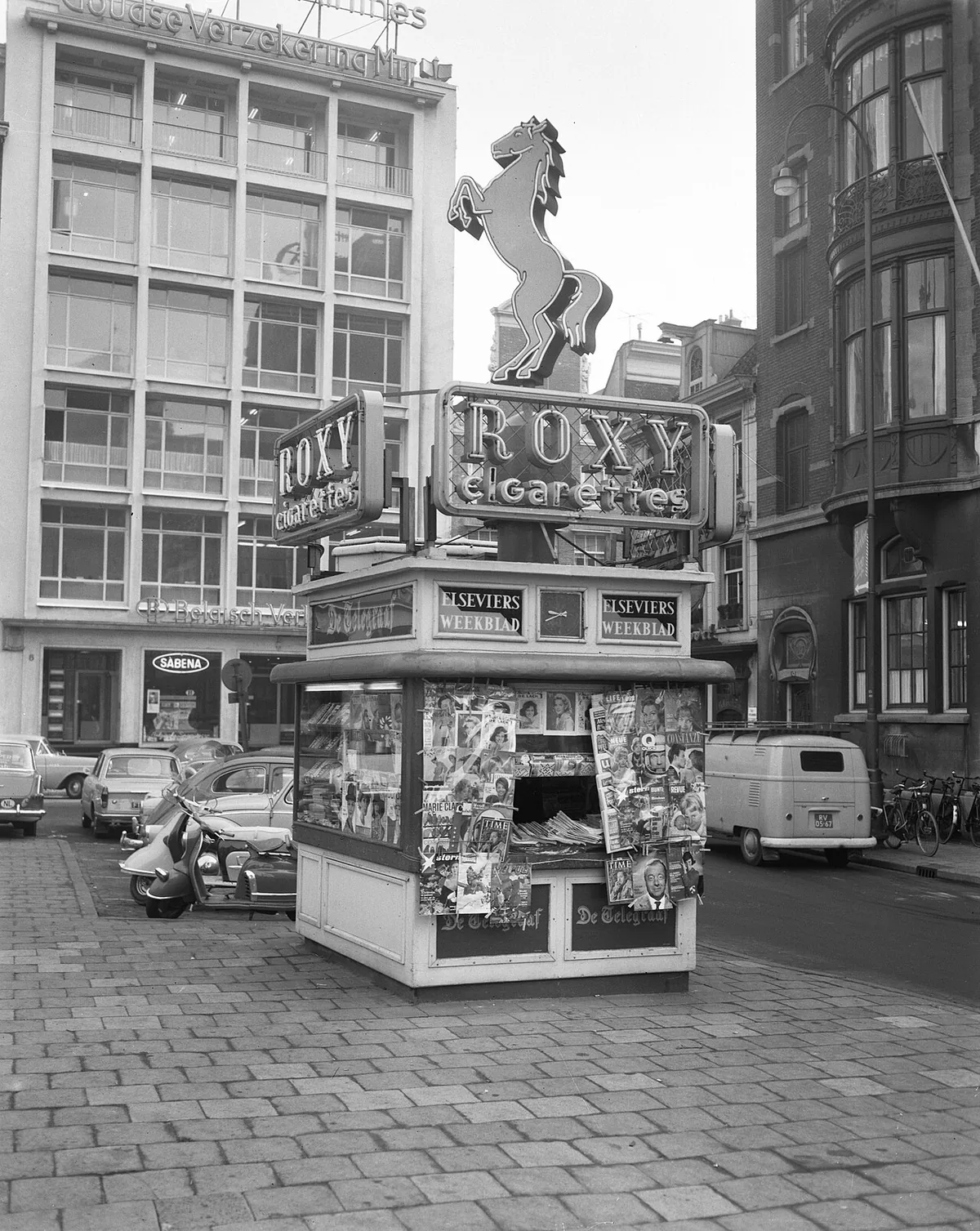
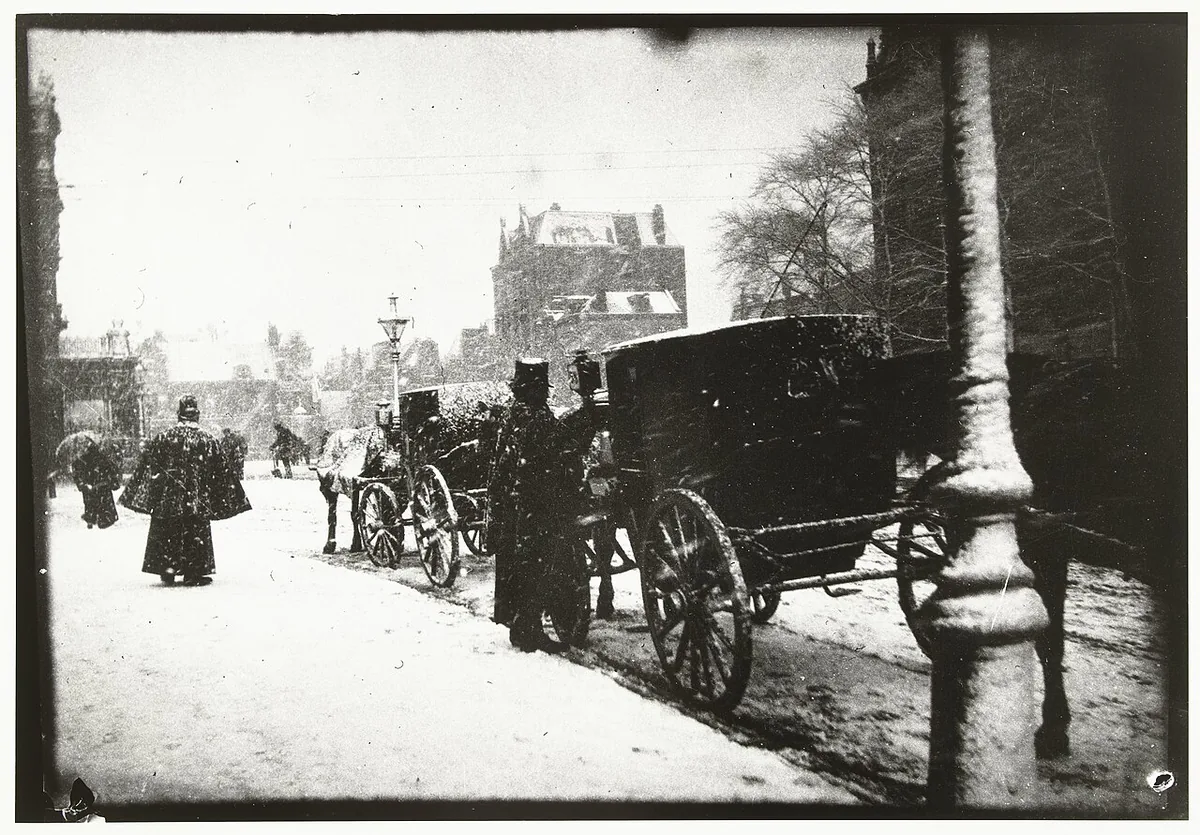
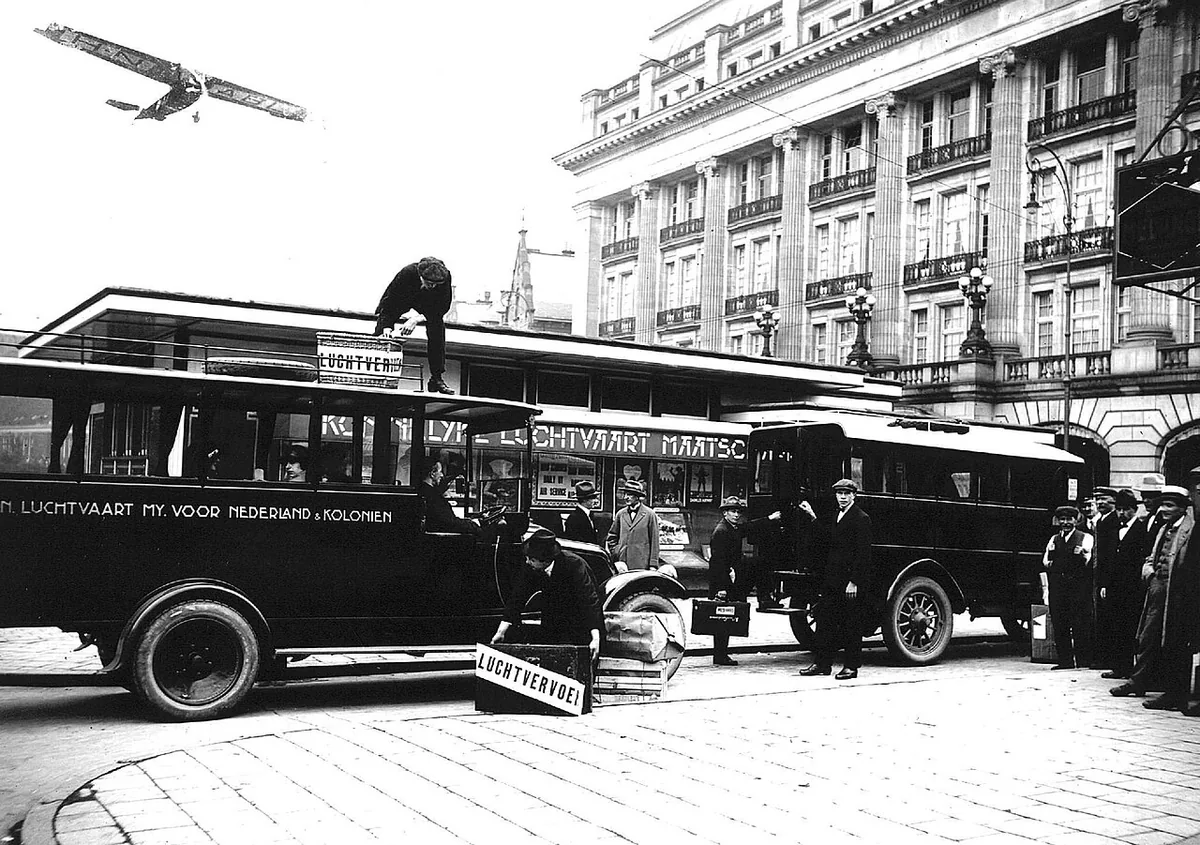
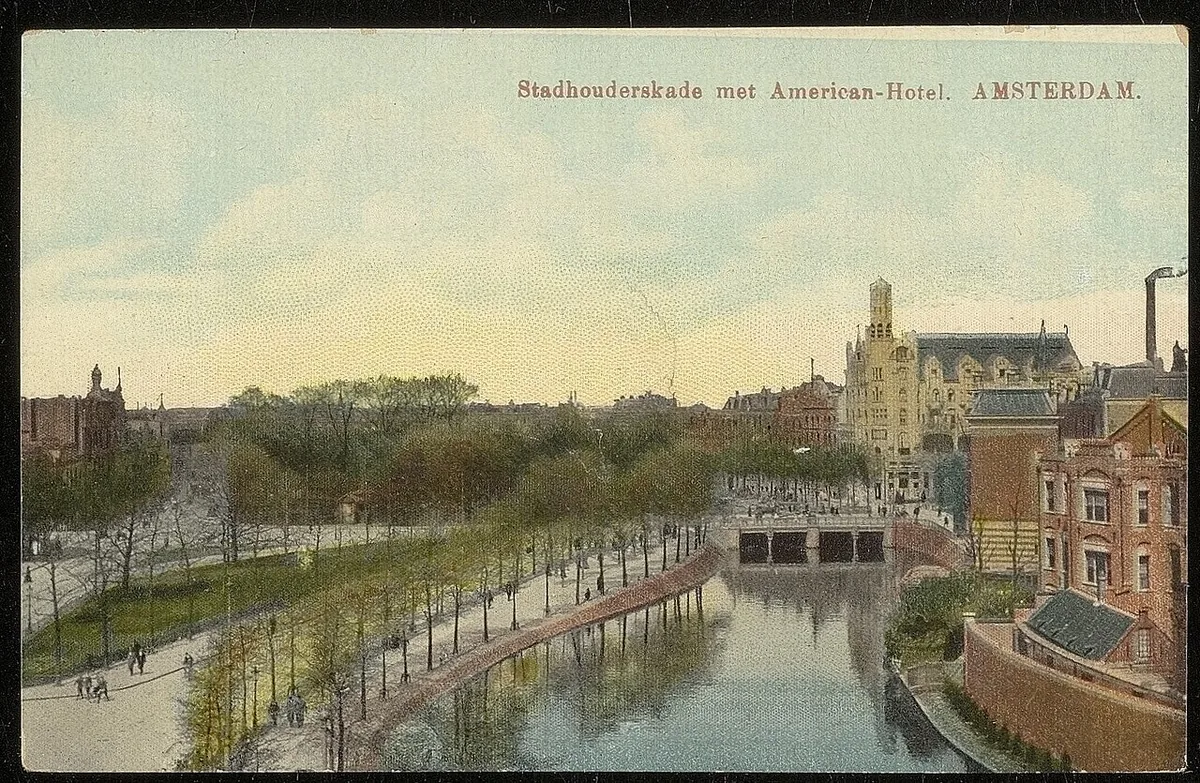
Named for the former gate on the road to Leiden, Leidseplein grew from a wagon and carriage forecourt into a transport and entertainment hub. Its theatre, tram stop, hidden canal and redesigned Kleine-Gartmanplantsoen show how the square keeps adapting.
Quick facts
The Leidsepoort, built in 1664 by city master builder Daniël Stalpaert, stood near today’s Hirsch building and American Hotel; the gate was later demolished, but its name remains in Leidseplein.
A wooden city theatre opened on Leidseplein in 1774; after it burned in 1890, the present stone Stadsschouwburg opened in 1894.
The Lijnbaansgracht still runs underground beneath Leidseplein and continues in a culvert below the Stadsschouwburg toward the Melkweg.
Get directions to Leidseplein. Confirm the visitor entrance and current access with the venue before travelling.
Audio guide
Listen to this place’s guide.
Guide
Leidseplein is a public square in Amsterdam, in the municipality’s Centrum district. Its name means “Leiden Square”: the Leidsepoort, the city gate at the beginning of the road toward Leiden, once stood at its southern edge. The assigned map pin falls on the tram platform named Leidseplein, within the square; it marks a transport node, not a monument or the whole public space. Look around and the place’s recurring role becomes clear: people arrive, pause, transfer, meet, and move on.
Continue exploring
Discover the full story
Keep reading with a travel pass and explore every full guide and tour.
UpgradeMore places in Amsterdam
Canal Ring (Grachtengordel)
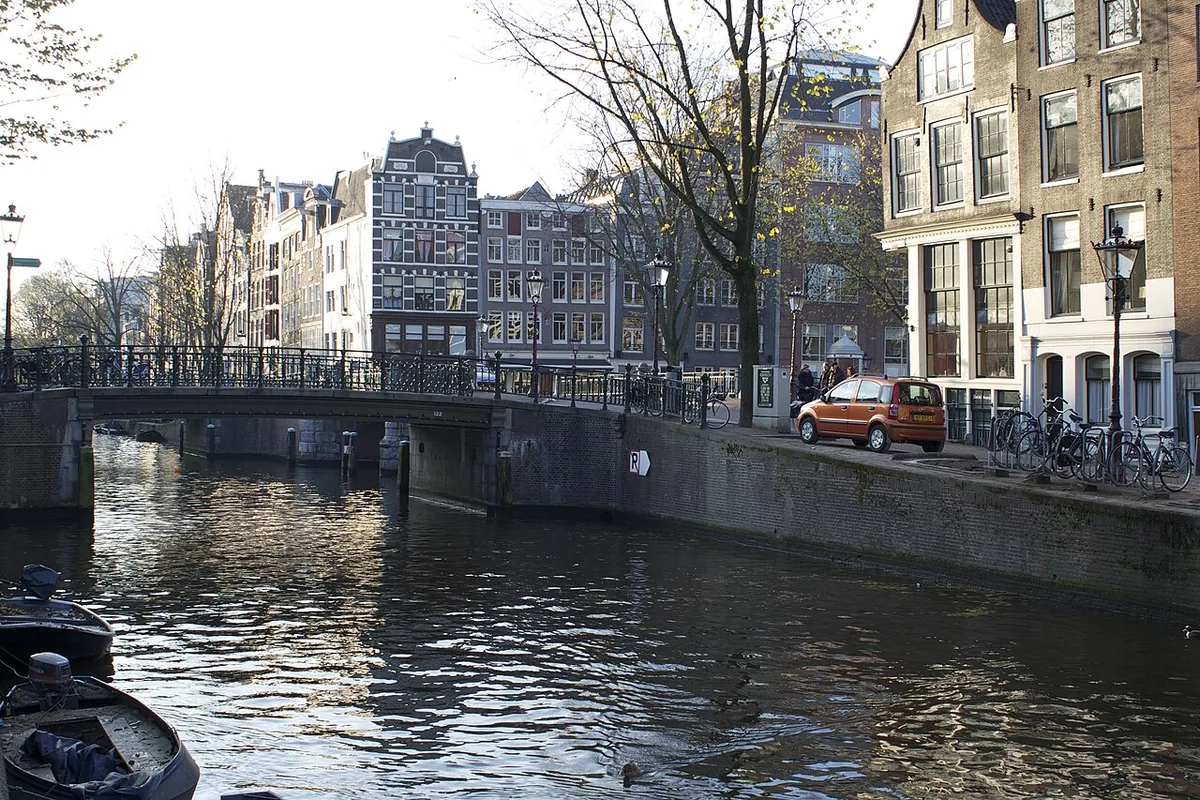
Amsterdam’s Grachtengordel is a seventeenth-century urban expansion built in stages around the older center. Read its canals, cross streets, bridges, and canal houses as one working city plan, while remembering that the UNESCO-listed area inside the Singelgracht is only a defined part of this broad
Rijksmuseum
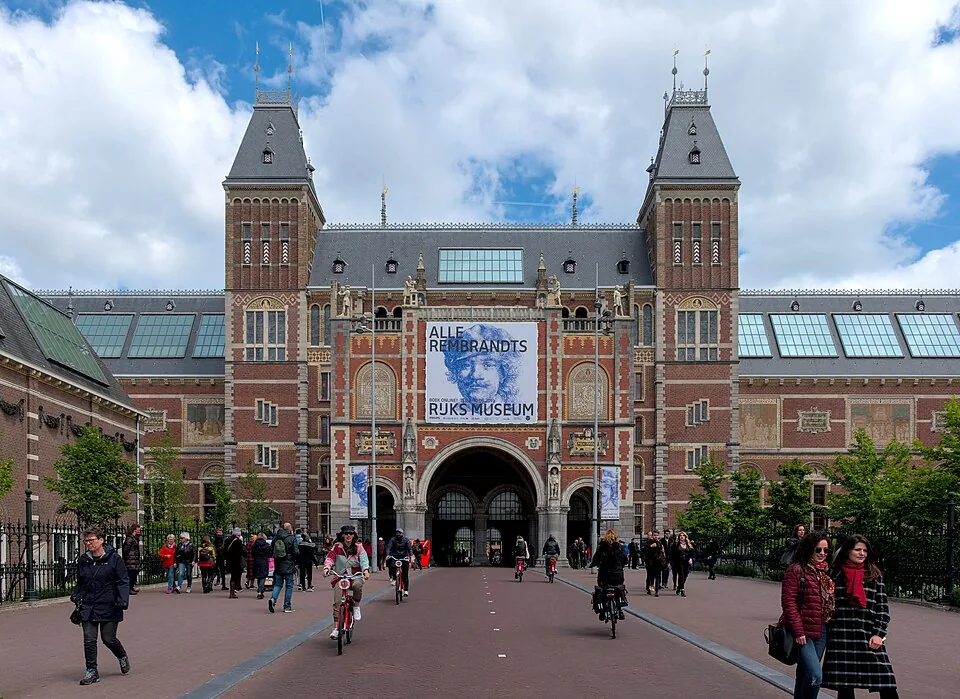
Start with the Rijksmuseum’s red-brick gateway, where towers, arches, and carved details make the building itself part of the collection. Inside, the Gallery of Honour draws your eye toward Rembrandt’s immense Night Watch, while Vermeer and other Dutch masters reward a slower look.
The Cat Cabinet
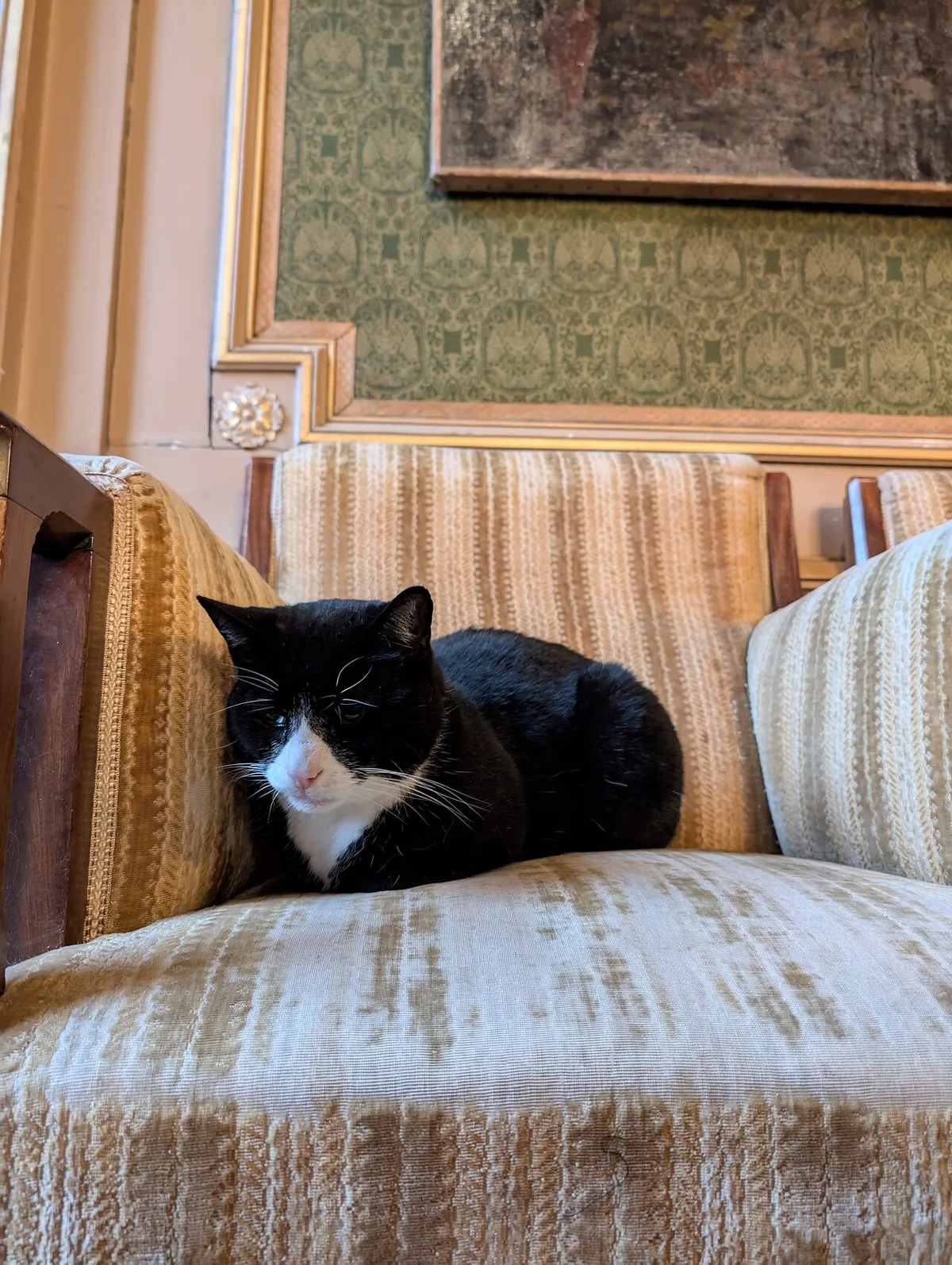
A red cat named John Pierpont Morgan inspired an Amsterdam canal-house museum devoted to cats in art. The house itself dates to the seventeenth century, so the visit links a private memorial to a playful collection spanning paintings, prints, and sculpture.

Van Gogh Museum
At the Van Gogh Museum, follow the artist’s work alongside the family story that kept it together. Compare the dark, carefully staged Potato Eaters with later experiments in color, and notice how letters, drawings and works by contemporaries turn a celebrated name into a working artist in his time.
Bloemenmarkt
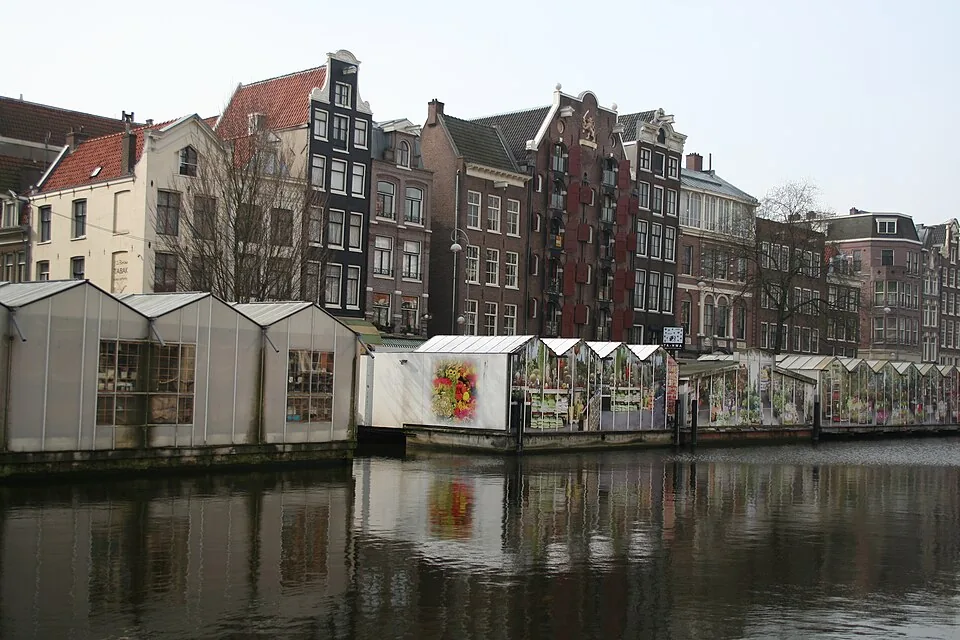
Amsterdam's Bloemenmarkt occupies floating stalls on the Singel between the Muntplein and Koningsplein. Moved here in 1862, it grew from a canal-borne trade in trees, plants and flowers. Its moorings still make the waterway part of the market's story.
De Negen Straatjes
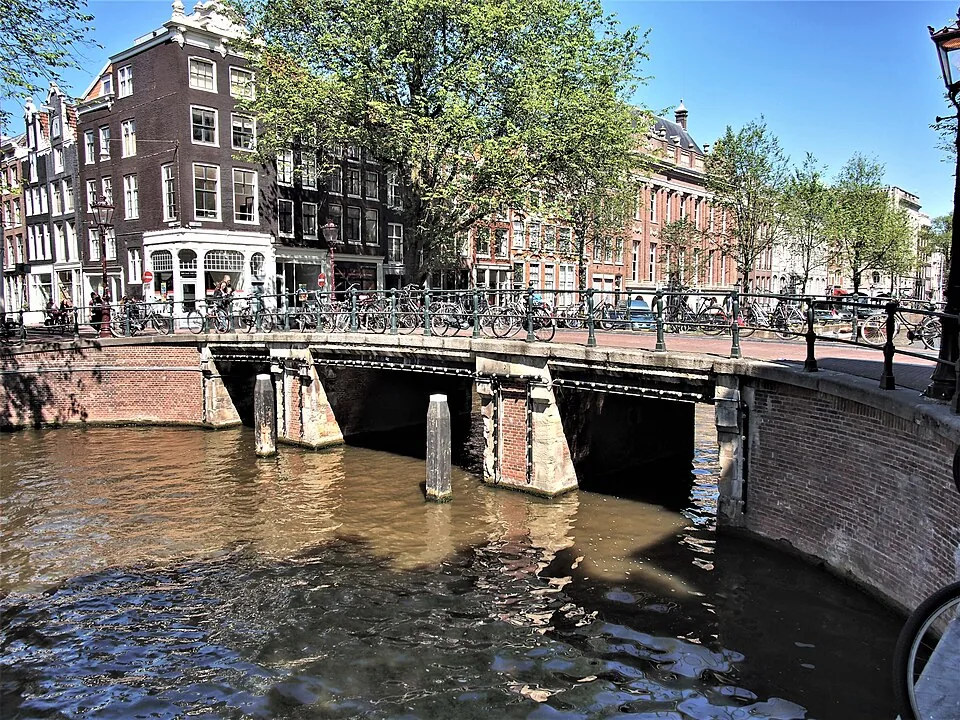
De Negen Straatjes is a named group of nine cross streets in Amsterdam’s canal belt, between the Singel, Herengracht, Keizersgracht and Prinsengracht. Their small plots once housed trades serving canal residents; today the historic street pattern frames a changing mix of shops, cafés and homes.