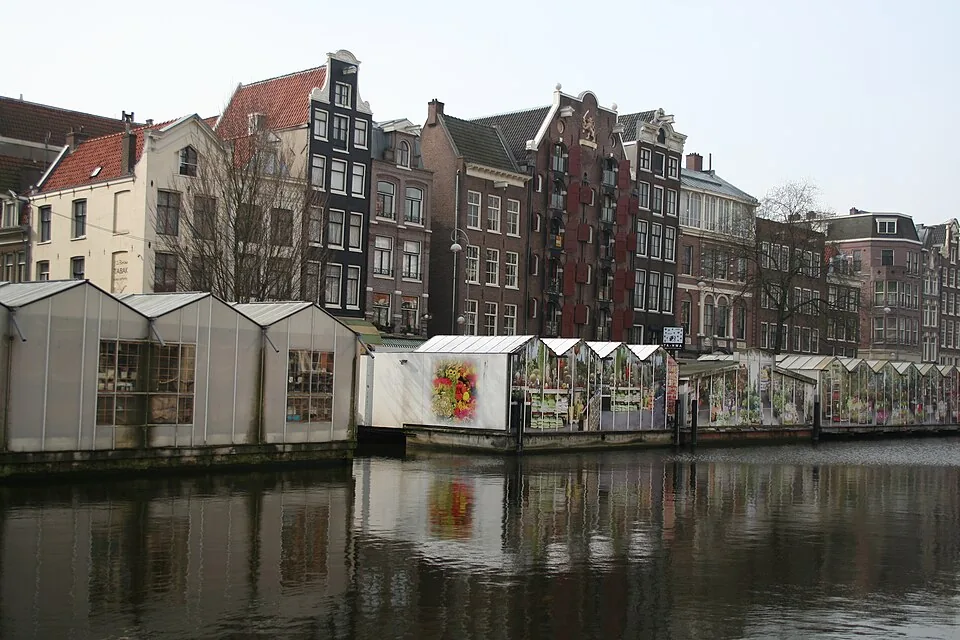
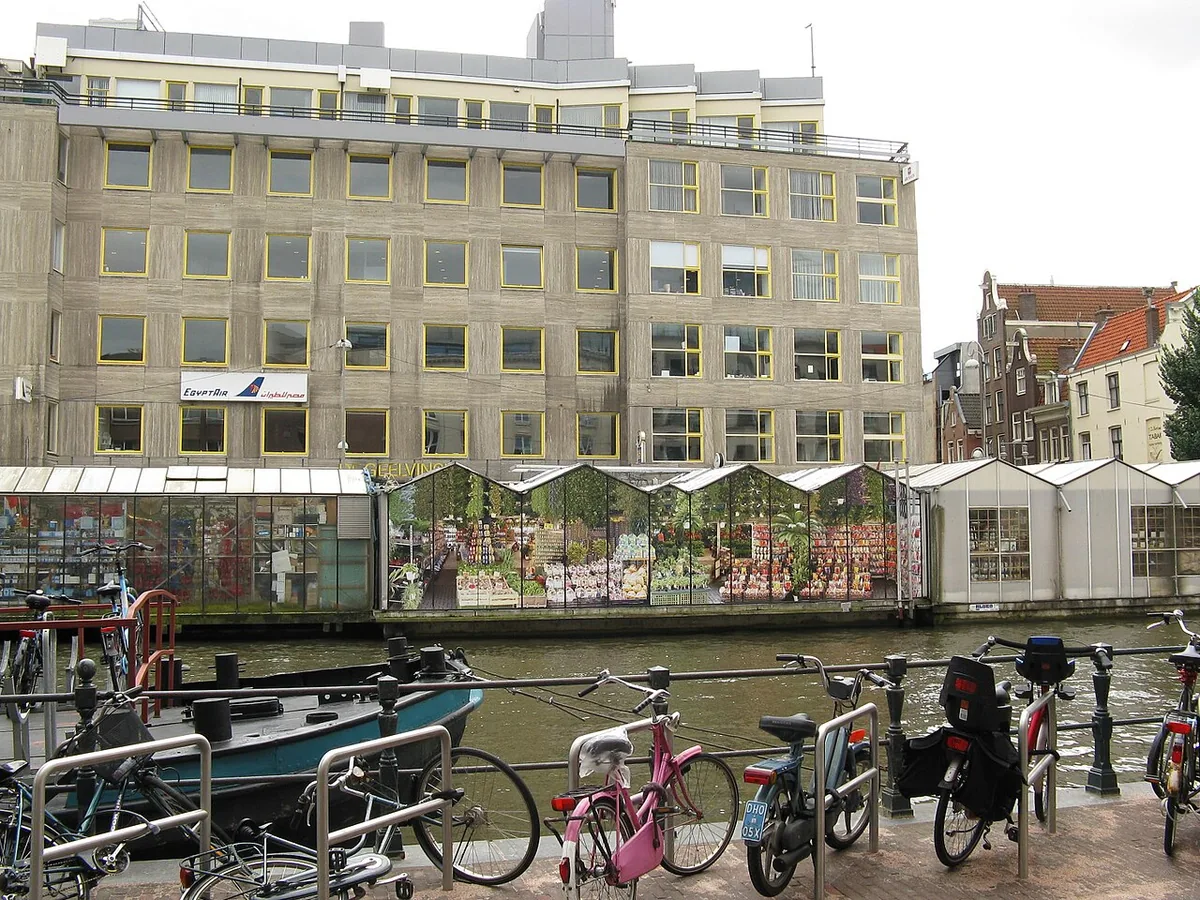
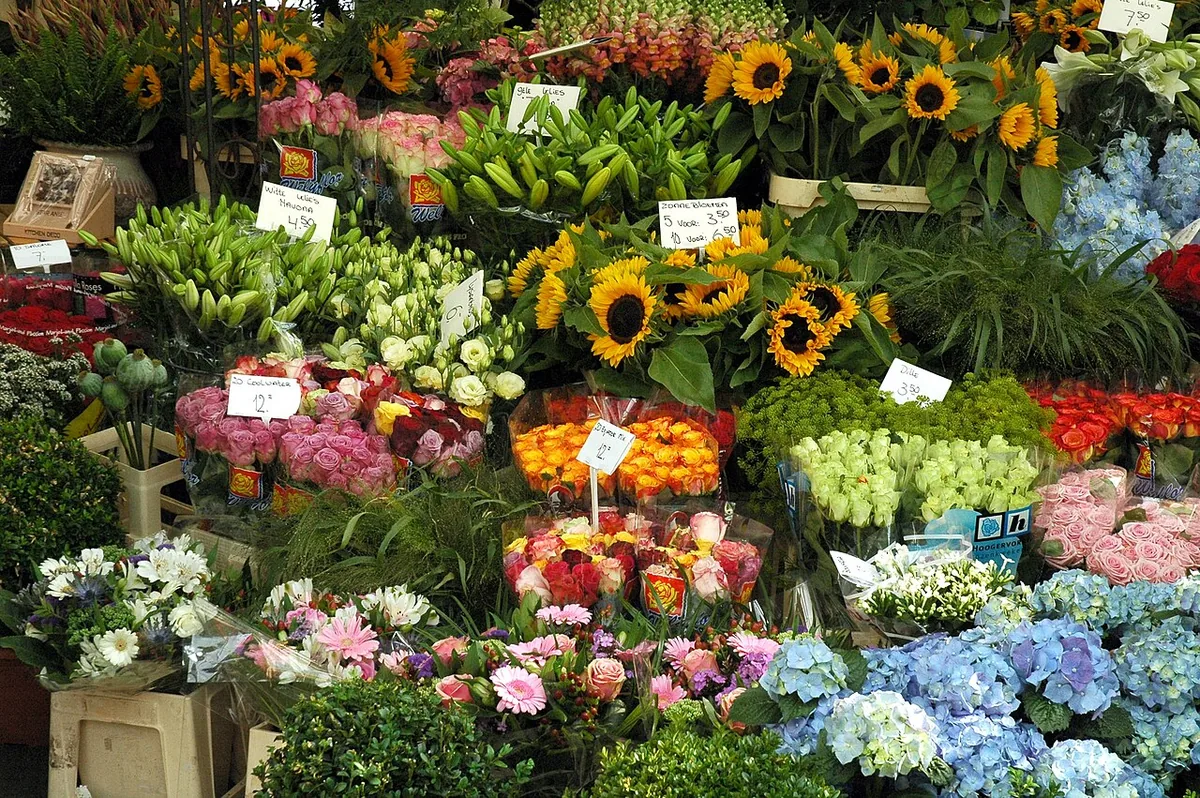
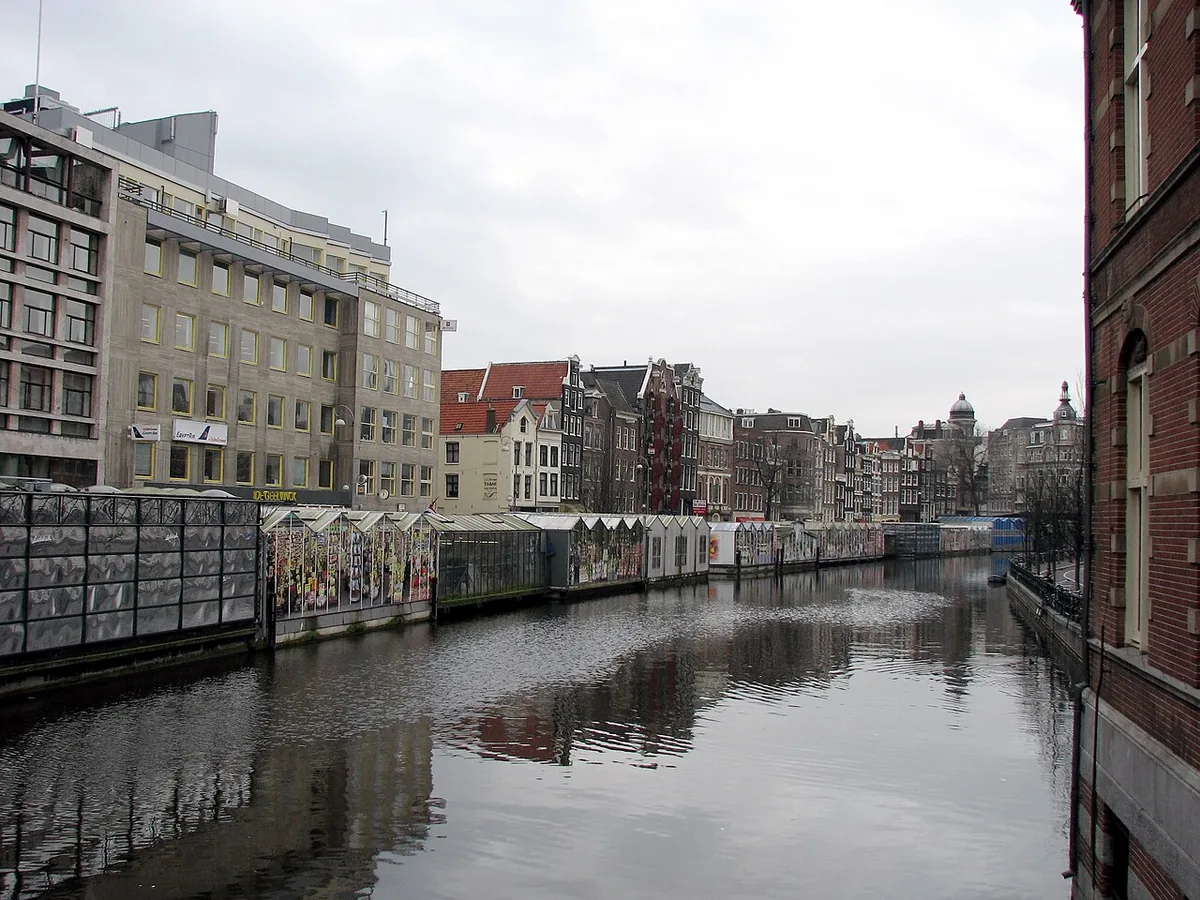
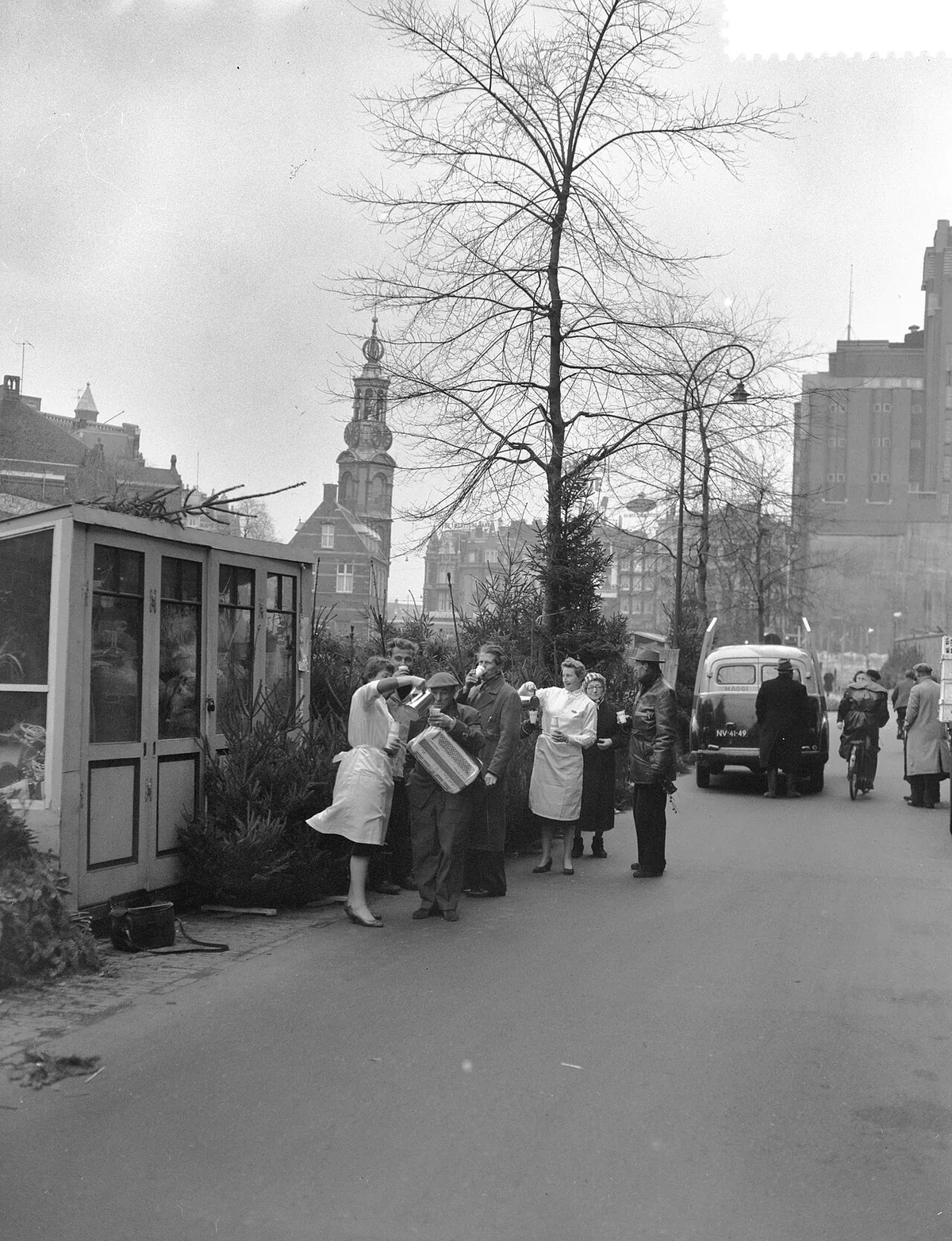
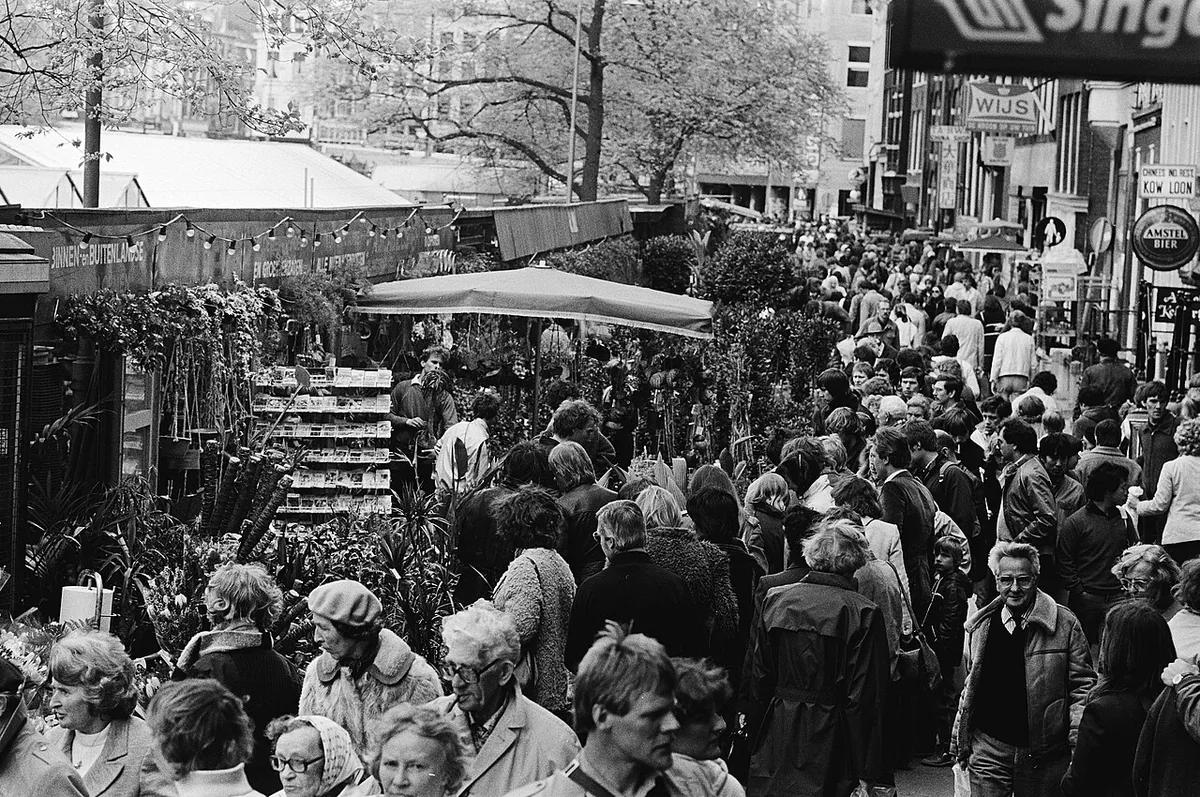
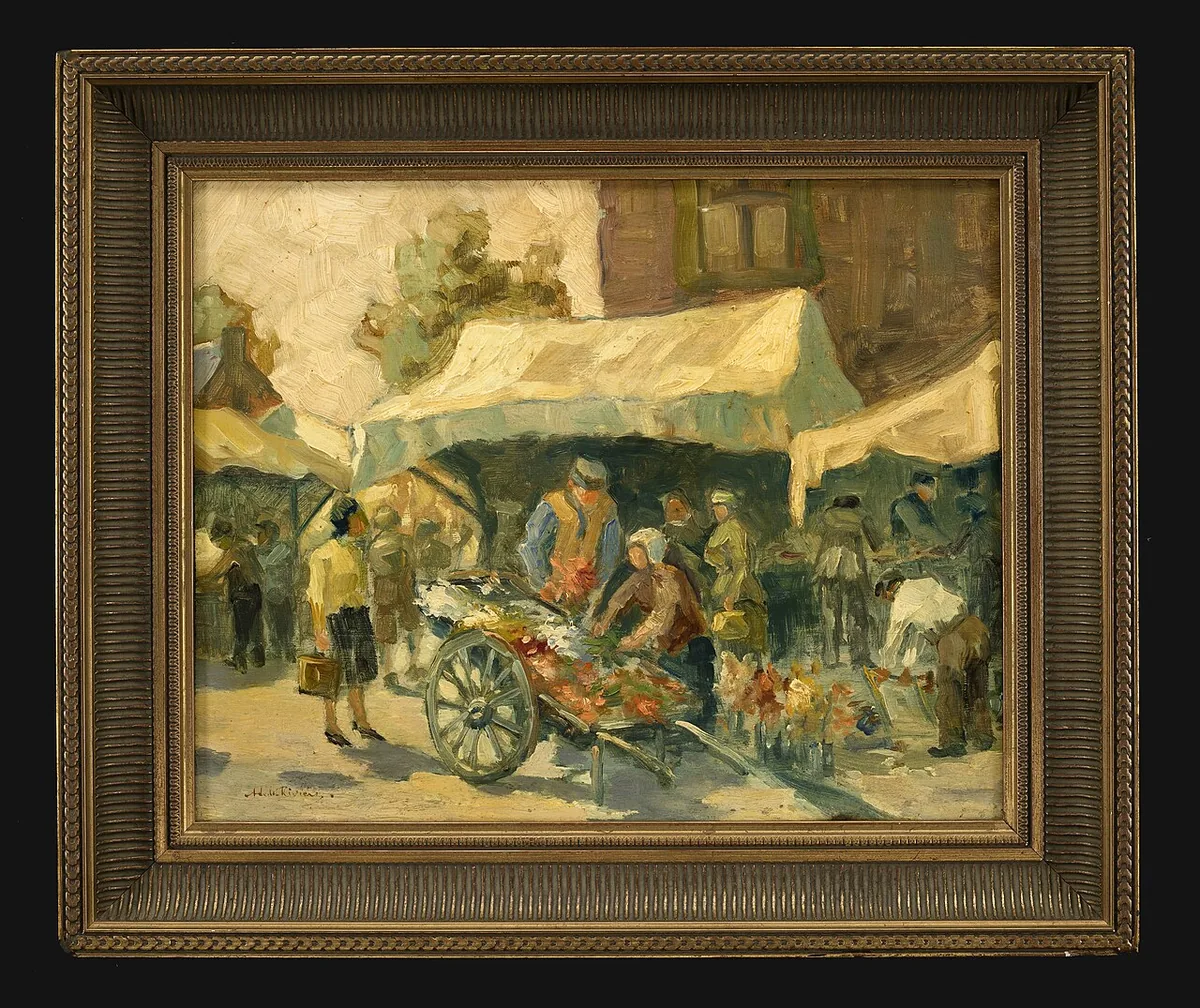
Amsterdam's Bloemenmarkt occupies floating stalls on the Singel between the Muntplein and Koningsplein. Moved here in 1862, it grew from a canal-borne trade in trees, plants and flowers. Its moorings still make the waterway part of the market's story.
Quick facts
Amsterdam’s principal flower market stood on the Sint-Luciënwal in the seventeenth century before moving to the Singel in 1862.
The Singel market was historically a trees-and-plants market; Stadsherstel says cut flowers became common there only in the 1960s.
The permanent market stalls still float on the canal, recalling the boats that once delivered plants and flowers for sale.
Get directions to Bloemenmarkt. Confirm the visitor entrance and current access with the venue before travelling.
Audio guide
Listen to this place’s guide.
Guide
Look past the flowers and souvenir displays at Amsterdam’s Bloemenmarkt and notice where the stalls stand: on boats moored along the Singel. Their floating form connects this busy canal edge to an older way of selling plants. The Singel is not simply a picturesque setting; the water once carried the market’s stock into the city.
Continue exploring
Discover the full story
Keep reading with a travel pass and explore every full guide and tour.
UpgradeMore places in Amsterdam
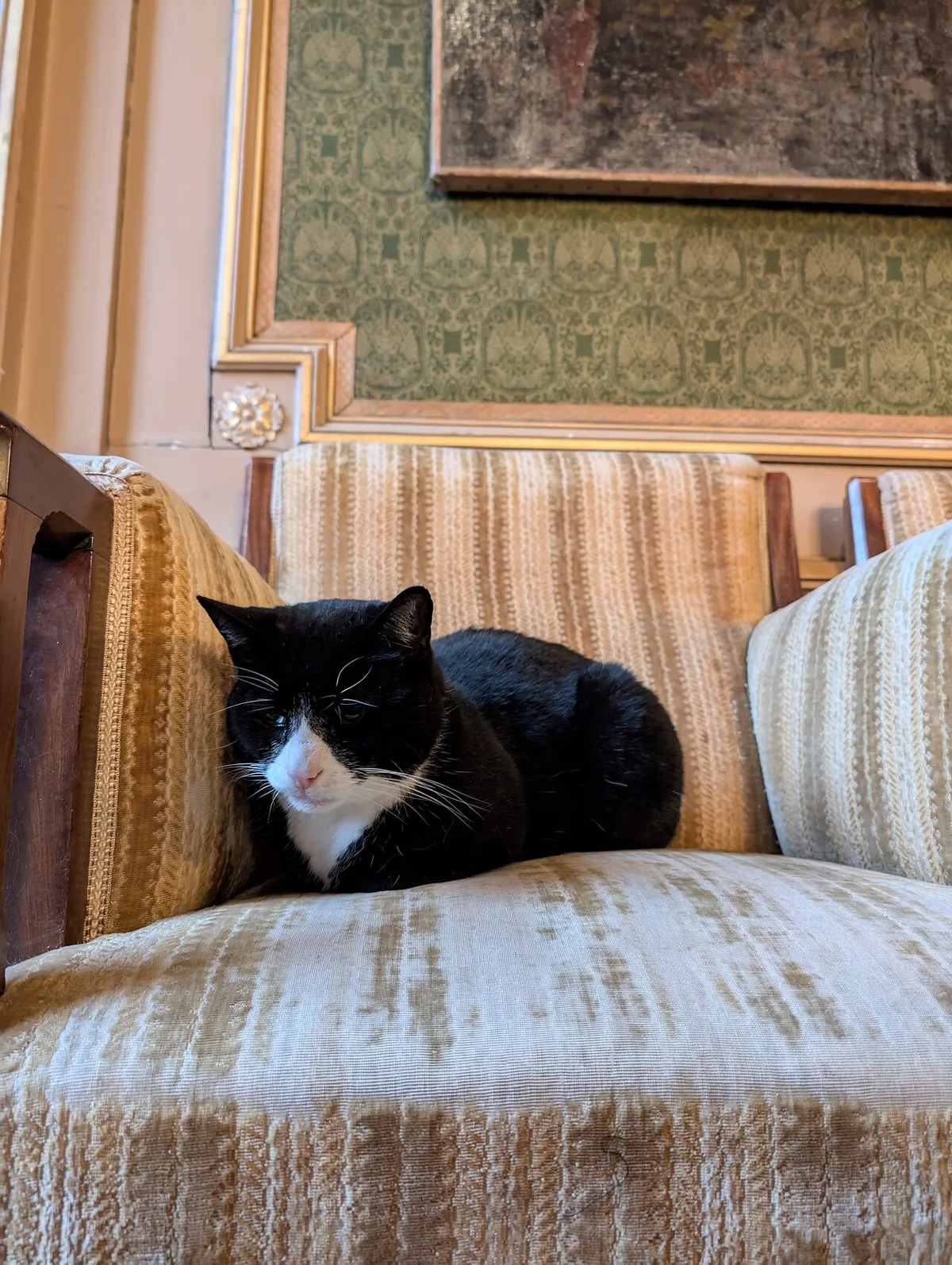
The Cat Cabinet
A red cat named John Pierpont Morgan inspired an Amsterdam canal-house museum devoted to cats in art. The house itself dates to the seventeenth century, so the visit links a private memorial to a playful collection spanning paintings, prints, and sculpture.
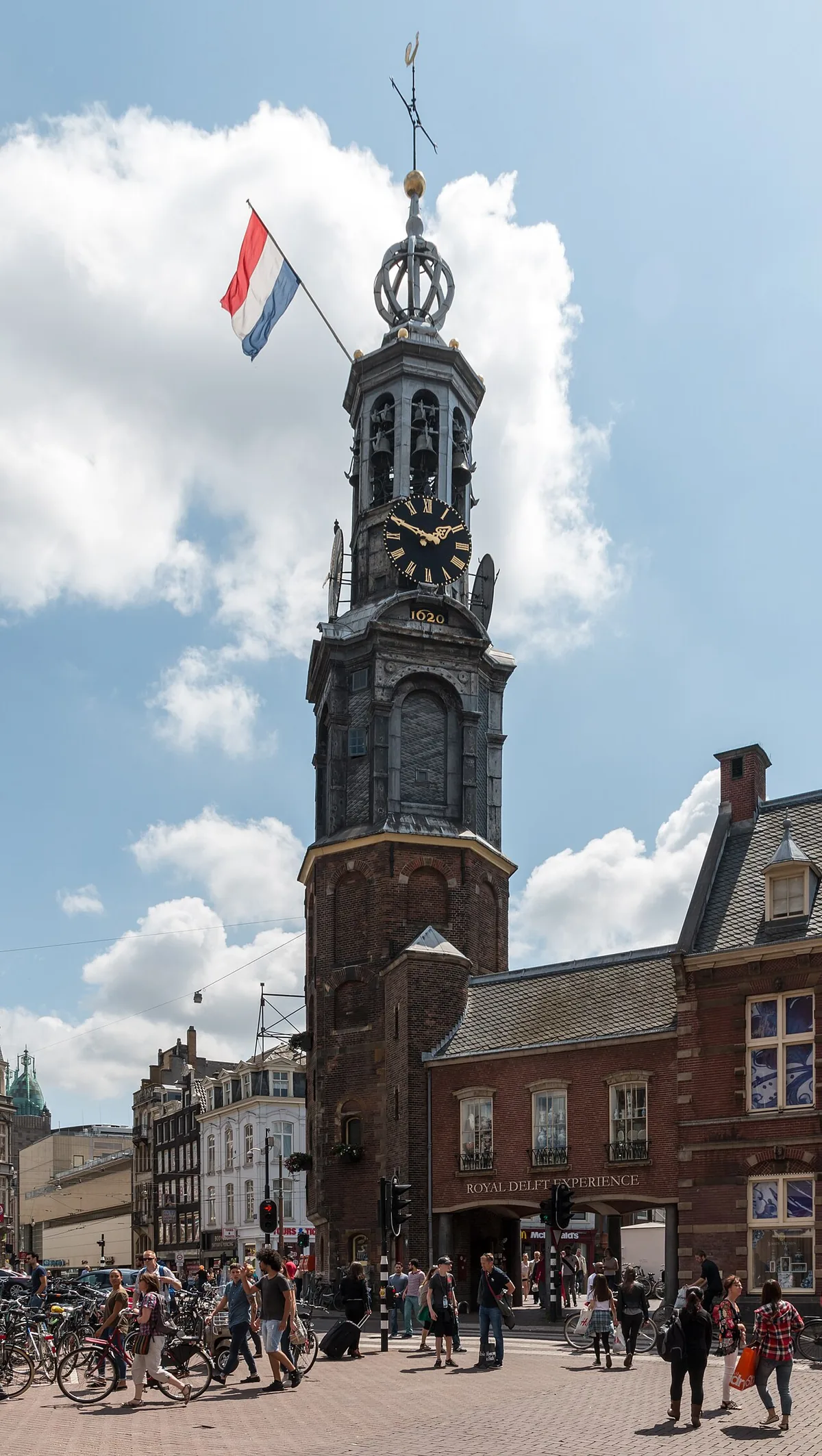
Munttoren
The Munttoren is the surviving western tower of Amsterdam’s Regulierspoort, rebuilt after the 1618 fire into a clock tower. A nearby guardhouse briefly housed a mint during wartime in 1672–73, giving the tower and Muntplein their enduring name.
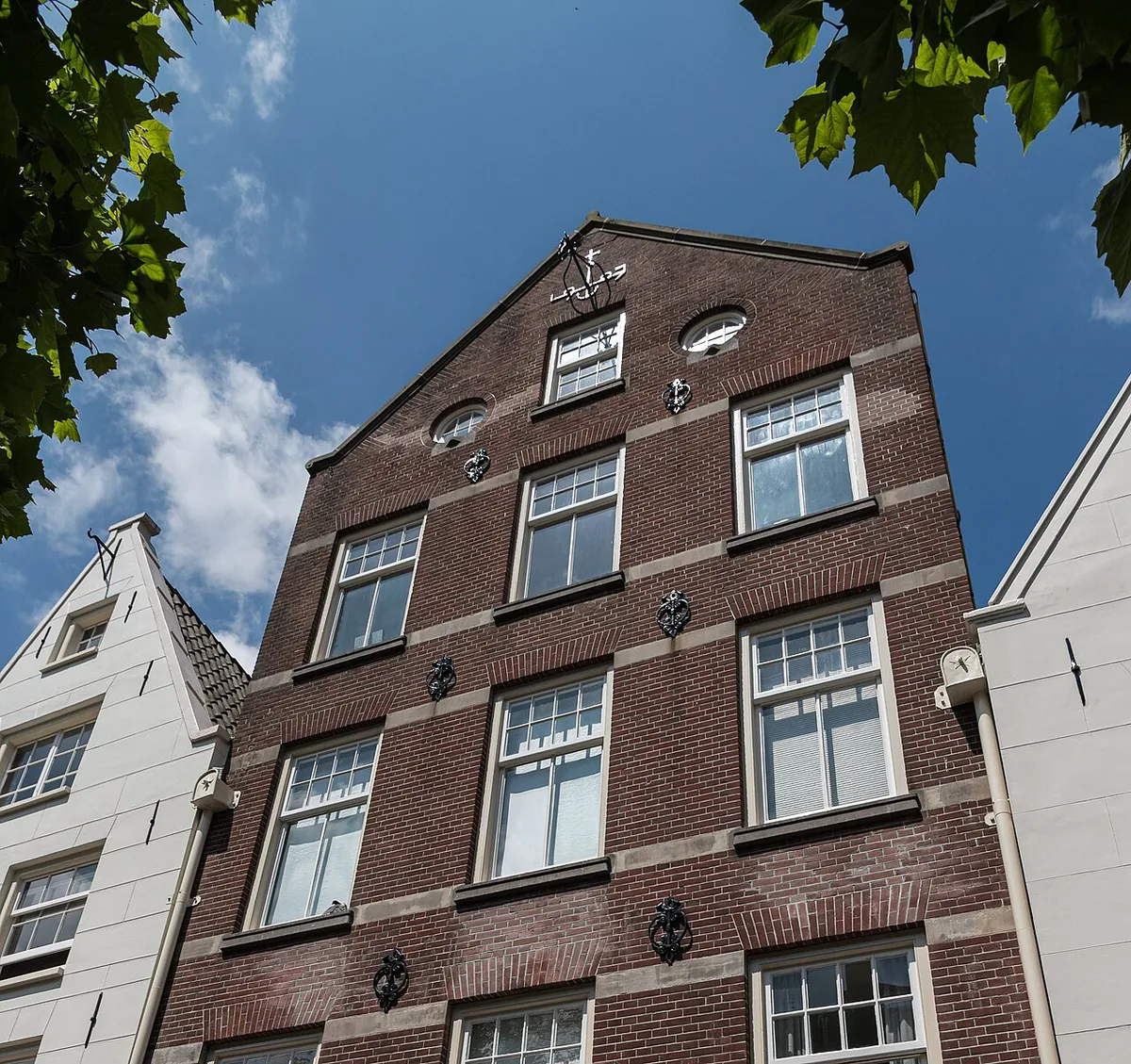
Spui
Spui occupies the line of an old sluice channel that marked Amsterdam’s southern edge around 1425. Filled between 1867 and 1882, the waterway became a tram junction and later a stage for Provo gatherings around Het Lieverdje.
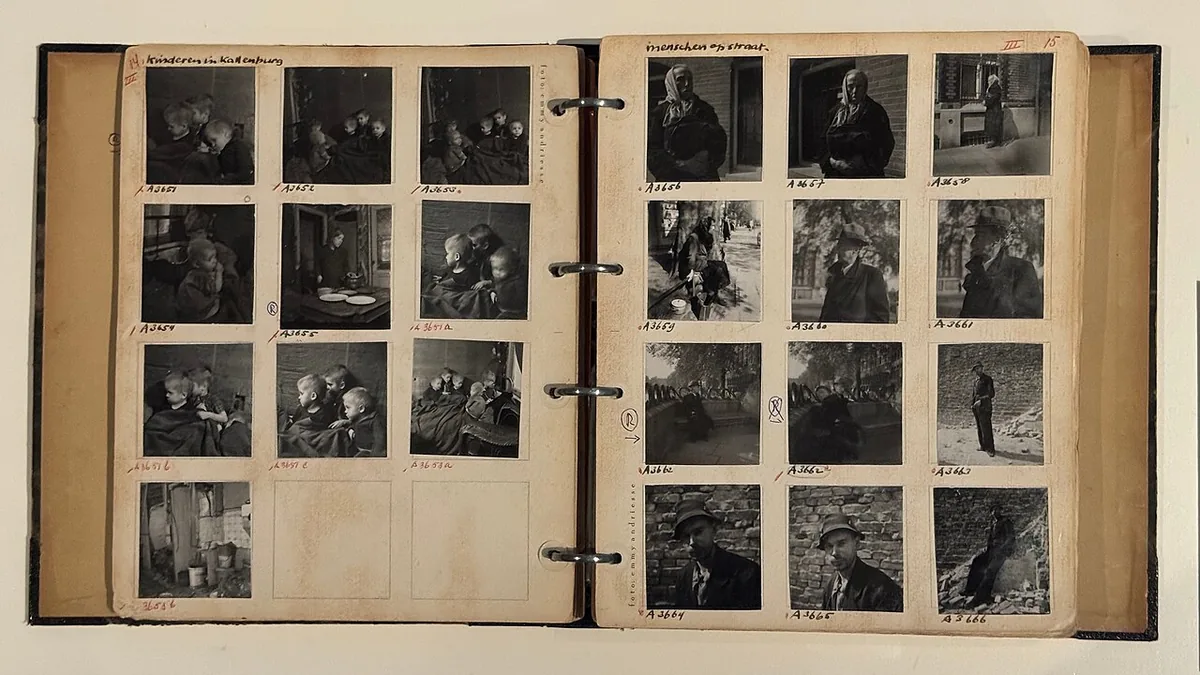
FOAM Photography Museum
At Keizersgracht 609, a carved palette and brushes recall the building’s first museum life as Museum Fodor. Today Foam presents changing exhibitions across photography’s many genres, bringing historic images and new voices into conversation.
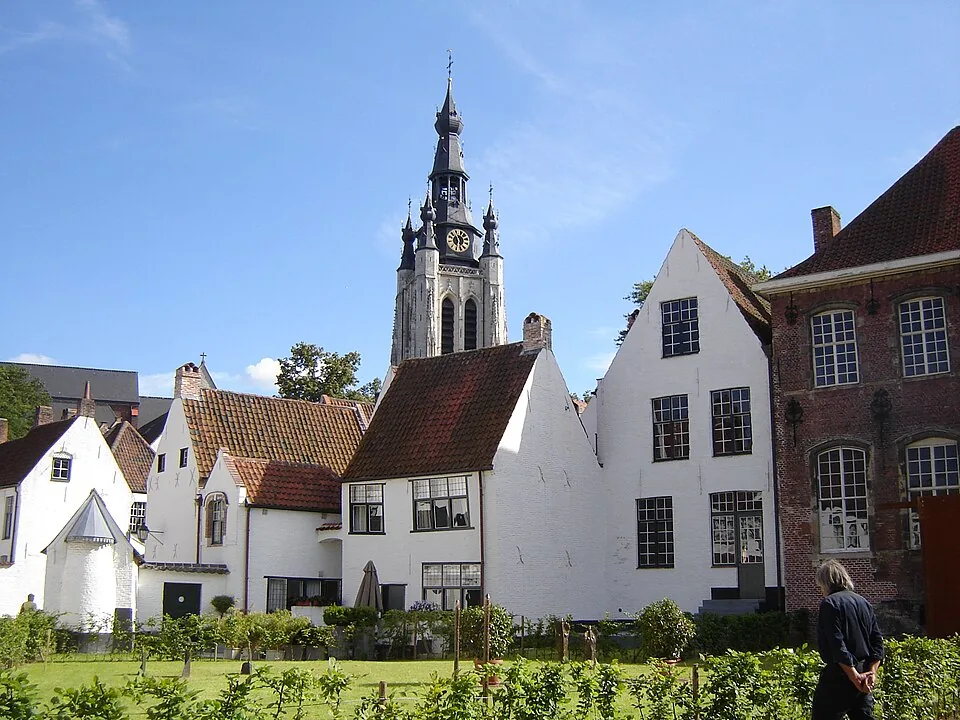
Begijnhof
Amsterdam’s medieval Begijnhof was a community of Catholic laywomen who lived and worked together without being cloistered nuns. Its uneven courtyard, rare timber-framed Wooden House, former English church, and still-active Catholic chapel record centuries of changing worship and residential life.
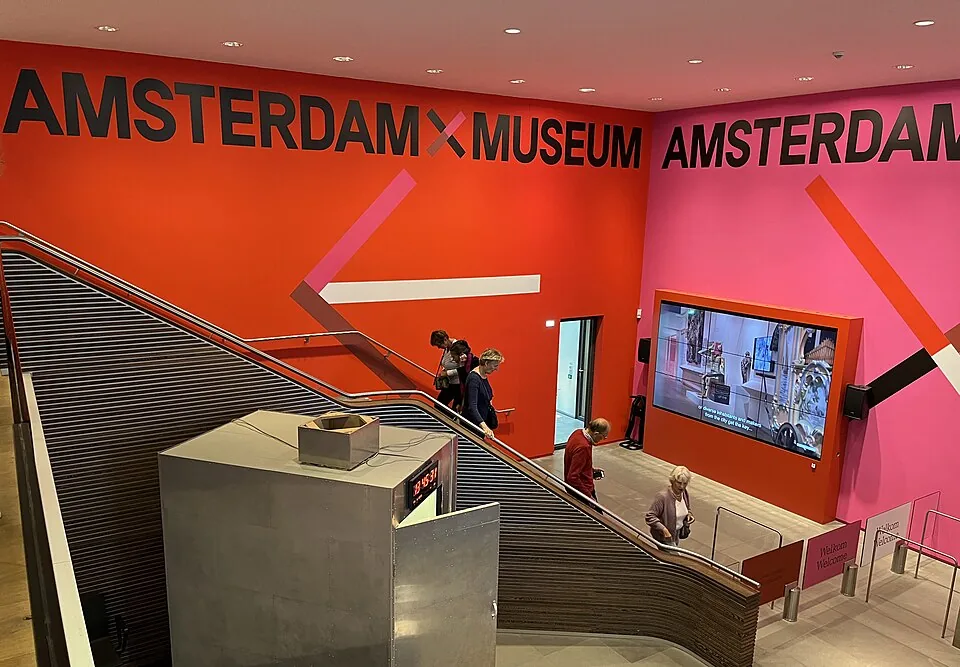
Amsterdam Museum
The Amsterdam Museum’s historic home occupies the former Burgerweeshuis, a centuries-old complex shaped by a convent, an orphanage and the city museum. Its courtyards and façades preserve that changing civic story; the Kalverstraat site is currently closed during renovation.