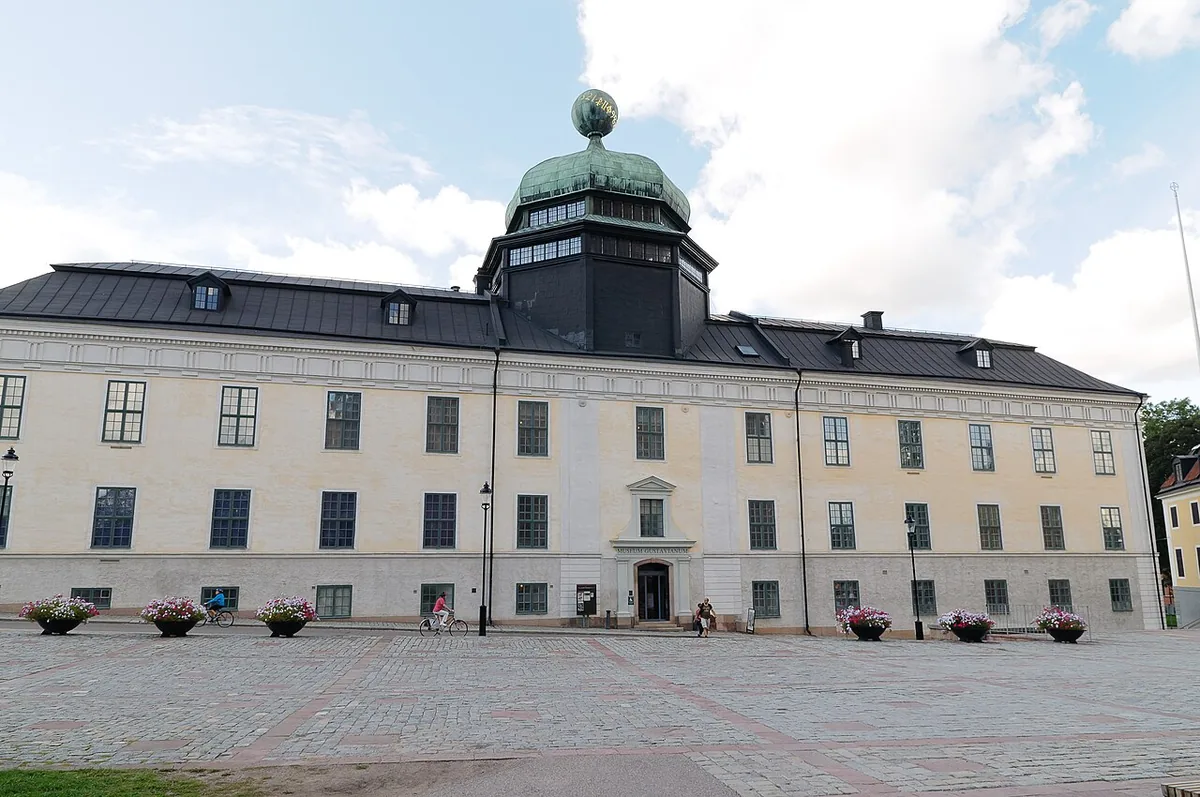
Uppsala University’s oldest surviving building began as lecture halls, student rooms and a library. Today its museum collections share space with Olof Rudbeck’s reconstructed 17th-century anatomical theatre beneath the famous rooftop cupola.
Quick facts
Gustavianum was completed in 1625 after construction began in 1622, with funds and land provided by King Gustav II Adolf.
Olof Rudbeck the Elder oversaw construction of the anatomical theatre in 1662–63; its restored interior was reconstructed in the 1950s from his drawings.
The Augsburg Art Cabinet was donated to Uppsala University by King Karl XI in 1694 and preserves about a thousand objects in its original collection.
Get directions to Gustavianum. Confirm the visitor entrance and current access with the venue before travelling.
Audio guide
Listen to this place’s guide.
Guide
The globe above Gustavianum’s roof once served as a sundial. Beneath it, a steeply tiered room was built for anatomy demonstrations; elsewhere in the same building, students ate, slept, listened to lectures and later studied among the university library’s books. Gustavianum is not simply a museum placed inside an old university building. Its rooms record how Uppsala University taught, collected and presented knowledge over four centuries.
Continue exploring
Discover the full story
Keep reading with a travel pass and explore every full guide and tour.
UpgradeMore places in Uppsala
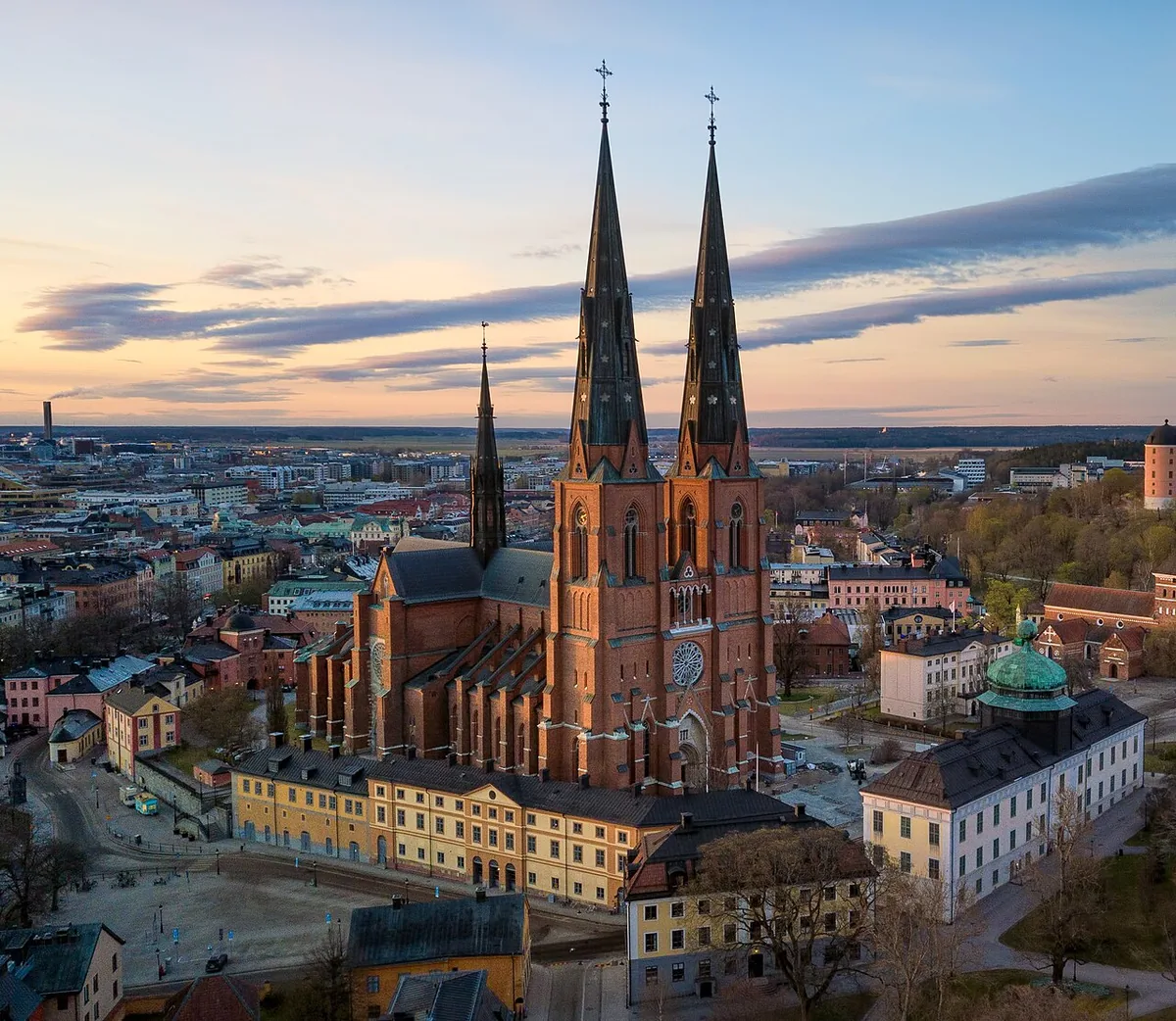
Uppsala Cathedral
Built over more than 160 years and reshaped by fire, reform and restoration, Uppsala Cathedral remains Sweden’s national church landmark and the seat of its archbishop. Inside, medieval relics, royal tombs and a 19th-century Gothic revival meet in a living place of worship.
Kulturkvarteret Walmstedtska
Three historic houses in central Uppsala bring a reconstructed nineteenth-century professor’s home together with contemporary art galleries and literary organizations. Walmstedtska’s story moves from a family-built academic residence to a municipally preserved cultural quarter, where the old domesti
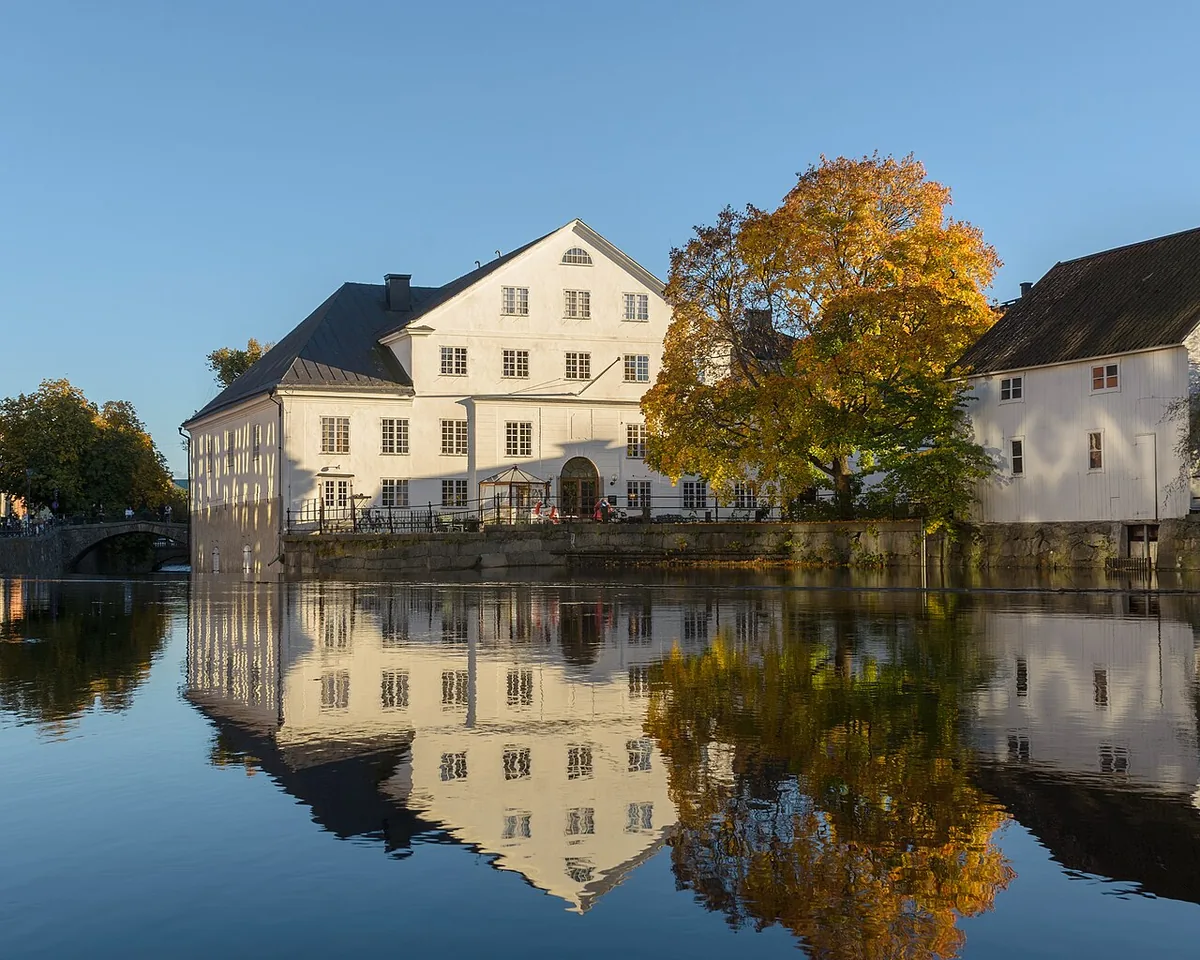
Upplandsmuseet
Upplandsmuseet tells the story of Uppsala and Uppland from its home in Akademikvarnen, a former watermill on the Fyris River. The mill’s own history—from medieval grain production and university monopoly to a 1959 museum opening—makes the building part of the collection.
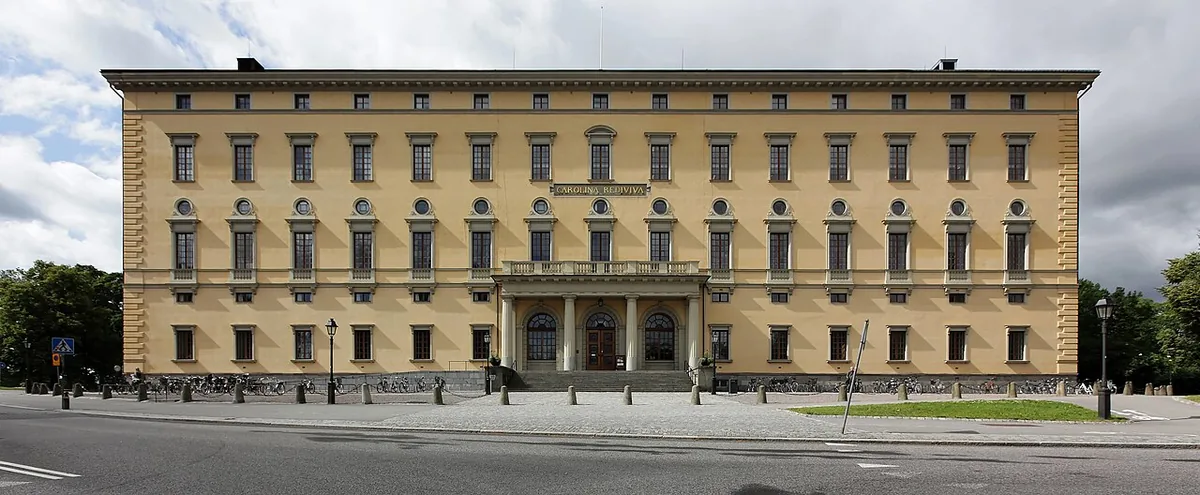
Carolina Rediviva
Carolina Rediviva is Uppsala University Library’s landmark main building, opened in 1841. A name meaning ‘the revived Carolina’ joins a demolished medieval university house to a royal-era library project; its former ceremonial hall, later reading rooms and modern extensions chart changing ideas abou
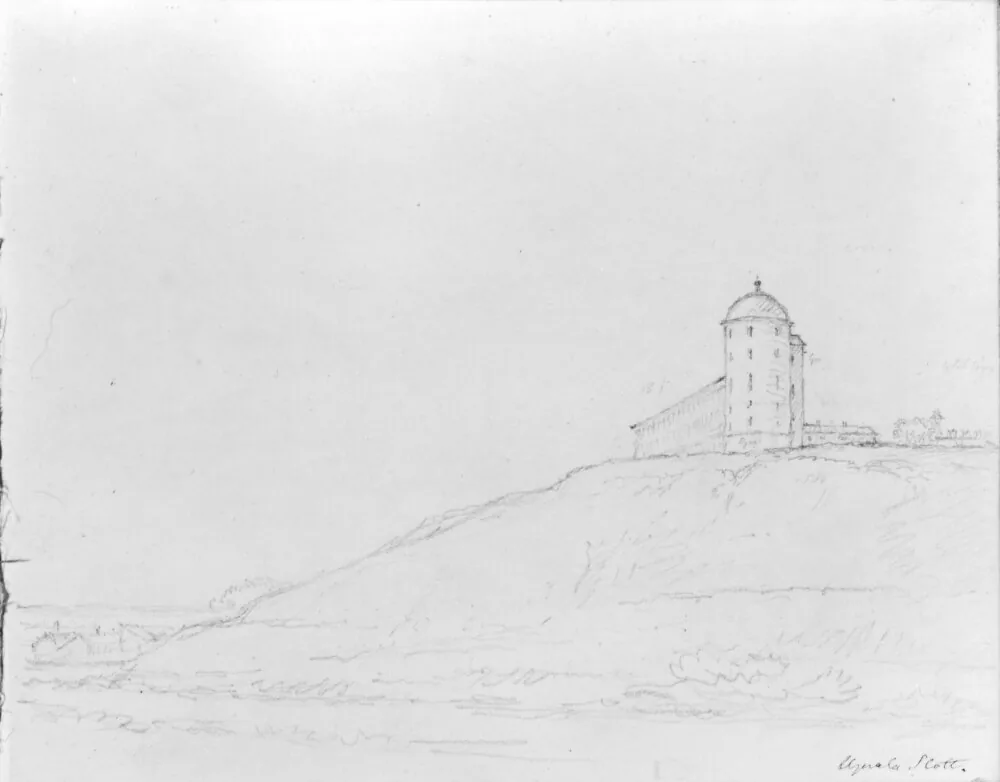
Uppsala Castle
Uppsala Castle began as Gustav Vasa’s 1549 fortress and became a Renaissance palace, royal stage, governor’s residence and civic landmark. Its bastions, Gunilla’s Bell and rebuilt State Hall preserve traces of military power, Queen Christina’s abdication, the 1702 fire and later public protest.
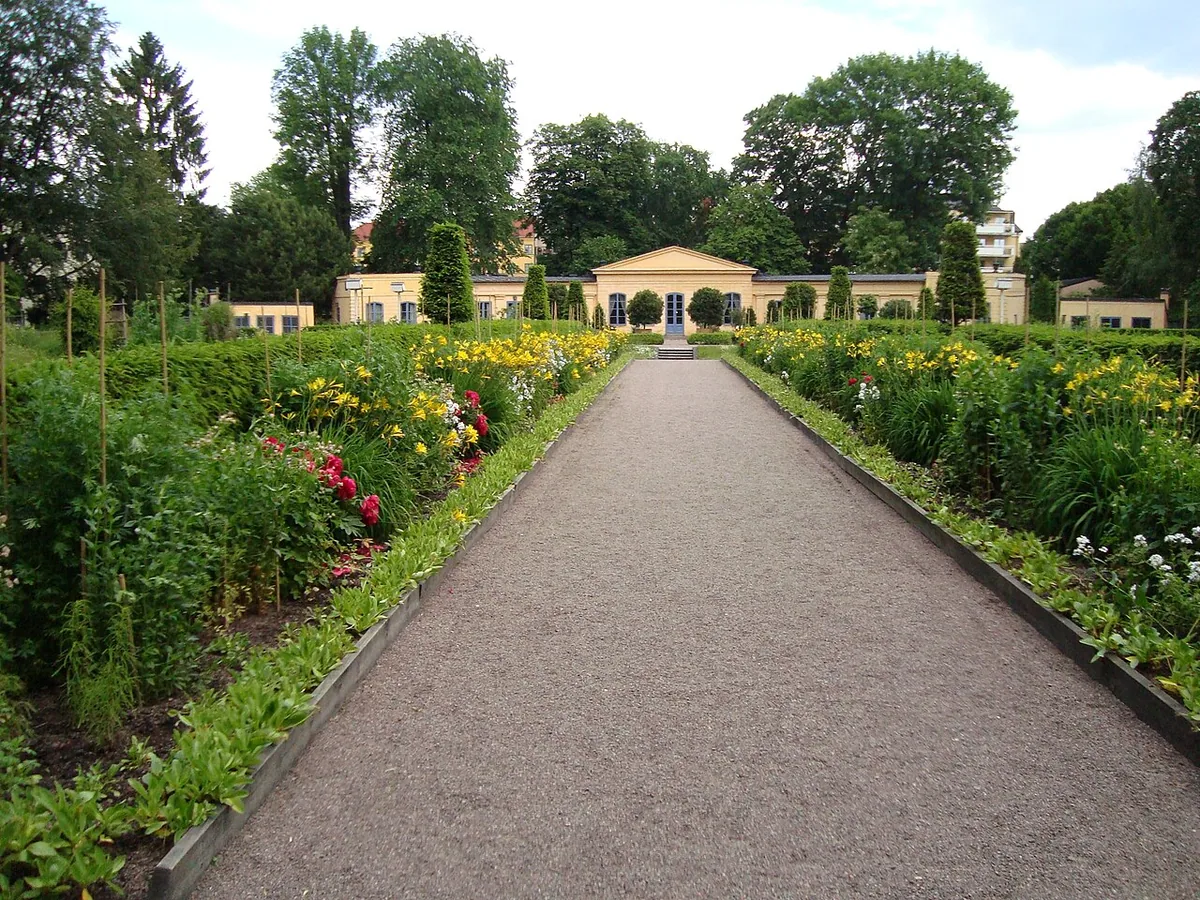
Linnaeus Garden (Linnéträdgården)
Founded by Olof Rudbeck in 1655 and reshaped by Carl Linnaeus, Sweden’s oldest botanical garden is a reconstructed eighteenth-century teaching garden. Its formal beds, Orangery, and adjacent Linnaeus Museum reveal how plants were collected, classified, and kept through Uppsala’s winters.