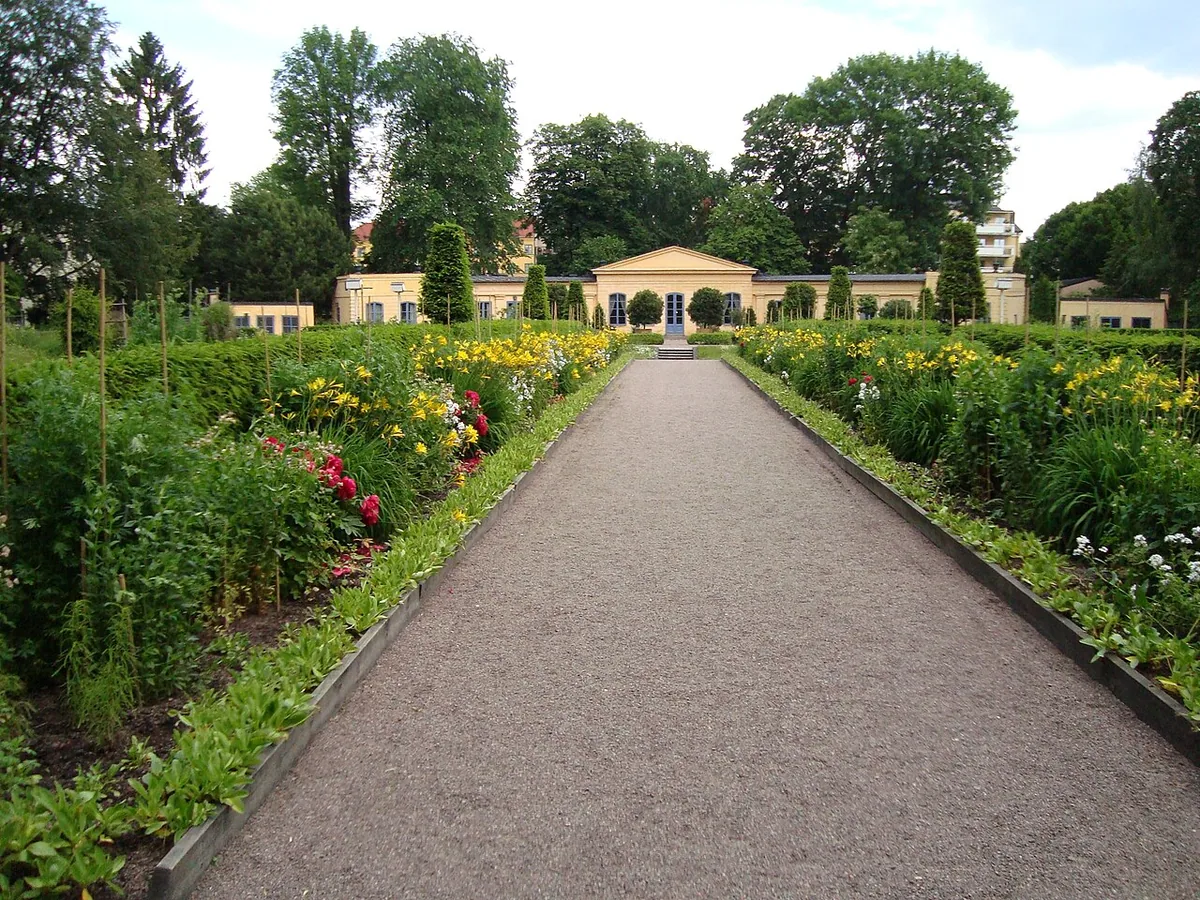
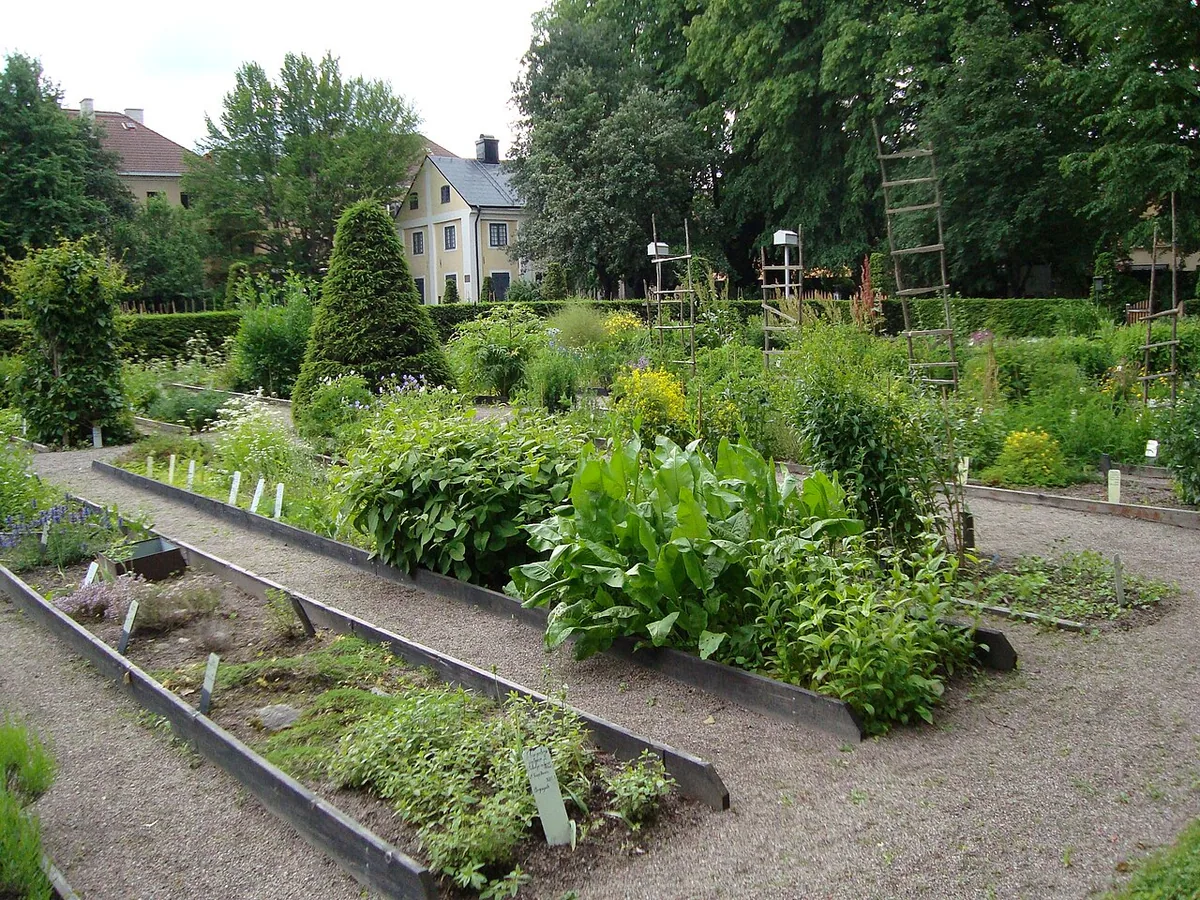
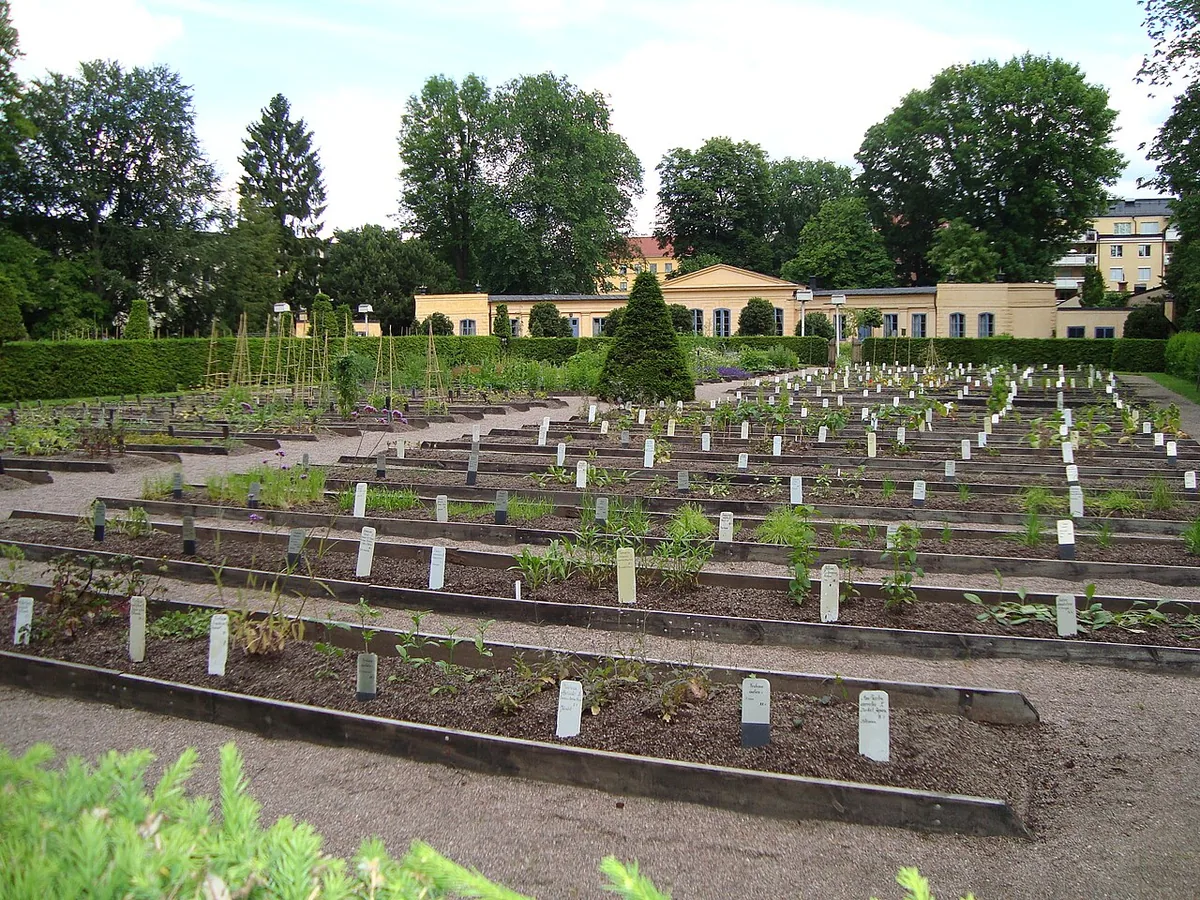
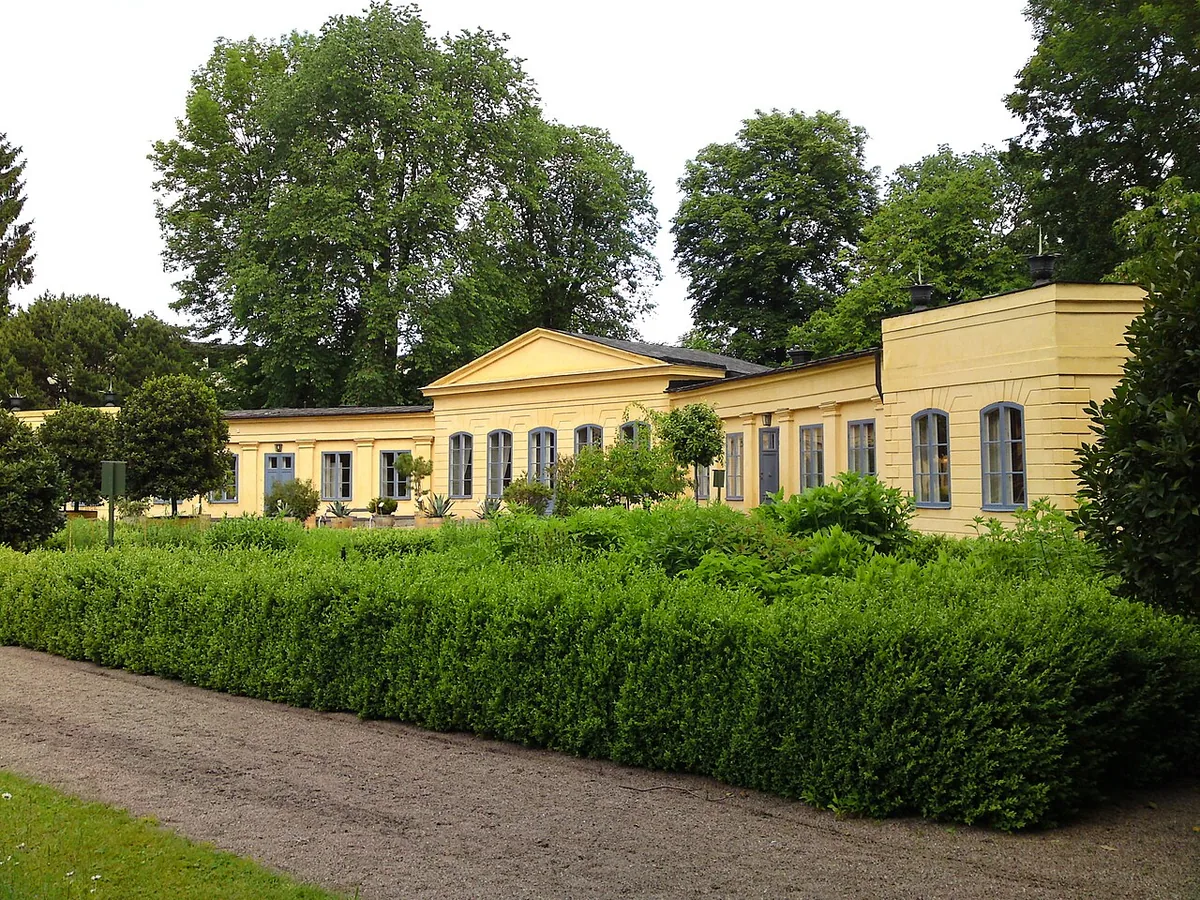
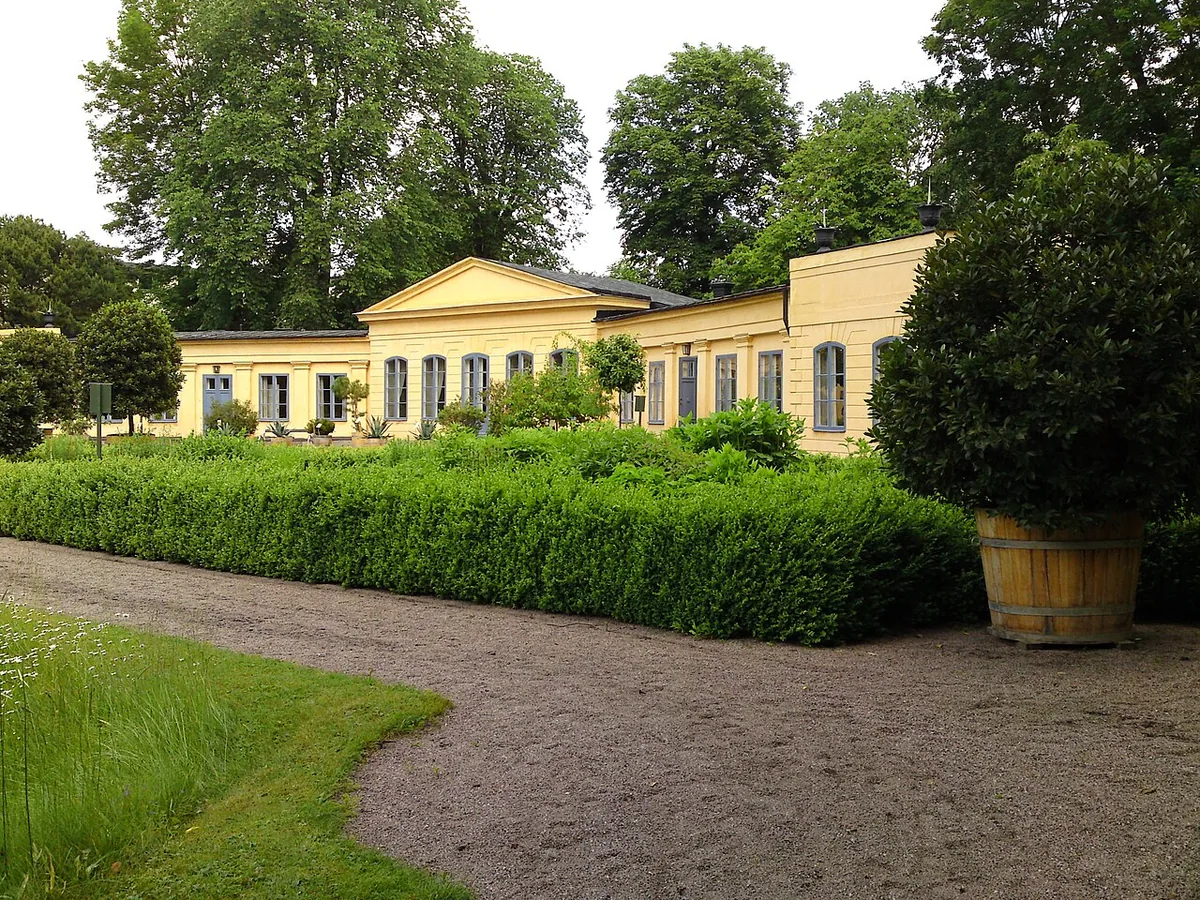
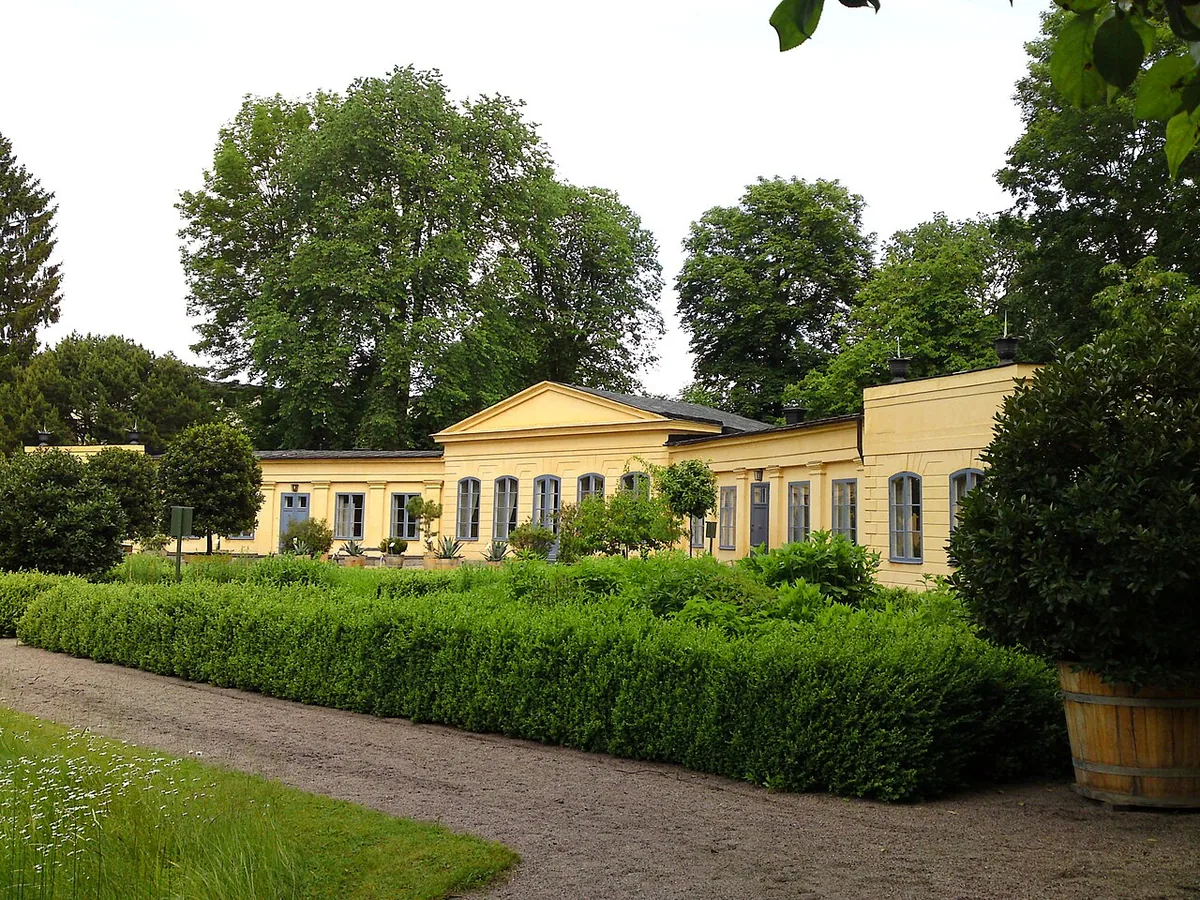
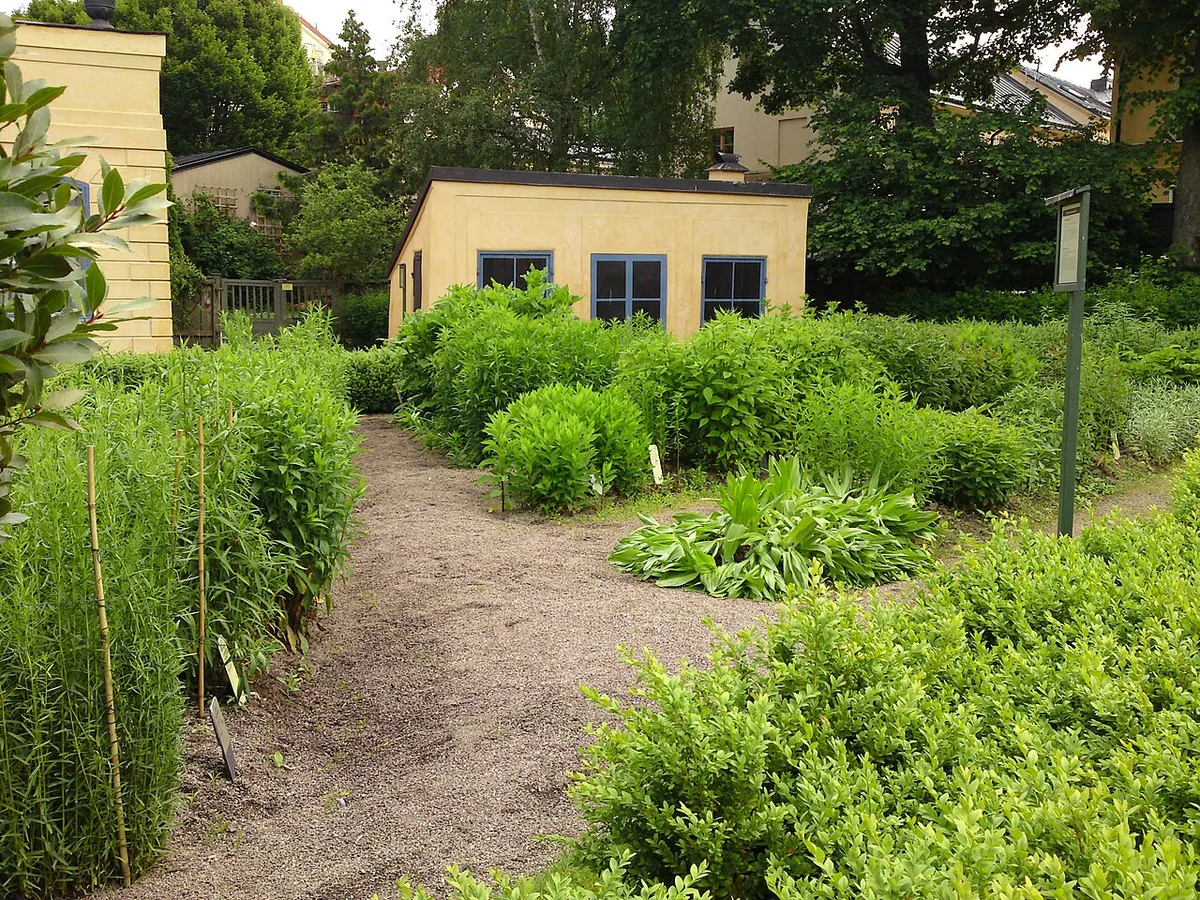
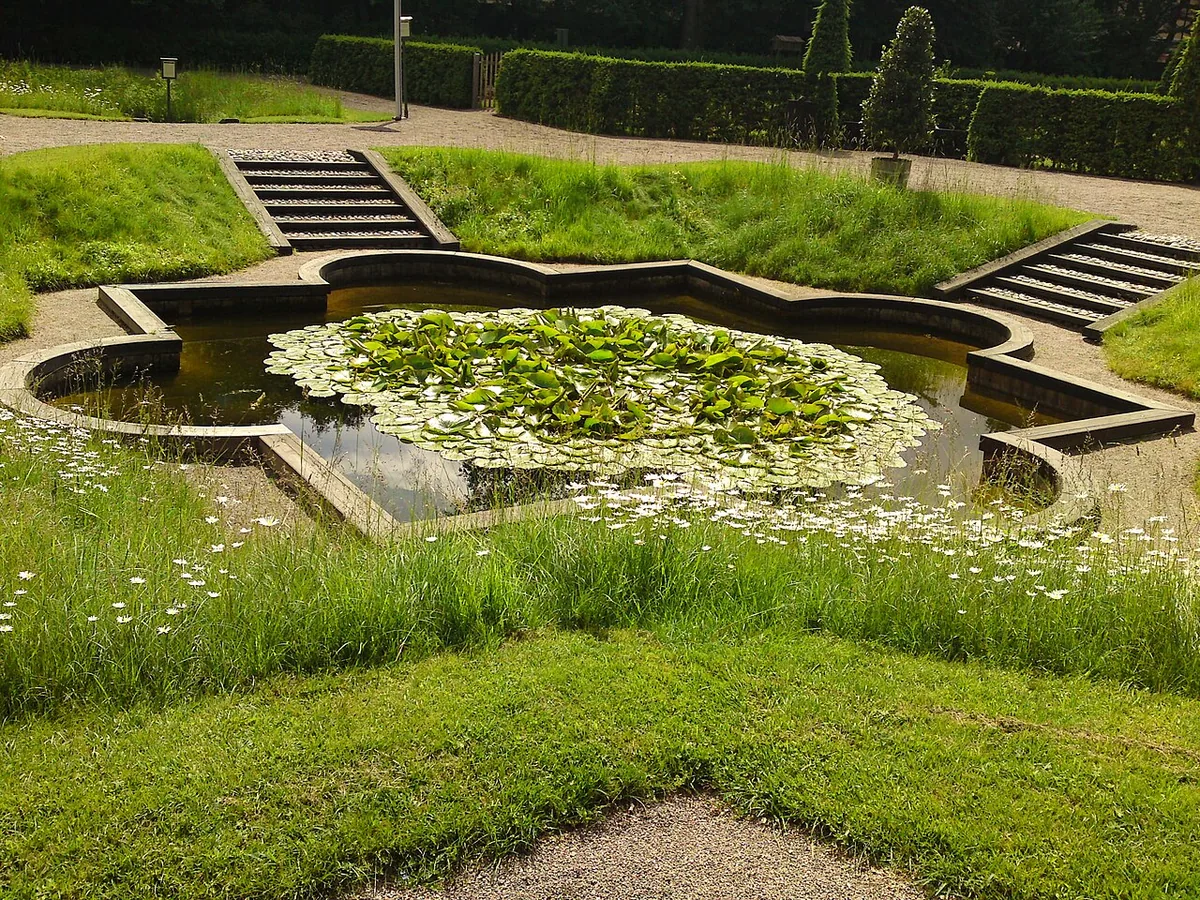
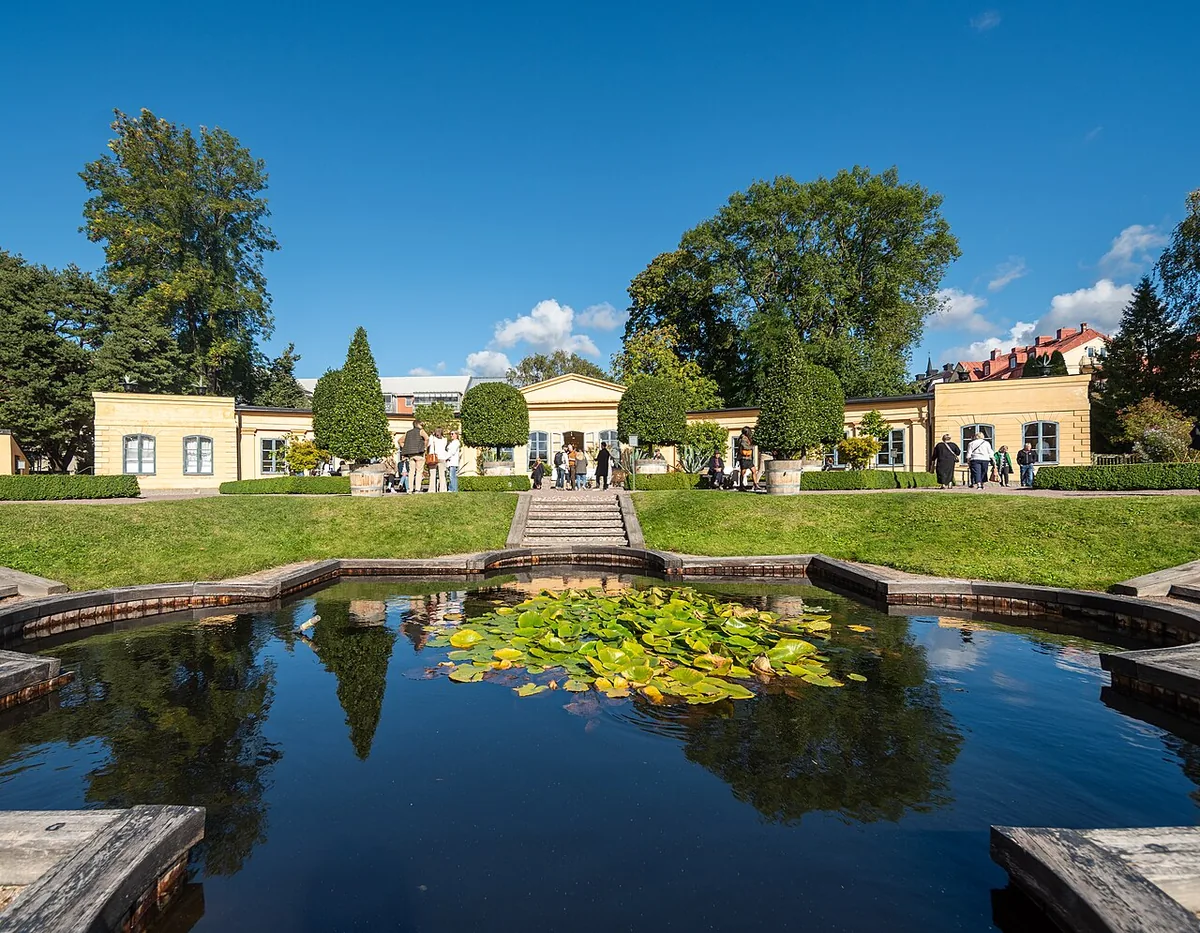
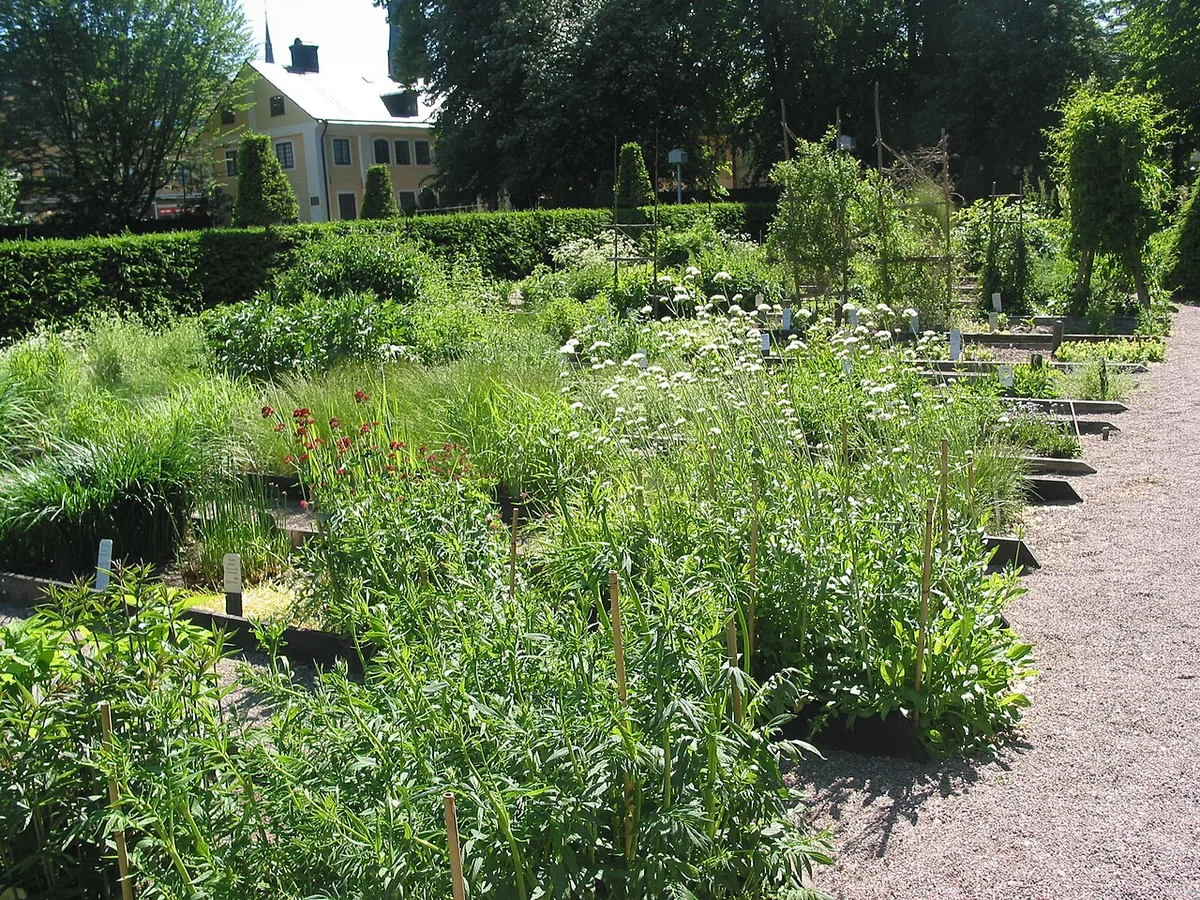
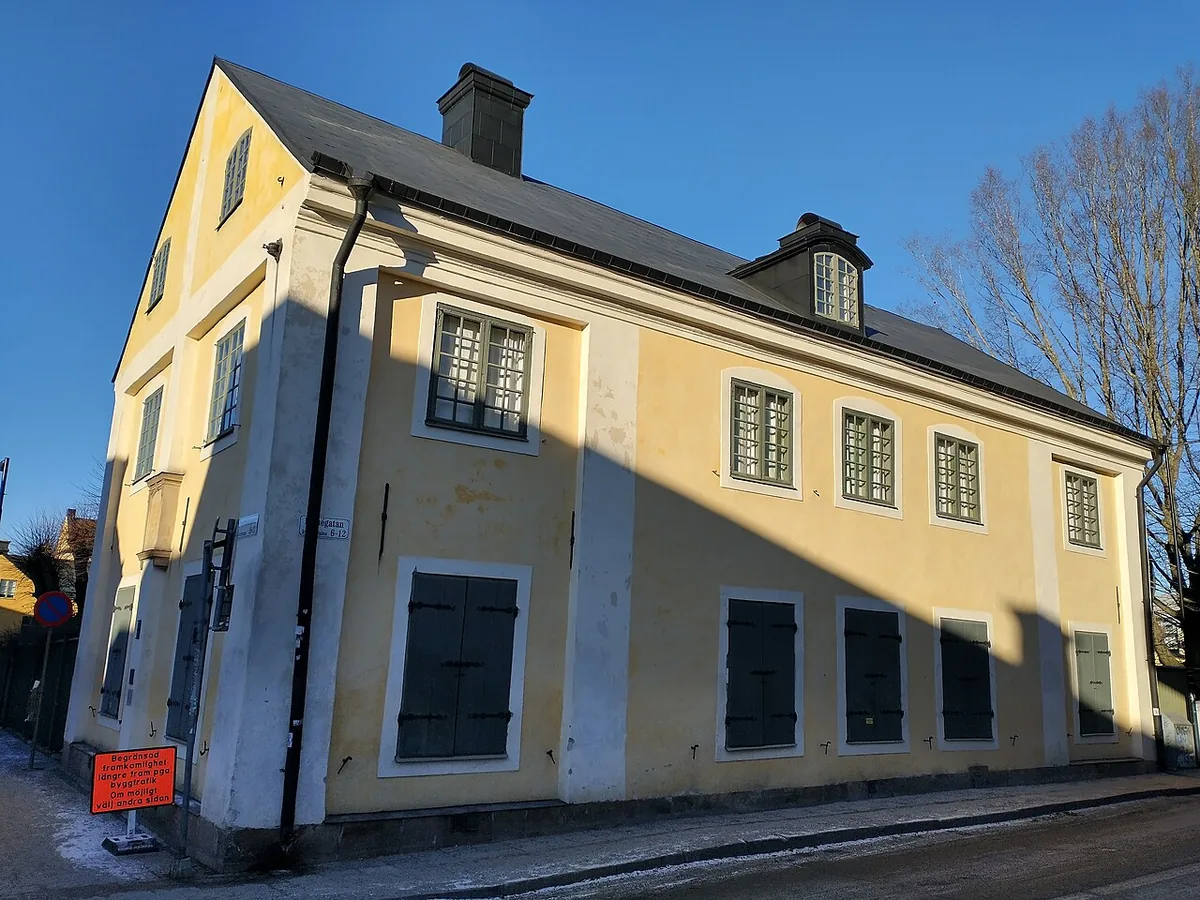
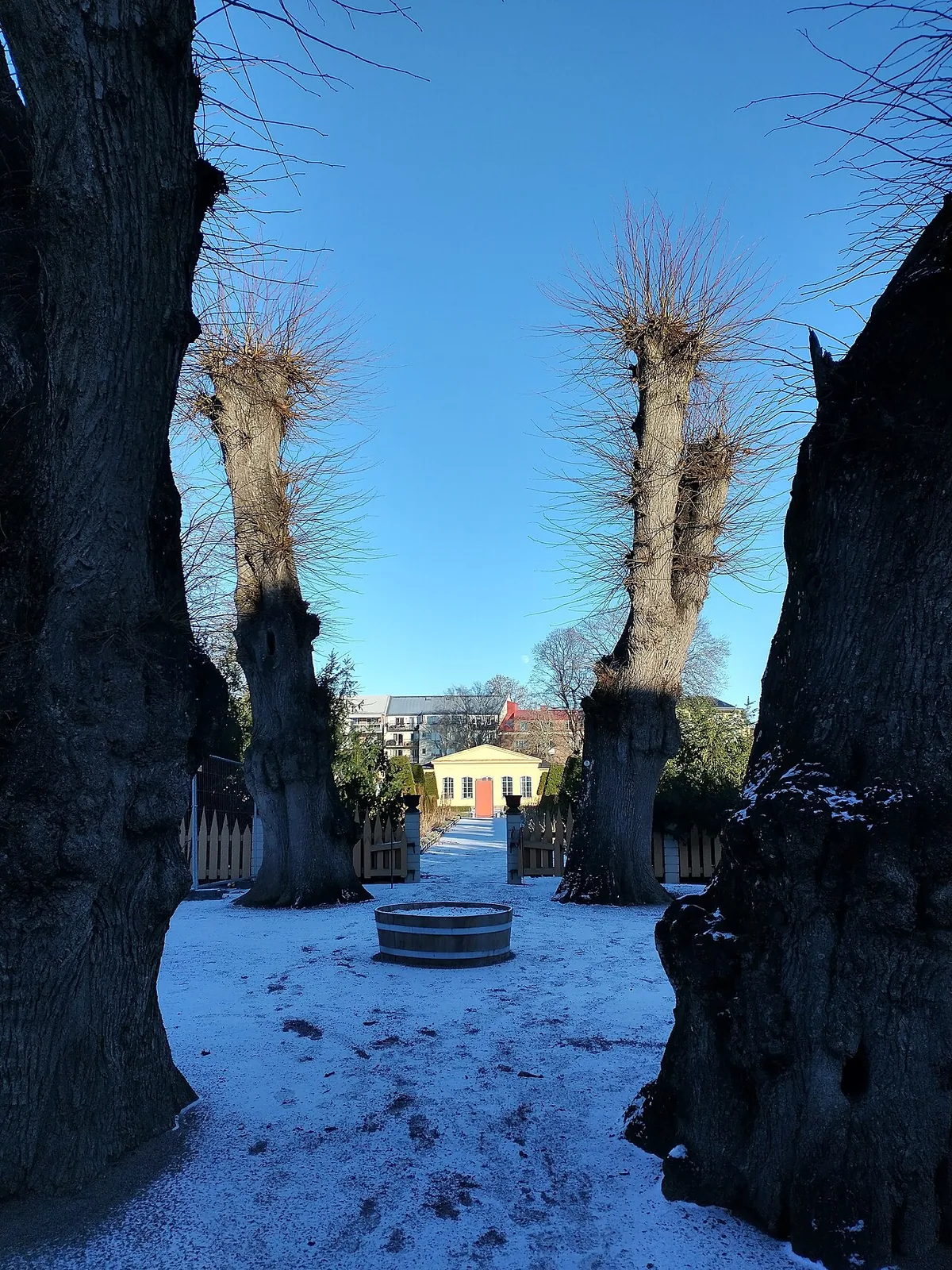
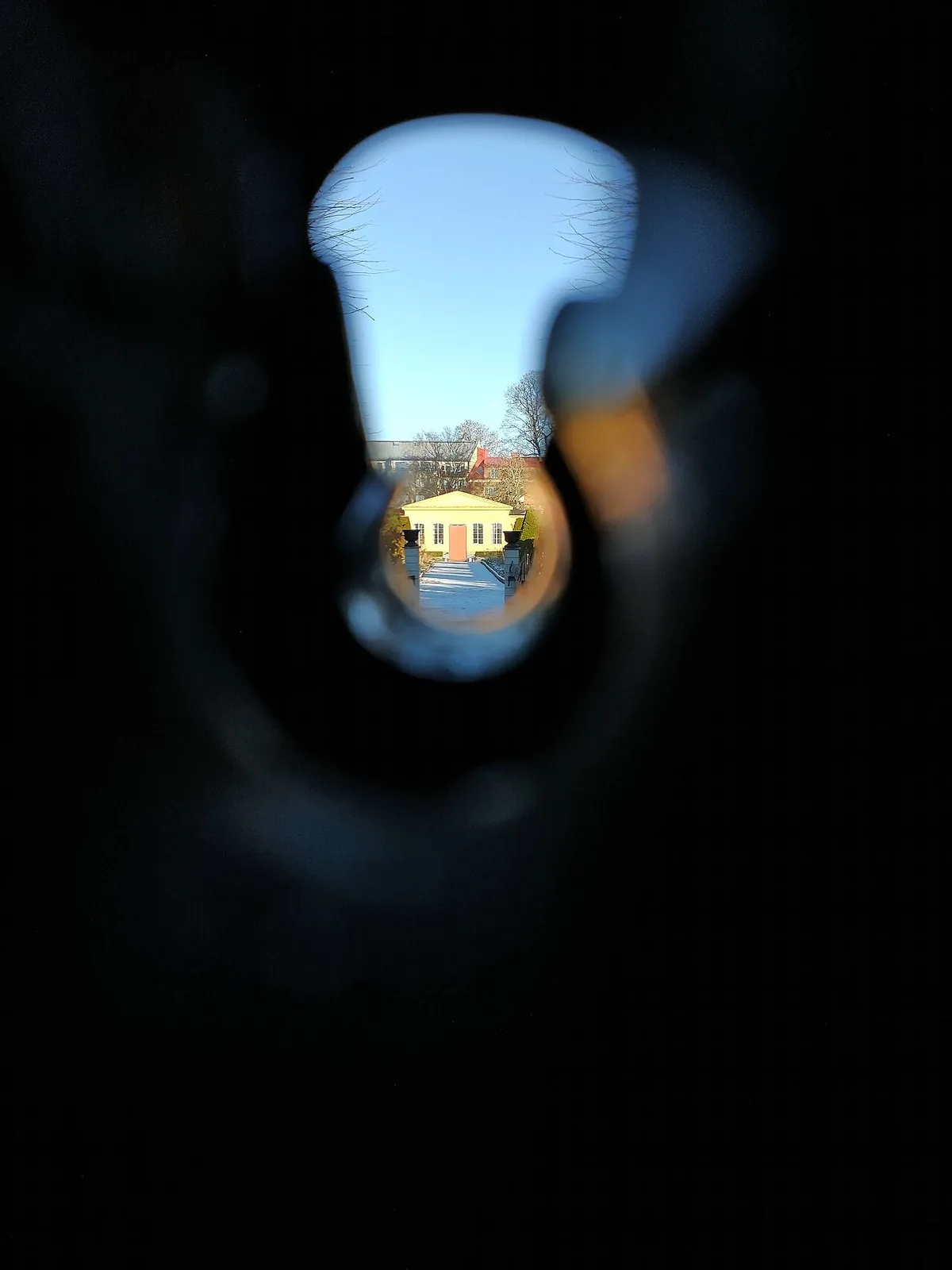
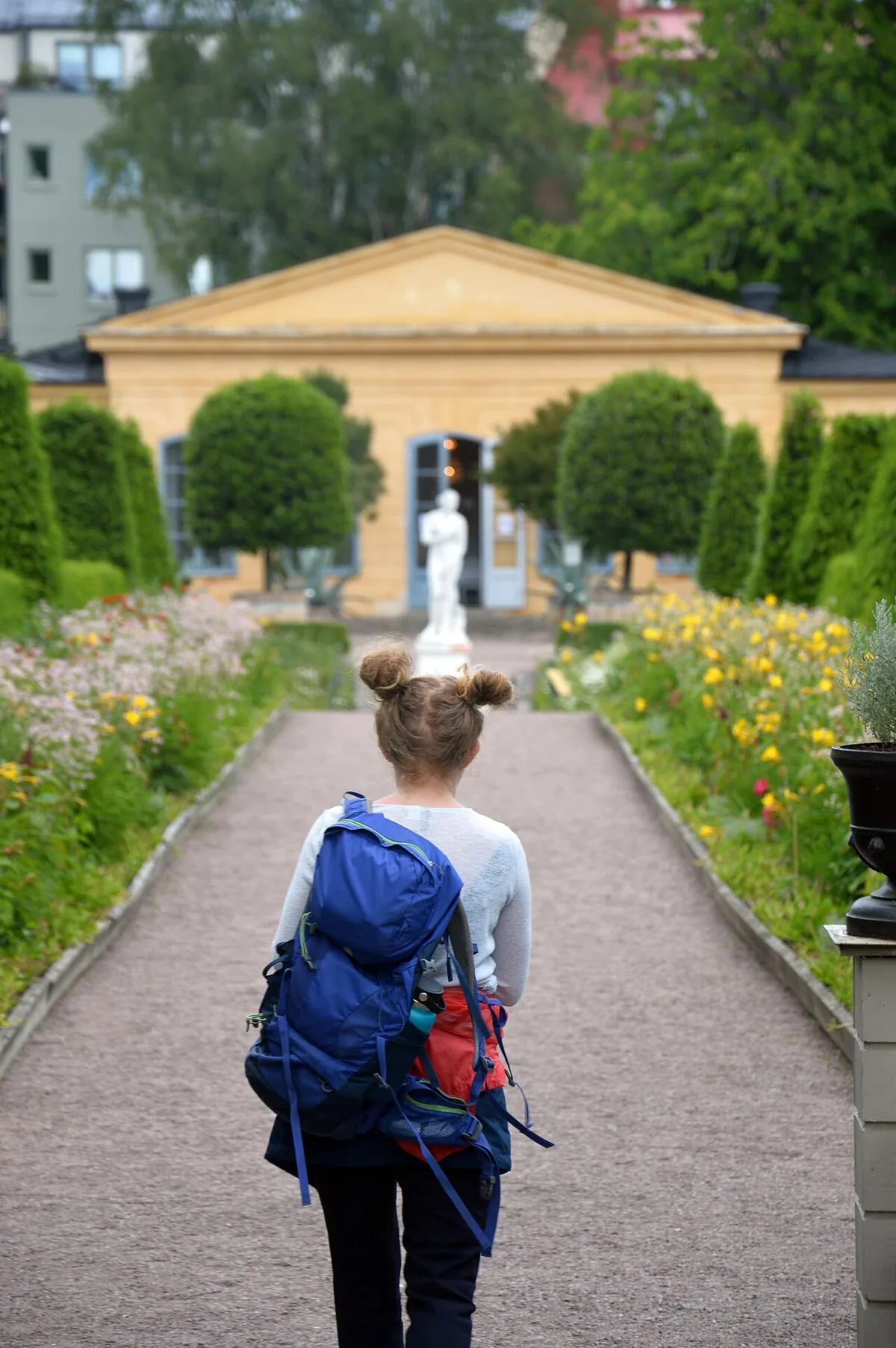
Founded by Olof Rudbeck in 1655 and reshaped by Carl Linnaeus, Sweden’s oldest botanical garden is a reconstructed eighteenth-century teaching garden. Its formal beds, Orangery, and adjacent Linnaeus Museum reveal how plants were collected, classified, and kept through Uppsala’s winters.
Quick facts
Olof Rudbeck the Elder founded the garden in 1655 as a teaching garden for Uppsala University’s medical students.
Carl Linnaeus became director in 1741; the garden was reconstructed according to his 1745 plan and reopened to visitors in 1923.
The Orangery was built in the 1740s to overwinter plants in rooms with different temperature and humidity conditions.
Get directions to Linnaeus Garden (Linnéträdgården). Confirm the visitor entrance and current access with the venue before travelling.
Audio guide
Listen to this place’s guide.
Guide
The Linnaeus Garden is a living reconstruction of an eighteenth-century scientific workplace, set inside central Uppsala. Its name points to Carl Linnaeus, but the garden began earlier: in 1655 the physician and professor Olof Rudbeck the Elder established Sweden’s first botanical garden here, near the Fyris River, to teach medical students about plants and medicinal herbs. The site links two generations of university botany, and the plan visitors encounter today is a carefully researched revival rather than an untouched survival.
Continue exploring
Discover the full story
Keep reading with a travel pass and explore every full guide and tour.
UpgradeMore places in Uppsala

Kulturkvarteret Walmstedtska
Three historic houses in central Uppsala bring a reconstructed nineteenth-century professor’s home together with contemporary art galleries and literary organizations. Walmstedtska’s story moves from a family-built academic residence to a municipally preserved cultural quarter, where the old domesti
Upplandsmuseet
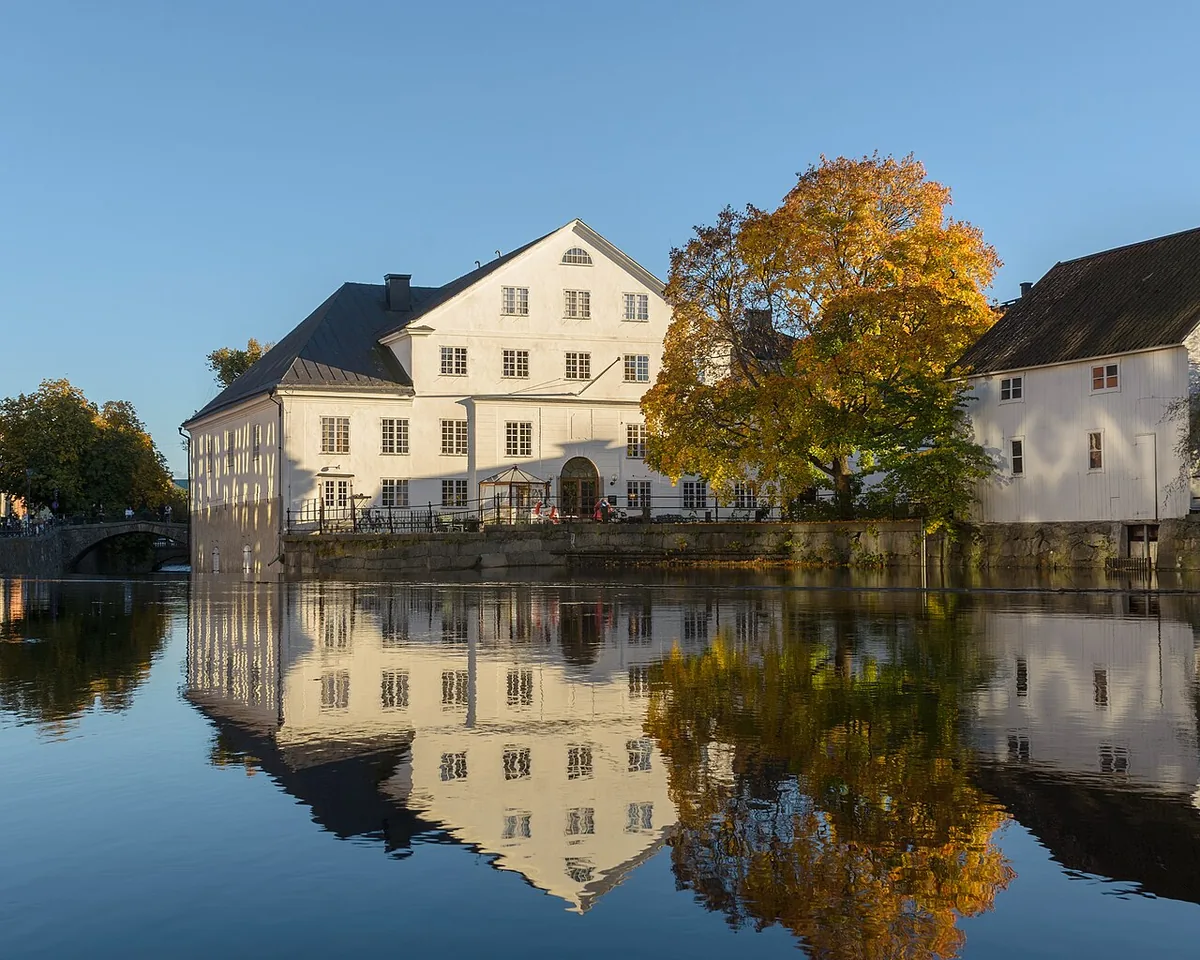
Upplandsmuseet tells the story of Uppsala and Uppland from its home in Akademikvarnen, a former watermill on the Fyris River. The mill’s own history—from medieval grain production and university monopoly to a 1959 museum opening—makes the building part of the collection.
Uppsala Cathedral
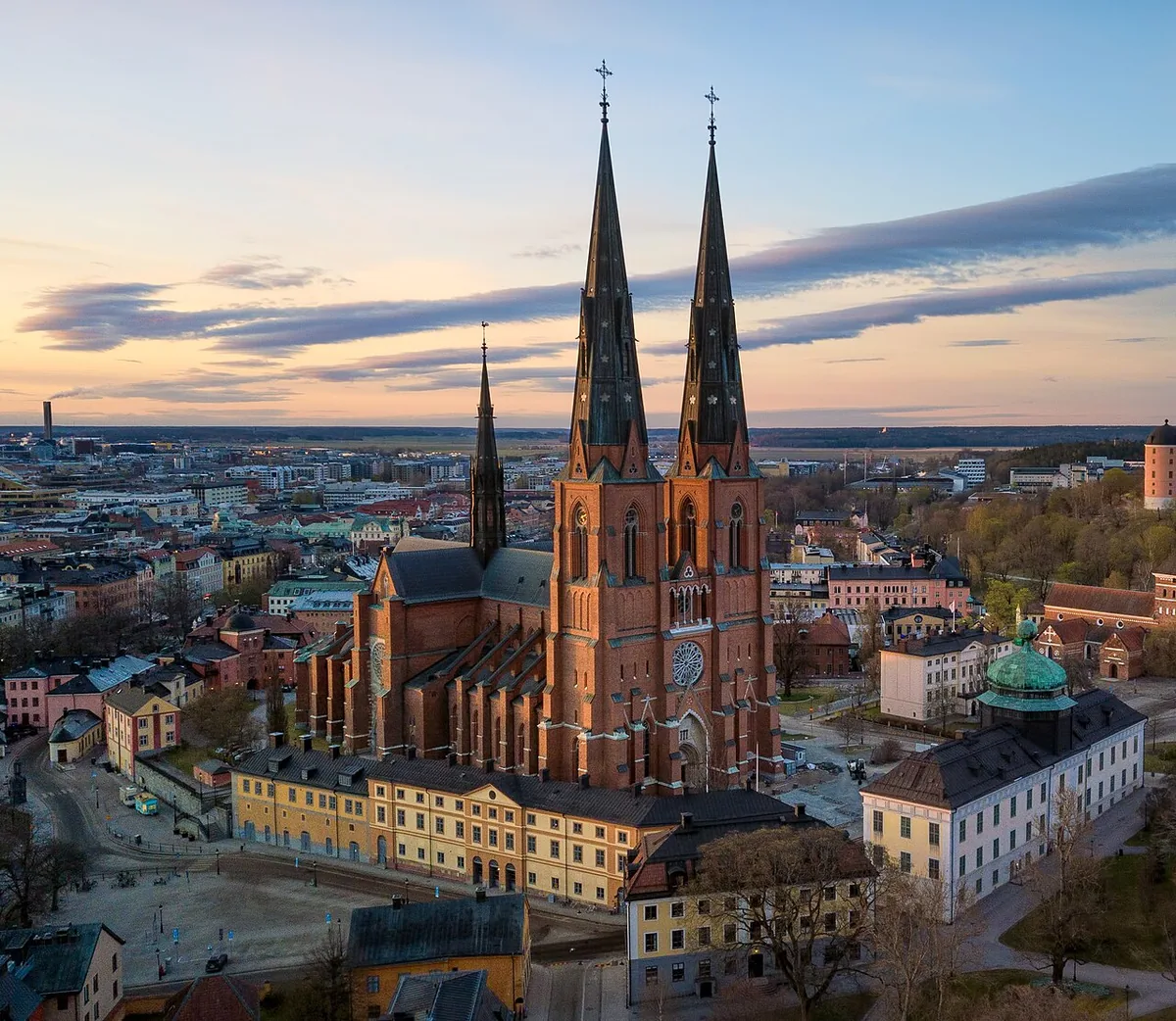
Built over more than 160 years and reshaped by fire, reform and restoration, Uppsala Cathedral remains Sweden’s national church landmark and the seat of its archbishop. Inside, medieval relics, royal tombs and a 19th-century Gothic revival meet in a living place of worship.
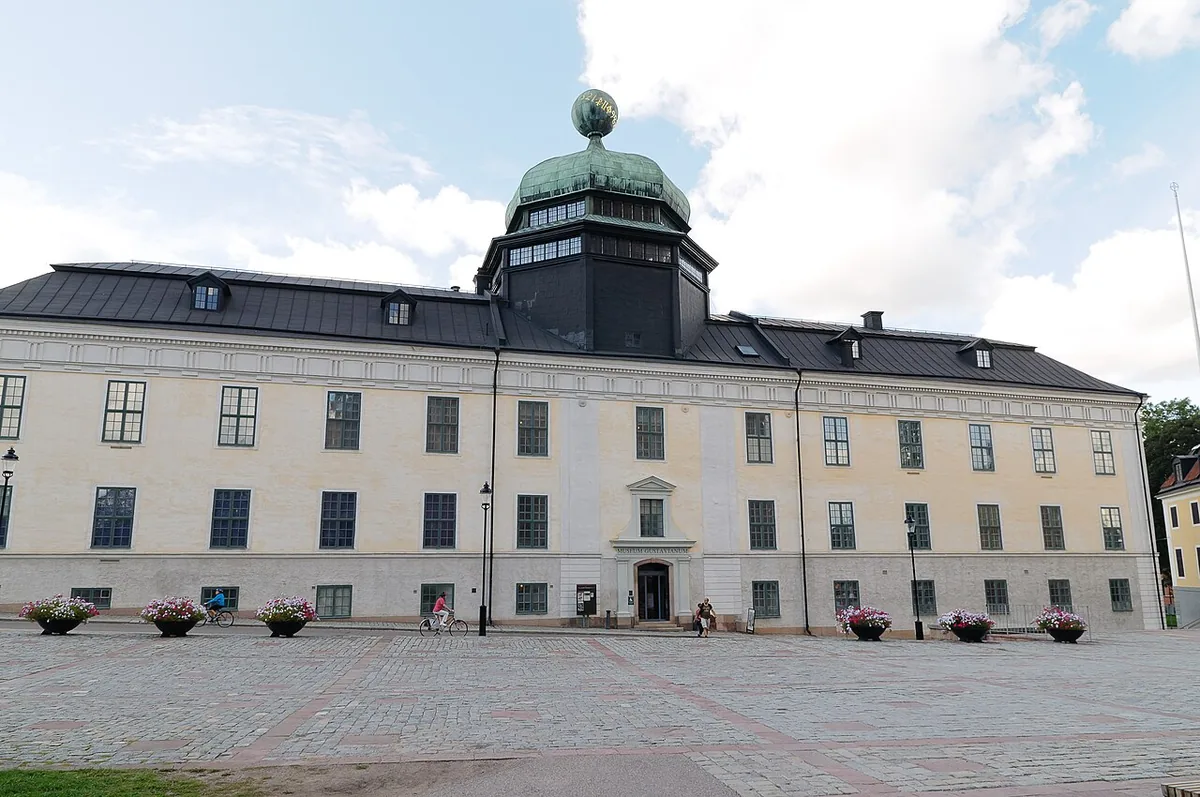
Gustavianum
Uppsala University’s oldest surviving building began as lecture halls, student rooms and a library. Today its museum collections share space with Olof Rudbeck’s reconstructed 17th-century anatomical theatre beneath the famous rooftop cupola.
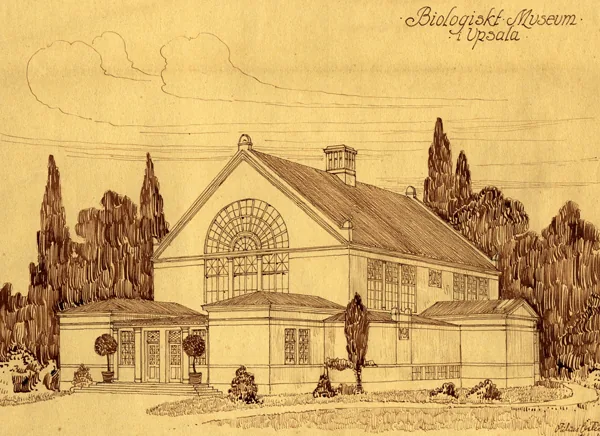
Biotopia
Biotopia brings Uppland’s wildlife and landscapes into focus through immersive early twentieth-century dioramas, geological displays and hands-on learning. Opened as Biologiska museet in 1910, it pairs preserved habitat scenes with a modern program rooted in Uppsala’s surrounding nature.
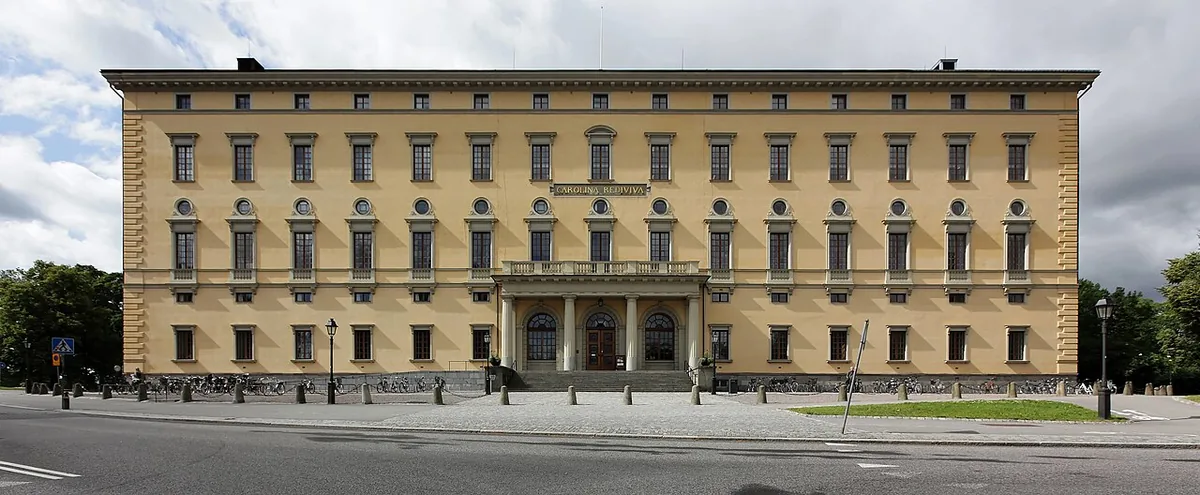
Carolina Rediviva
Carolina Rediviva is Uppsala University Library’s landmark main building, opened in 1841. A name meaning ‘the revived Carolina’ joins a demolished medieval university house to a royal-era library project; its former ceremonial hall, later reading rooms and modern extensions chart changing ideas abou