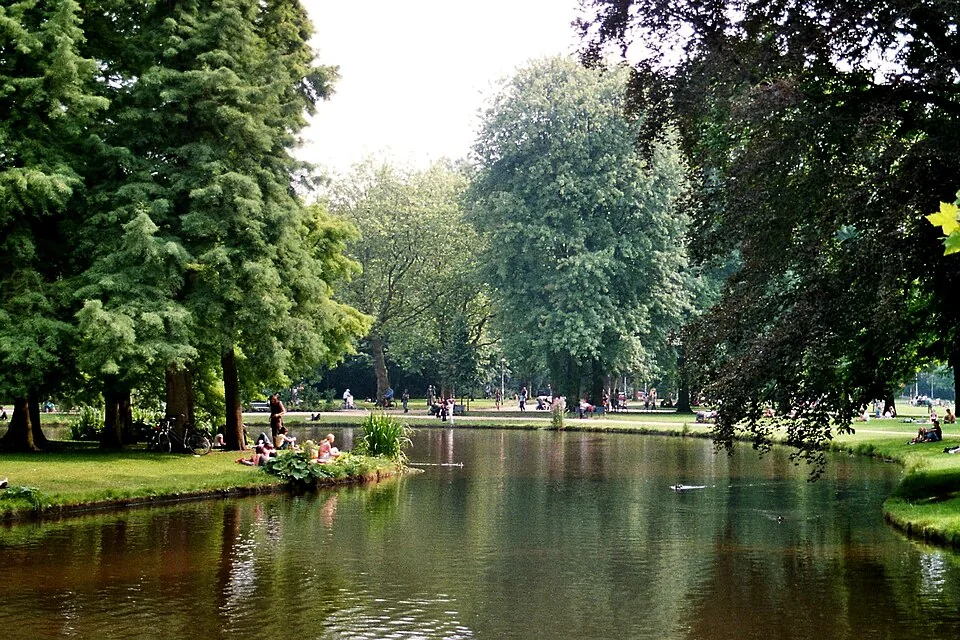
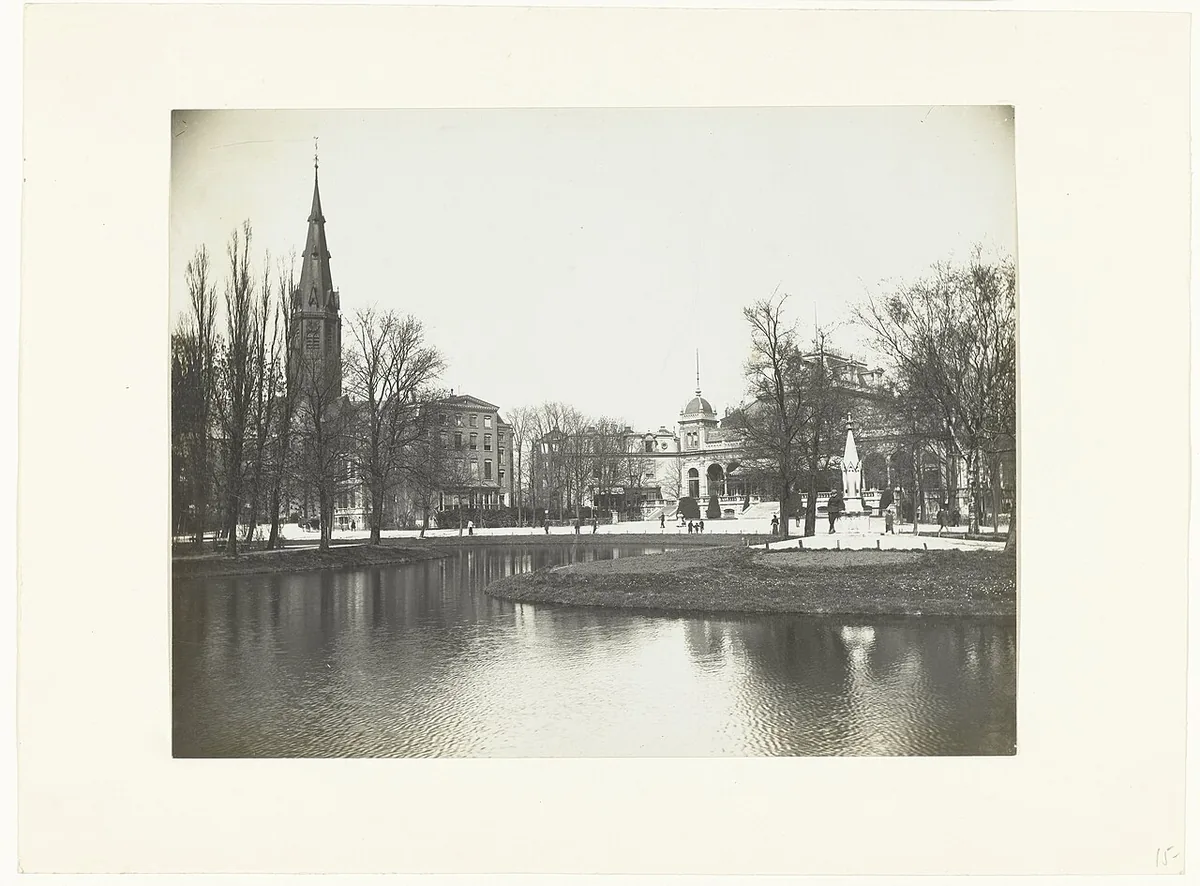
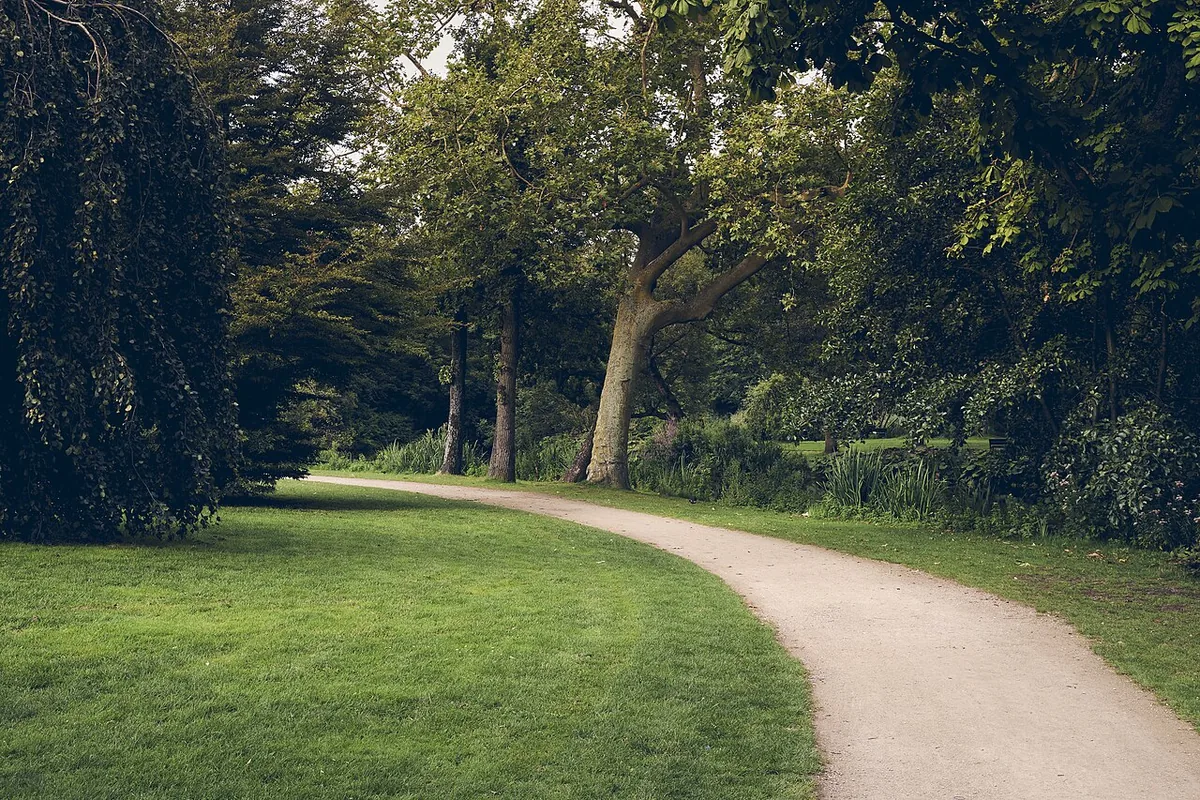
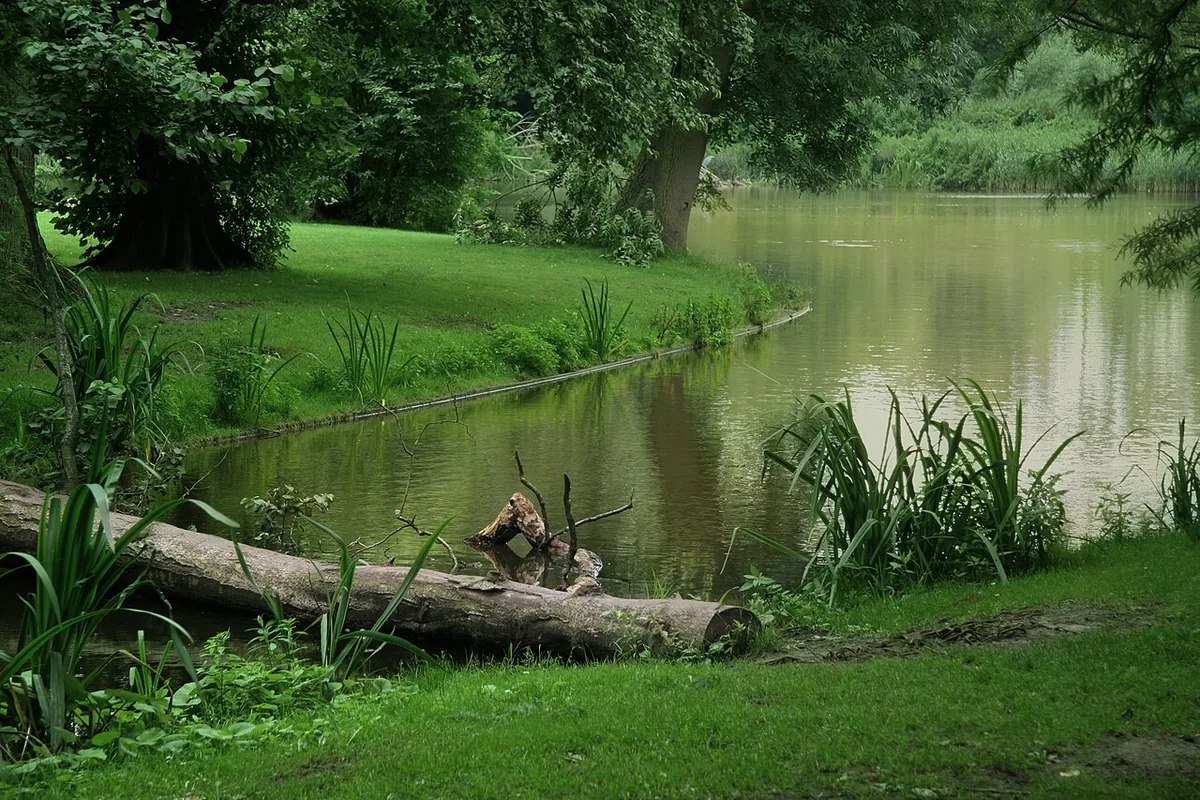
Follow the Vondelpark’s curving paths past ponds, bridges, and open lawns, and look for how the landscape hides and reveals the city. Opened in 1865, this deliberately natural-looking park began as a private civic project.
Quick facts
The first section of Vondelpark opened in 1865 as the Nieuwe Park, a privately initiated riding and walking park.
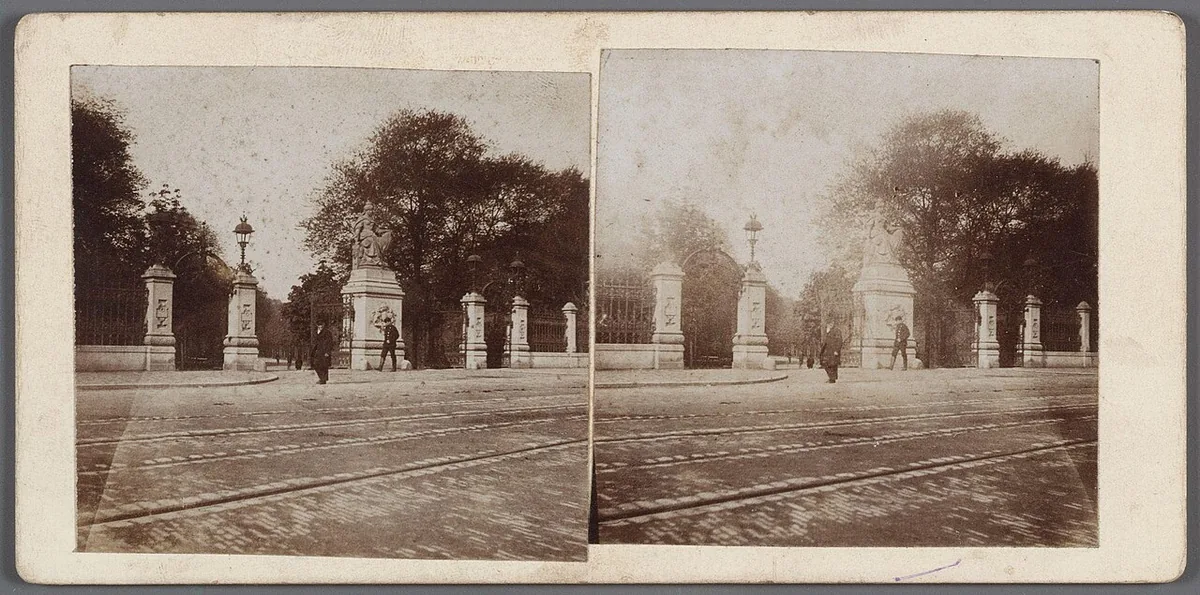
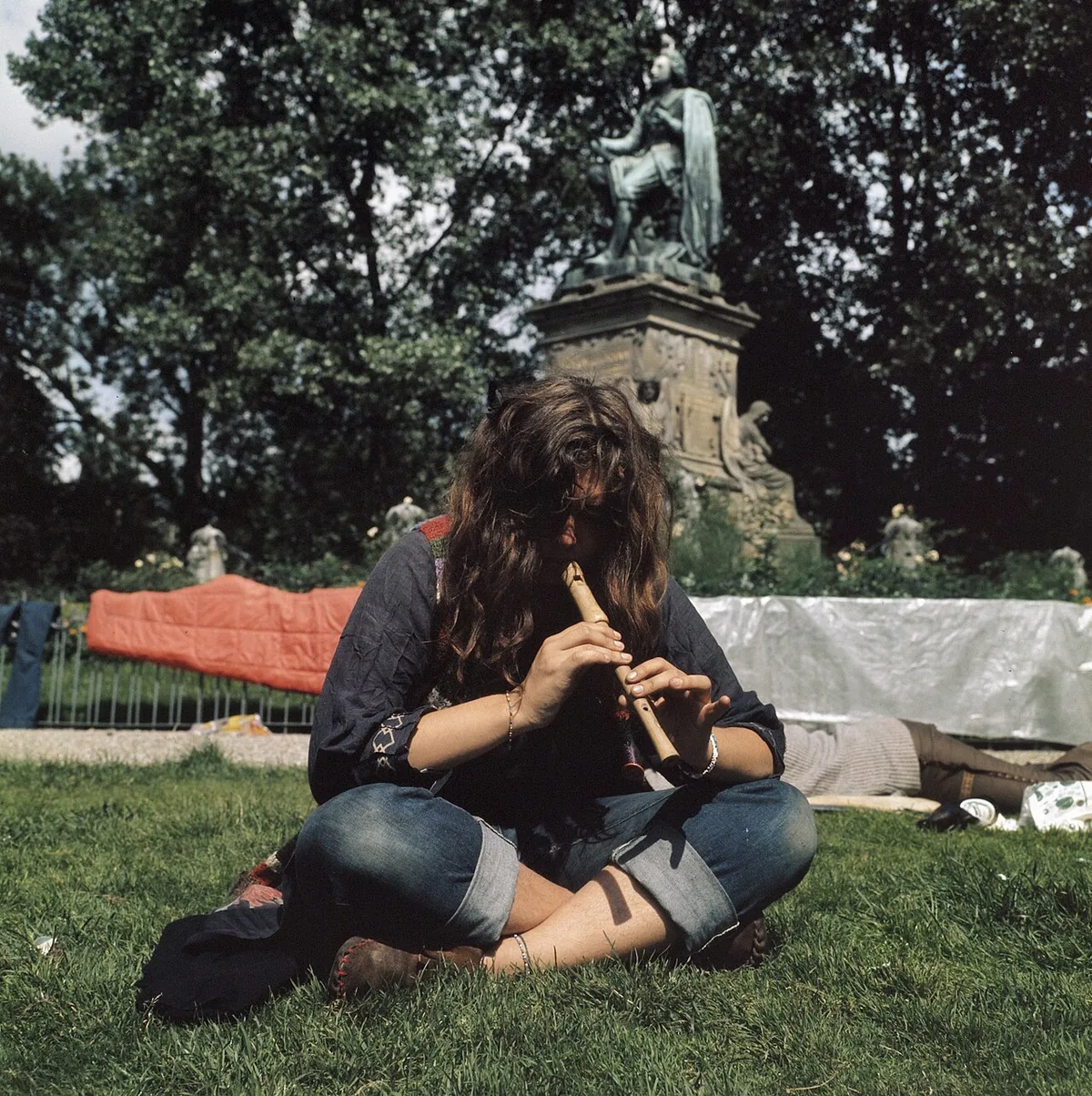
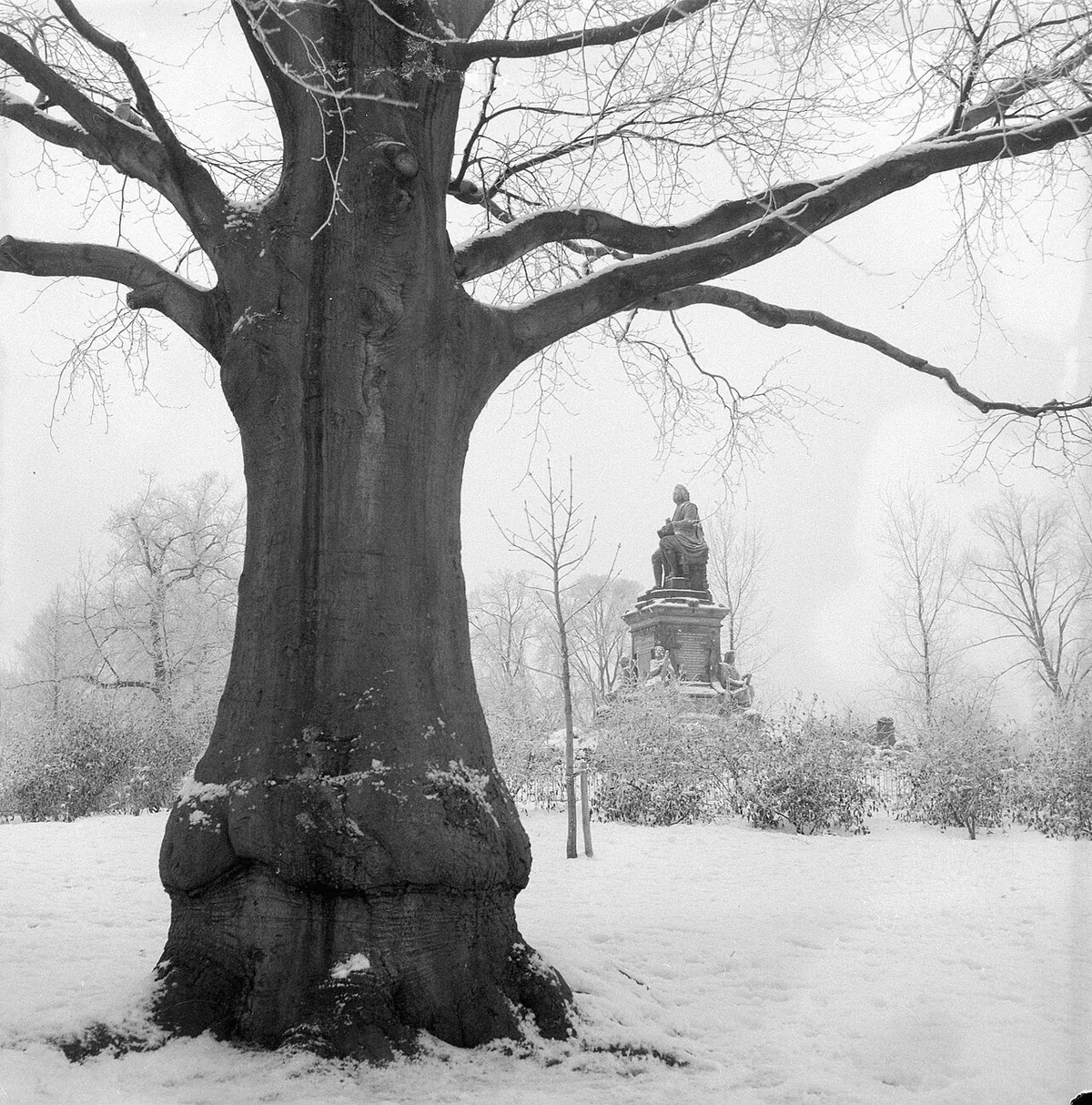
The statue of Joost van den Vondel installed in 1867 gave the park its name; the Rijksdienst voor het Cultureel Erfgoed records its placement on 18 October 1867.
Vondelpark was entered on the national monument register in 1996, the first Dutch city park to receive that status.
Planning your visit
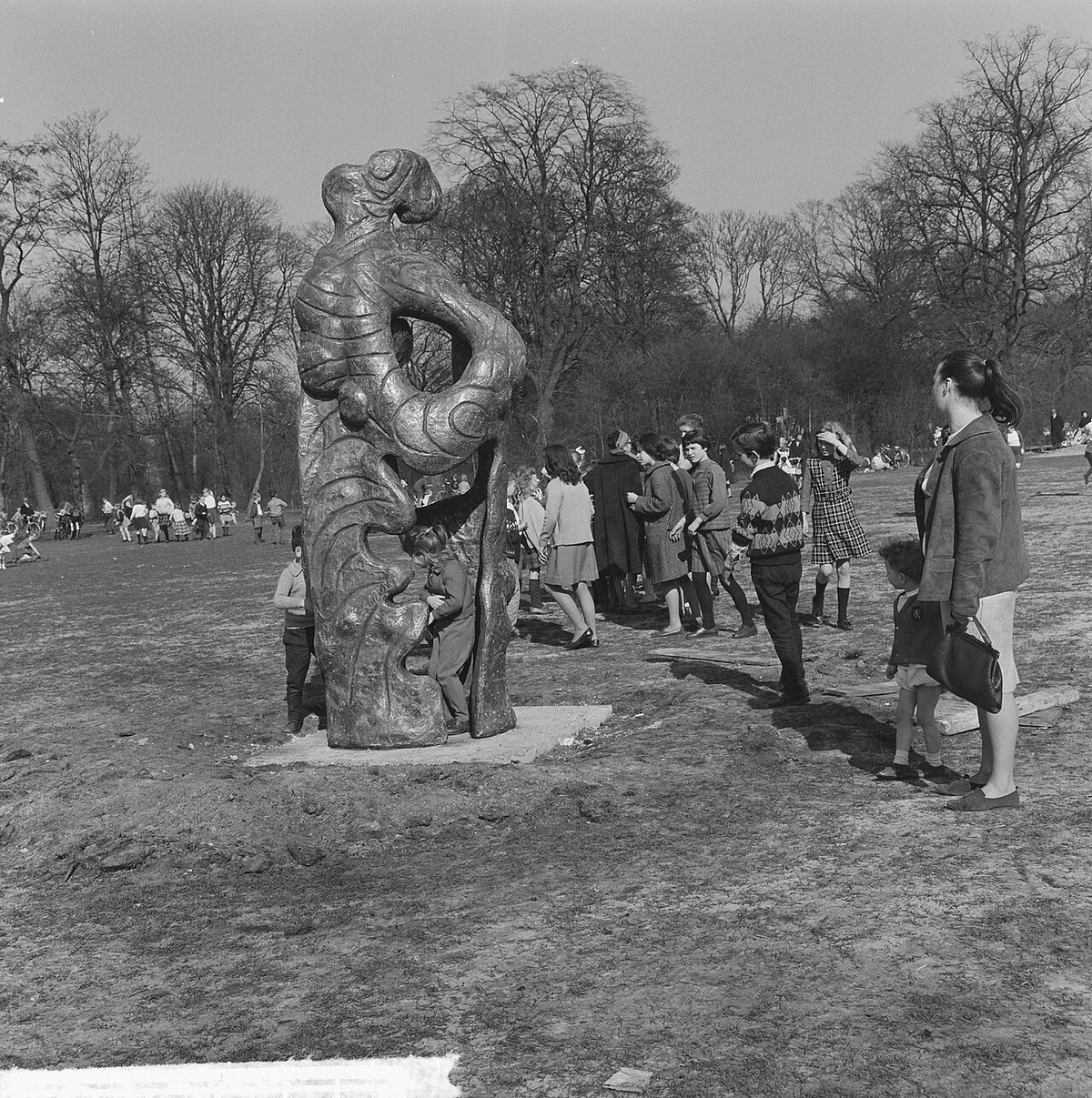
Vondelpark gives an Amsterdam visit a different rhythm from the nearby museums. Follow the paths between ponds and lawns, and look for the statue of the poet Vondel, whose name the park carries. The rose garden and outdoor sculptures provide reasons to pause; the open-air theatre is a separate destination with its own programme.
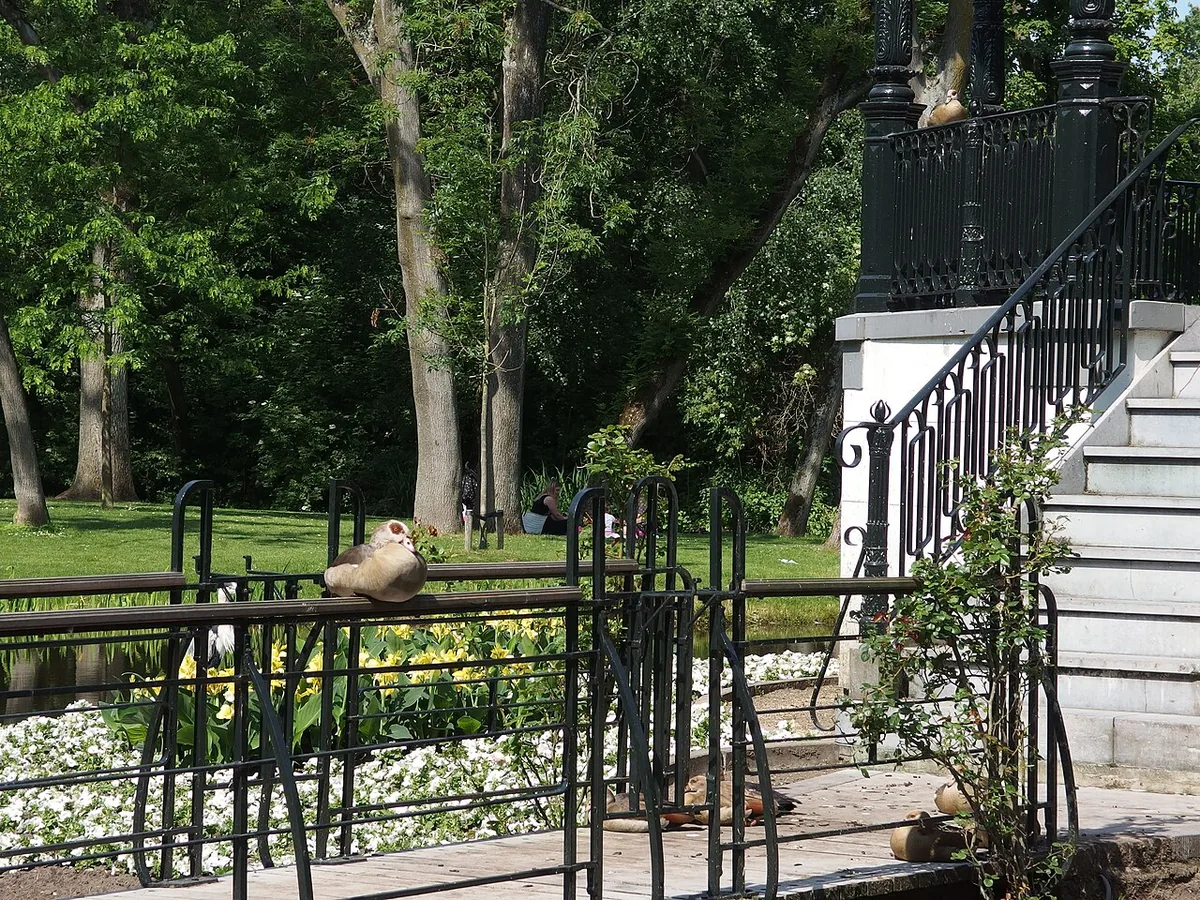
Use the park as a flexible walk alongside the Museum Quarter rather than a stop that requires you to cover every path. There are several entrances, so choose one that fits your next destination. I amsterdam's accessibility guide describes flat entrances and wide paved perimeter paths, useful starting points when planning a visit with a wheelchair or pushchair.
Check current park notices and any theatre programme before relying on a particular activity. Cafés, performances and seasonal planting offer different experiences at different times. Follow signs on site for permitted cycling and other uses; a public park is also a shared everyday space for residents.
Sources and verification
Sources checked by Finding Locations using AI-assisted research. This is a source check, not a field inspection. Check the official venue information before visiting.
Get directions to Vondelpark. Confirm the visitor entrance and current access with the venue before travelling.
Audio guide
Listen to this place’s guide.
Guide
Vondelpark’s paths seem to make decisions for you. A curve hides the next pond; a bridge or stand of trees interrupts a straight view. That carefully composed surprise is the park’s signature. Jan David Zocher and his son Louis Paul designed it in the English landscape style, which arranged lawns, water, wooded pockets and winding routes to suggest nature rather than a formal geometric garden.
Continue exploring
Discover the full story
Keep reading with a travel pass and explore every full guide and tour.
UpgradeMore places in Amsterdam
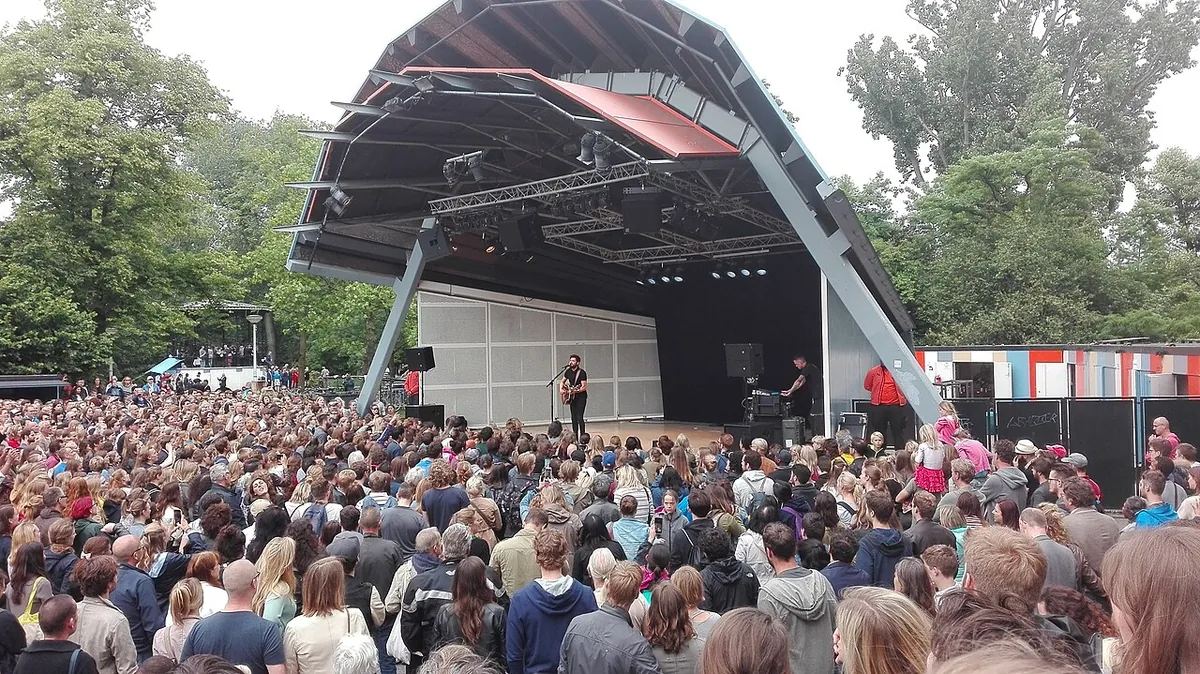
Vondelpark Open Air Theatre
Since the 1950s, music and performance have drawn audiences to Vondelpark. The open-air theatre opened in 1965, and a regular free programme was established in 1974, turning the park’s informal culture of gathering into an enduring public stage.
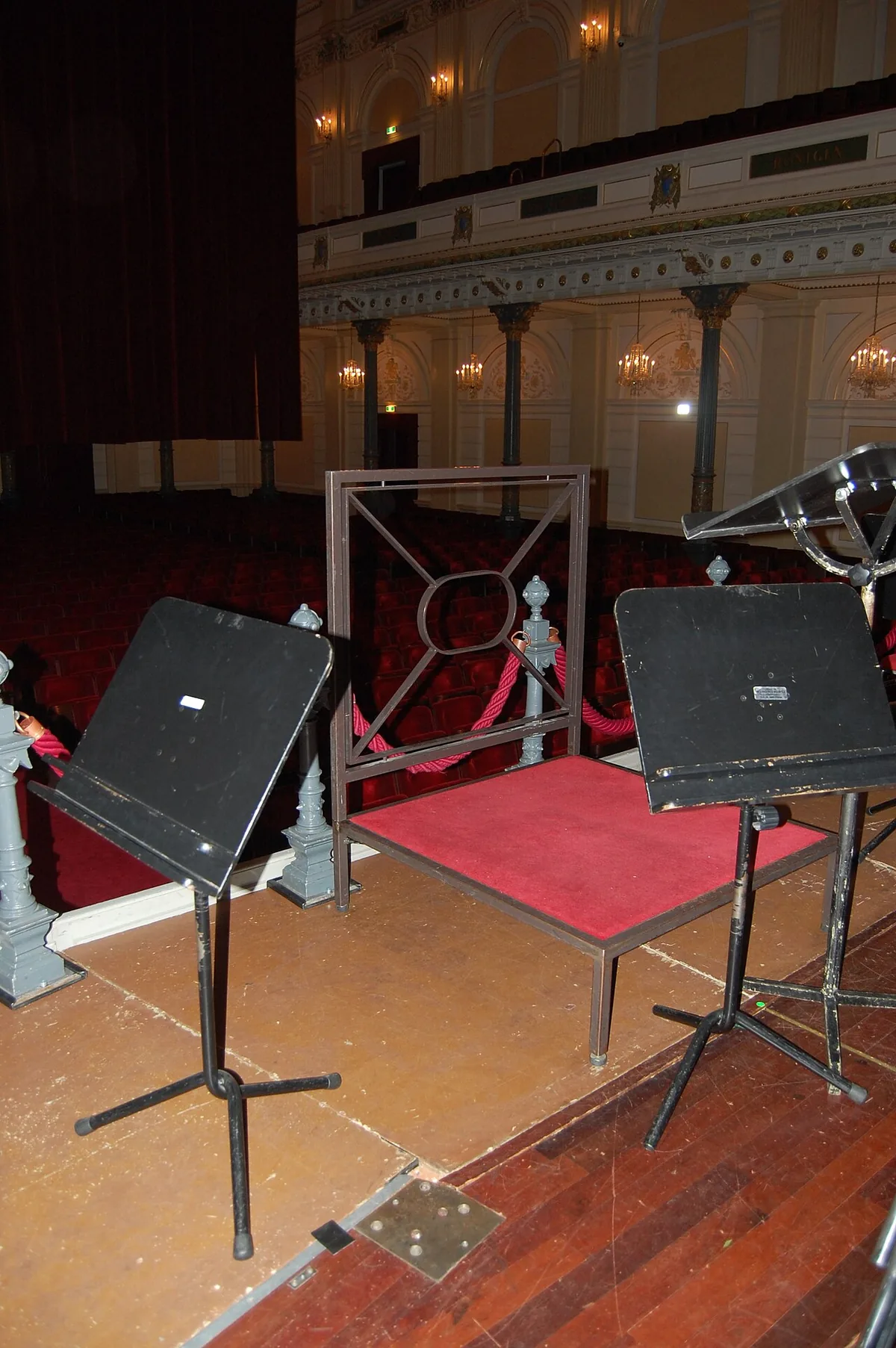
Concertgebouw
Amsterdam’s Concertgebouw began as a citizens’ campaign for a dedicated concert hall on the fields of Nieuwer-Amstel. Opened in 1888, its Main Hall became renowned only after years of acoustic adjustment; a memorial inside also recalls Jewish musicians dismissed during the occupation.
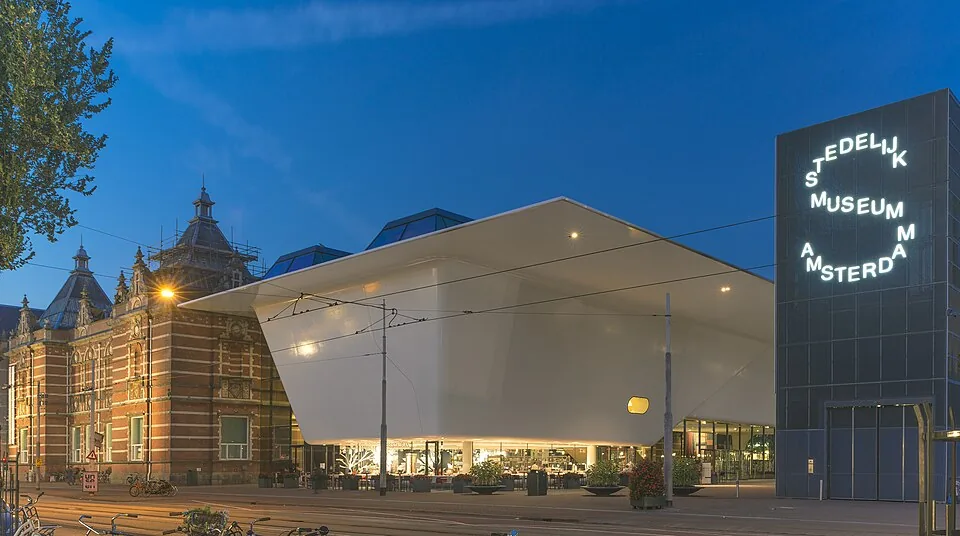
Stedelijk Museum
At Museumplein, a nineteenth-century red-brick museum meets a sweeping white extension opened in 2012. Inside, the Stedelijk brings modern and contemporary art into conversation with design and photography. Its changing displays invite close looking, while the building and its history reveal how Ams
Van Gogh Museum
At the Van Gogh Museum, follow the artist’s work alongside the family story that kept it together. Compare the dark, carefully staged Potato Eaters with later experiments in color, and notice how letters, drawings and works by contemporaries turn a celebrated name into a working artist in his time.
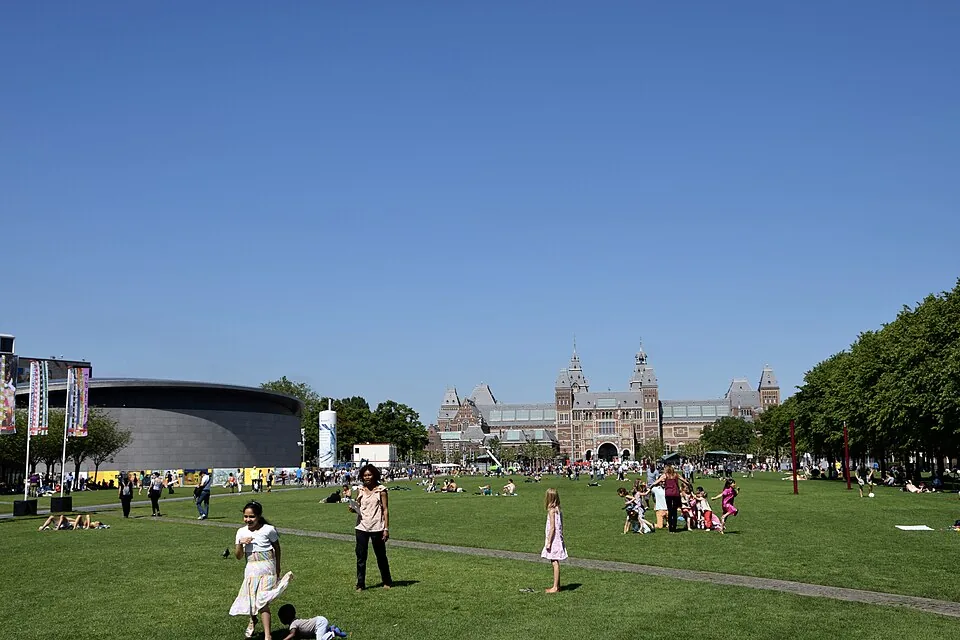
Museumplein
Museumplein is an open public square and park in Amsterdam-Zuid’s Museumkwartier, framed by major cultural institutions. Its broad lawn and tree groves reflect a 1999 redesign; the space also serves sport, neighborhood recreation, protest and public events.
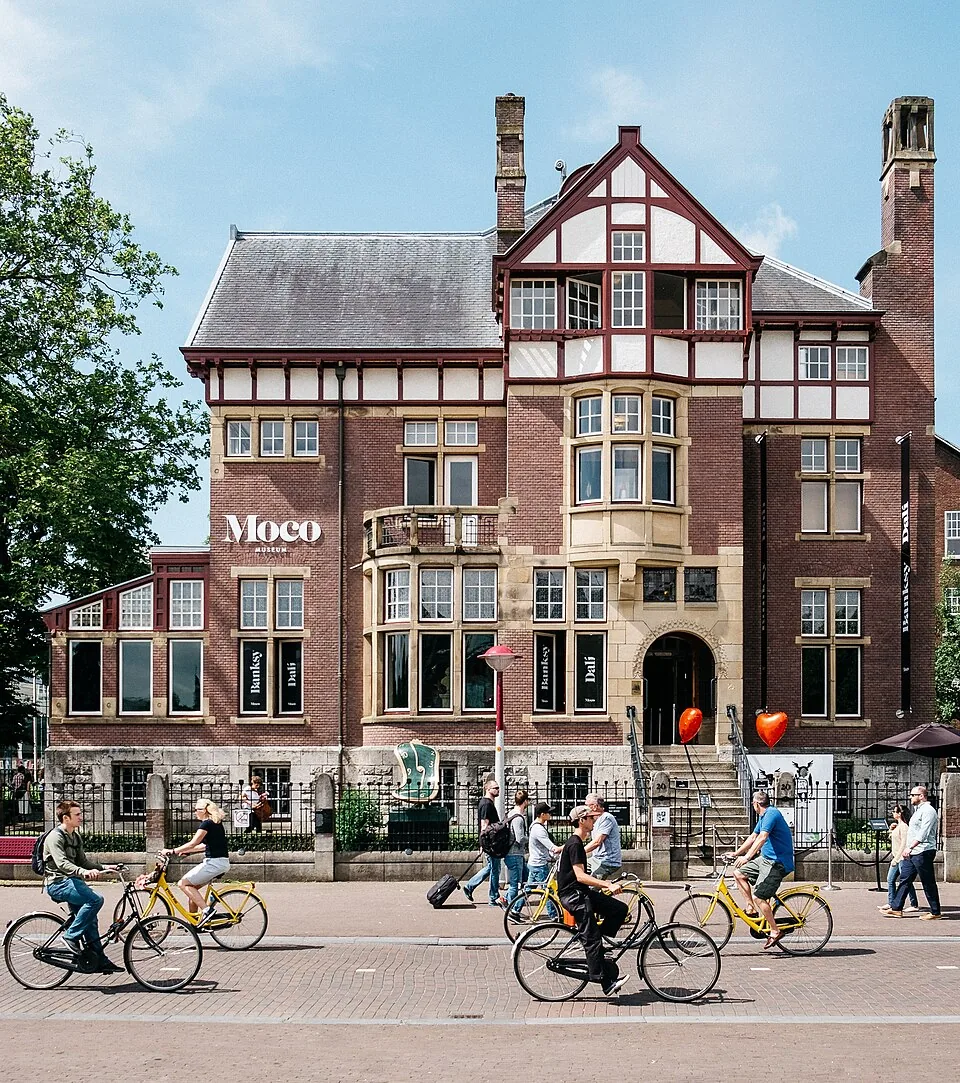
Moco Museum
Inside Villa Alsberg, an early twentieth-century residence on Museumplein, Moco places modern, contemporary and street art in domestic-scale rooms. Its history as a private home, religious residence and museum shapes how visitors encounter the work.