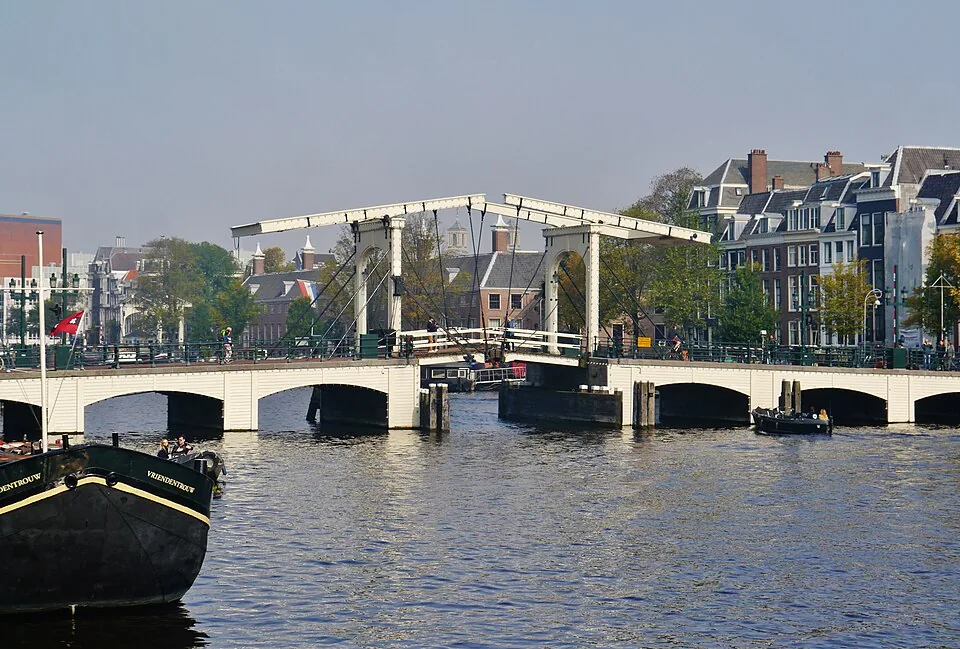
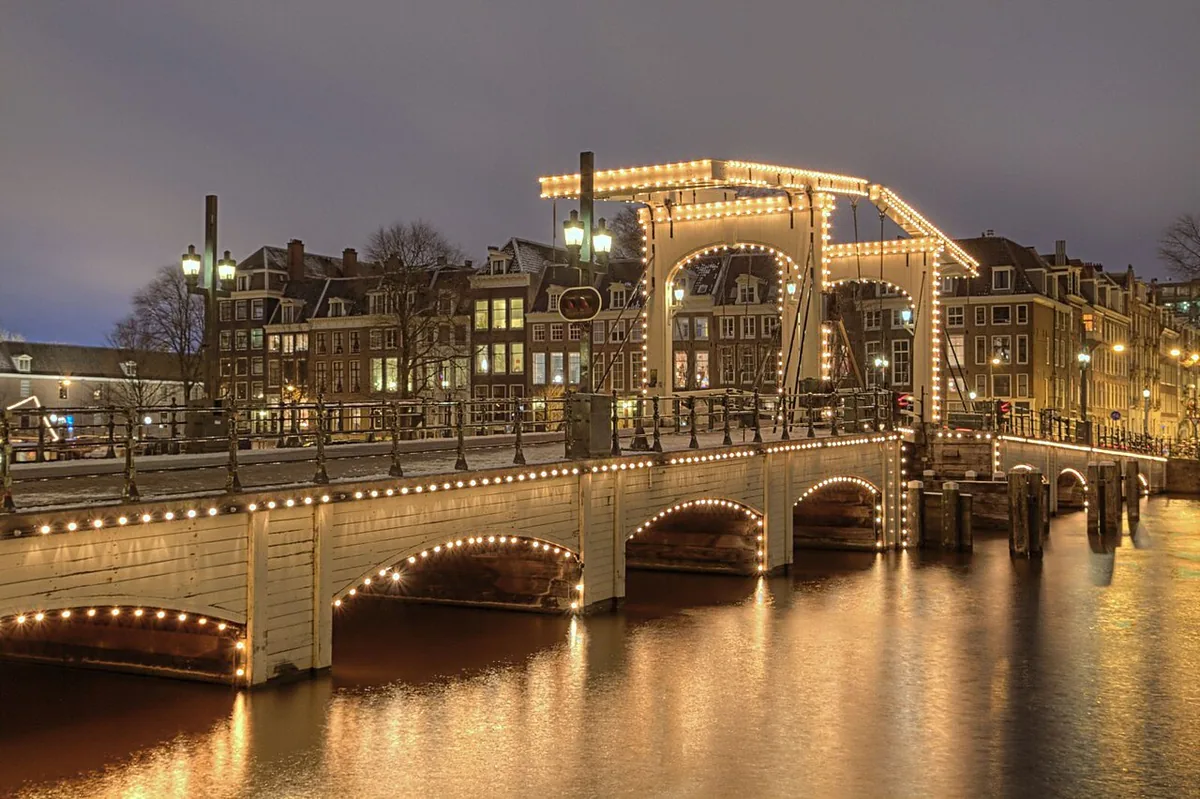
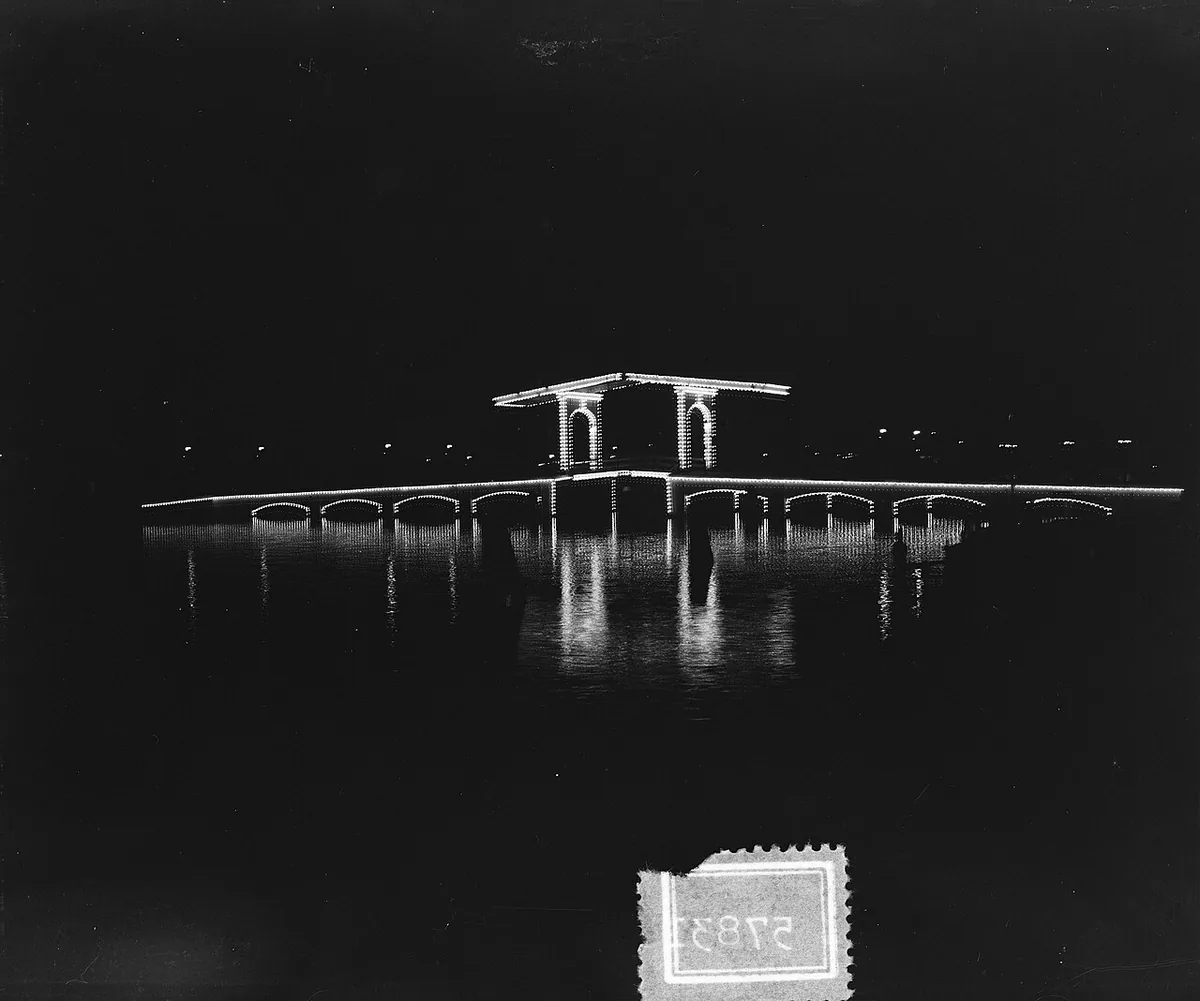
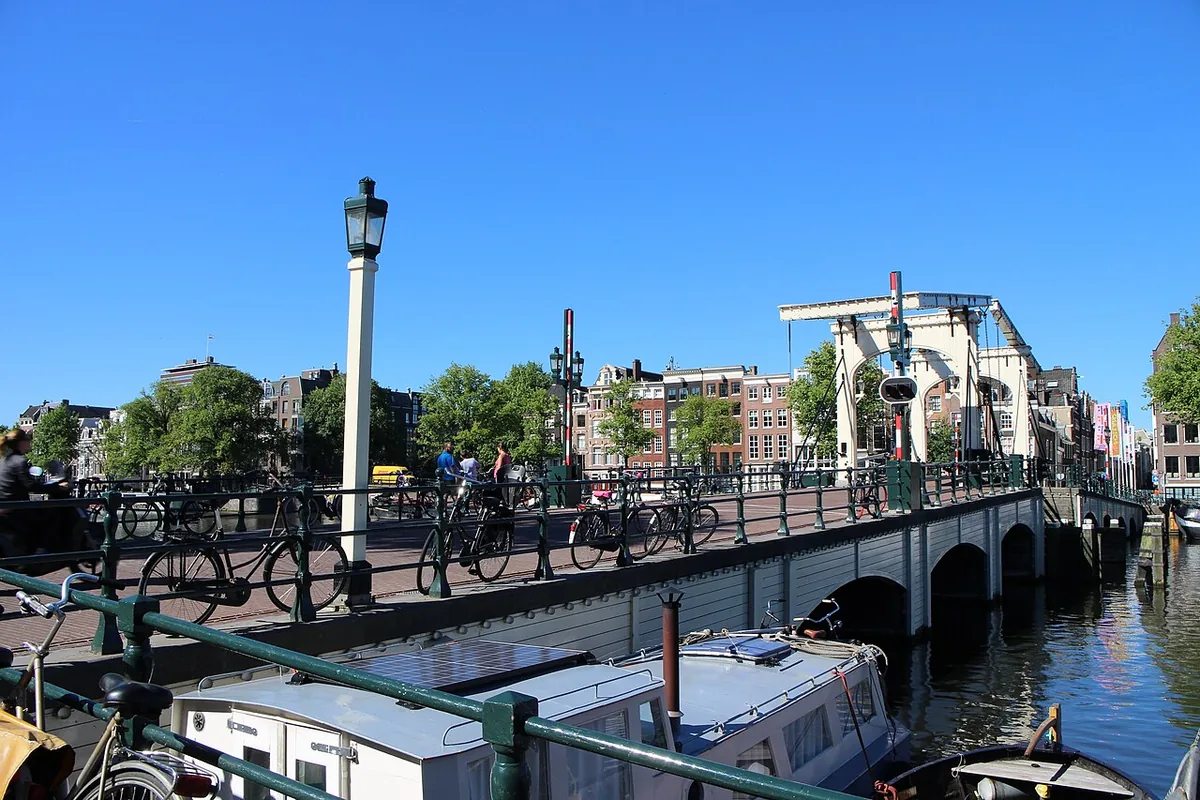
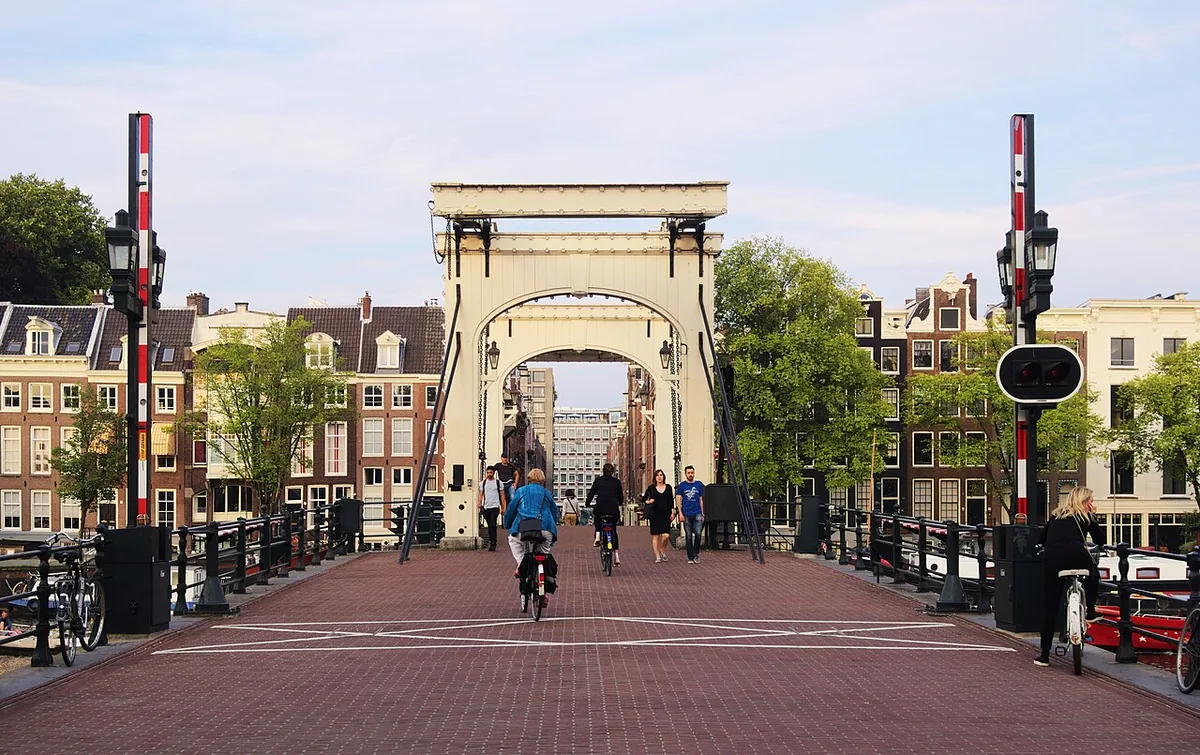
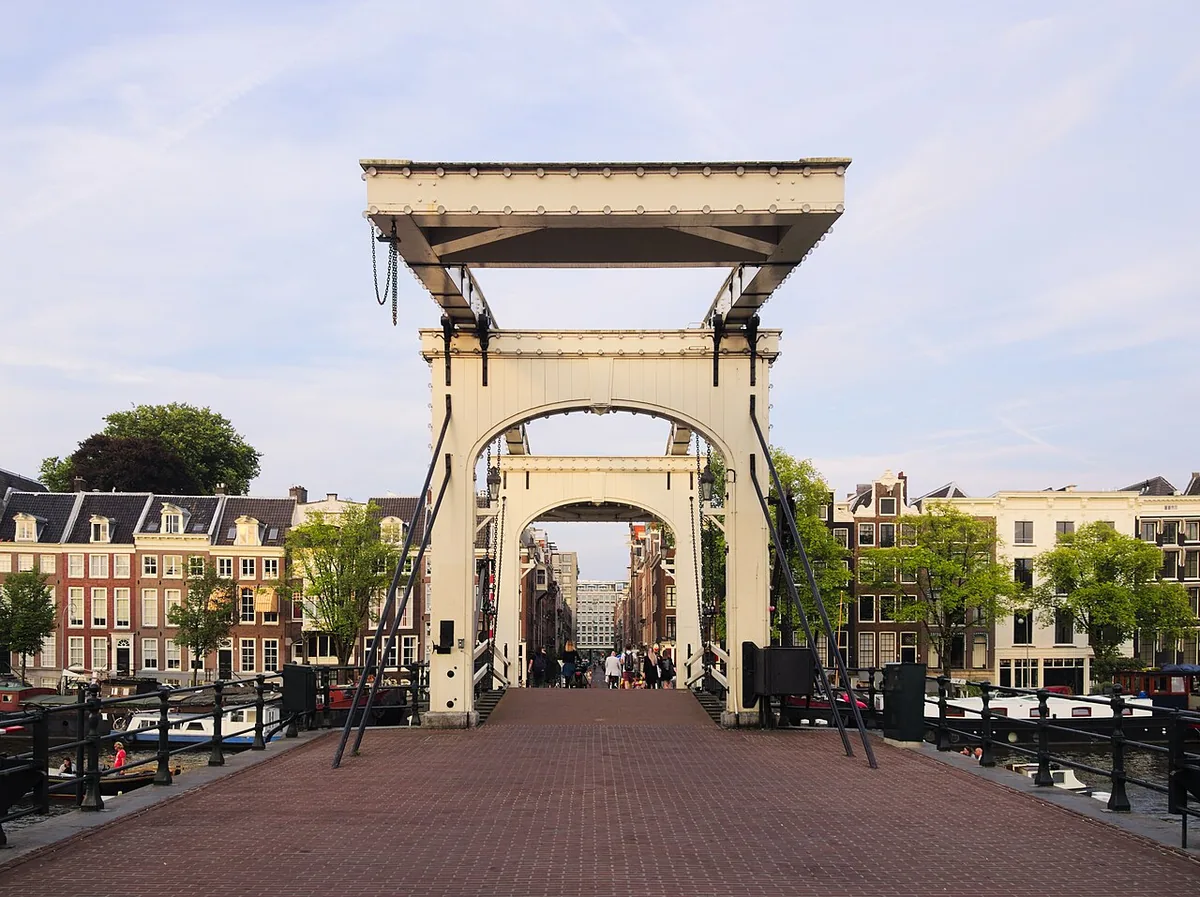
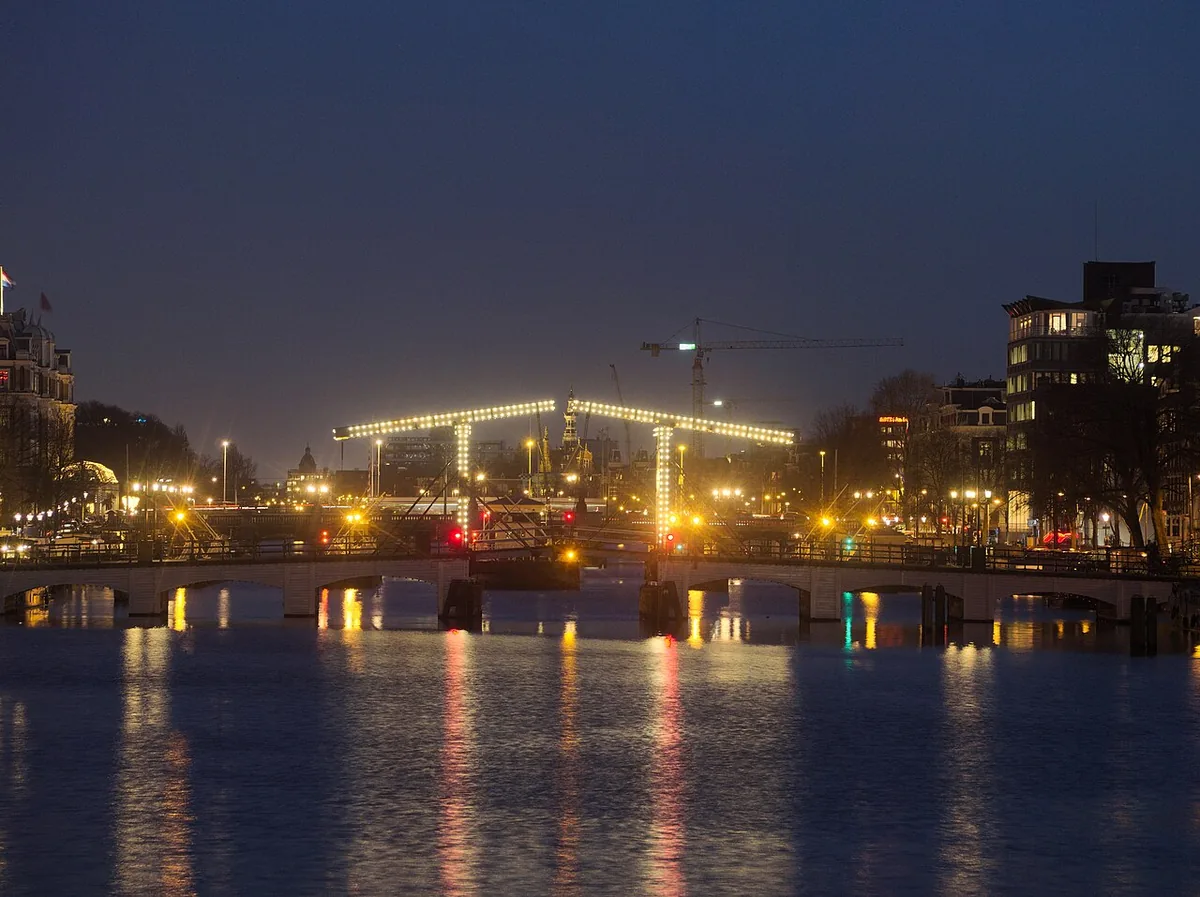
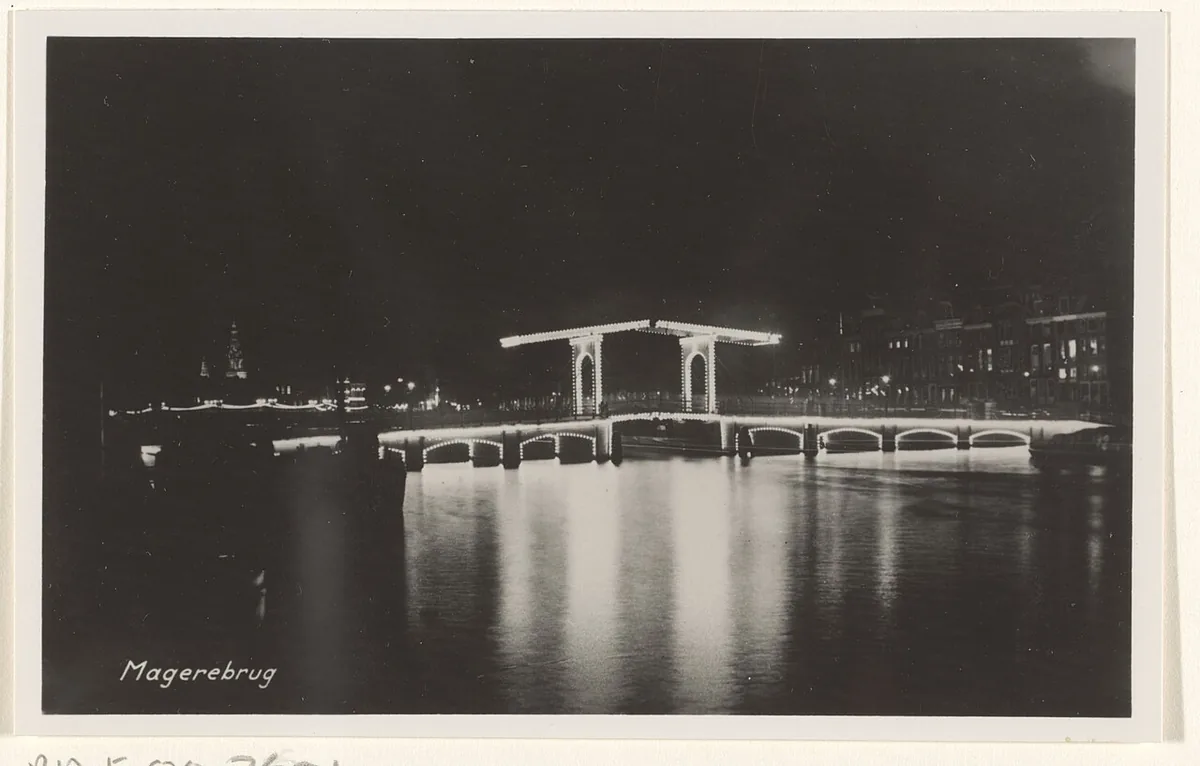
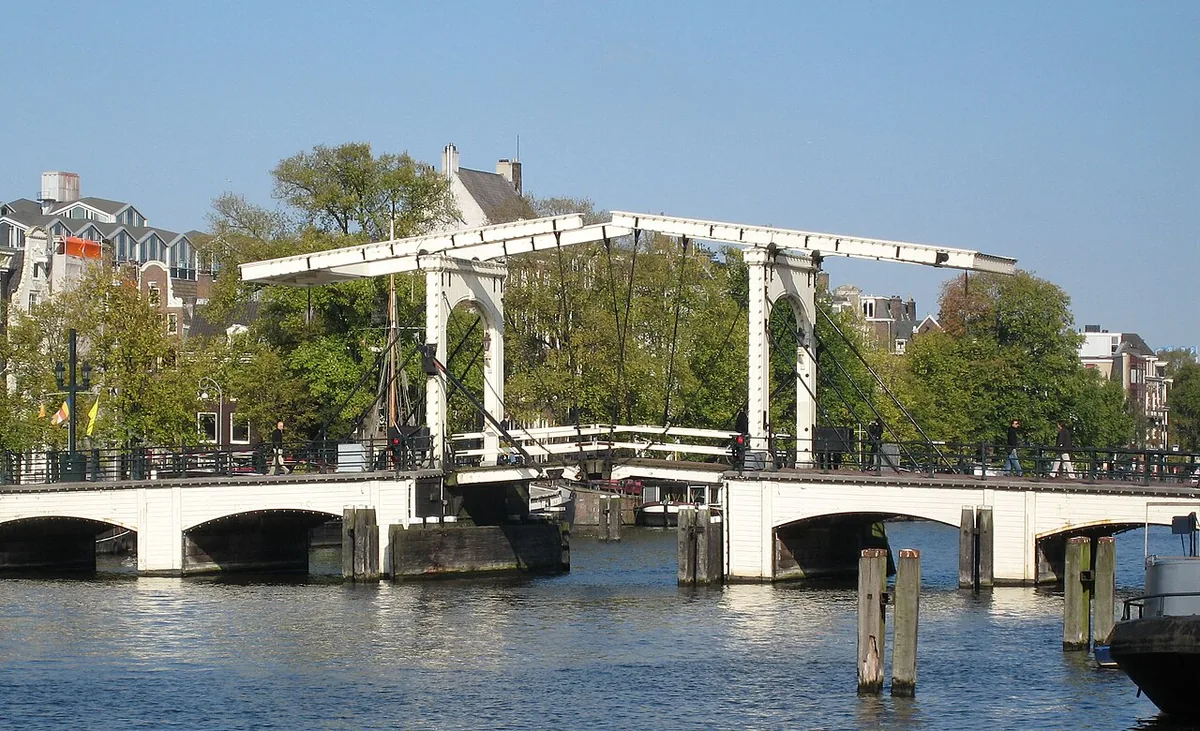
The Magere Brug is a double wooden lifting bridge across the Amstel, linking Kerkstraat and Nieuwe Kerkstraat. Rebuilt in 1934 to a design by Piet Kramer, it preserves a familiar profile while serving as working river infrastructure.
Quick facts
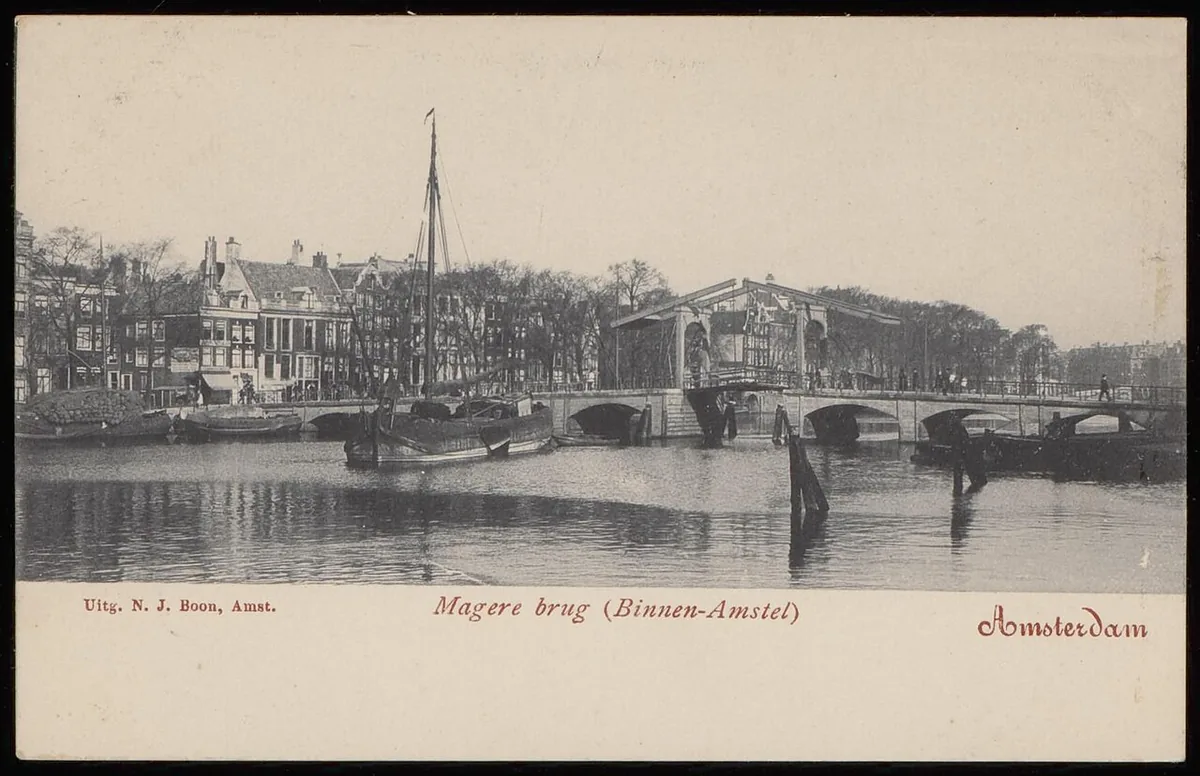
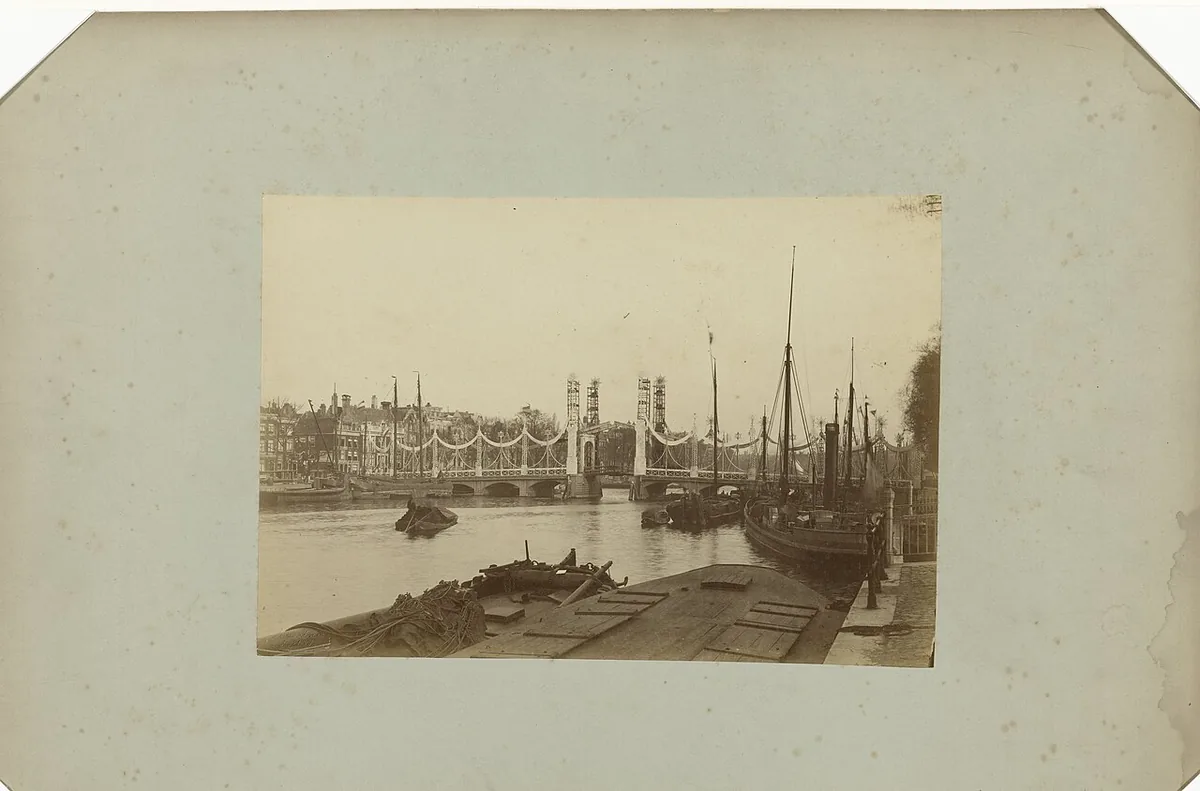
The original wooden Kerkstraatbrug was built in 1691 with thirteen small vessel openings; its narrow deck gave rise to the nickname Magere Brug.
The current nine-opening profile dates to a 1934 rebuild by municipal architect Piet Kramer, who renewed the bridge in its historic style and widened its approaches.
Two bridge keepers operated the lifting mechanism by hand until automation in 1994; the change followed safety concerns raised by labor inspectors.
Get directions to Magere Brug. Confirm the visitor entrance and current access with the venue before travelling.
Audio guide
Listen to this place’s guide.
Guide
The Magere Brug, or “Skinny Bridge,” crosses the Amstel between Kerkstraat and Nieuwe Kerkstraat in Amsterdam’s Centrum. Its assigned map point falls on the bridge itself. The white-painted timber outline looks old, but the current bridge was rebuilt in 1934: a working piece of infrastructure whose familiar shape was deliberately carried forward through successive rebuilds.
Continue exploring
Discover the full story
Keep reading with a travel pass and explore every full guide and tour.
UpgradeMore places in Amsterdam
H’ART Museum
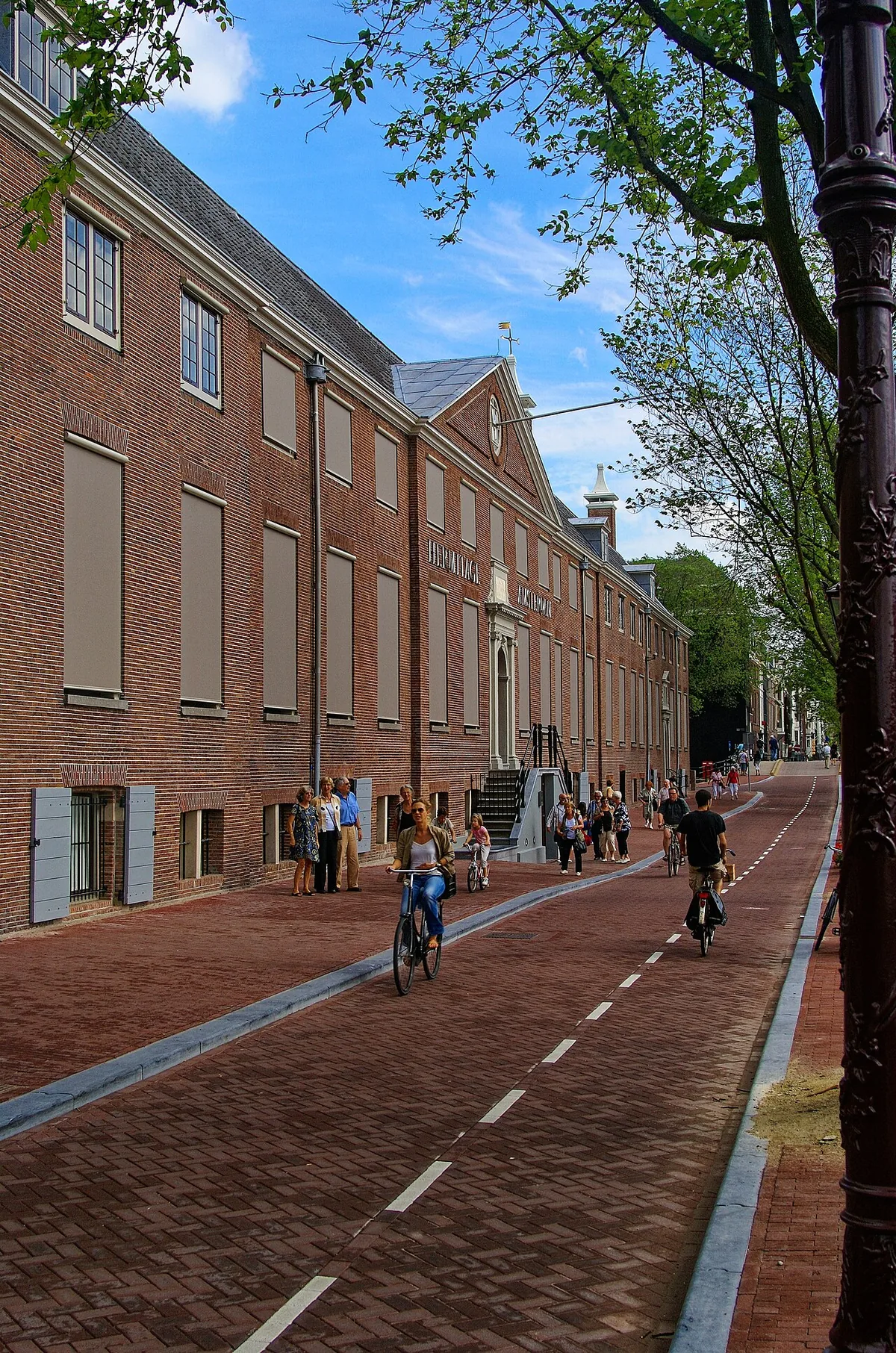
H’ART Museum occupies the Amstelhof, a riverside care home built for older women in the 1680s. Its long façade and courtyard reflect church-run care, while later museum chapters—from Hermitage Amsterdam to international partnerships—show how the building continues to serve a changing city.
Jewish Historical Museum
Amsterdam’s Jewish Museum + junior (formerly the Jewish Historical Museum) occupies four connected Ashkenazi synagogues on Jonas Daniël Meijerplein. Their restored interiors and modern links trace both centuries of Jewish communal life and the buildings’ transformation into a museum.
Waterlooplein
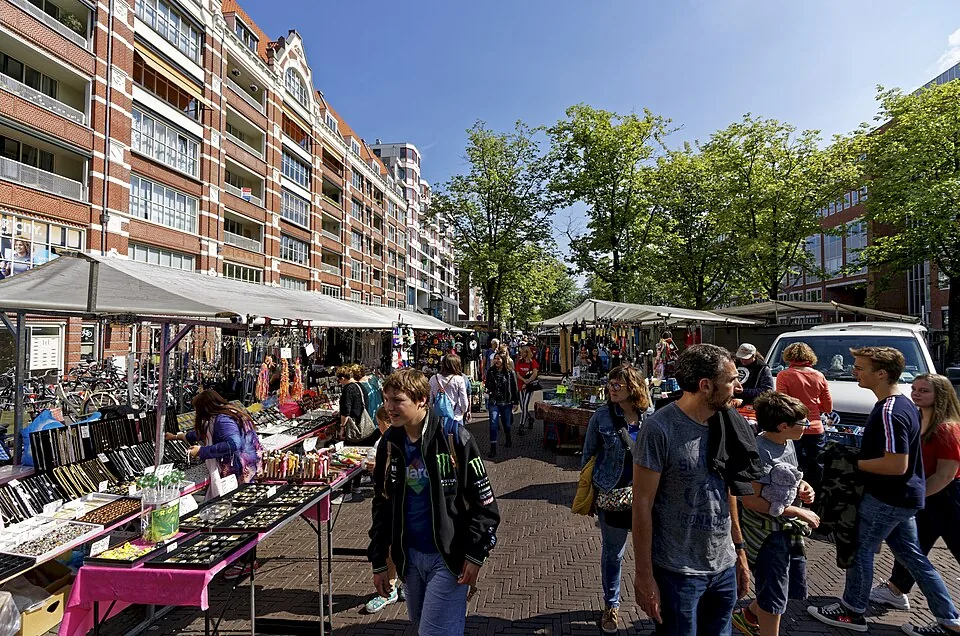
Waterlooplein is a market square formed over two filled canals in Amsterdam’s historic Jewish quarter. Its story connects Jewish street trade and wartime persecution with metro construction, neighborhood protest, and the Stopera redevelopment.
Portuguese Synagogue
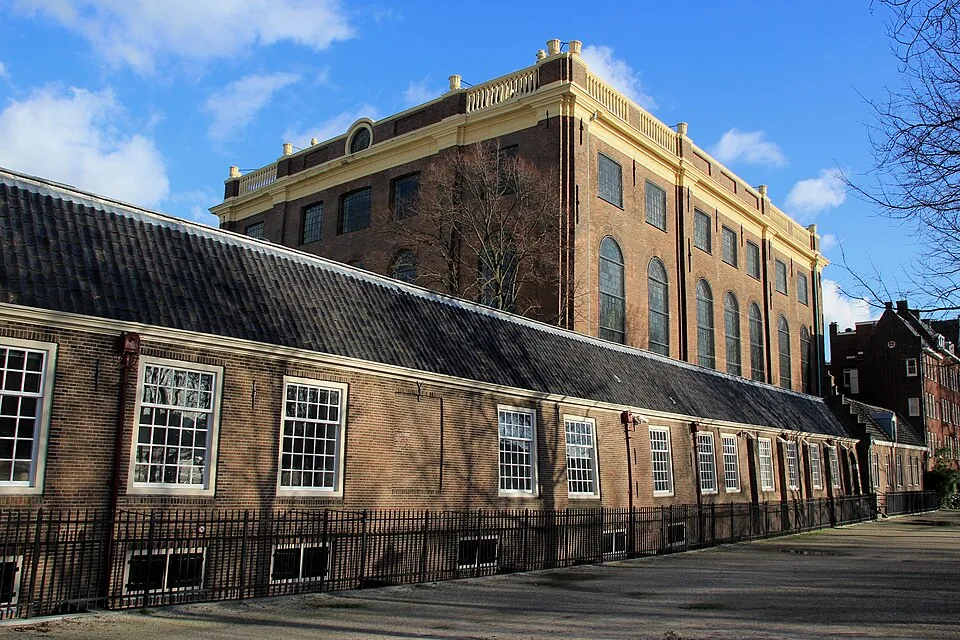
Amsterdam’s Portuguese Synagogue, or Esnoga, is an active place of Sephardic worship, opened in 1675. Its historic interior centers on a tebah and Torah ark, with candle chandeliers and a sanded pine floor still linking the space to its religious use today.
Rembrandtplein
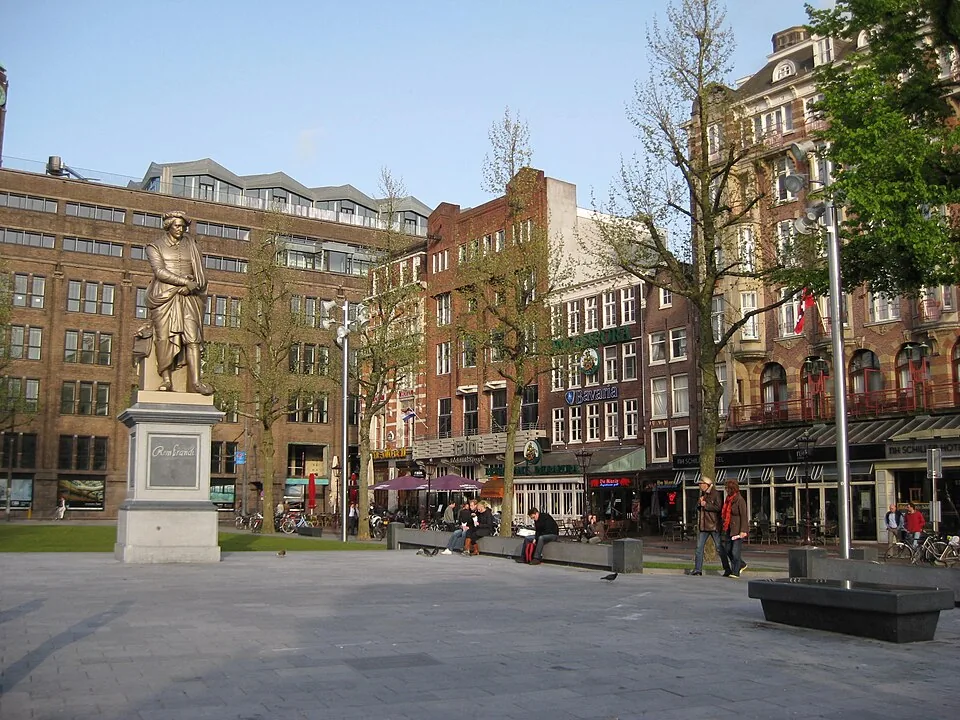
Rembrandtplein grew from a wagon stopping place and Botermarkt into a monument square and Amsterdam entertainment district. Its lanes recall the carts and horses once served here; cafés, terraces and nearby Reguliersdwarsstraat carry later histories of cultural life and queer nightlife.
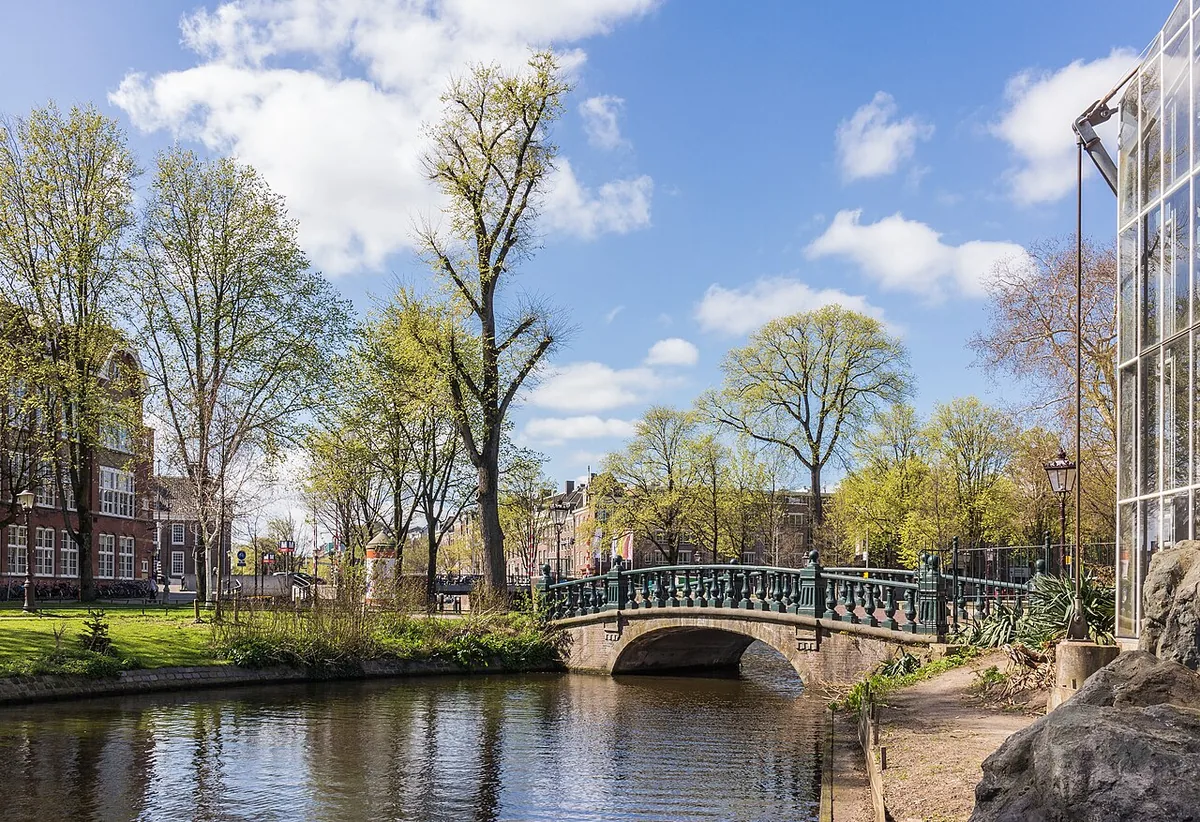
Hortus Botanicus
Amsterdam’s Hortus Botanicus grew from a 1638 medicinal garden into a living botanical collection. At the Plantage site since 1682, it brings historic catalogues, glasshouses, plant science and the city’s global trade histories together.