Explore the Louvre as a fortress transformed into a royal palace and public museum. Medieval remains, the Grande Galerie, and I. M. Pei’s pyramid reveal how each era reshaped this Paris landmark.
Quick facts
Philippe Auguste began building the Louvre fortress in 1190; excavated medieval moat and enclosure remains survive beneath the museum.
The Grande Galerie was built under Henri IV to link the Louvre with the Tuileries Palace; the 460-metre riverside gallery later became an early public museum space.
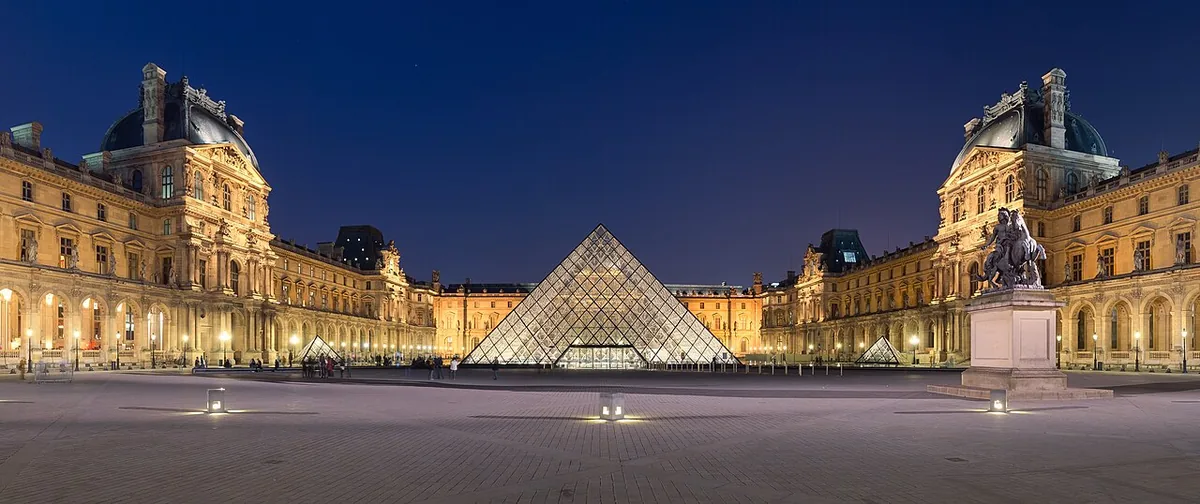
The Muséum central des arts opened to the public on 10 August 1793, and I. M. Pei’s pyramid was inaugurated in 1989.
Planning your visit
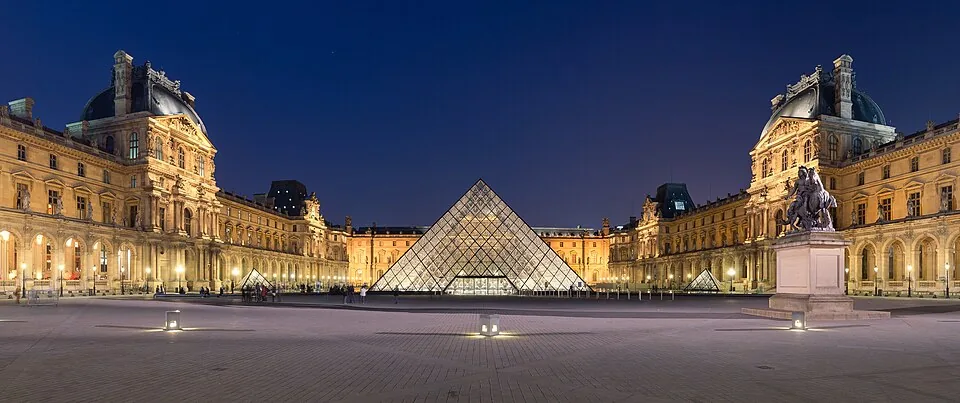
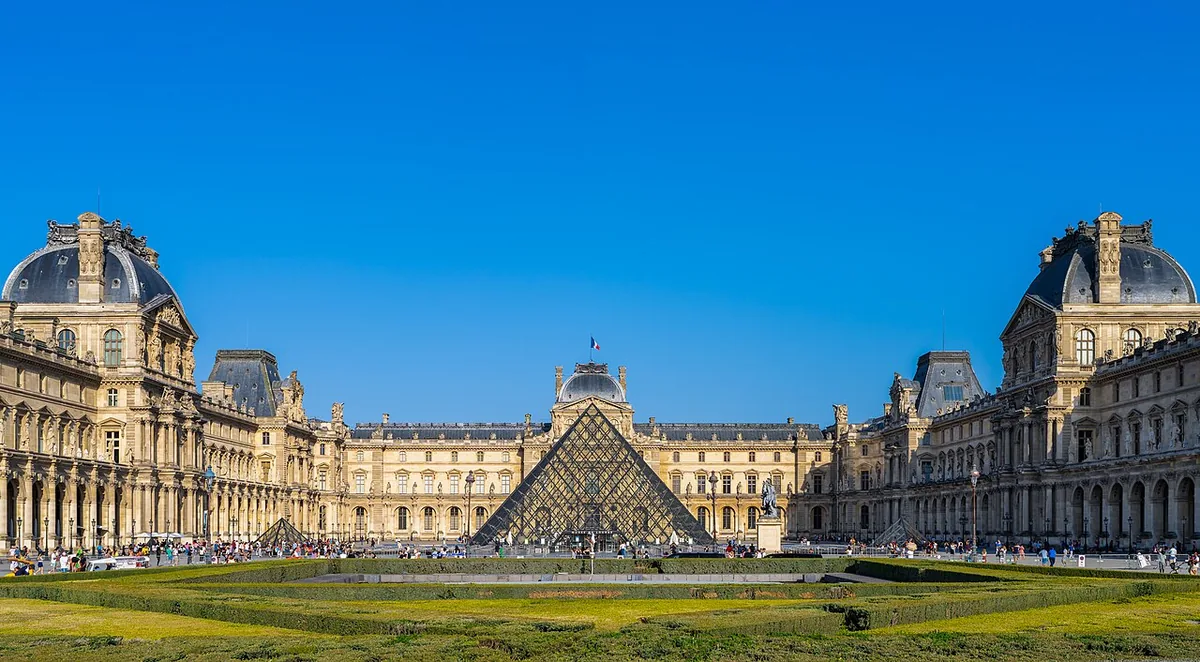
The Louvre's entrance is part of its story. I. M. Pei's Pyramid was designed to bring visitors into a central underground lobby serving three wings. From Cour Napoléon, notice how its transparent glass lets the palace façades remain visible: the modern structure reorganised movement through a much older building.
Inside, choose a few destinations before setting off. One revealing stop is the Daru staircase, where the Winged Victory of Samothrace stands on a ship-shaped base. The sculpture represents the goddess Nike arriving on a ship; its elevated display helps you read that movement rather than treating it only as a famous silhouette.
The Pyramid is the main entrance, and the museum recommends reserving a time slot. Other entrances have their own eligibility and opening conditions. Download the museum map and check the list of available galleries before a visit built around a particular artwork: room closures can change the route, and the palace contains far more than one visit can comfortably cover.
Sources and verification
- Louvre: Cour Napoléon and Pyramid
- Louvre: the Daru staircase
- Louvre: visiting information
- Louvre: map, entrances and directions
Sources checked by Finding Locations using AI-assisted research. This is a source check, not a field inspection. Check the official venue information before visiting.
Get directions to Louvre Museum. Confirm the visitor entrance and current access with the venue before travelling.
Audio guide
Listen to this place’s guide.
Guide
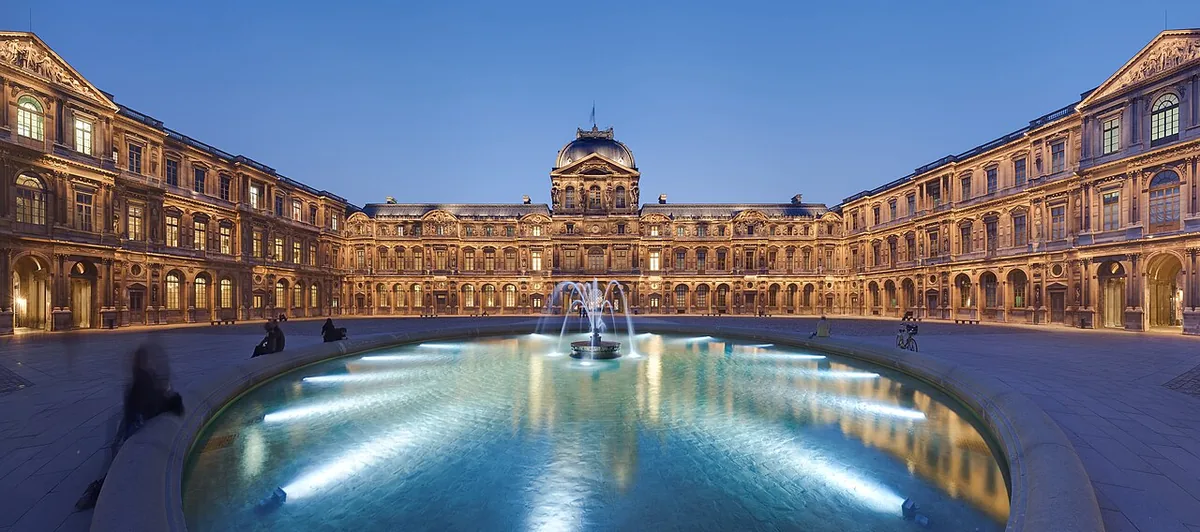
The Louvre is easiest to understand as a building that kept changing its job. Its oldest story survives below the grand façades and around the Cour Carrée: in 1190, King Philippe Auguste began a fortified castle at the western edge of Paris. It guarded a city exposed to threats from the west and the Seine. The original structure was a compact quadrangle with a moat and a central keep, the Grosse Tour.
Continue exploring
Discover the full story
Keep reading with a travel pass and explore every full guide and tour.
UpgradeMore places in Paris
Pont Neuf
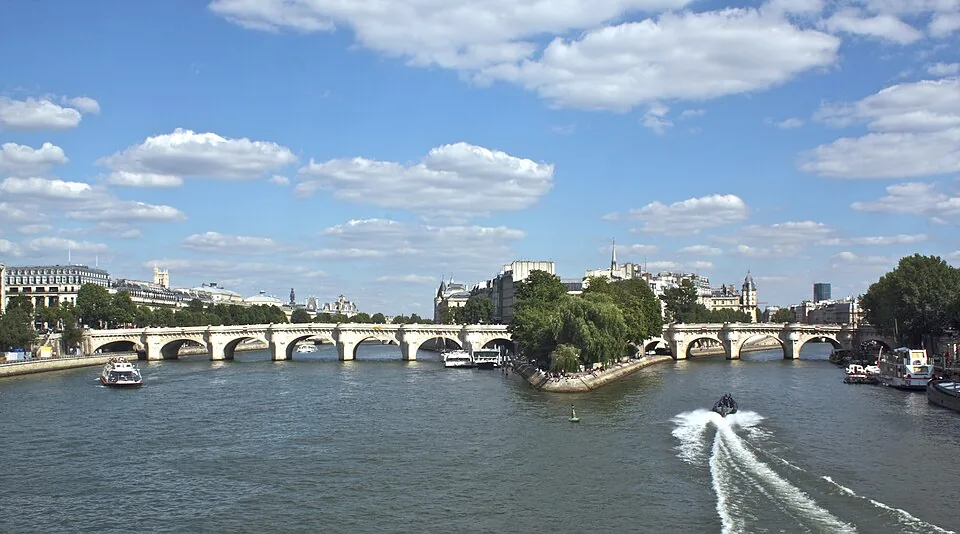
Pont Neuf is paradoxically the oldest surviving bridge in Paris. Its late sixteenth-century design introduced stone construction without houses on the bridge, leaving it open as a public route and viewpoint over the Seine.
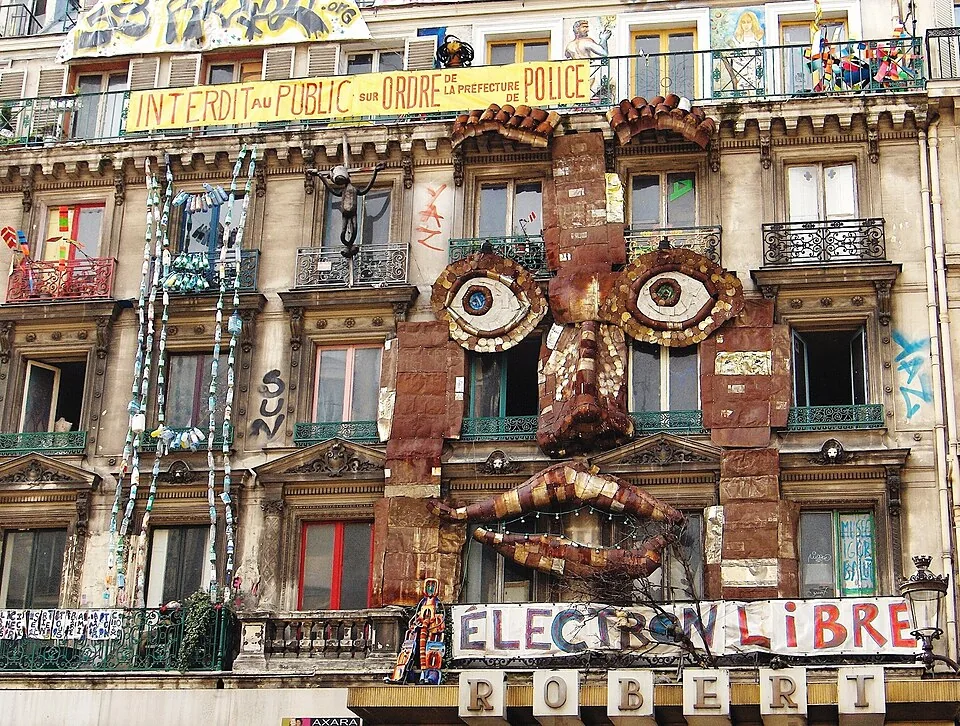
59 Rivoli
59 Rivoli is a working artist collective and public art space in a 19th-century Rue de Rivoli building. Born from a 1999 occupation of a vacant property, it now combines artist studios, a gallery and public programming under an association-city partnership.
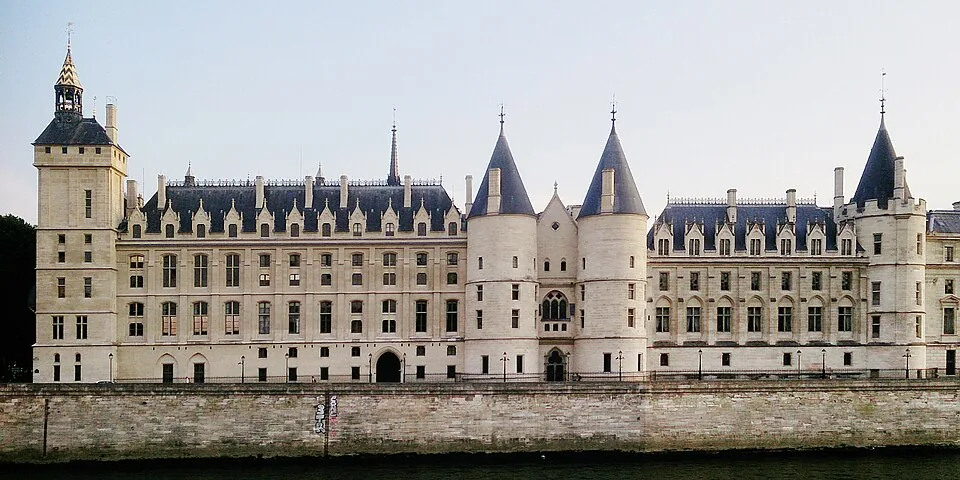
Conciergerie
The Conciergerie preserves part of the medieval Palais de la Cité, once the residence and seat of French royal power. Later converted into a prison, it became closely associated with the Revolutionary Tribunal and the confinement of Marie-Antoinette.
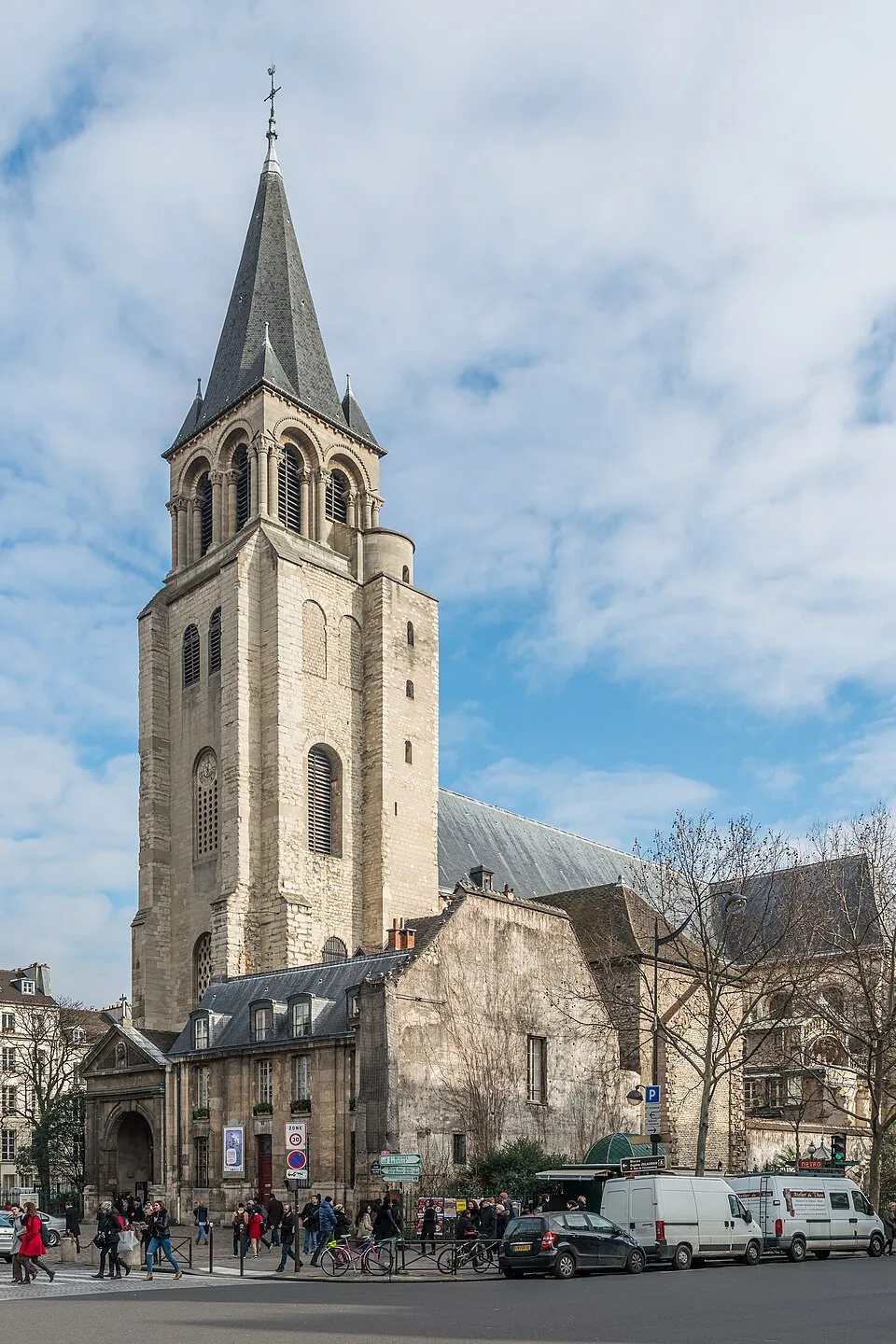
Saint-Germain-des-Prés
Saint-Germain-des-Prés grew around a sixth-century abbey outside Paris’s early walls. Its medieval church, former fairground, scholarly monasteries, and postwar cafés trace a neighborhood shaped by pilgrimage, performance, study, and everyday gathering.
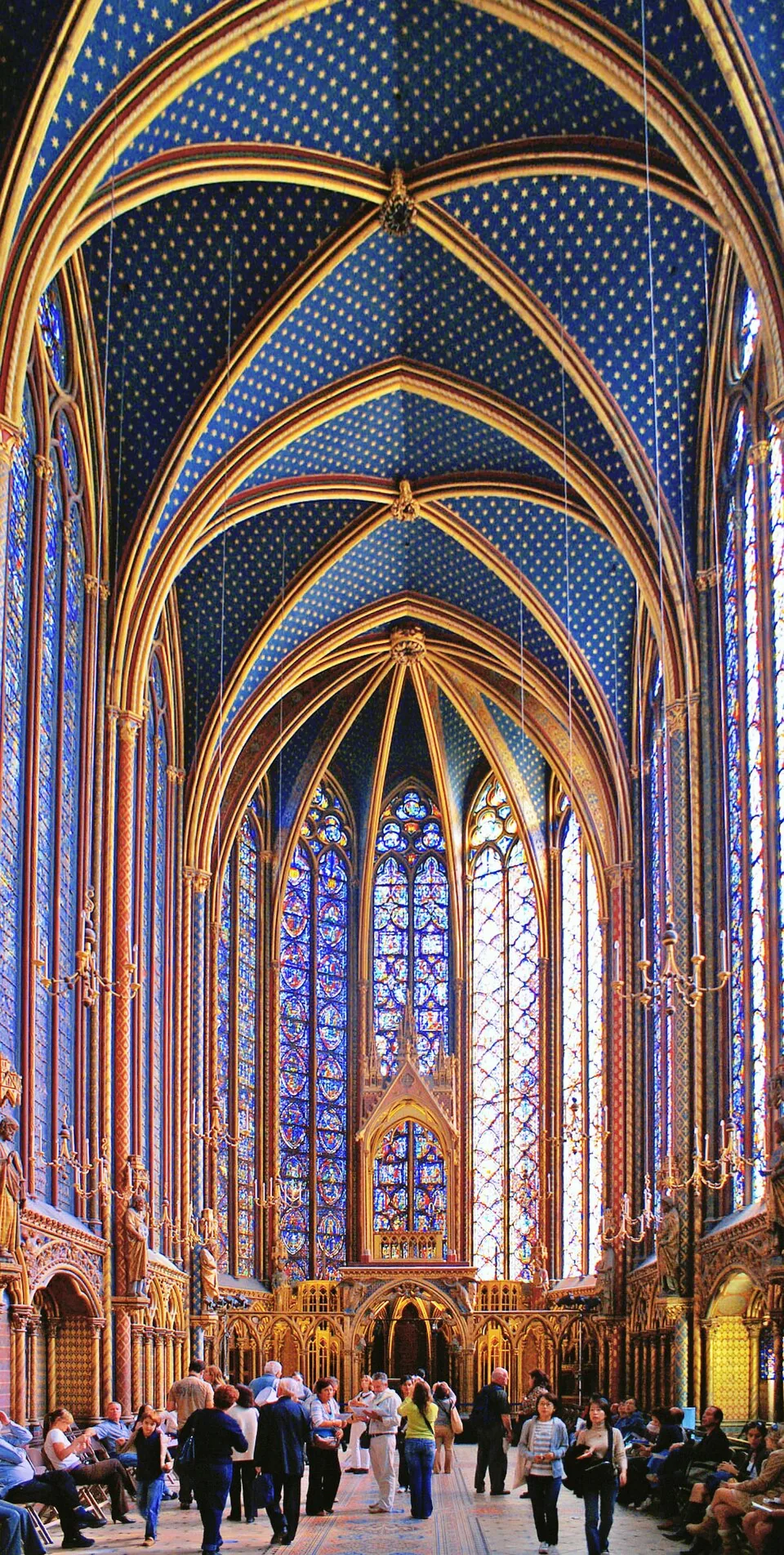
Sainte-Chapelle
Built for Louis IX inside the former Palais de la Cité, Sainte-Chapelle was a royal sanctuary for Passion relics. Its two stacked chapels culminate in an upper room of stained glass, where biblical history, royal imagery and sacred light meet.
Musée d’Orsay
Musée d’Orsay occupies Victor Laloux’s former Gare d’Orsay, built for the 1900 Paris Exposition. Its glass roof, clocks and great nave preserve the experience of a railway terminus, now framing collections of art and design from 1848 to 1914.