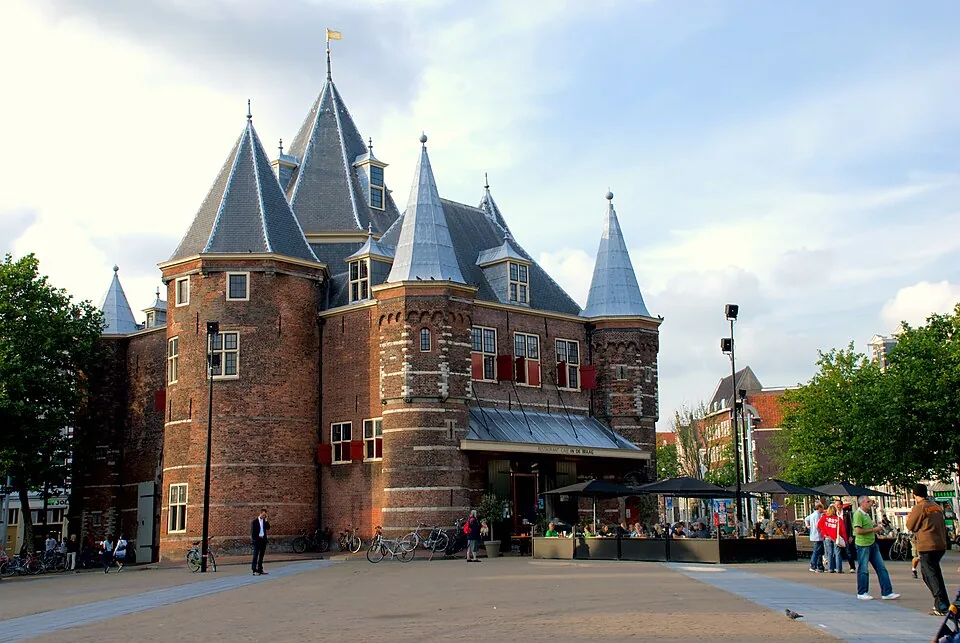
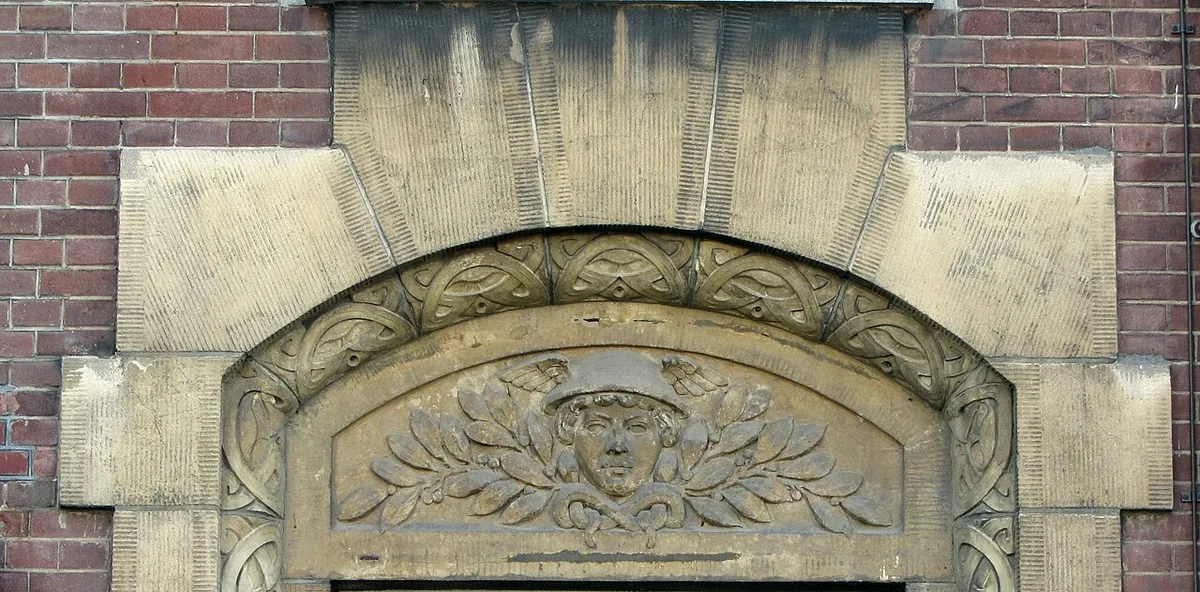
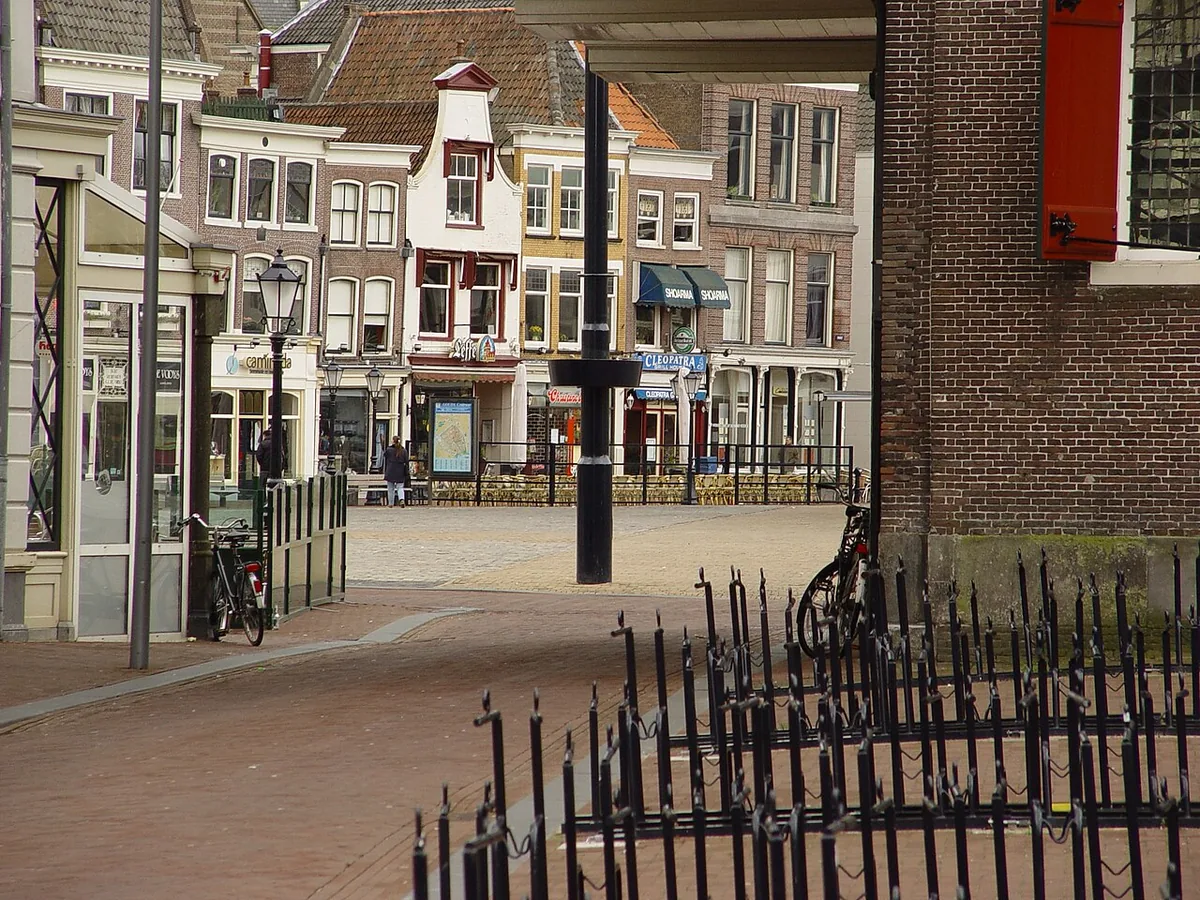
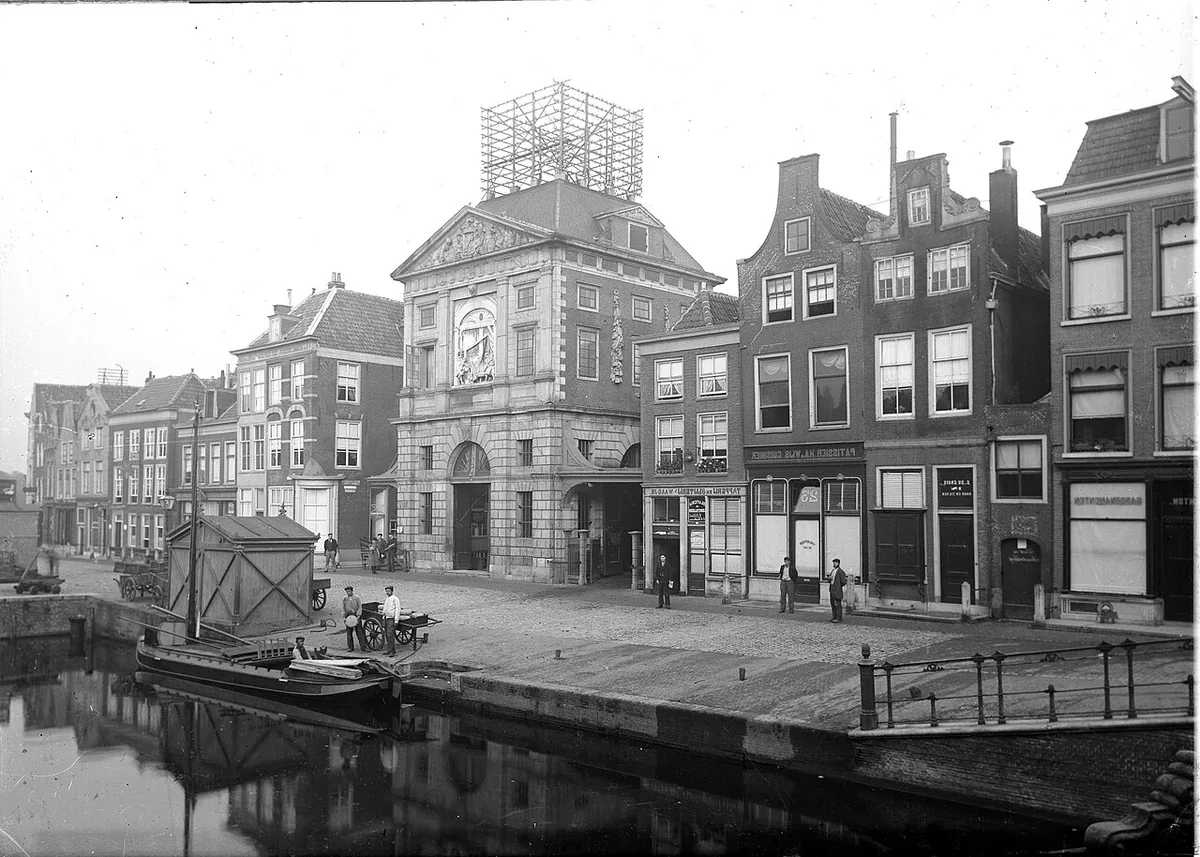
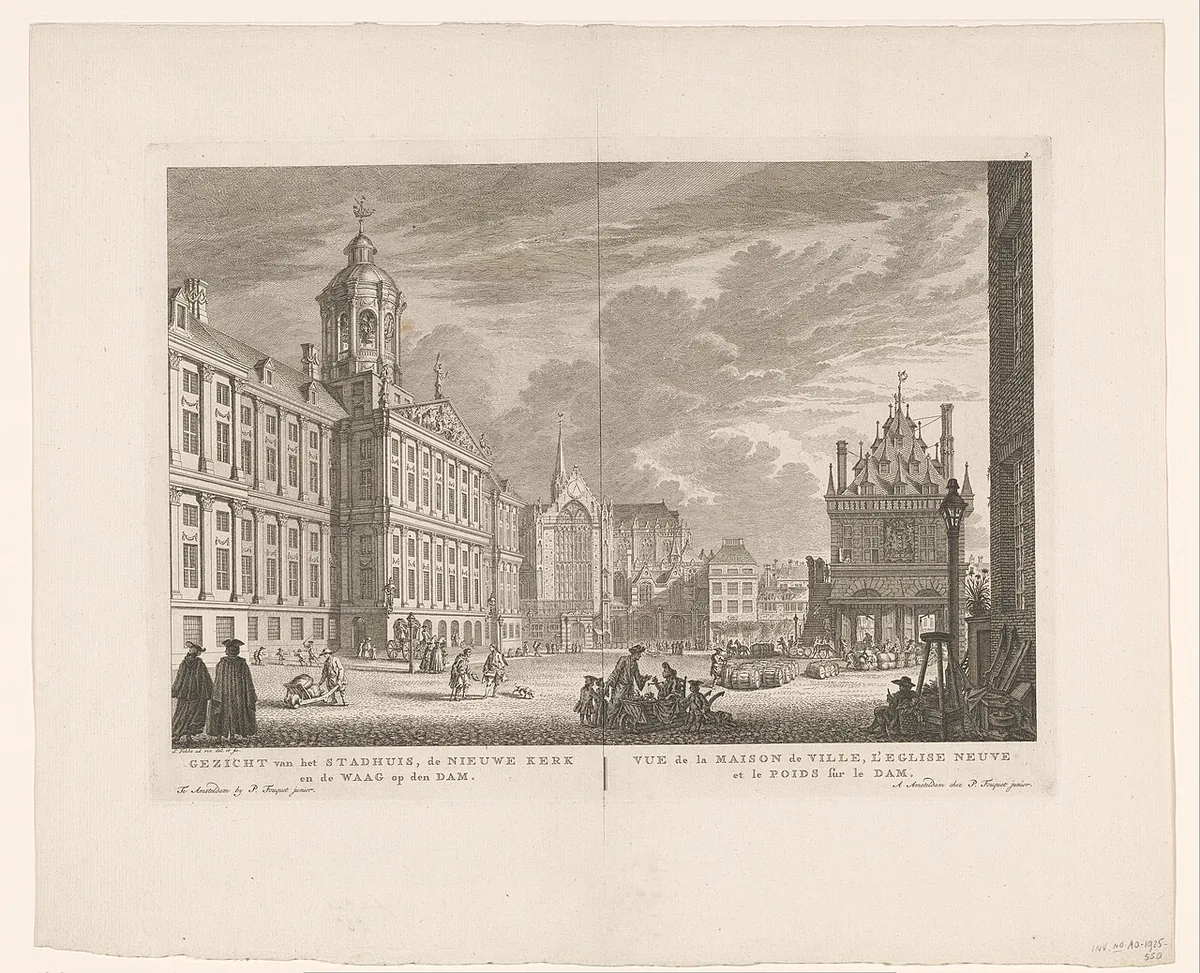
De Waag began as Amsterdam’s Sint Anthoniespoort, a fortified eastern gate built in 1488. After the city expanded, it became a public weighing house in 1617, with guild rooms above and an anatomical theatre added in 1691. Its clustered towers trace centuries of changing city life.
Quick facts
De Waag began as the Sint Anthoniespoort; an inscription records the laying of its first stone on 28 April 1488.
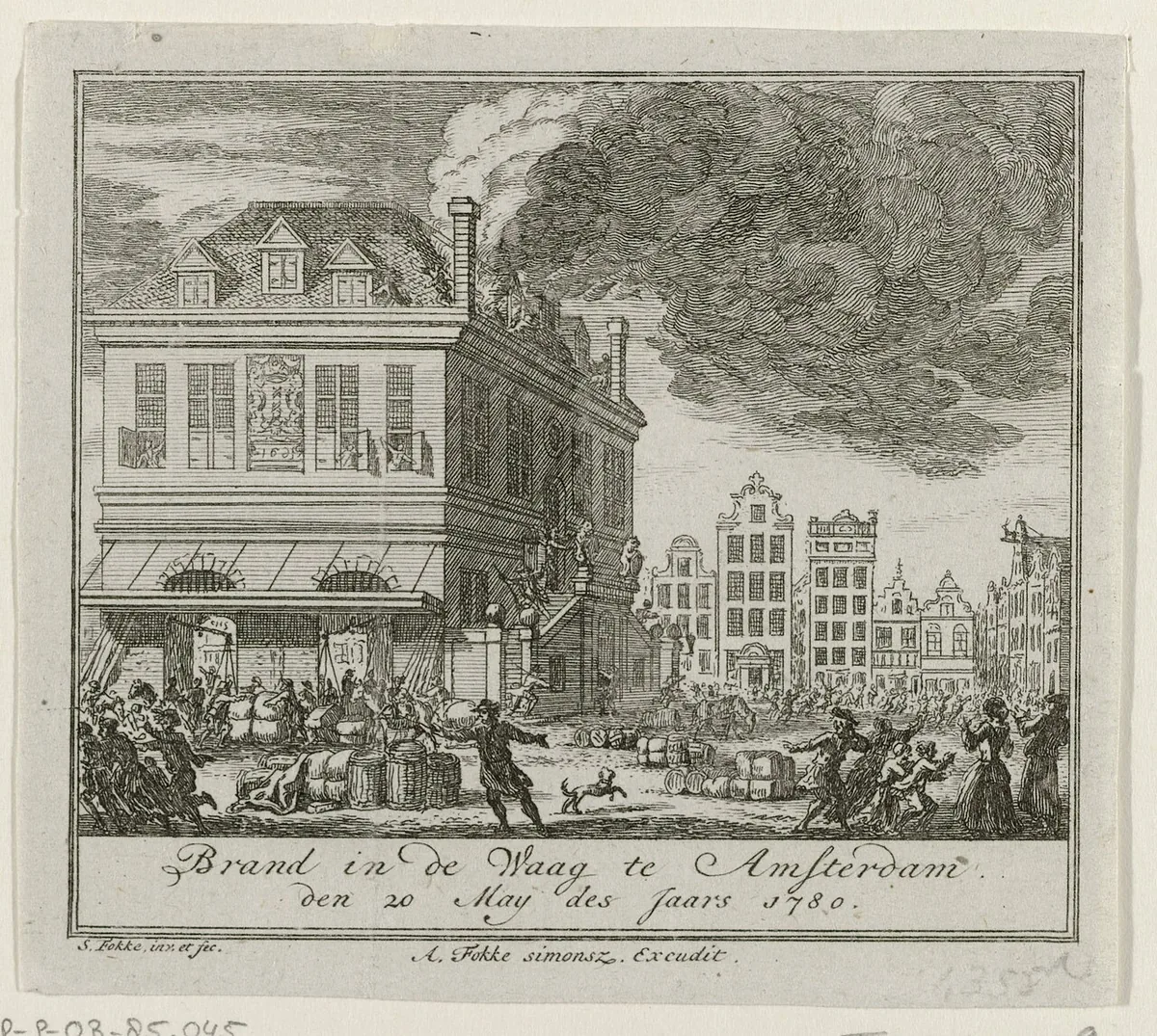
Amsterdam’s city council ordered the former gate converted into a public weighing house in 1617, after the Nieuwmarkt square was formed in 1614.
The surgeons’ guild’s anatomical theatre occupied a purpose-built central tower completed in 1691; Rembrandt’s 1632 anatomy painting predates that theatre.
Get directions to De Waag. Confirm the visitor entrance and current access with the venue before travelling.
Audio guide
Listen to this place’s guide.
Guide
De Waag stands in the middle of Nieuwmarkt, but its towers make more sense when you imagine water and a wall where the square is now. The building began as the Sint Anthoniespoort, an eastern gate in Amsterdam’s late-medieval fortifications. A municipal archaeological and building-history investigation describes a complex with a main gate and a foregate, each flanked by towers. A stone inscription on the building records the laying of the gate’s first stone on 28 April 1488.
Continue exploring
Discover the full story
Keep reading with a travel pass and explore every full guide and tour.
UpgradeMore places in Amsterdam
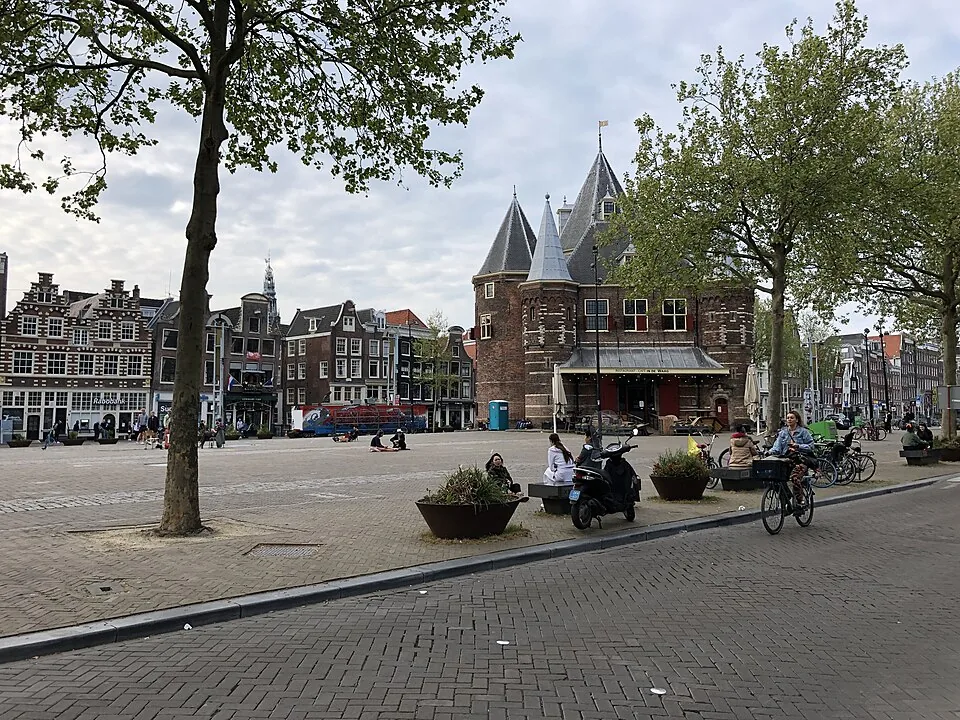
Nieuwmarkt
Nieuwmarkt grew around the Waag, a former city gate that became a public weighing house. The square’s changing uses—from trade to wartime persecution to modern protest—make it one of Amsterdam’s most layered public spaces.
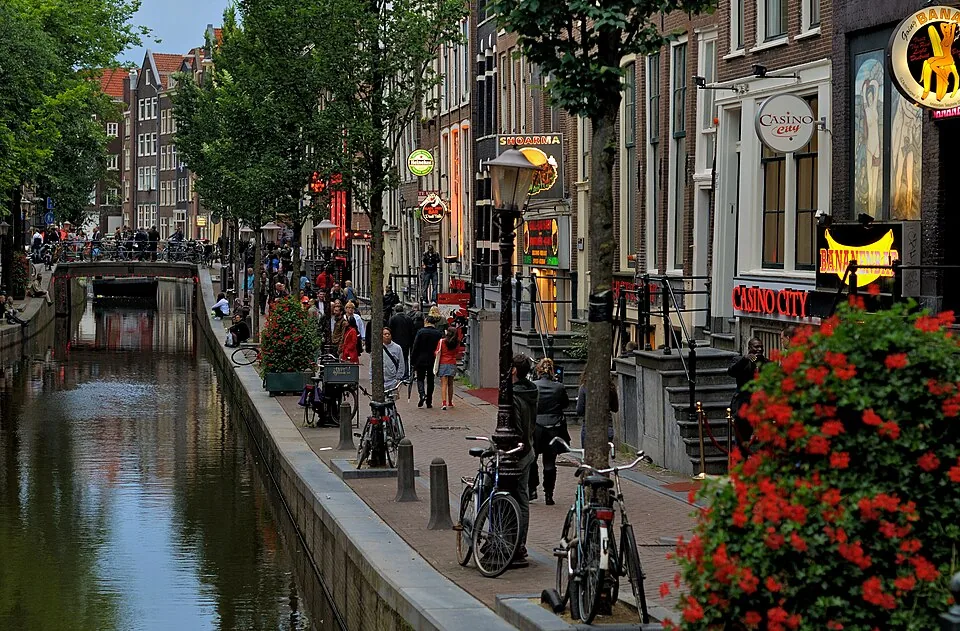
Red Light District
Amsterdam’s Red Light District is a working neighborhood as well as a historic port-area quarter. Its story includes centuries of regulation and change, but the people who live and work here deserve privacy; the most respectful visit begins by treating the streets as public space shared with residen
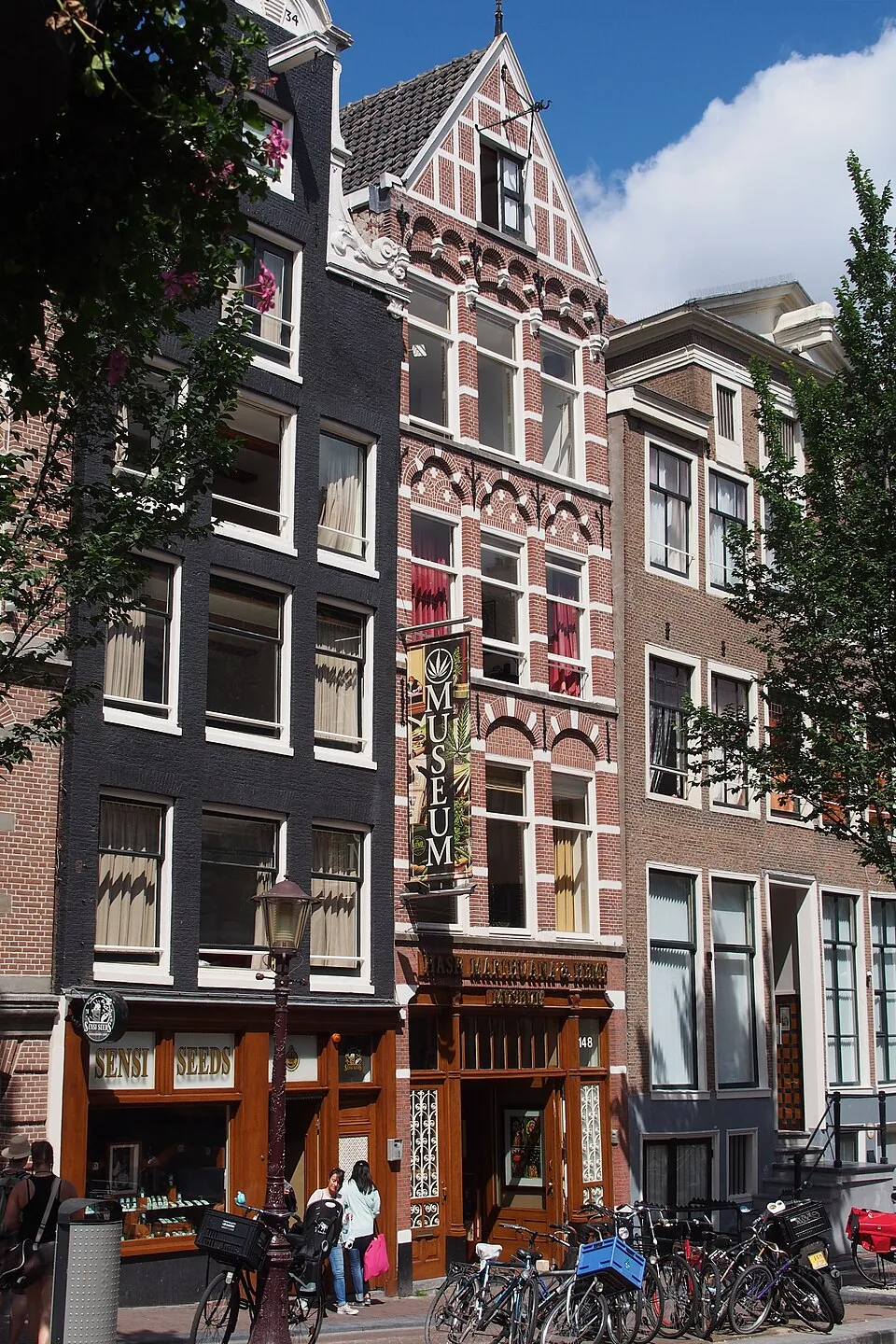
Hash Marihuana & Hemp Museum
Founded in 1987, Amsterdam’s Hash Marihuana & Hemp Museum traces cannabis through history, medicine, art and everyday culture. Its collection includes more than 9,000 objects, while the nearby Hemp Gallery explores industrial hemp’s long and varied uses.
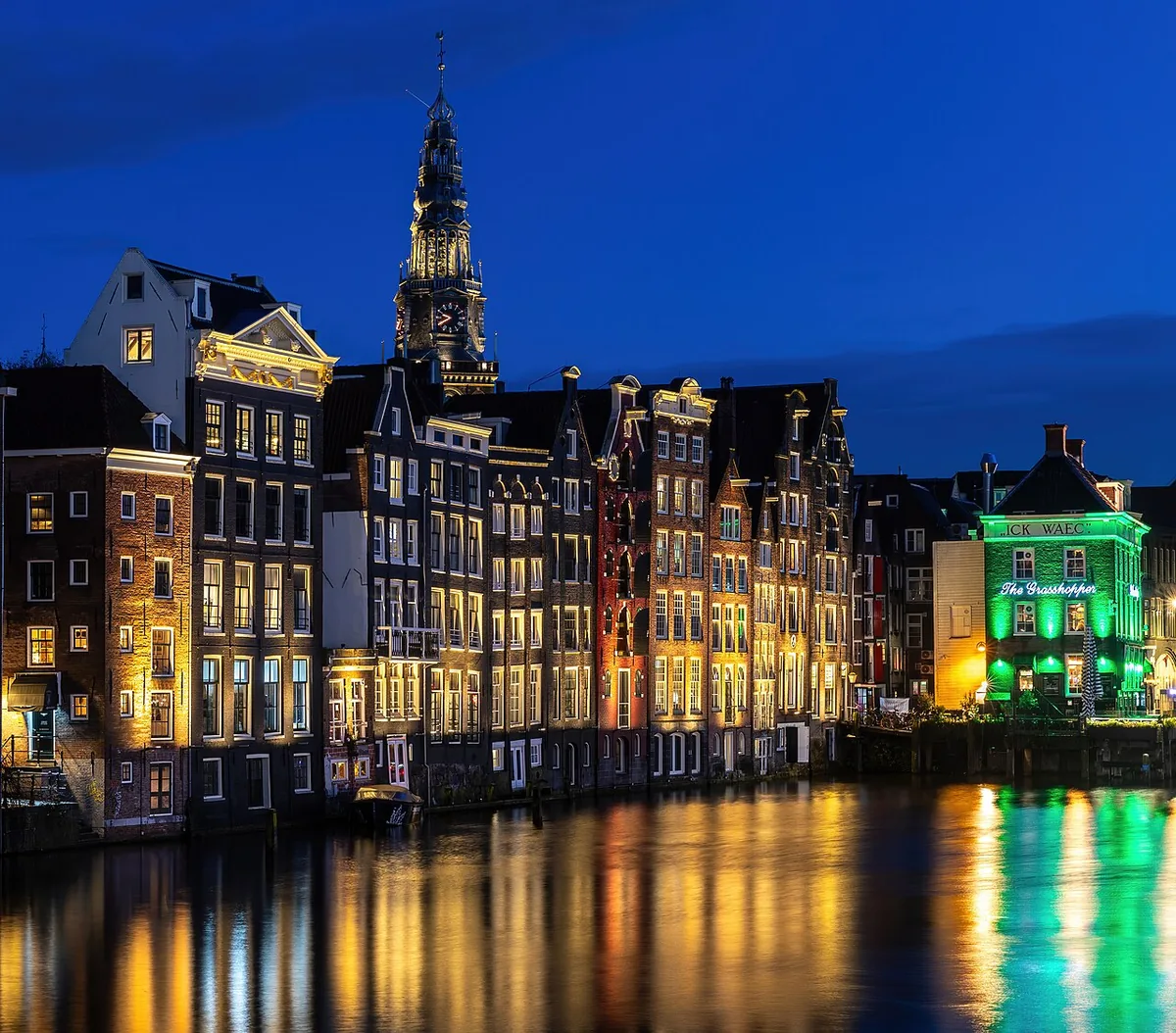
Oude Kerk
Amsterdam’s oldest surviving building grew from a thirteenth-century chapel into a Gothic hall church shaped by port trades, religious change, and generations of burial. Its guild chapels, memorials, music, and contemporary art keep the city’s layered history present.
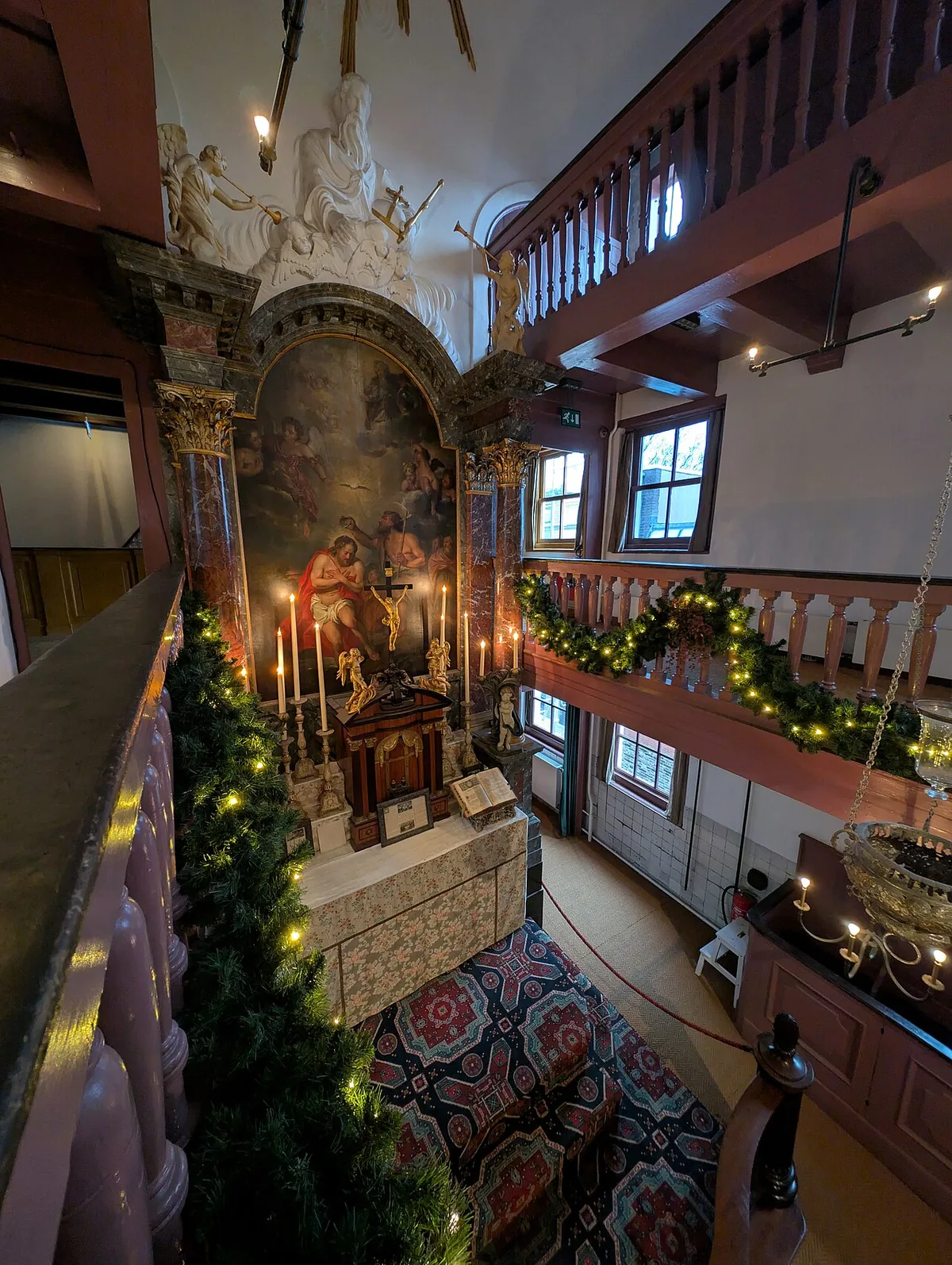
Our Lord in the Attic Museum
A seventeenth-century Catholic church fills the joined upper floors of a canal house and two rear houses. Built by merchant Jan Hartman, it preserves the history of Amsterdam’s tolerated house churches and the community that worshipped here.
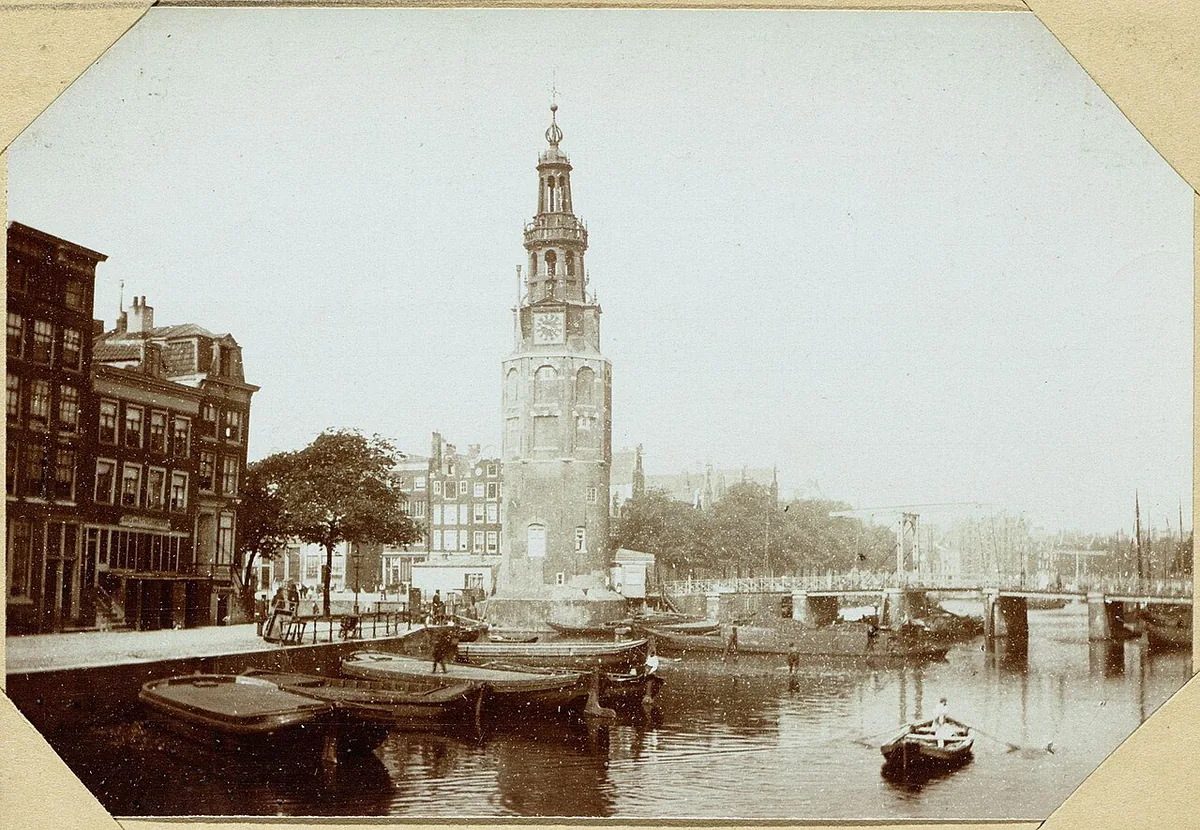
Montelbaanstoren
Montelbaanstoren marks Oudeschans with a 16th-century defensive base and a 1606 crown associated with Hendrick de Keyser. Its erratic clock earned the nickname Malle Jaap; later, the tower housed Amsterdam’s City Water Office.