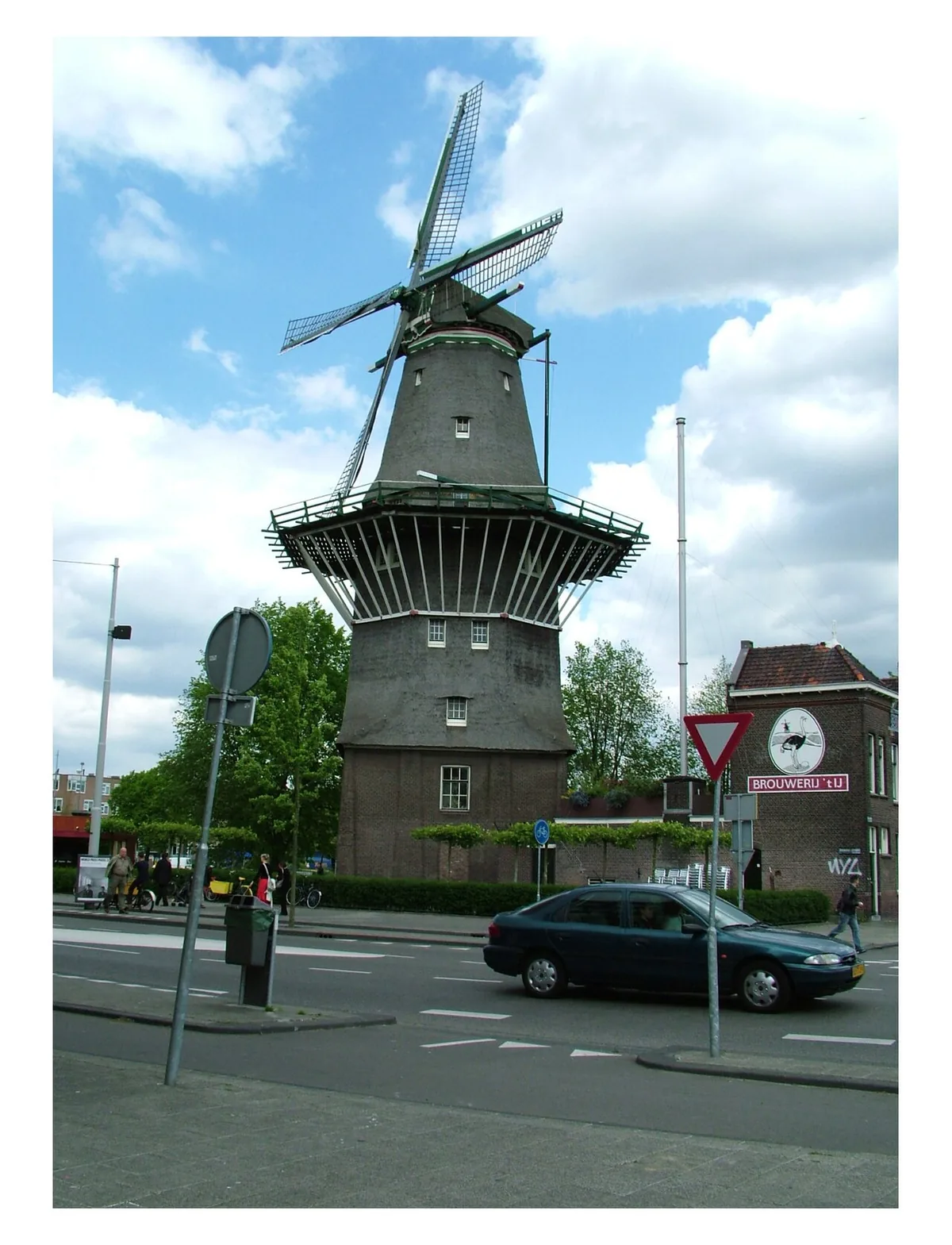
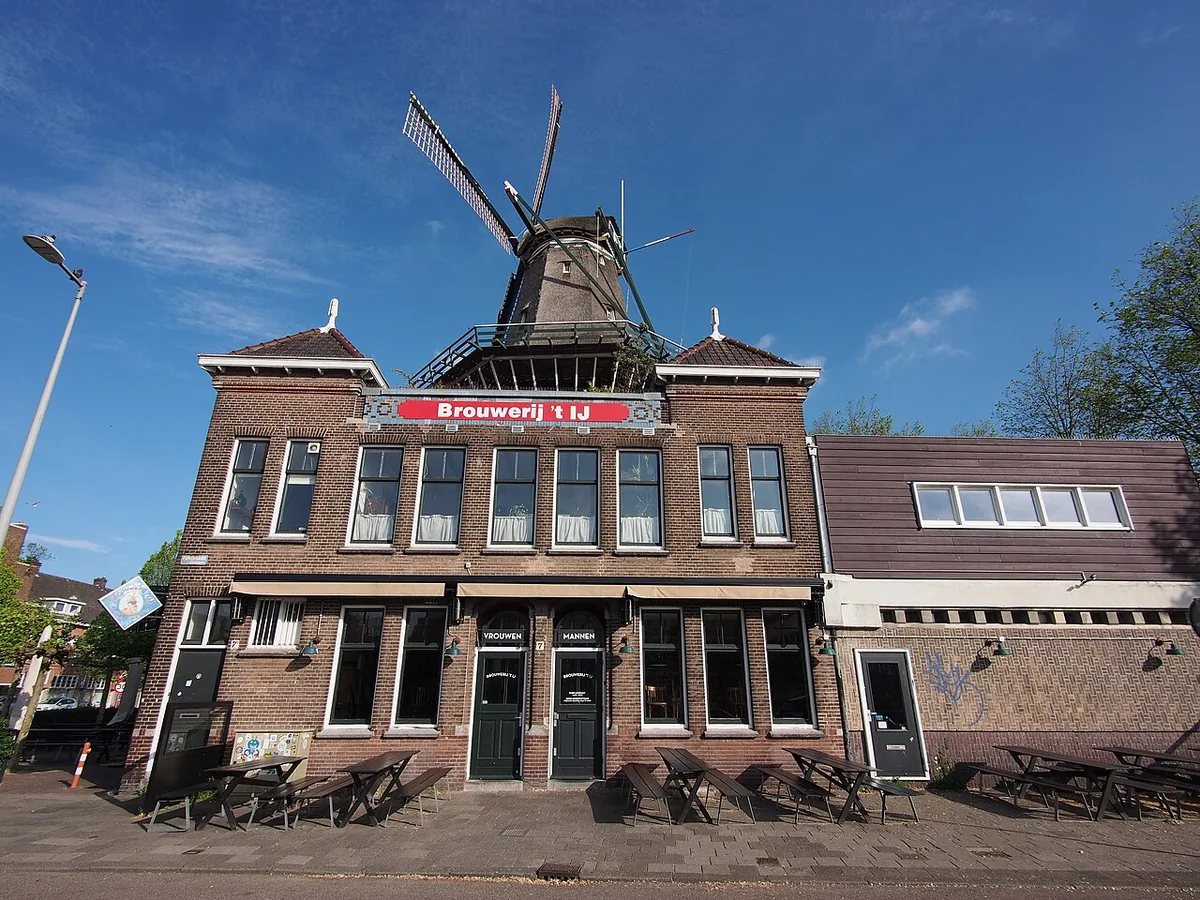
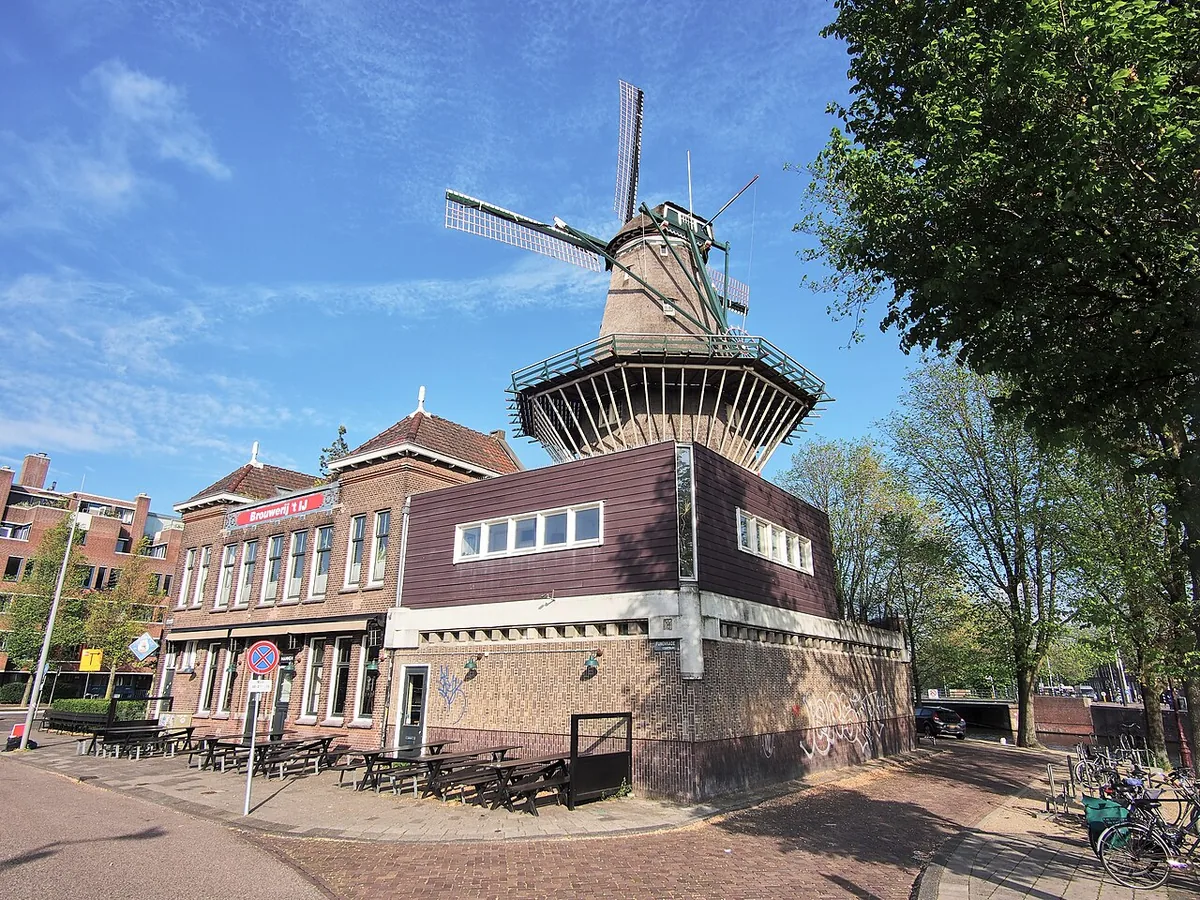
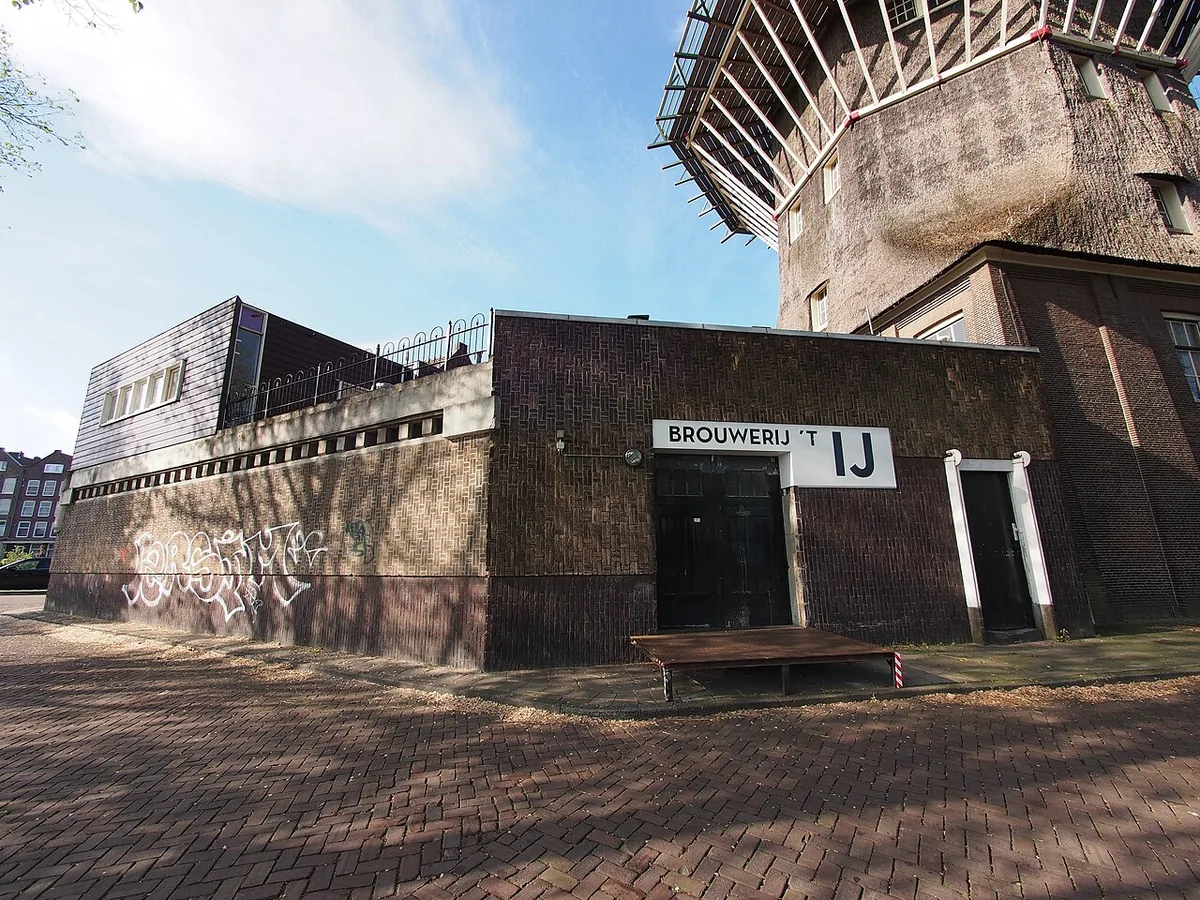
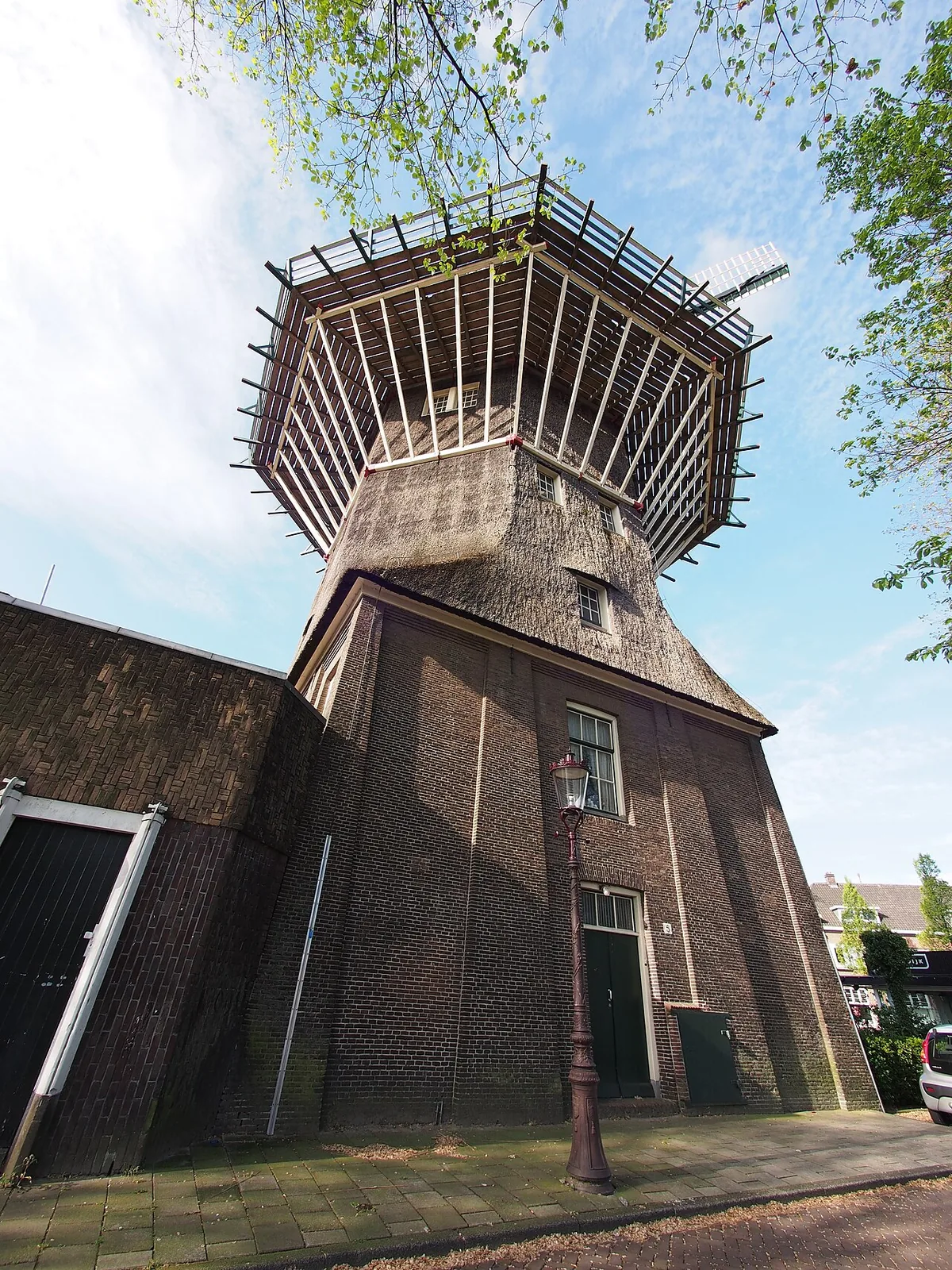
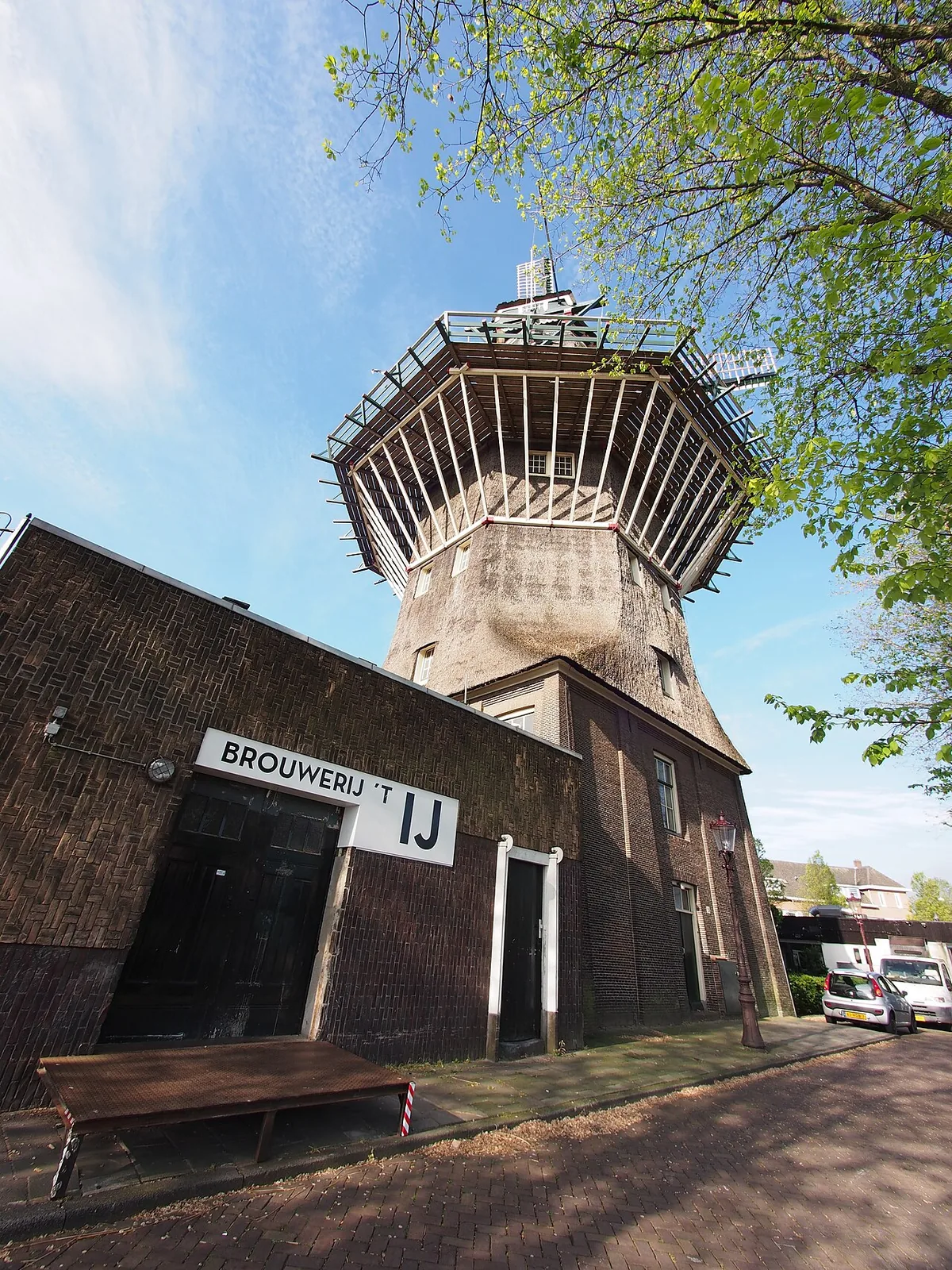
Brouwerij ’t IJ has brewed beside Amsterdam’s De Gooyer windmill since 1985, in the former Funen municipal bathhouse. Its story links the city’s public-health history with a pioneering craft brewery and a neighborhood tasting room shaped by local regulars.
Quick facts
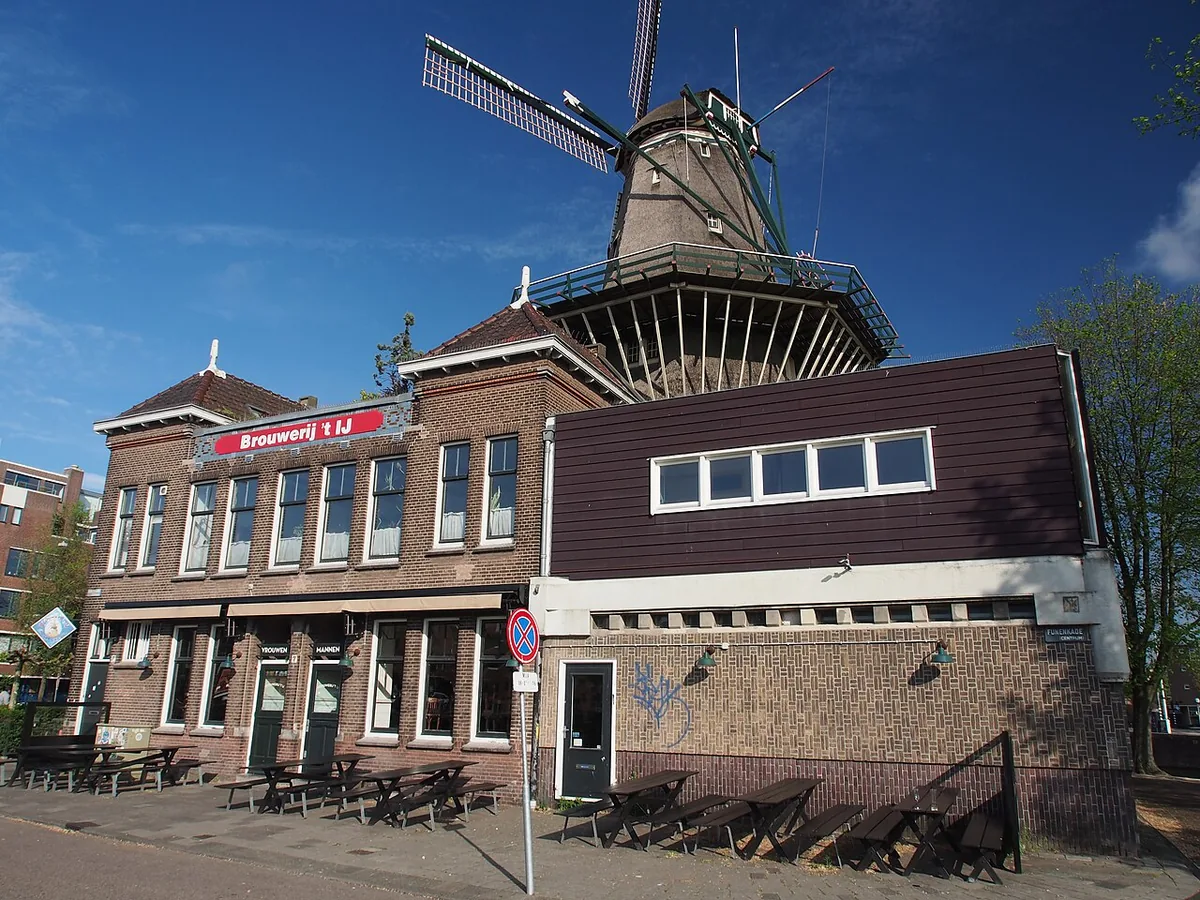
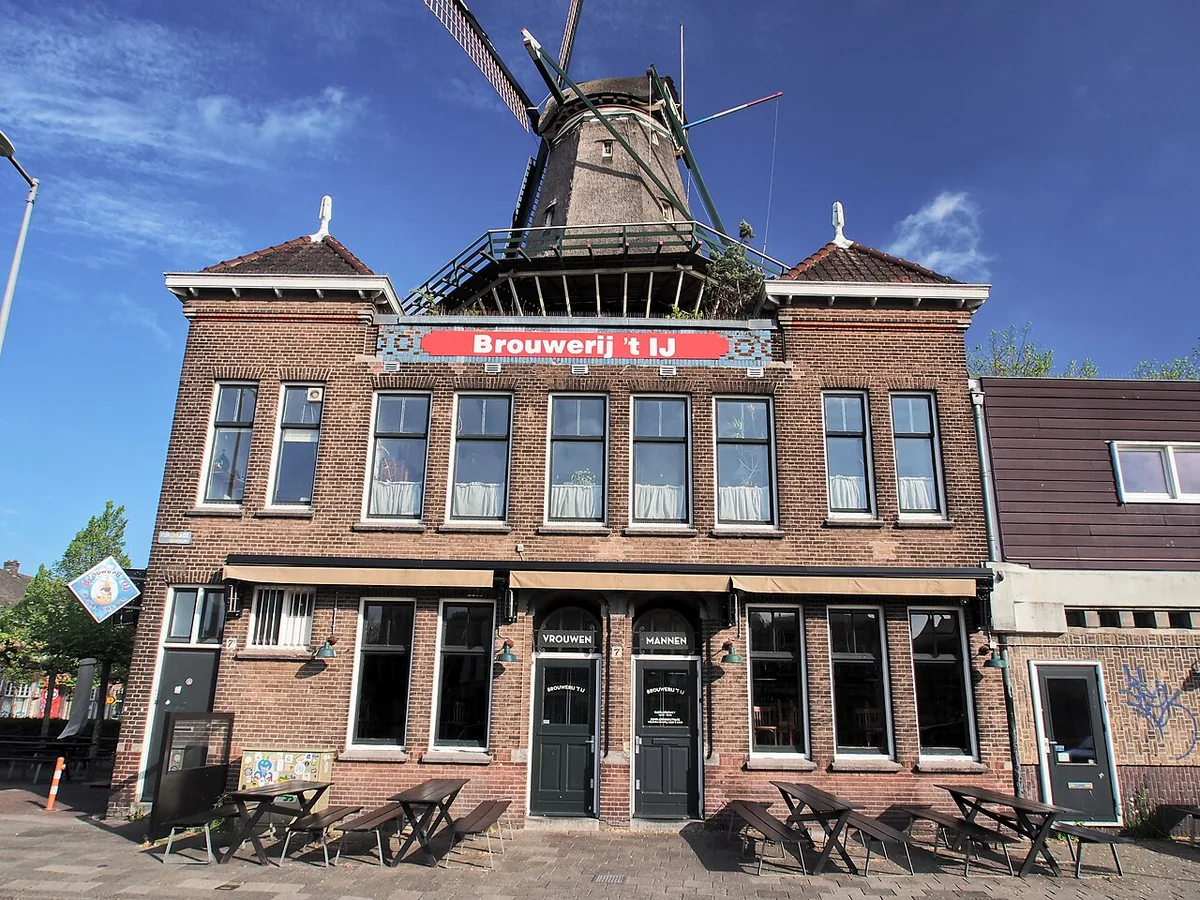
Brouwerij ’t IJ opened in 1985 in the former Funen municipal bathhouse, Amsterdam’s first municipally built public bathhouse, opened in 1911.
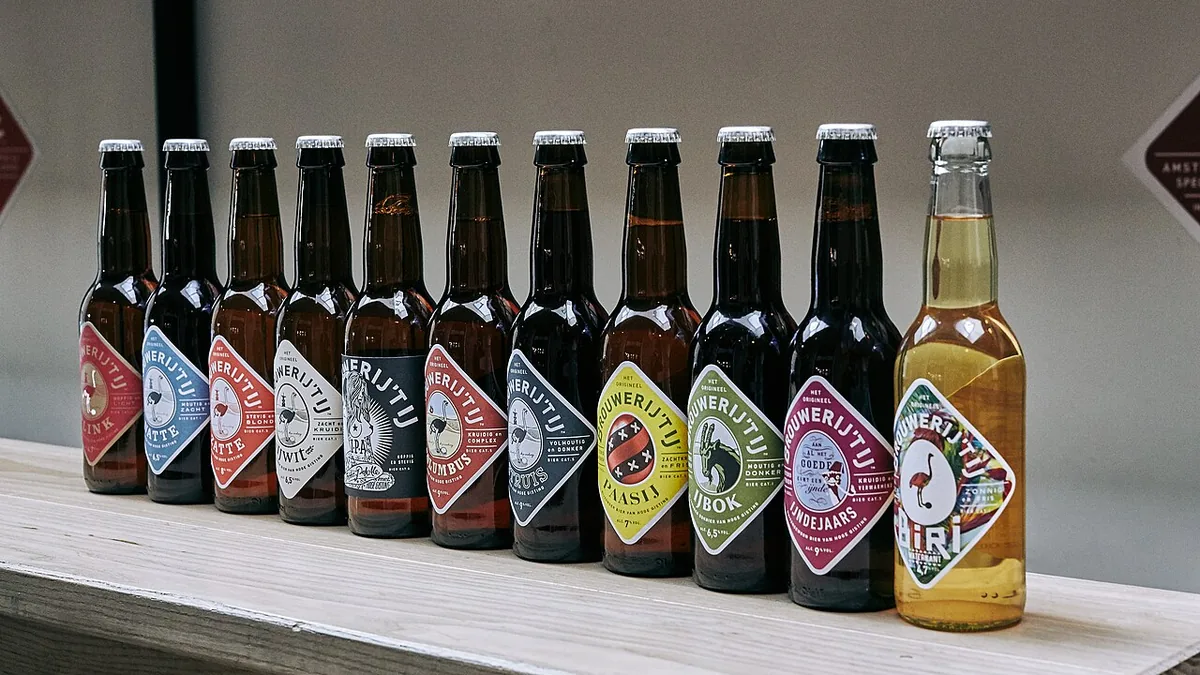
Founder Kaspar Peterson named the brewery after the IJ; its first beer was Zatte Tripel.
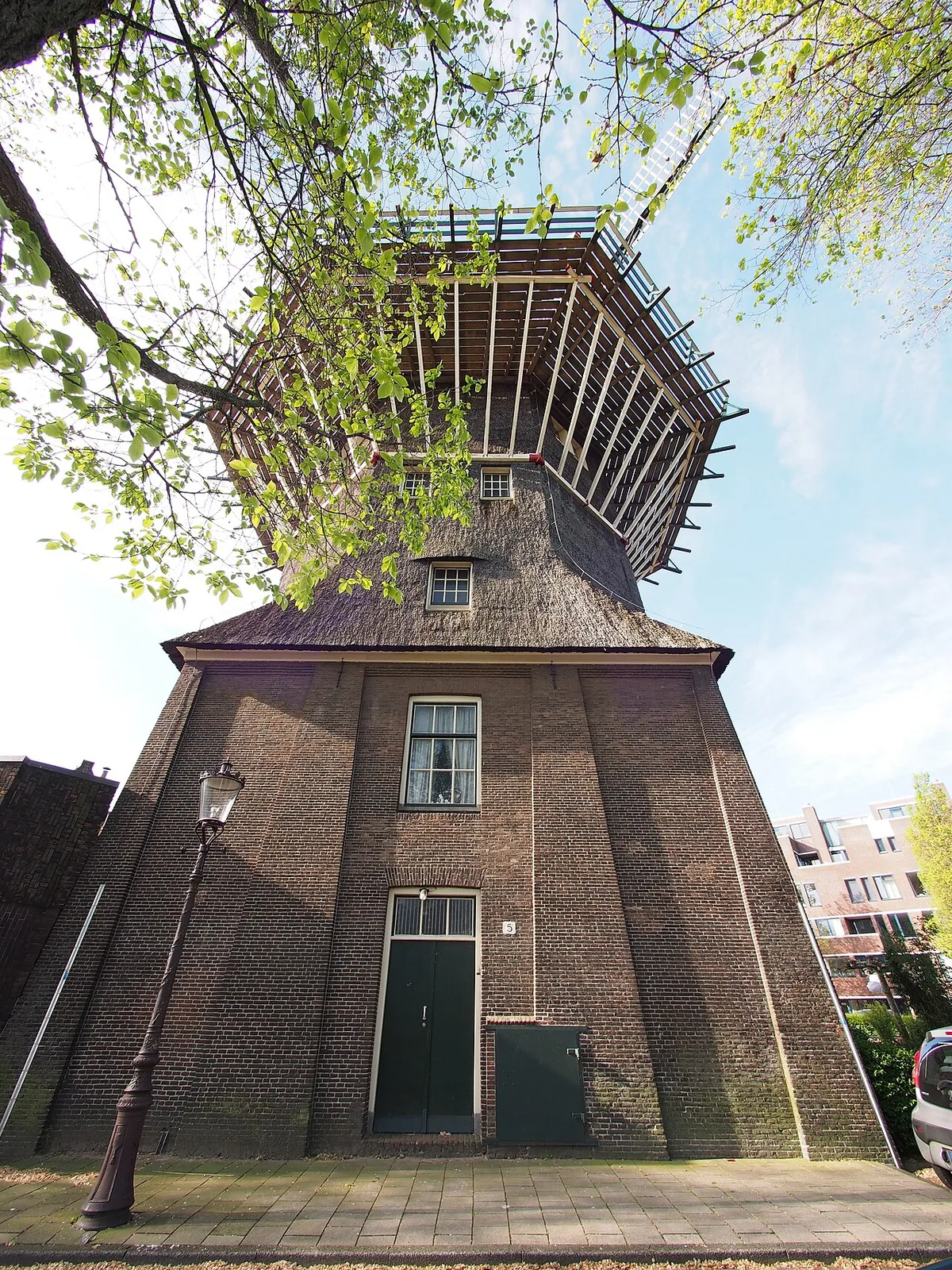
The tasting room began informally about a year after the brewery opened; De Gooyer windmill beside it is a separate site, not part of the brewery.
Get directions to Brouwerij ’t IJ. Confirm the visitor entrance and current access with the venue before travelling.
Audio guide
Listen to this place’s guide.
Guide
The tall wooden sails beside Brouwerij ’t IJ belong to De Gooyer, a historic grain mill; the brick building beside it has a different working past. At Funenkade 7, a municipal bathhouse became a brewery, and its conversion joined two eras of Amsterdam’s everyday industry in one small corner of the city.
Continue exploring
Discover the full story
Keep reading with a travel pass and explore every full guide and tour.
UpgradeMore places in Amsterdam
Tropenmuseum
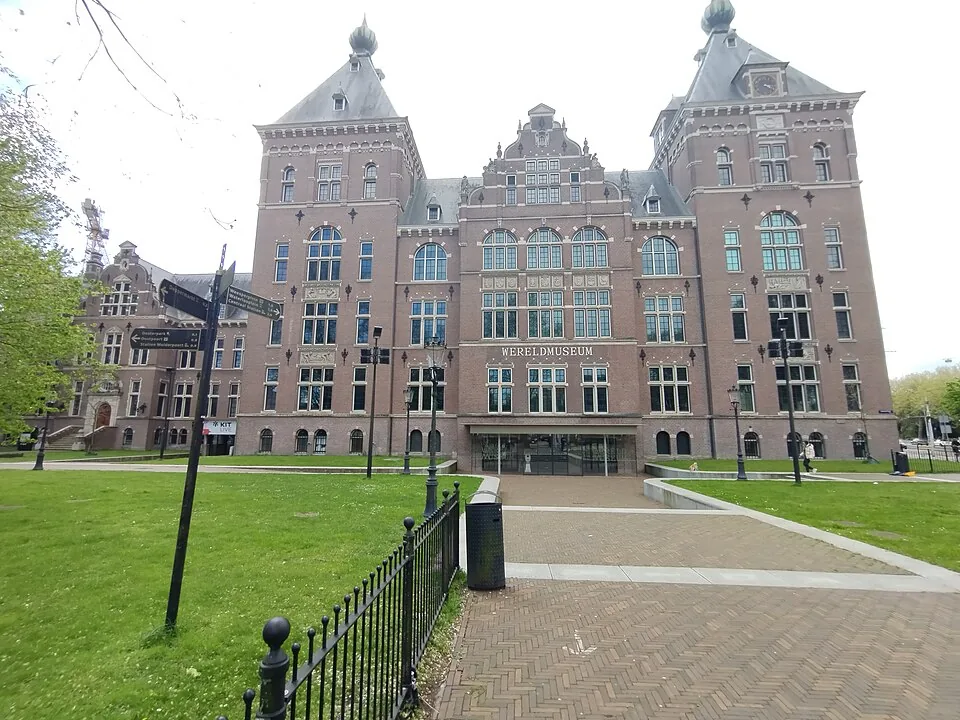
Wereldmuseum Amsterdam occupies the monumental former Colonial Institute, opened in 1926. Its historic architecture and collections now frame exhibitions that examine the museum’s colonial origins, the histories of objects, and the continuing effects of colonialism.

Artis Royal Zoo
Founded in 1838, ARTIS grew from a members’ society for studying living and preserved nature into Amsterdam’s historic zoo and museum landscape. Its grounds preserve nineteenth-century buildings and paths, while the Groote Museum invites visitors to reconsider how people have classified and related
Oosterpark
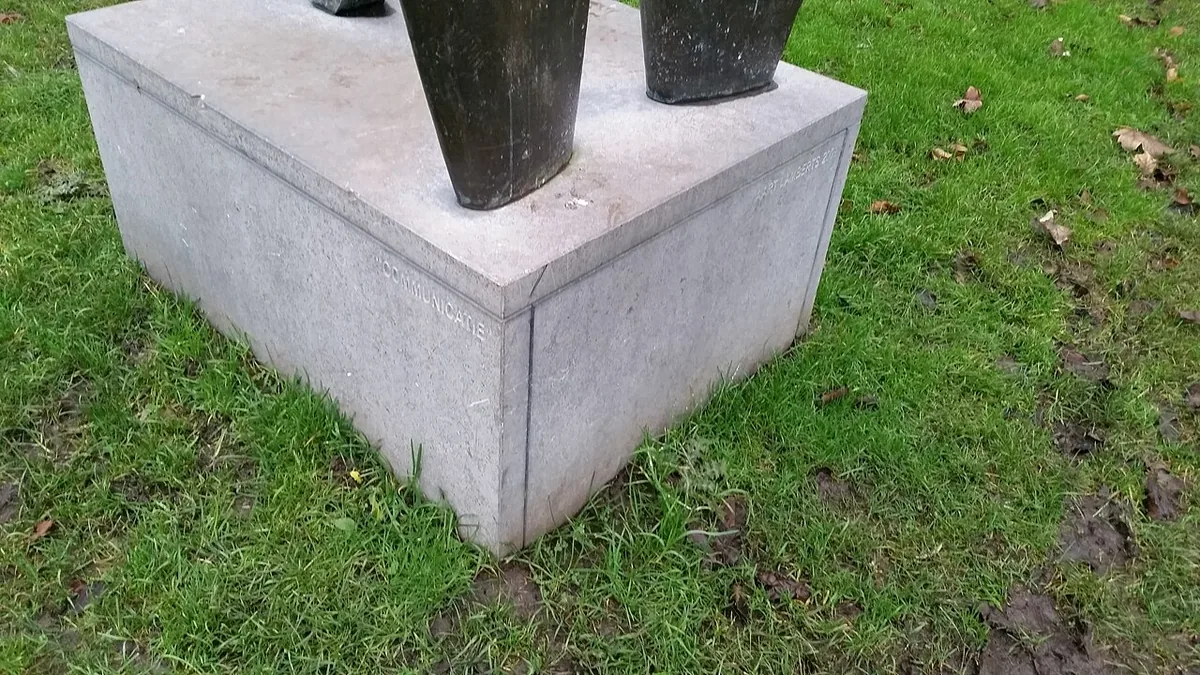
Oosterpark is Amsterdam-Oost’s first large municipal park: a 19th-century landscape shaped by a former cemetery and a changing neighborhood, with monuments that keep public memory present.
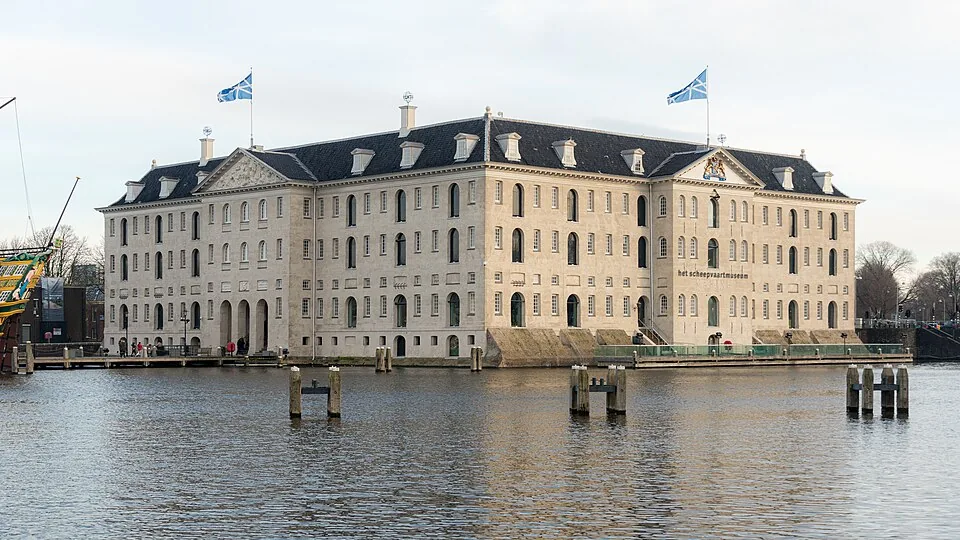
Het Scheepvaartmuseum
Inside the 1656 Admiralty storehouse on Kattenburg, rainwater cisterns, ship supplies and a modern compass-inspired glass roof reveal how Amsterdam equipped its fleet. The museum connects maritime skill with the labor, conflict and colonial violence behind ocean travel.
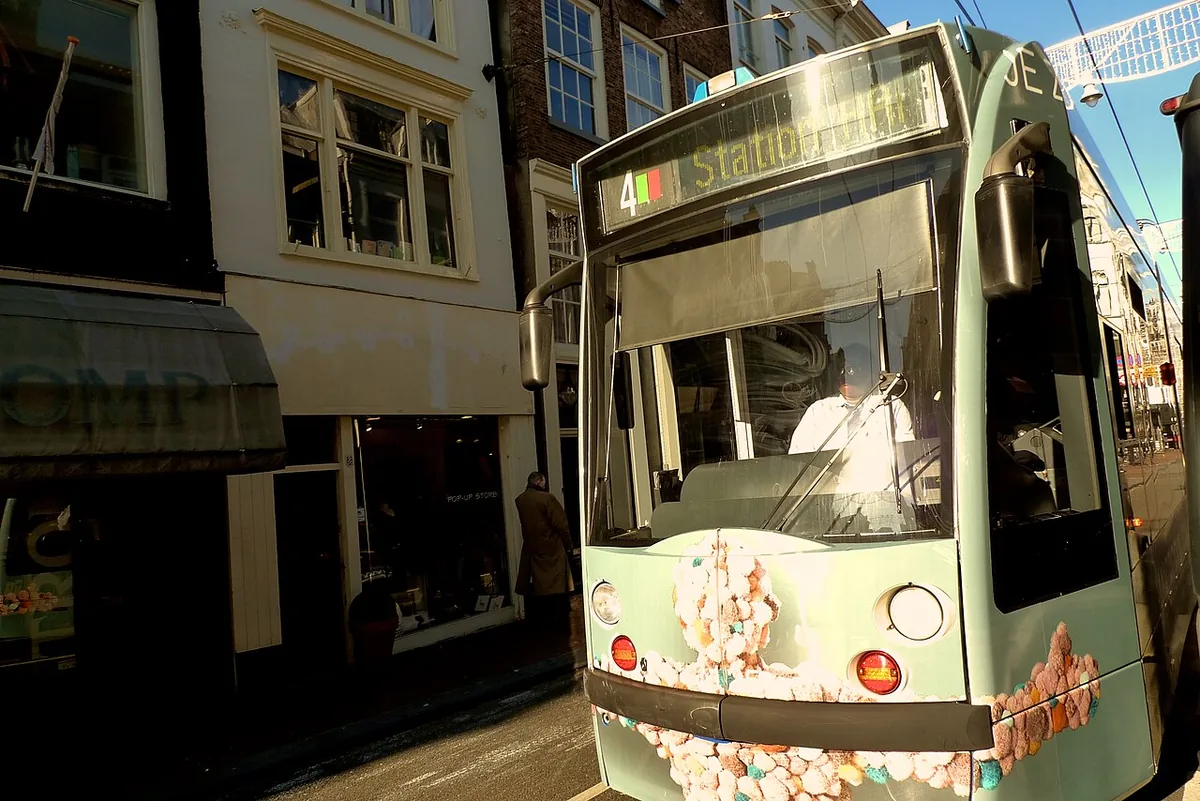
Micropia
ARTIS-Micropia turns the microbial world into something visitors can observe: living cultures, microscopes and interactive exhibits connect microbes to bodies, food and ecosystems. It occupies a restored ARTIS landmark with a complex history of science, civic records and wartime resistance.
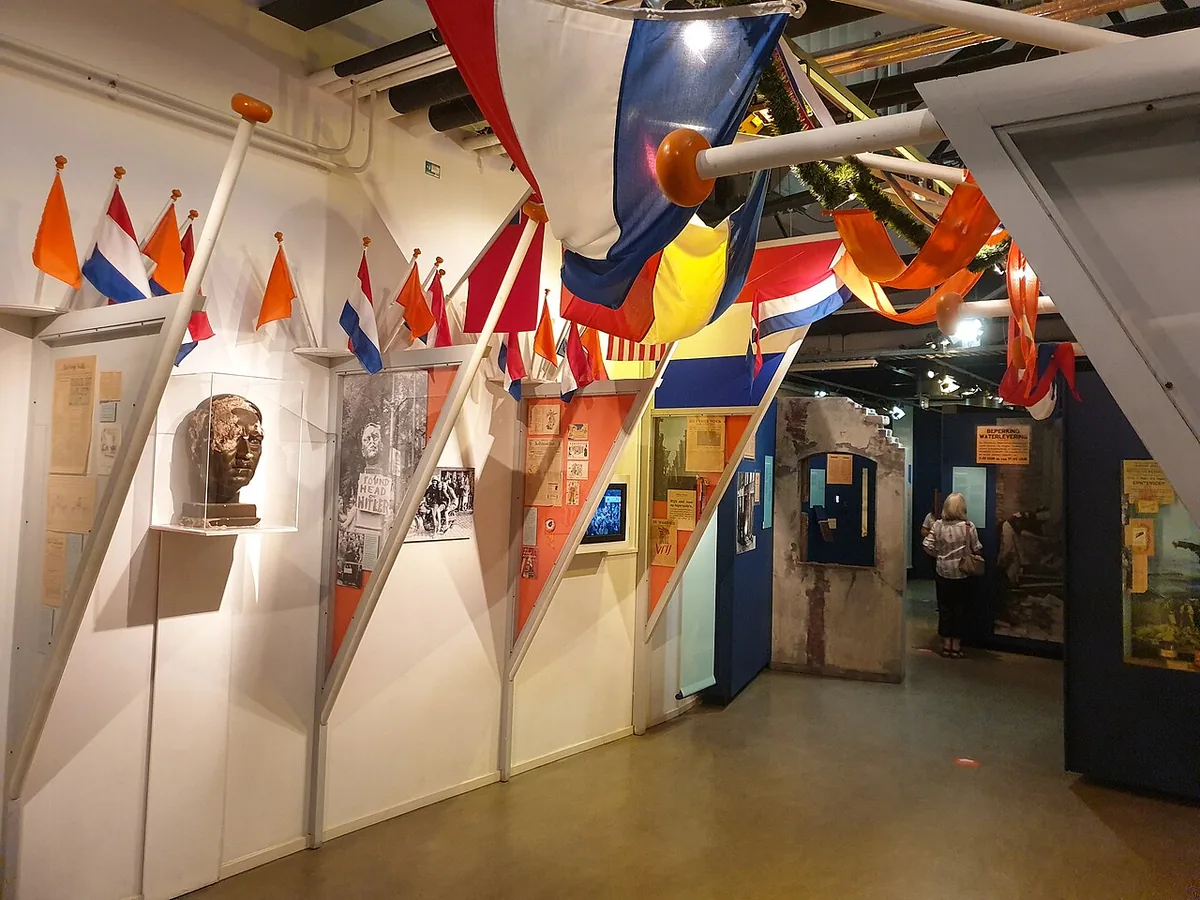
Verzetsmuseum Amsterdam
In the Plantage district, the Verzetsmuseum explores personal choices under Nazi occupation and the war’s colonial histories. Its home, the 1876 Plancius Building, began as a Jewish choral hall; across the street, resistance fighters attacked Amsterdam’s population registry in 1943.