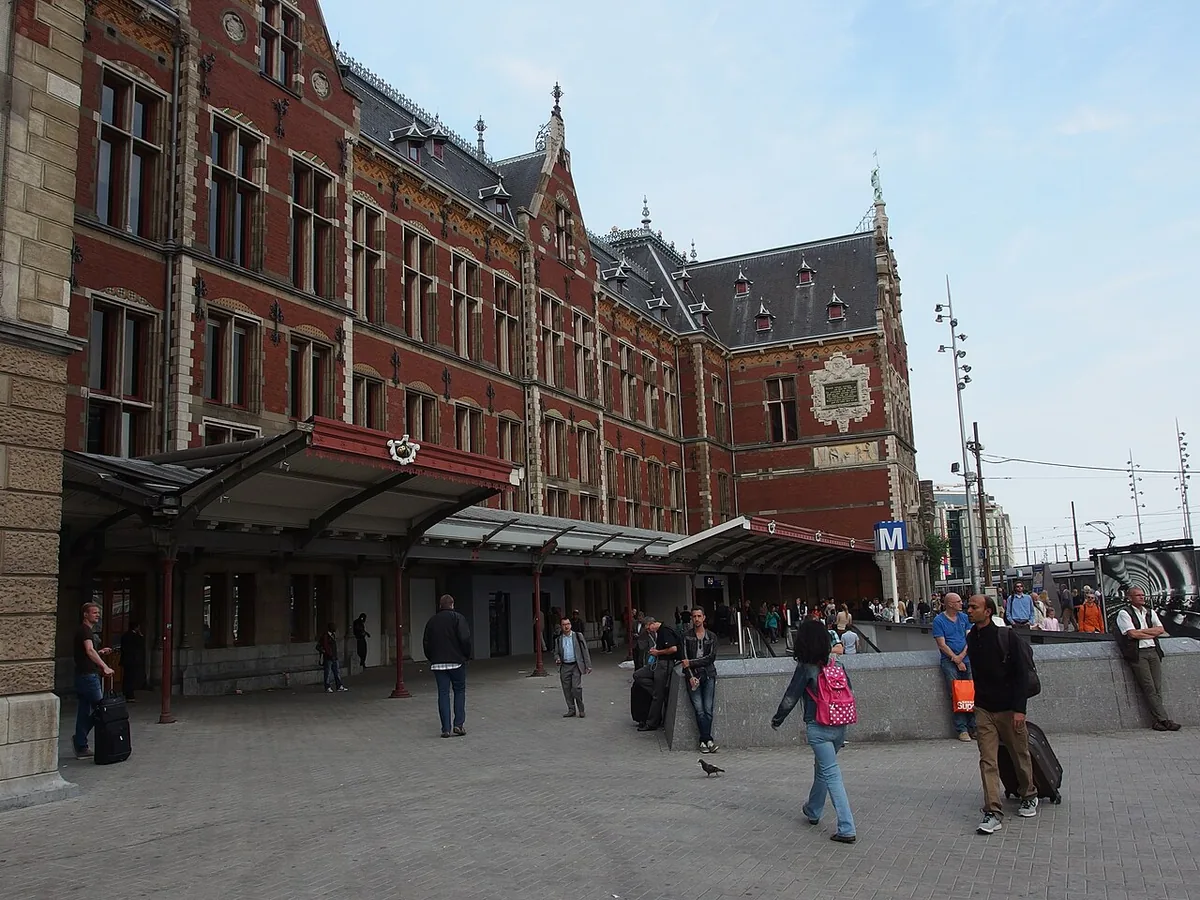
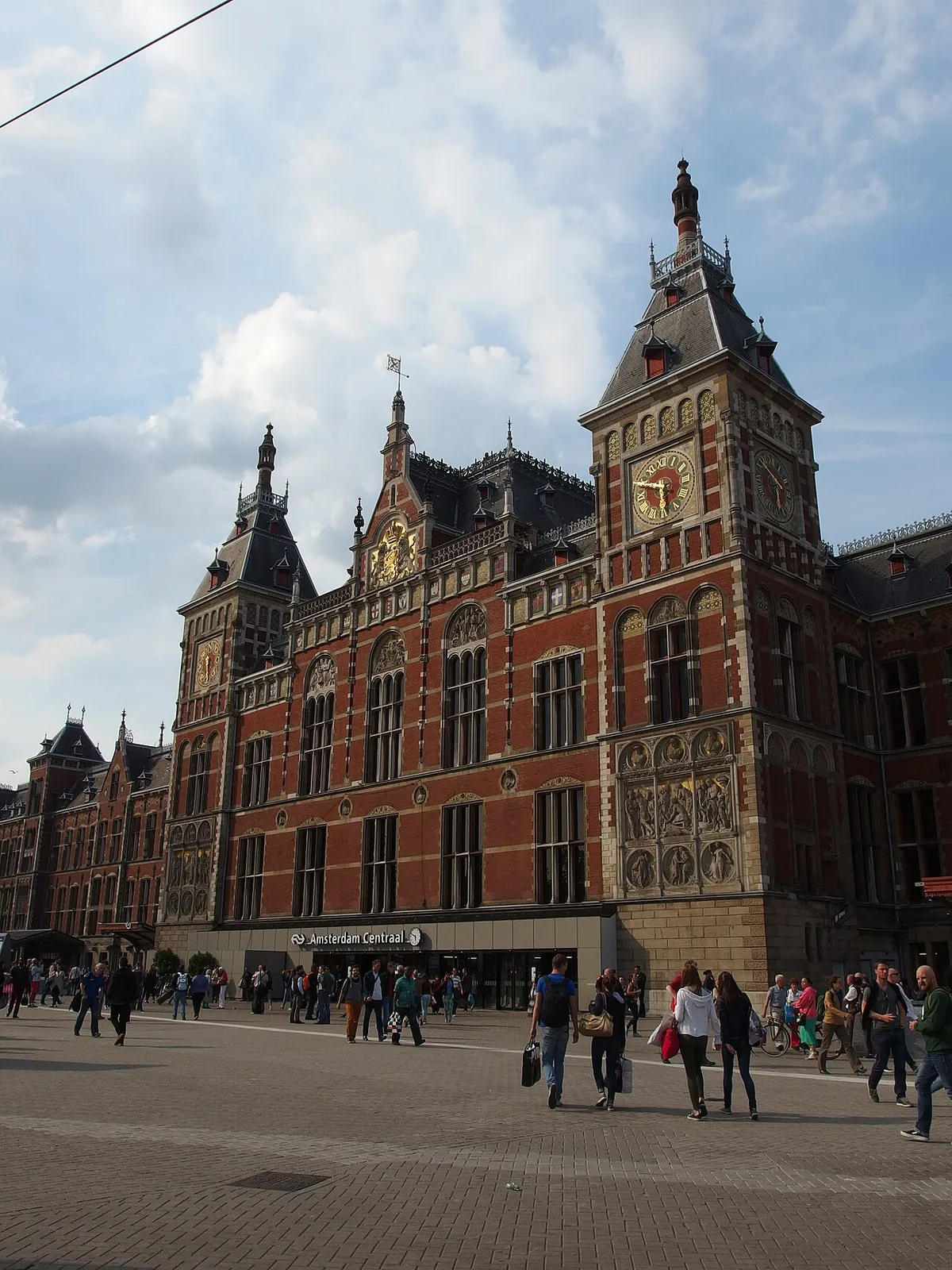
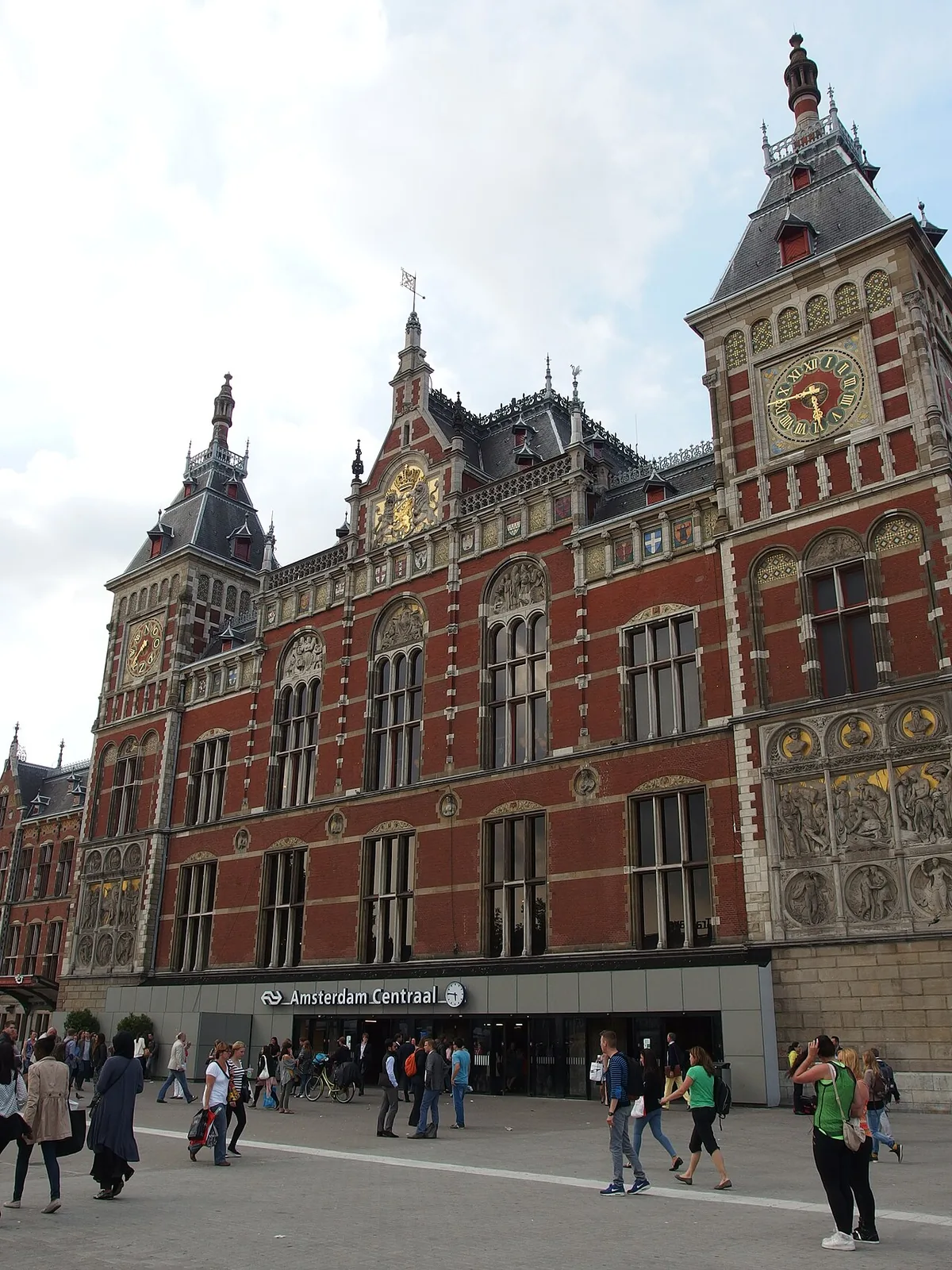
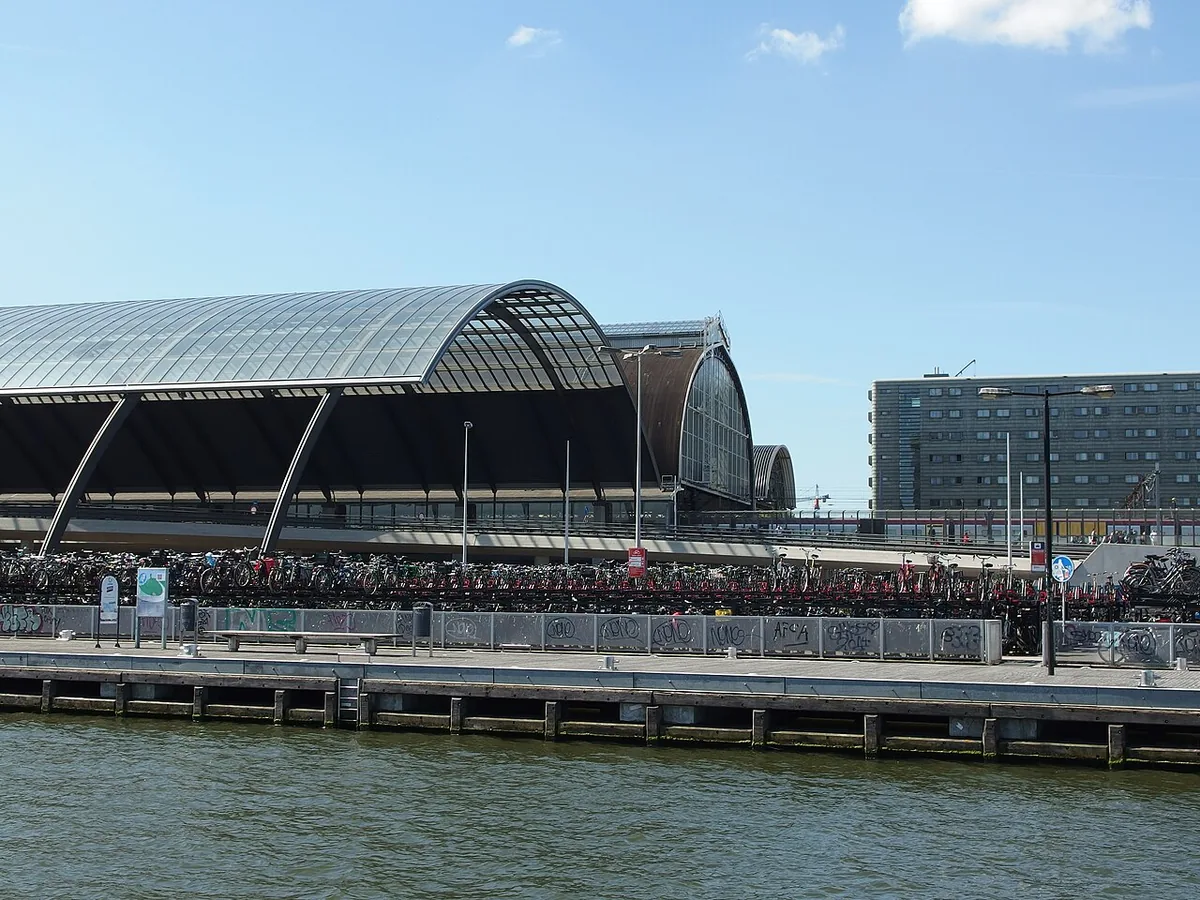
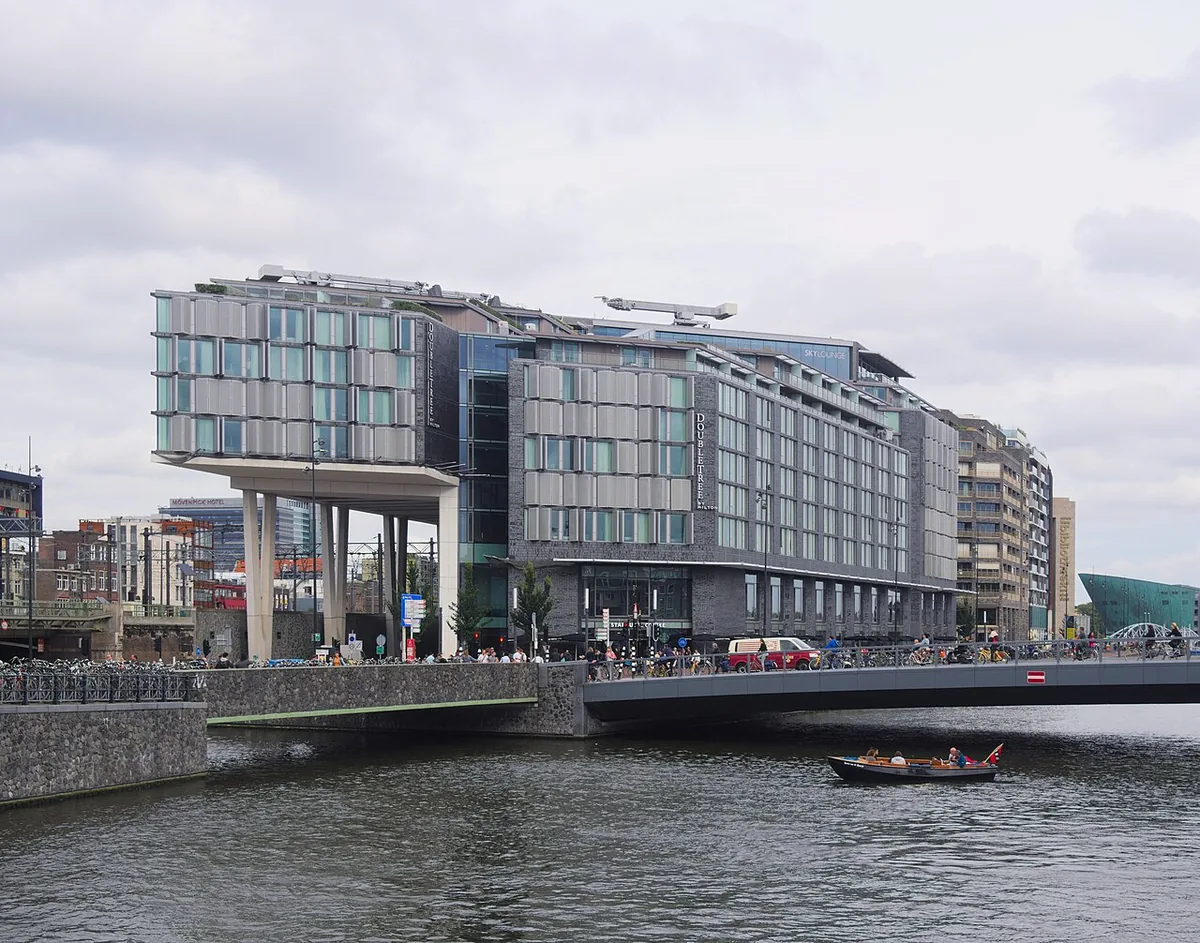
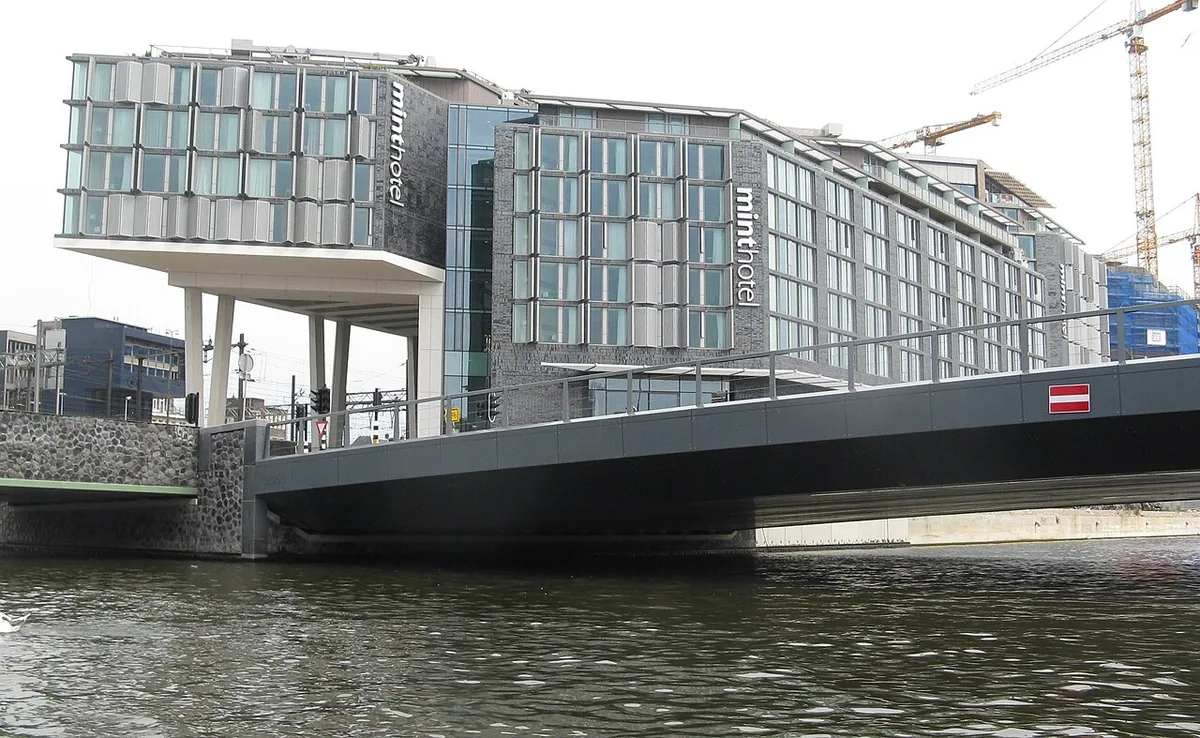
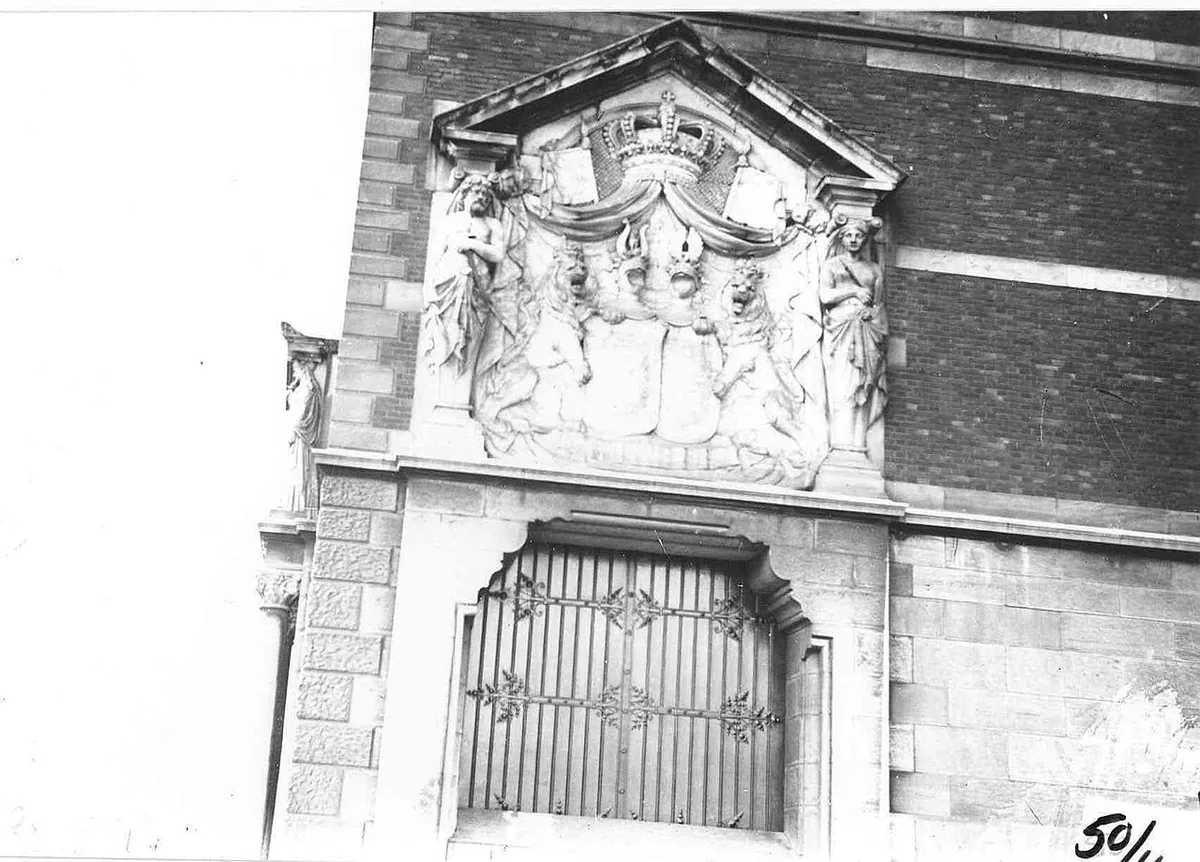
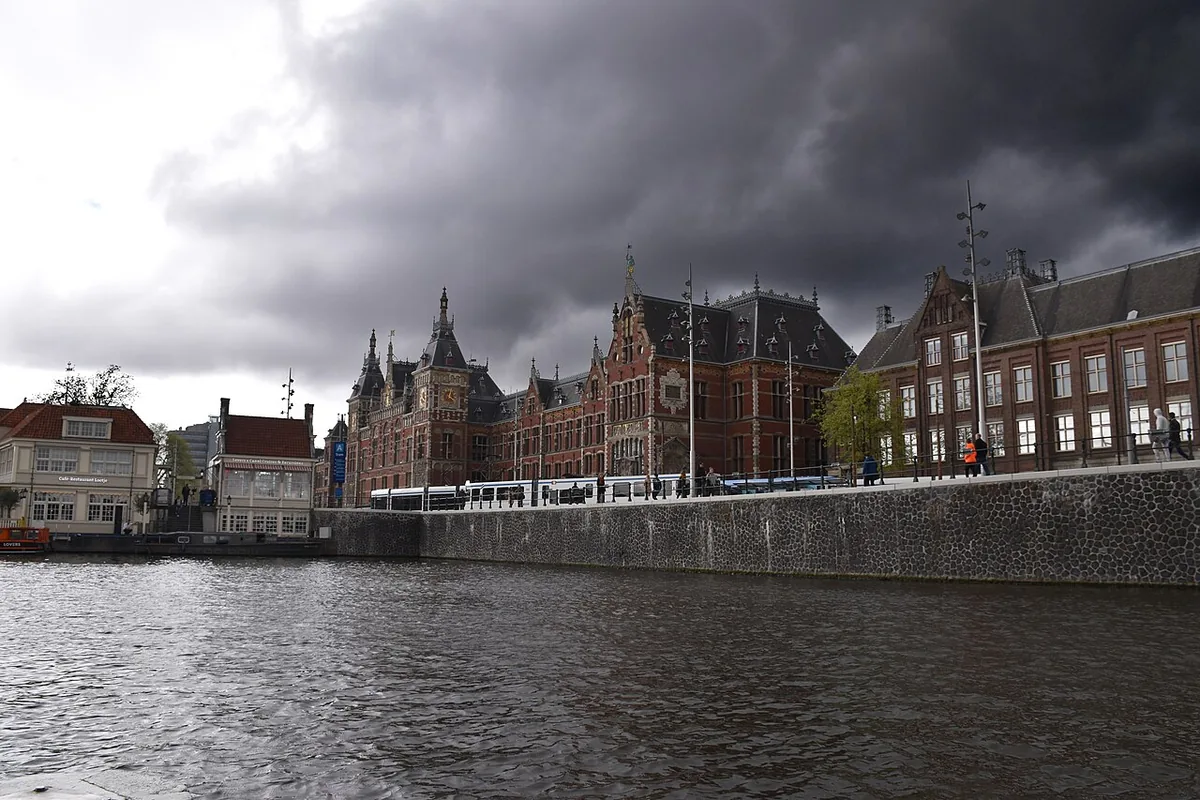
Amsterdam Centraal occupies Station Island in the IJ, where the historic centre meets the waterfront. Pierre Cuypers and A.L. van Gendt designed its monumental 1889 gateway, built on reclaimed islands and thousands of piles. Today the station remains a busy link between rail, city and harbour.
Quick facts
Amsterdam Centraal opened on 15 October 1889 after construction delays caused by subsidence.
The station was built on three reclaimed islands in the IJ and supported by 8,687 piles.
The city’s objections to the waterfront site included concerns about shipping, silting and losing the open harbour view.
Get directions to Amsterdam Centraal Station. Confirm the visitor entrance and current access with the venue before travelling.
Audio guide
Listen to this place’s guide.
Guide
Amsterdam Centraal makes a grand first impression, but its most important architectural decision is where it stands. The station occupies Station Island in the IJ, between the historic centre and the water. Its long brick façade, paired towers and central entrance were designed to make arrival feel like crossing a threshold into the city. The station opened on 15 October 1889; since then, millions of ordinary journeys have passed through a building conceived as both transport infrastructure and civic statement.
Continue exploring
Discover the full story
Keep reading with a travel pass and explore every full guide and tour.
UpgradeMore places in Amsterdam
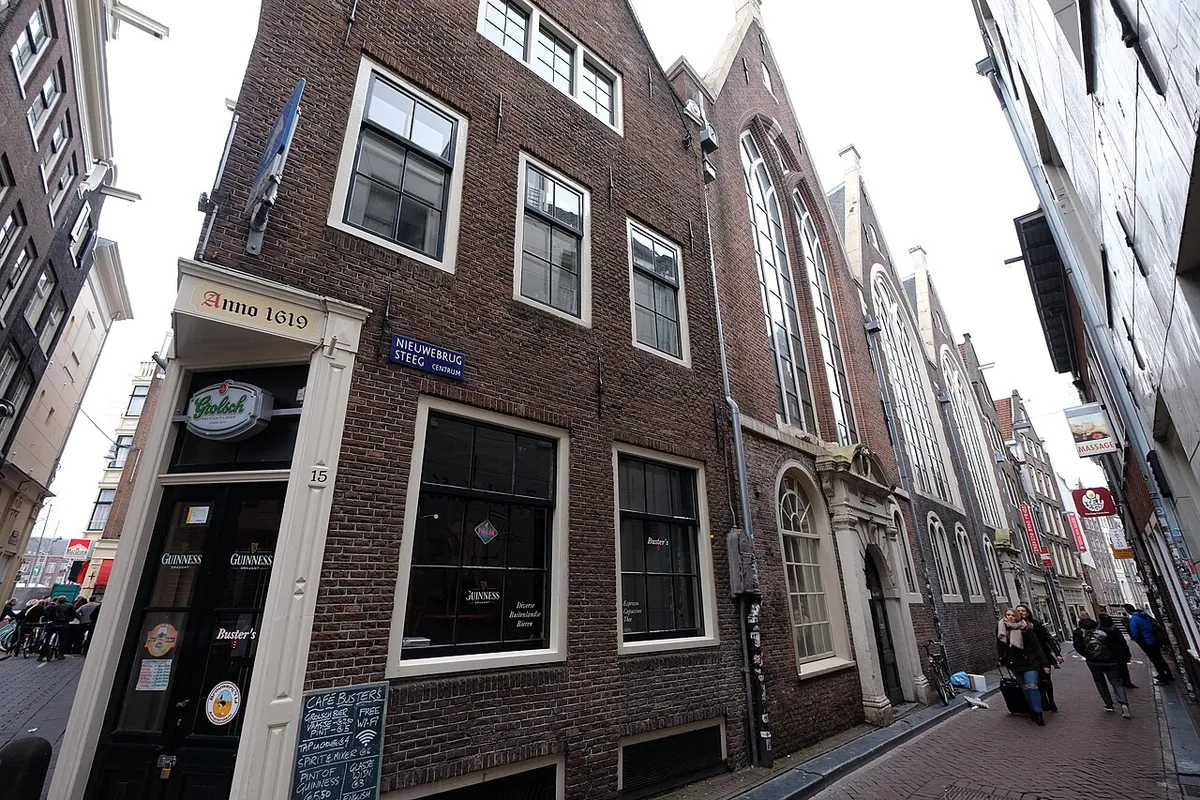
In’t Aepjen
In ’t Aepjen is a café at Zeedijk 1, inside a rare surviving sixteenth-century timber-framed Amsterdam house. Records, later shopfronts and a debated monkey legend reveal how the building’s use and story changed over time.
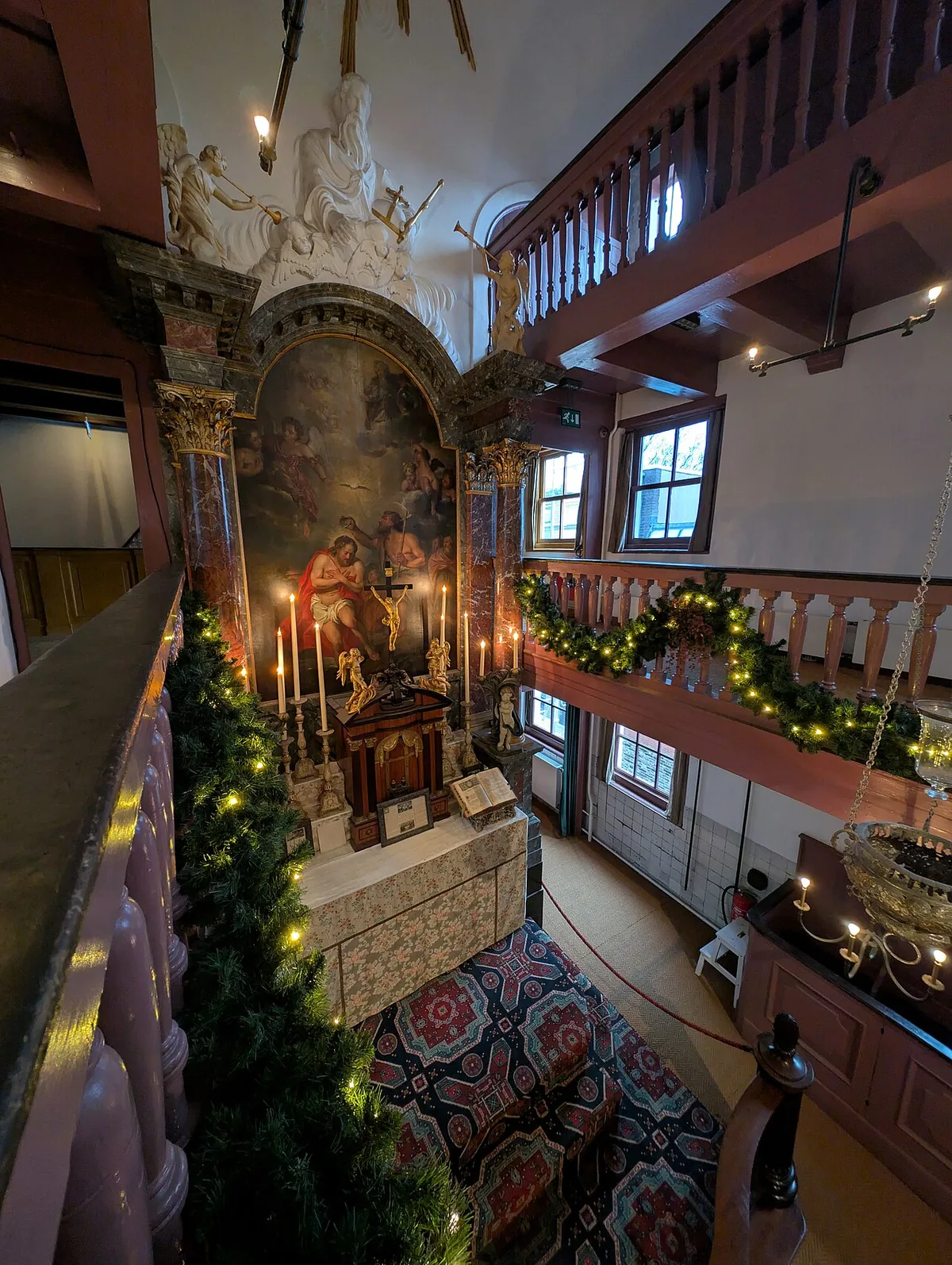
Our Lord in the Attic Museum
A seventeenth-century Catholic church fills the joined upper floors of a canal house and two rear houses. Built by merchant Jan Hartman, it preserves the history of Amsterdam’s tolerated house churches and the community that worshipped here.
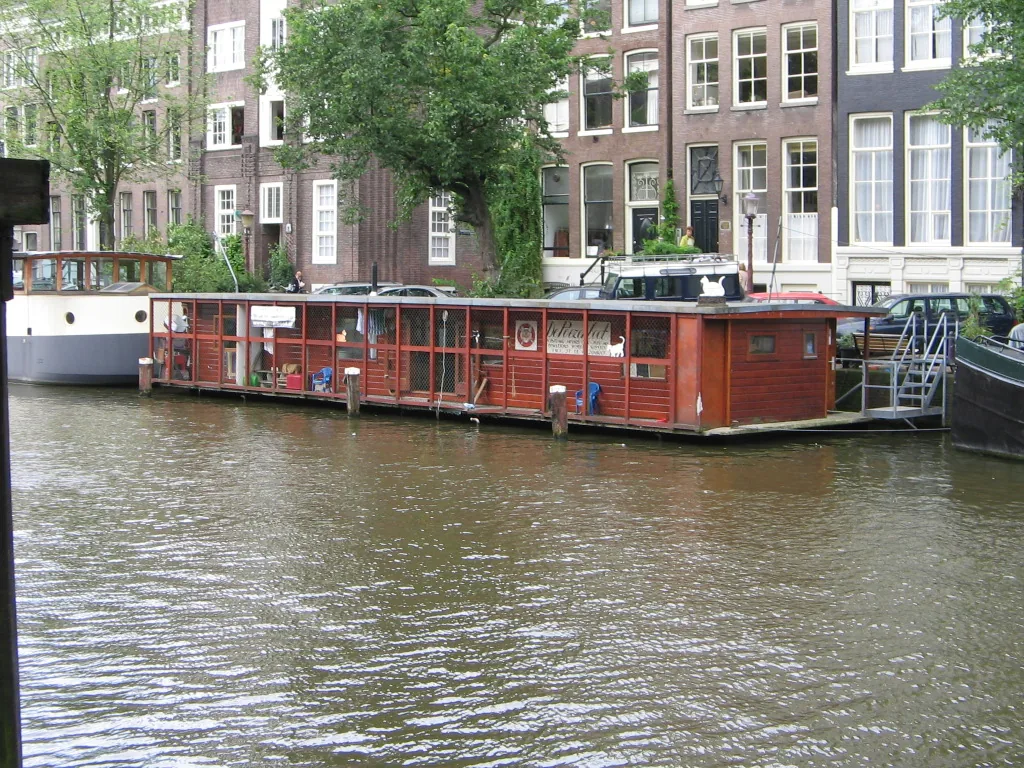
De Poezenboot
De Poezenboot is an Amsterdam cat sanctuary aboard a houseboat on the Singel. Founded by Henriette van Weelde after she began taking in stray cats in 1966, it provides veterinary care and refuge, including long-term shelter for cats not suited to rehoming. Volunteers and donations sustain its work.
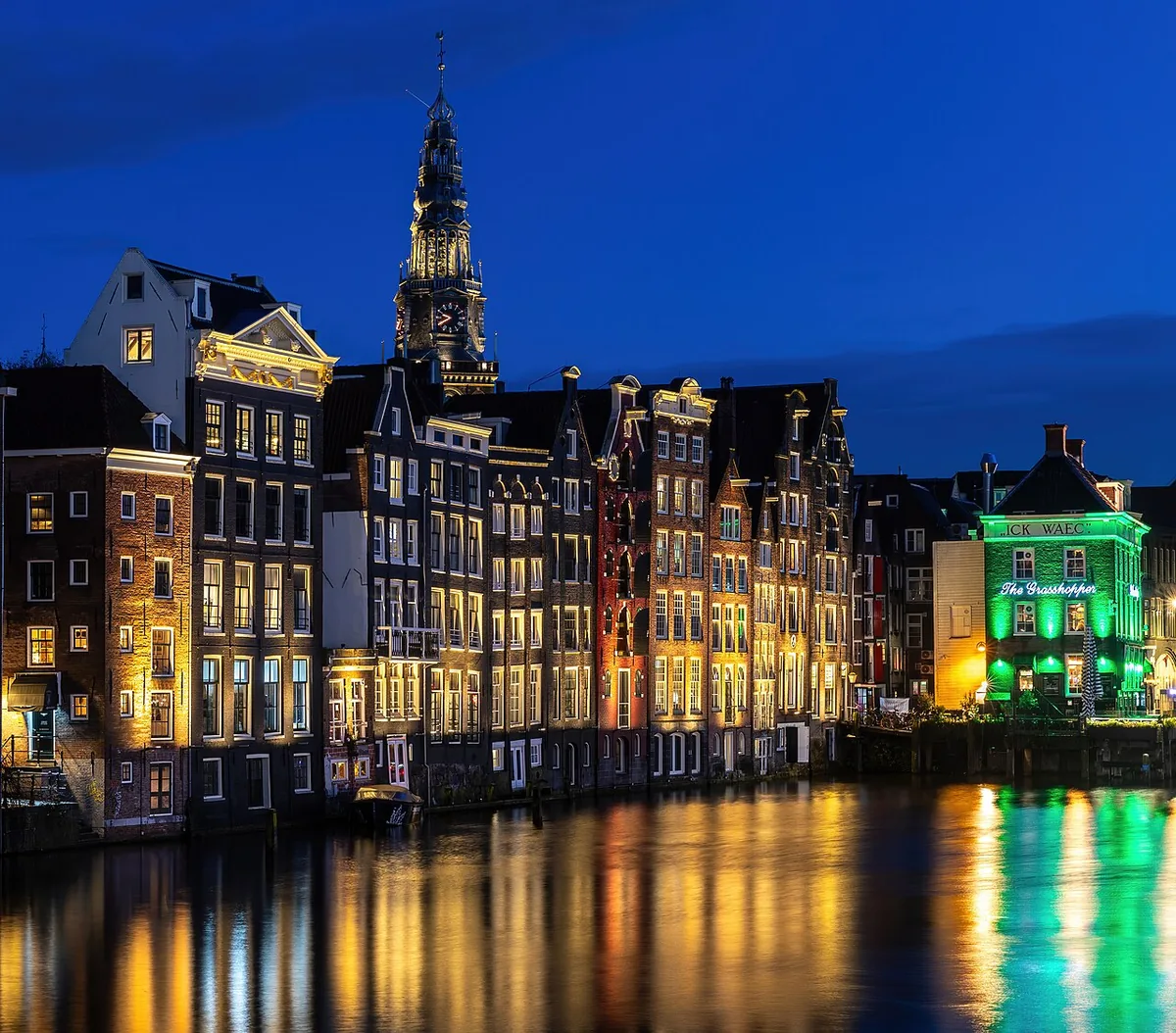
Oude Kerk
Amsterdam’s oldest surviving building grew from a thirteenth-century chapel into a Gothic hall church shaped by port trades, religious change, and generations of burial. Its guild chapels, memorials, music, and contemporary art keep the city’s layered history present.
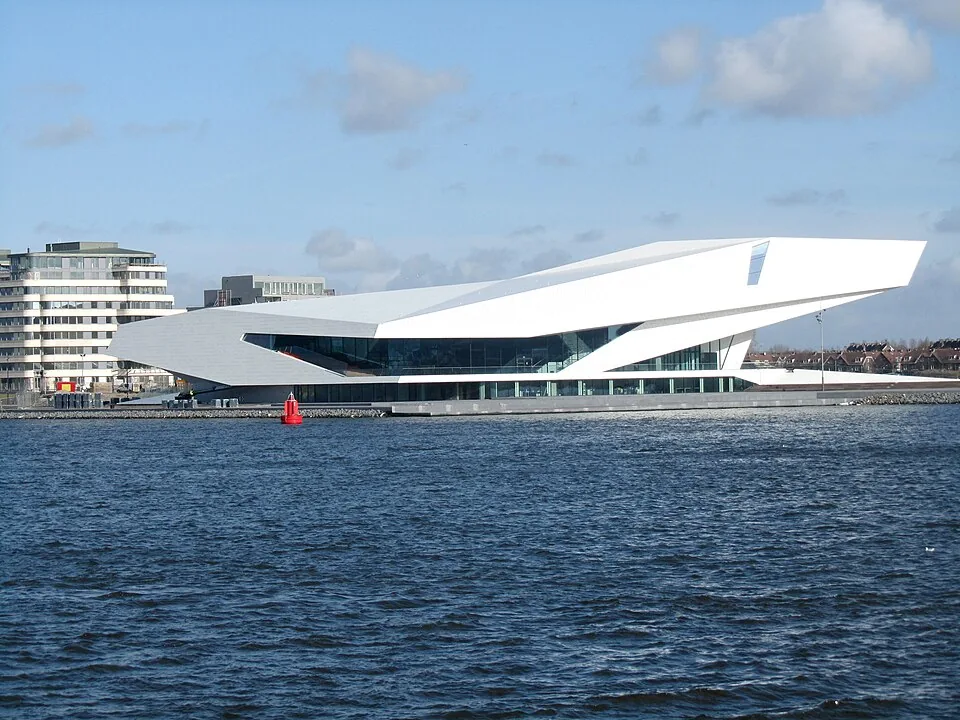
EYE Film Museum
Across the IJ from Amsterdam Centraal, EYE Film Museum brings Dutch film heritage into public view through exhibitions, screenings and a living archive. Its faceted white building, designed by Delugan Meissl Associated Architects, frames the river as part of the experience and anchors a cultural des
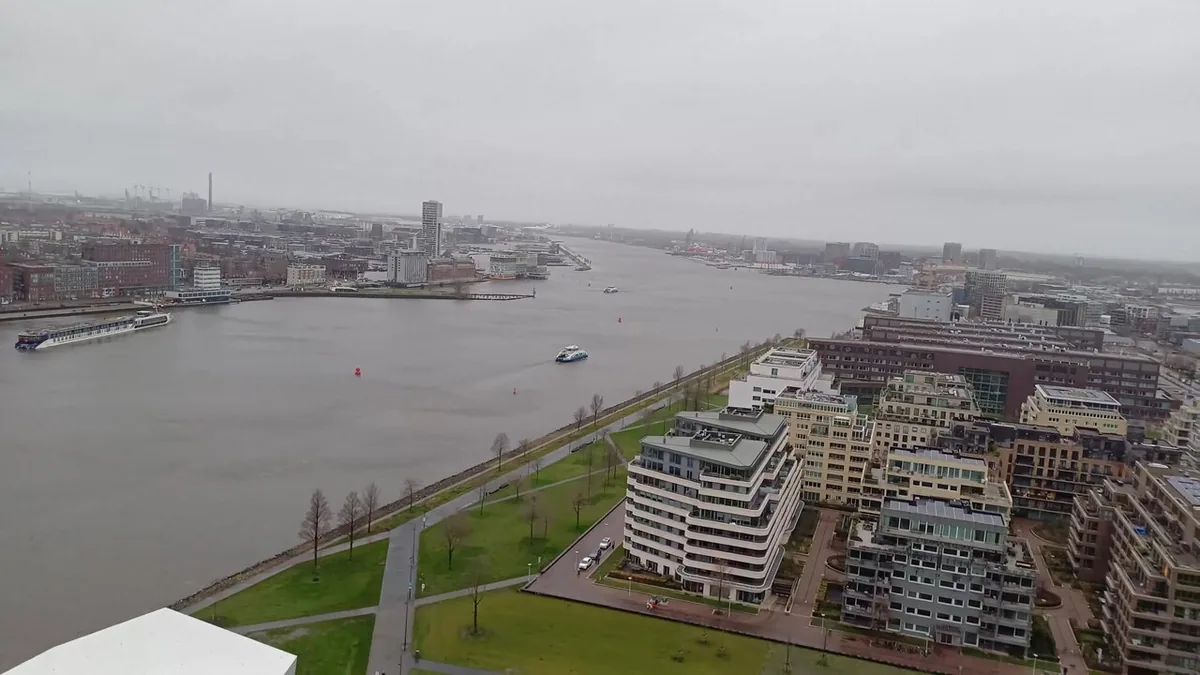
A'DAM Lookout Tower
A’DAM Lookout occupies the crown of Amsterdam Noord’s former Shell tower, a 1970s landmark set diagonally to the IJ. Its conversion into a public-facing tower kept Arthur Staal’s concrete structure while adding a sky deck above the redeveloping Overhoeks waterfront.