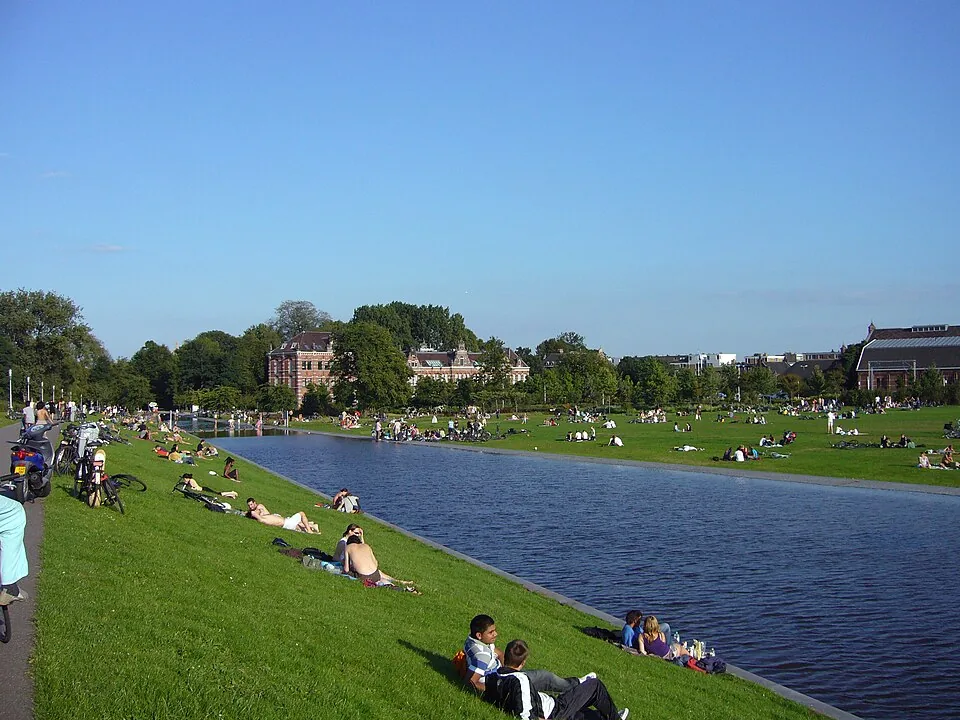


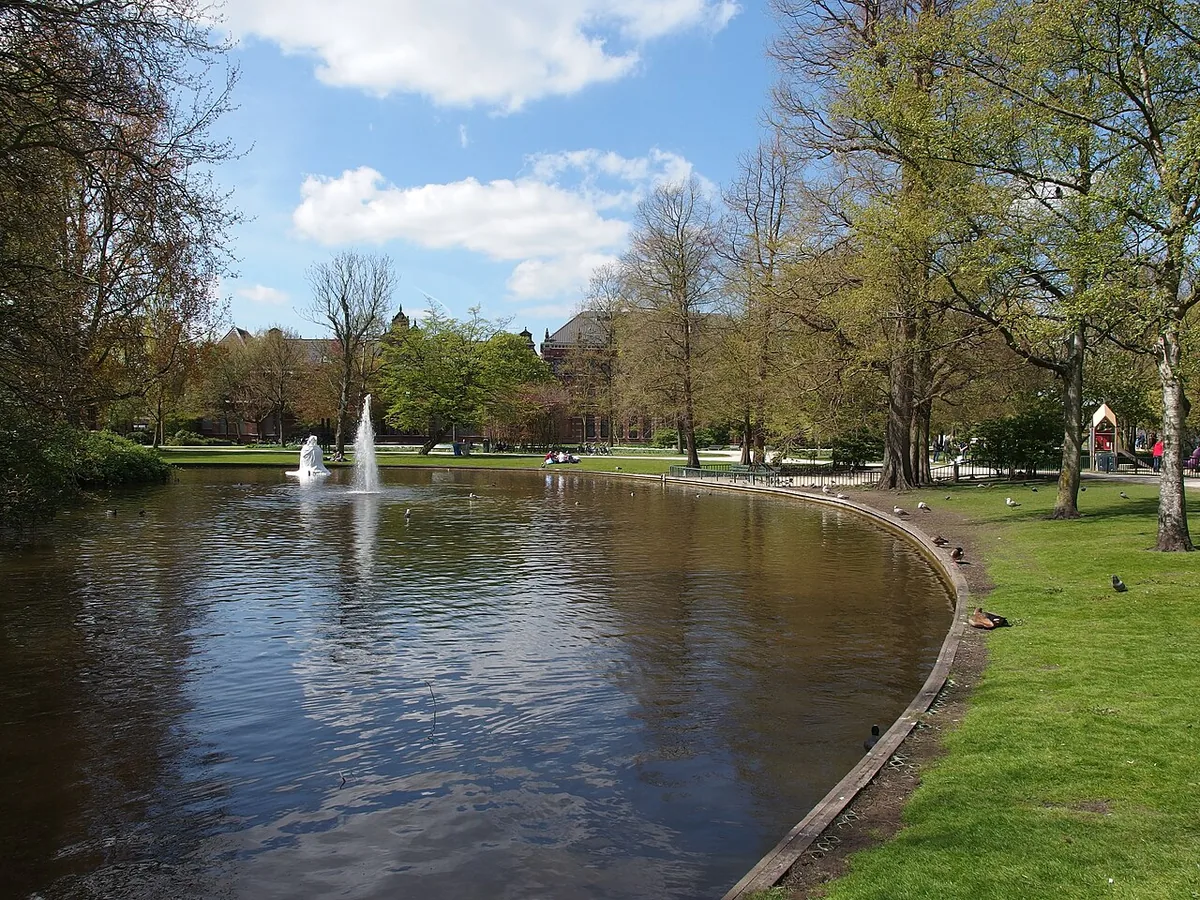
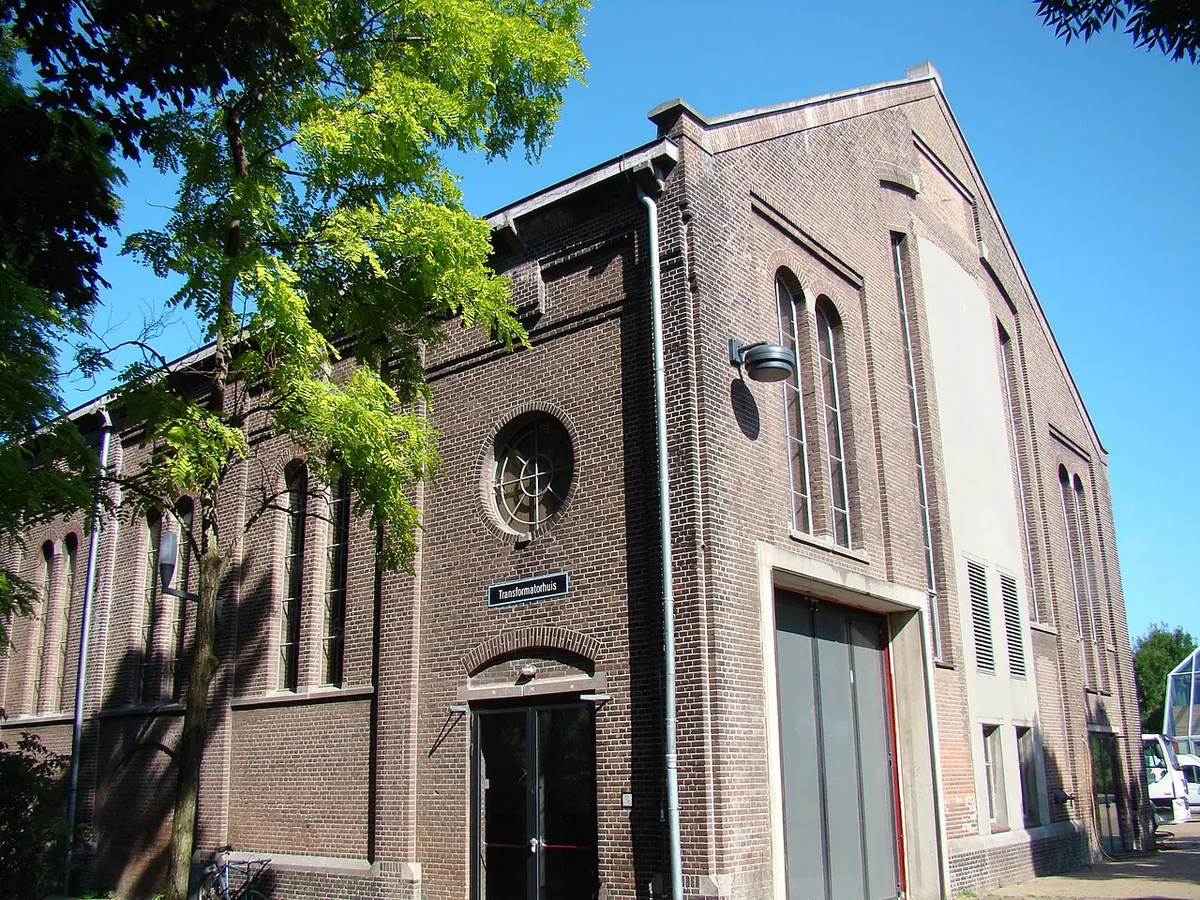
Westerpark joins Amsterdam’s nineteenth-century public green space with the former Westergasfabriek, whose coal-gas works shaped the district and left a legacy of contaminated soil. Today the covered industrial site is a cultural park beside lawns, water and recreation.
Quick facts
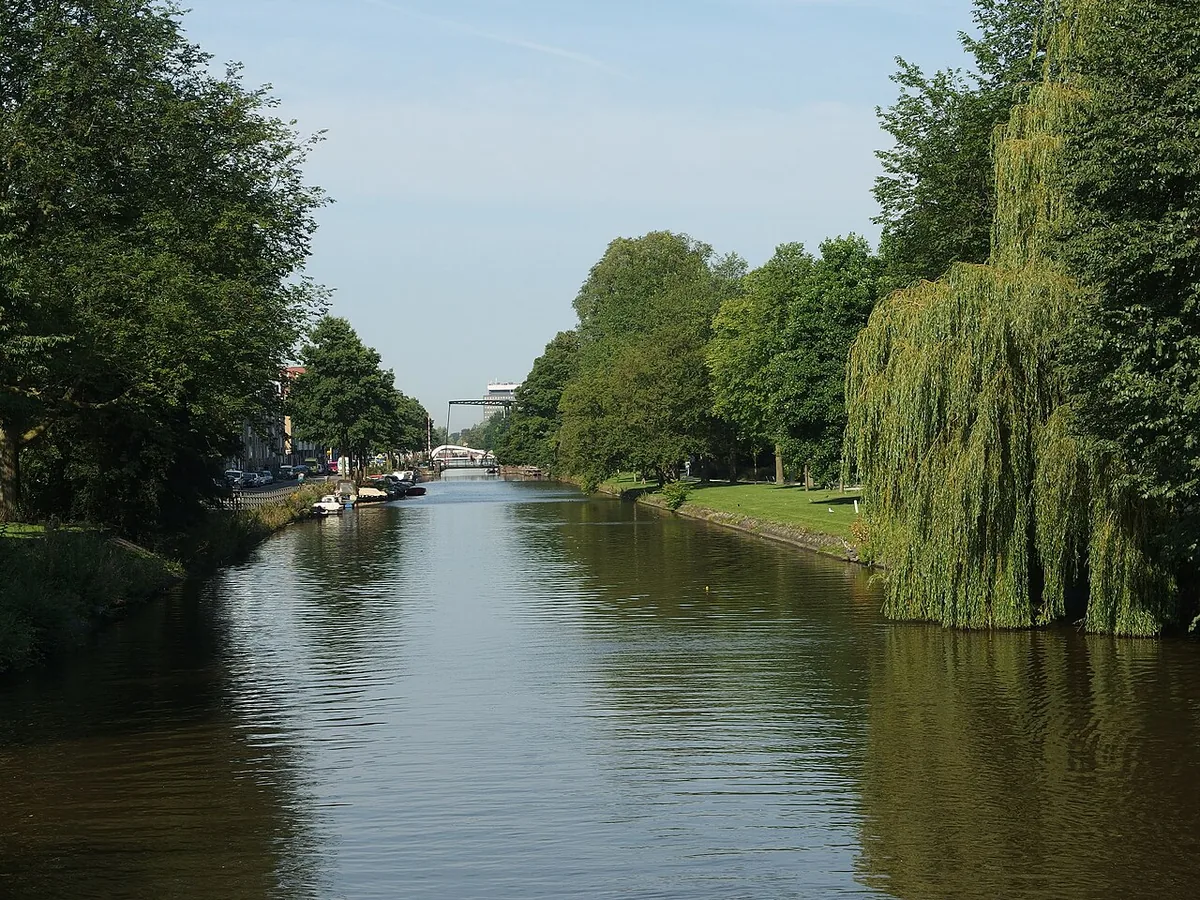
Westerpark opened in 1891, replacing the earlier Westerplantsoen after canal and railway works displaced it.
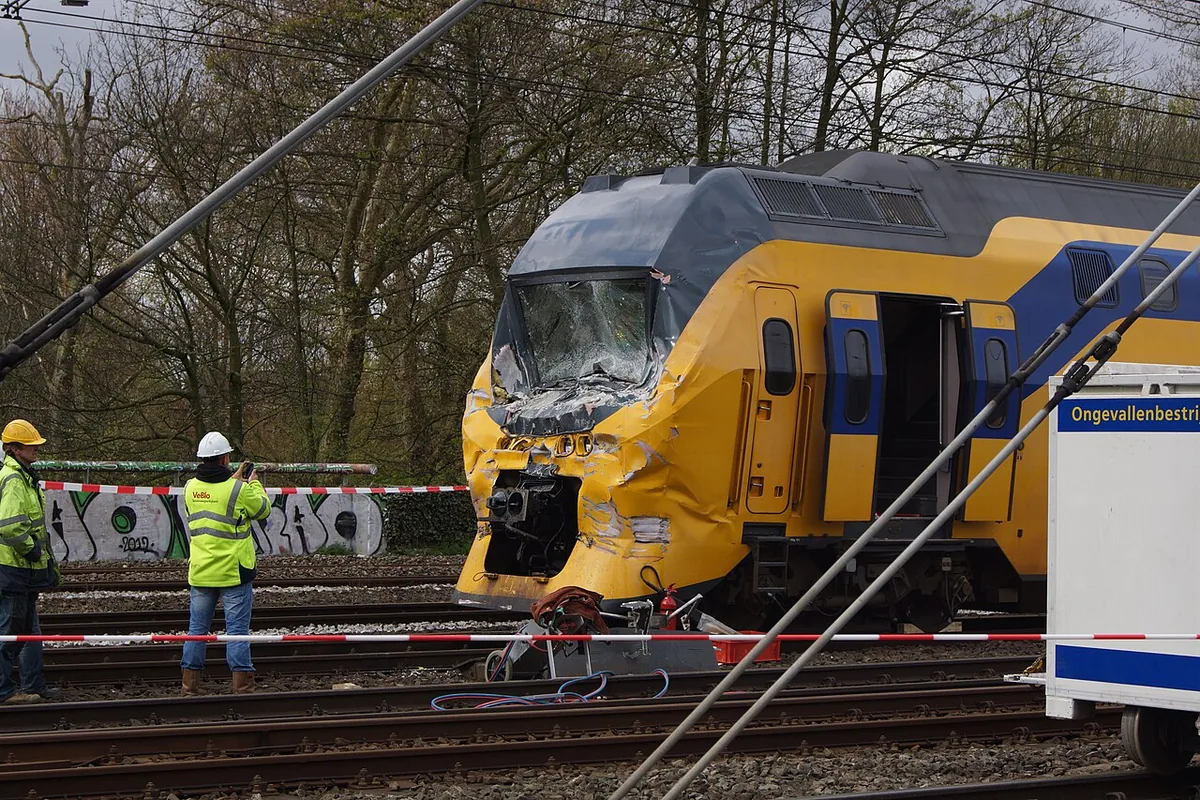
The Westergasfabriek made coal gas for Amsterdam’s street lighting; production ended in 1967 as natural gas replaced it.
The 2003 Cultuurpark Westergasfabriek extension was built on a clean top layer covering contaminated soil, following Kathryn Gustafson’s design.
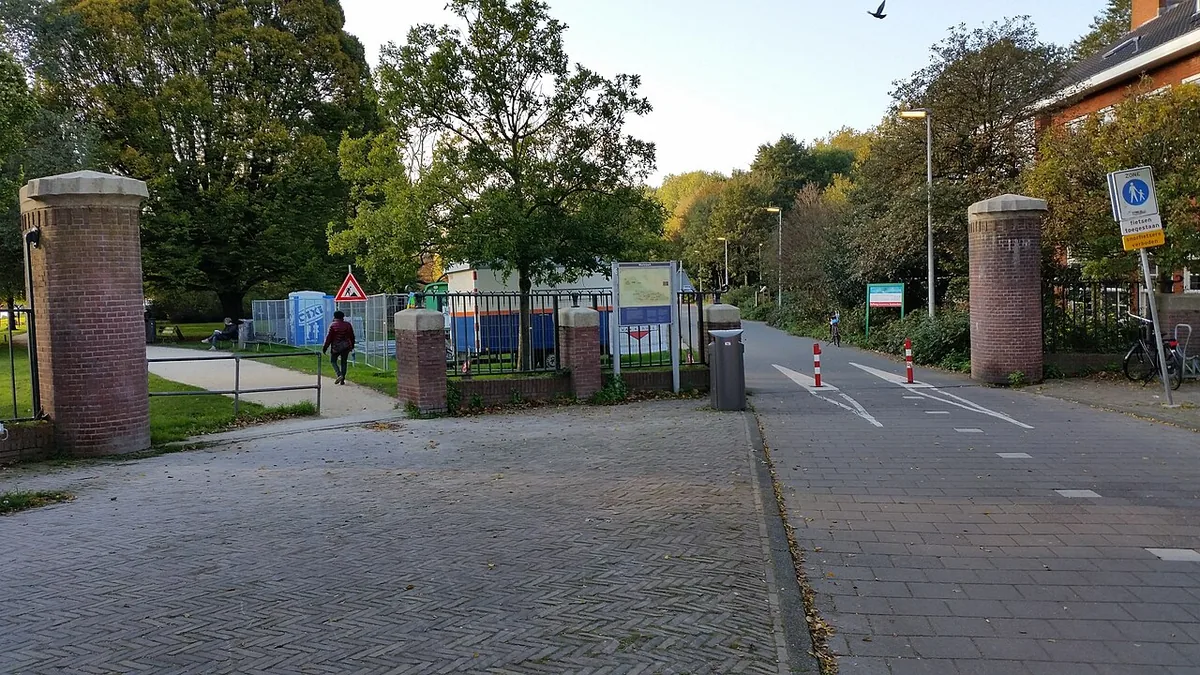
Get directions to Westerpark. Confirm the visitor entrance and current access with the venue before travelling.
Audio guide
Listen to this place’s guide.
Guide
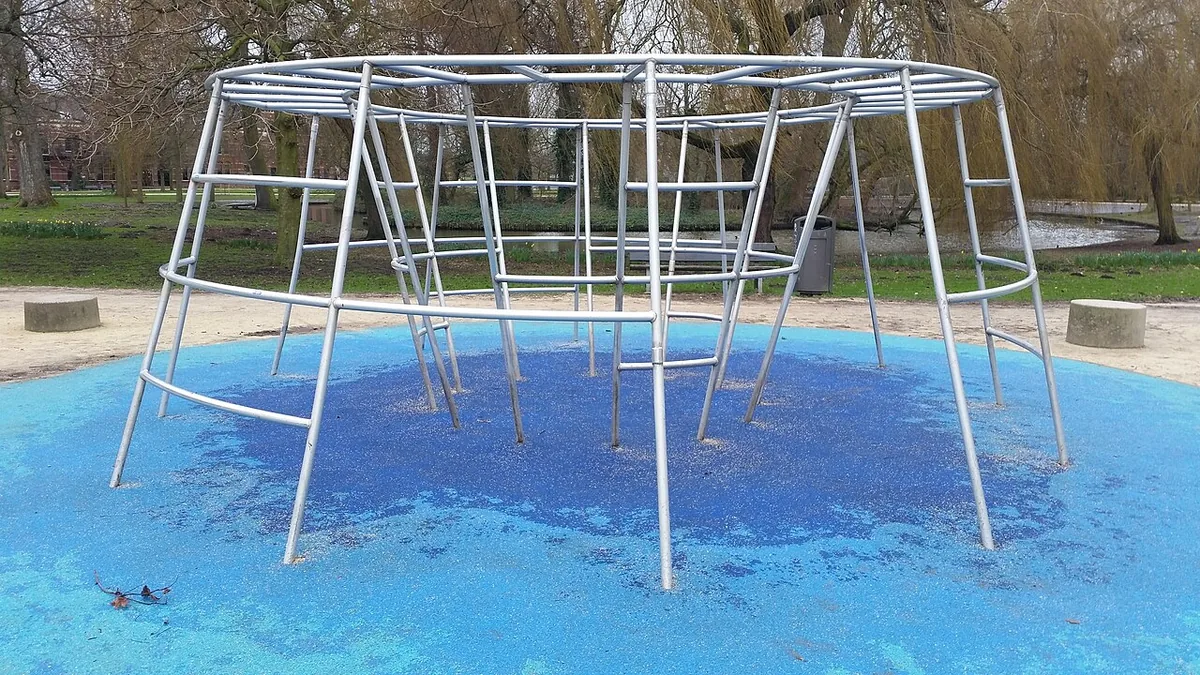
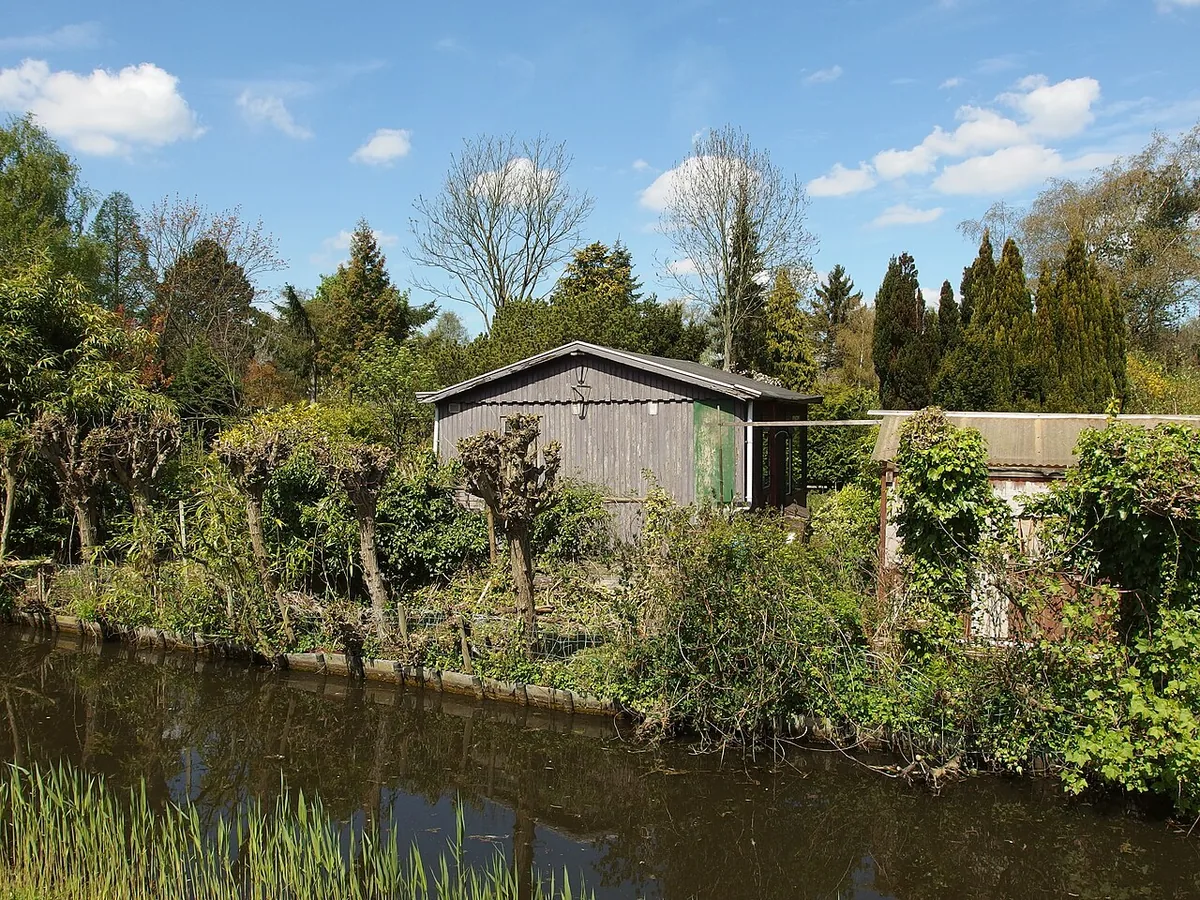
Westerpark is easiest to understand as a meeting of two urban needs: fresh air for a crowded industrial city, and room for the industry that helped light it. Today its lawns, water, recreation spaces and monumental brick works sit side by side in Amsterdam-West. The park’s boundaries and name can refer to a wider collection of green spaces, but this guide focuses on the historic municipal park and the adjacent former Westergasfabriek grounds that became its cultural extension.
Continue exploring
Discover the full story
Keep reading with a travel pass and explore every full guide and tour.
UpgradeMore places in Amsterdam
Museum Het Schip
Museum Het Schip is a social-housing complex in Amsterdam-West, designed by Michel de Klerk for Eigen Haard. Its wave-like brickwork earned the nickname “The Ship.” The museum occupies an incorporated former school and interprets the Amsterdam School, public housing and the restored neighborhood pos
Brouwersgracht
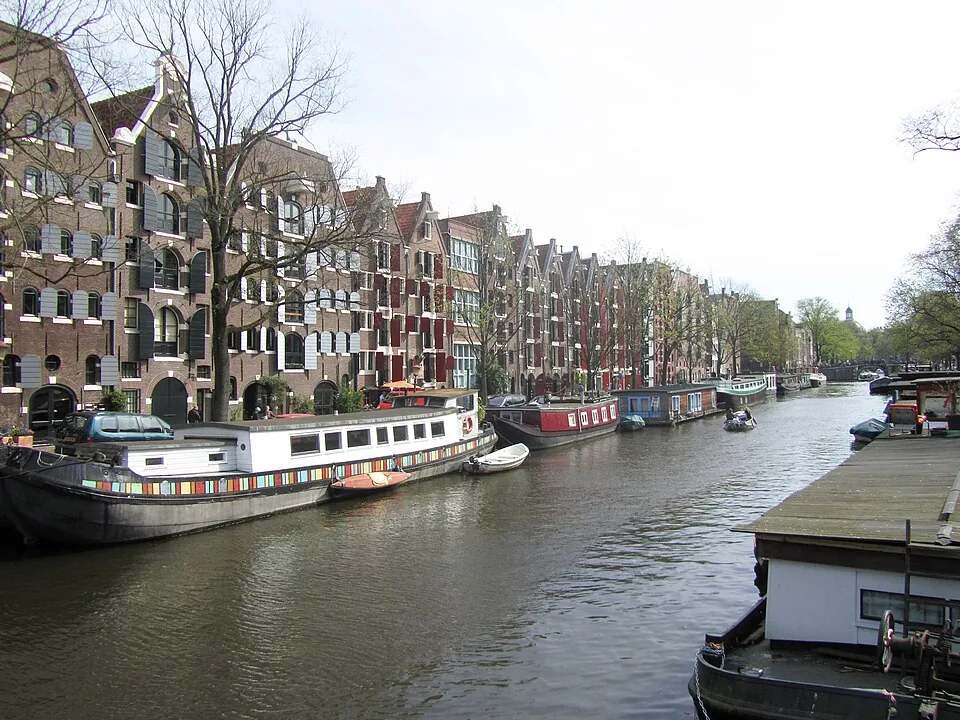
Brouwersgracht runs along the northern edge of the Jordaan, where Amsterdam’s old canal network met routes toward the IJ. Its name recalls brewing, while warehouses and Herenmarkt traces reveal the canal’s wider life as a freight route and neighbourhood workplace.
Café Papeneiland
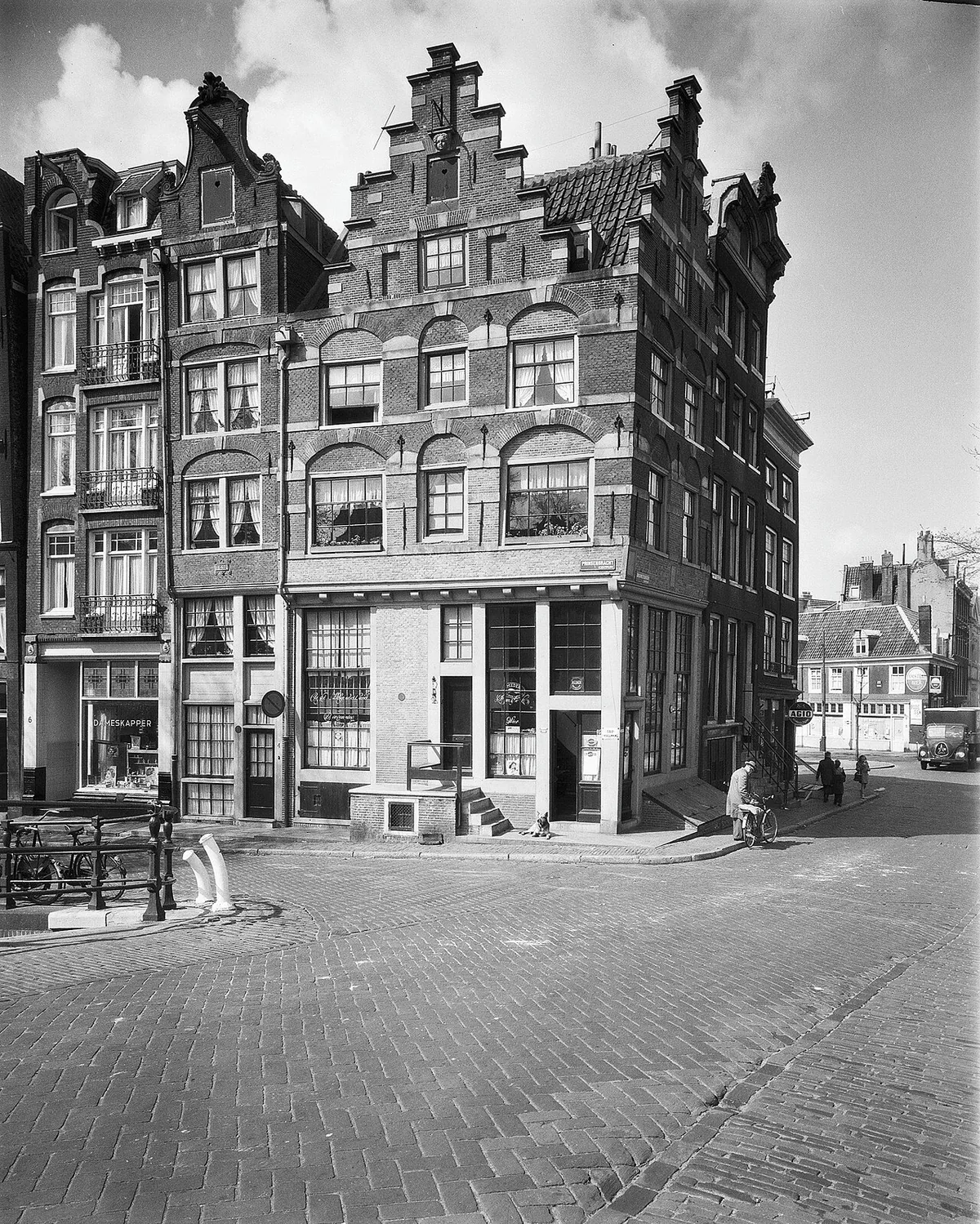
Café ’t Papeneiland occupies a canal-corner house at Prinsengracht 2 in Amsterdam. Built in 1641–42 as a shop with an upper dwelling, it became a documented café in 1896. Its façade preserves layers of restoration, while archaeological inspection disproved the famous cellar-tunnel tale.
Jordaan
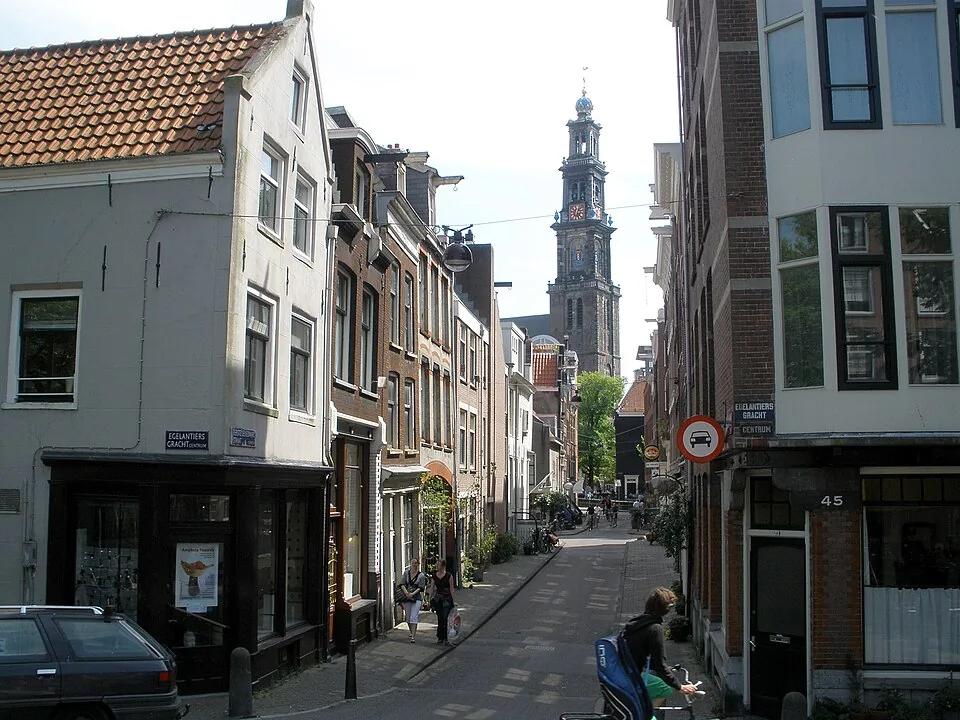
The Jordaan grew from Amsterdam’s 1613 western expansion, where older polder lines shaped a dense artisan neighborhood beside the grand canal ring. Its angled streets, courtyards and renewed homes reflect centuries of work, crowding, protest and repair.
Electric Ladyland Museum
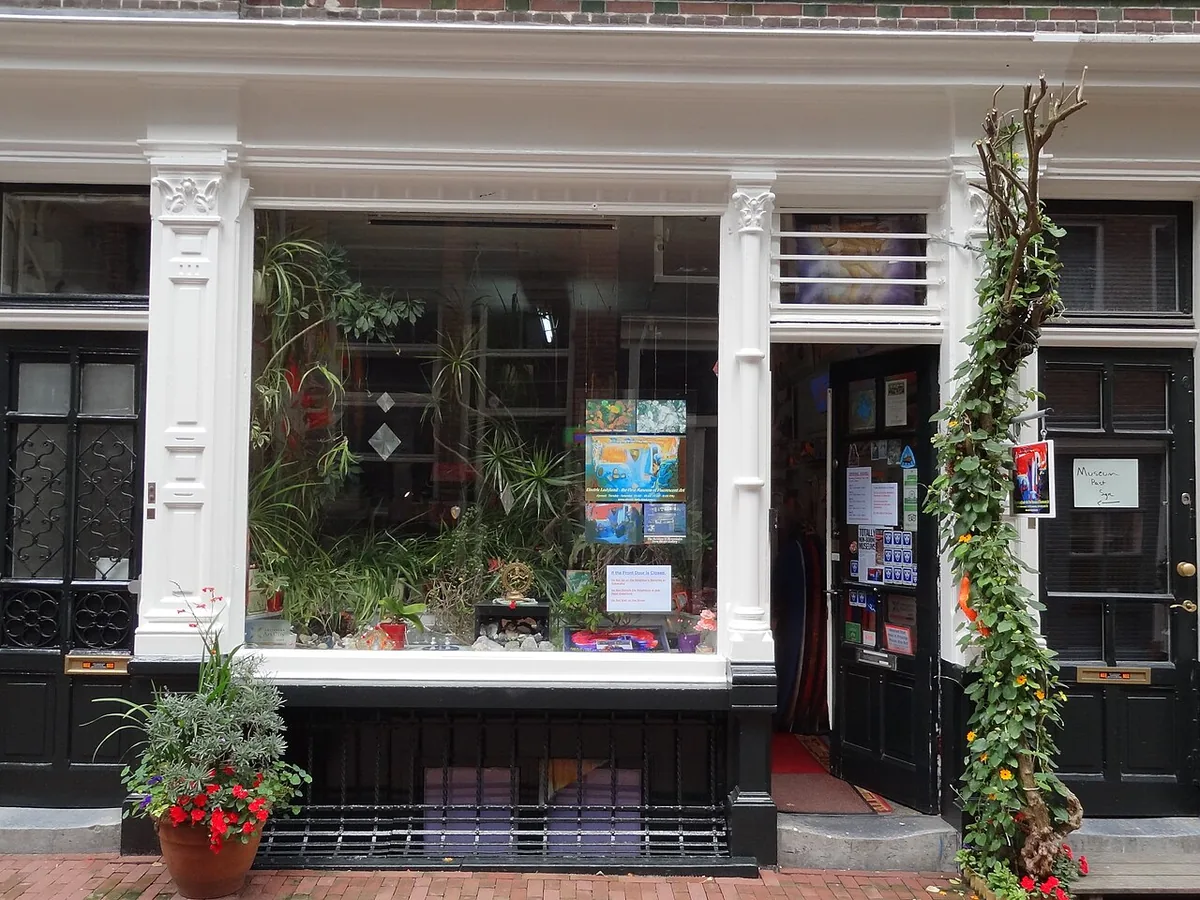
Electric Ladyland Museum in Amsterdam’s Jordaan makes fluorescence both its subject and its medium. Visitors enter a room-sized artwork, then compare minerals and everyday materials under different ultraviolet lights to see how illumination can transform what appears ordinary.
Anne Frank House
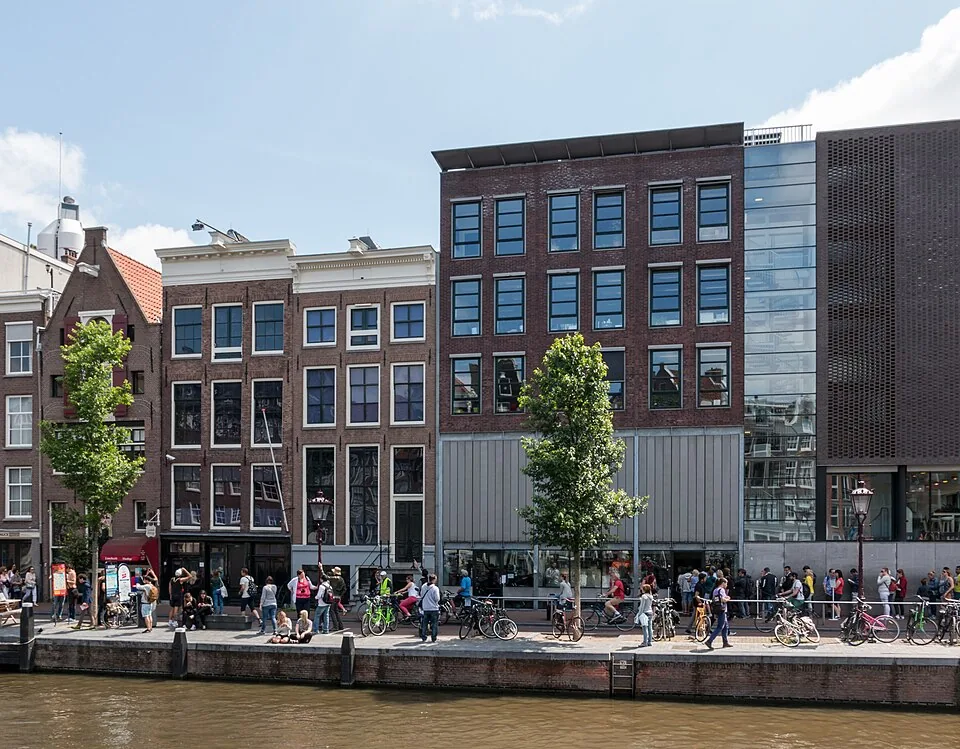
At Prinsengracht 263, a canal-side business address held the concealed annex where eight Jewish people hid from Nazi persecution. The Anne Frank House museum preserves this wartime site and the traces of its inhabitants, including the original bookcase and Anne Frank’s writings.