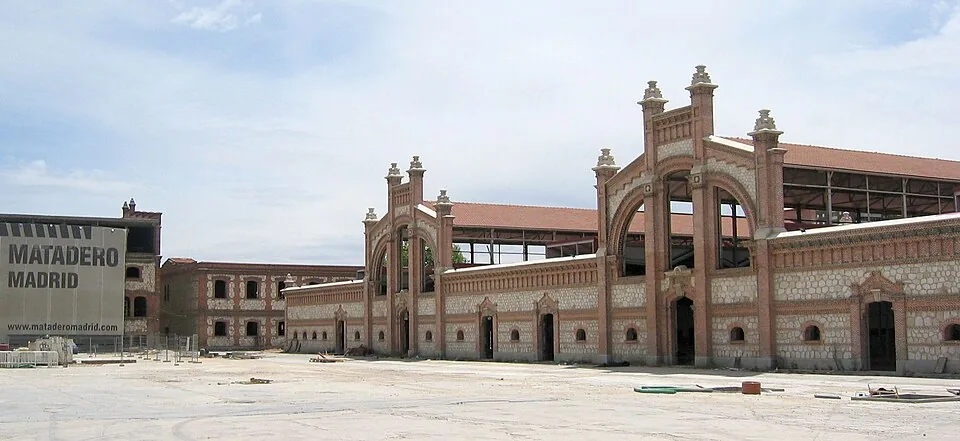
Matadero Madrid’s brick halls began as part of the city’s municipal slaughterhouse and livestock market. Their industrial scale now serves contemporary culture, making the site’s reuse visible: working infrastructure has become a place for exhibitions, performances, and public exchange.
Guide preview
Matadero Madrid was designed as infrastructure for a growing city. Architect Luis Bellido planned a large complex of buildings for the municipal slaughterhouse and livestock market; construction began in 1911, and the facility was inaugurated in 1924.
Continue exploring
Discover the full story
Keep reading with a travel pass and explore every full guide and tour.
UpgradeQuick facts
- Luis Bellido designed the slaughterhouse complex.
- The facility was inaugurated in 1924 and closed in 1996.
- The city repurposed the site as a contemporary cultural center in the 2000s.
More places in Madrid
Almudena Cathedral
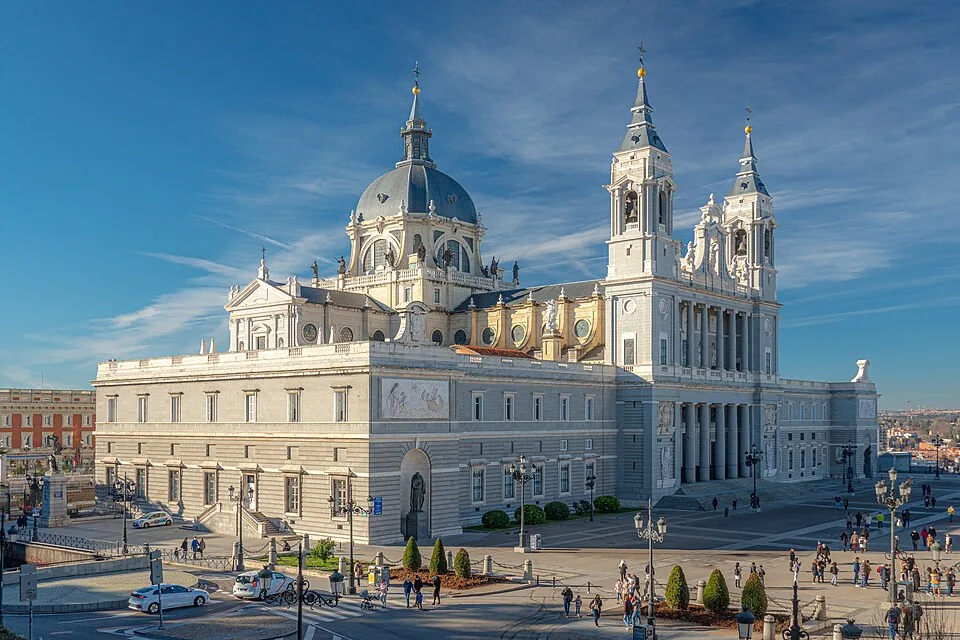
Almudena Cathedral took more than a century to complete, changing from a neo-Gothic proposal to a more classical exterior beside the Royal Palace. Its long construction reflects Madrid’s delayed status as a diocese and the political and financial interruptions of modern Spanish history.
Atocha Station Tropical Garden
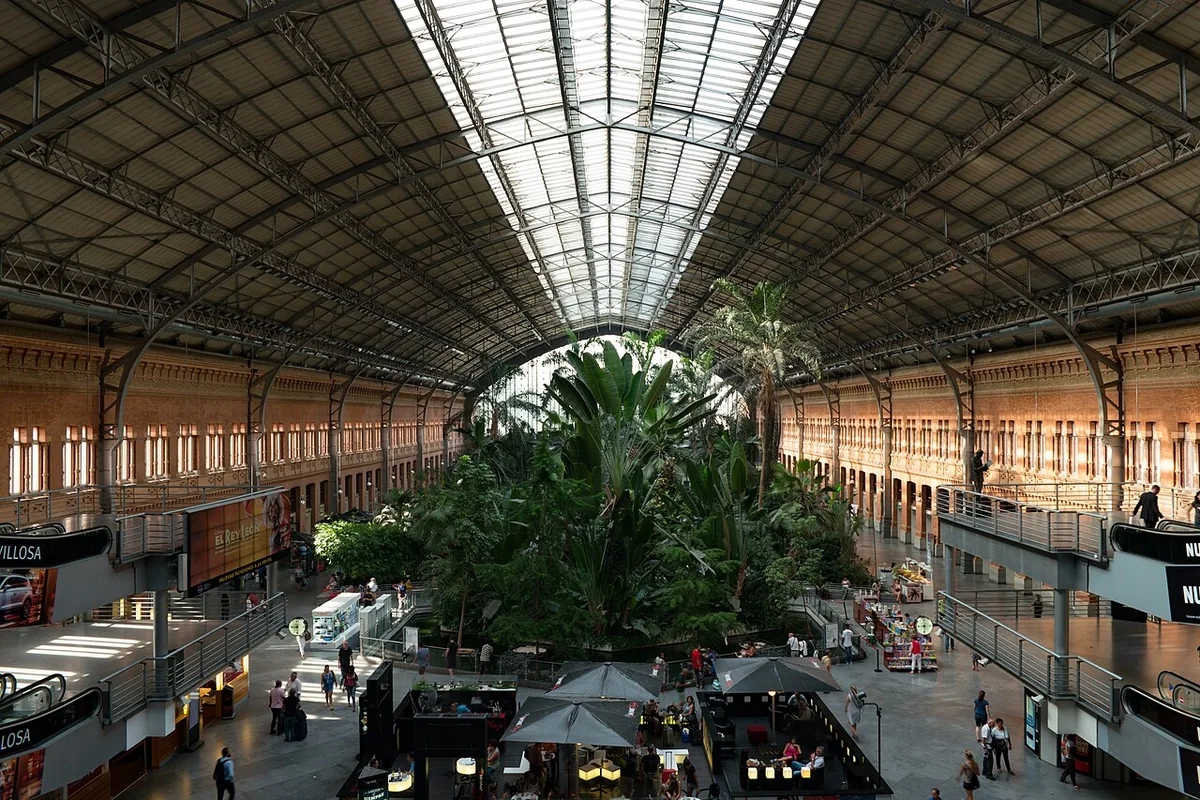
A tropical garden fills Atocha’s former passenger hall, bringing humid greenery and water into a major rail station. Its location is the surprise: a nineteenth-century transport space became an indoor landscape when the station was expanded for a new era of long-distance rail.
CaixaForum Madrid
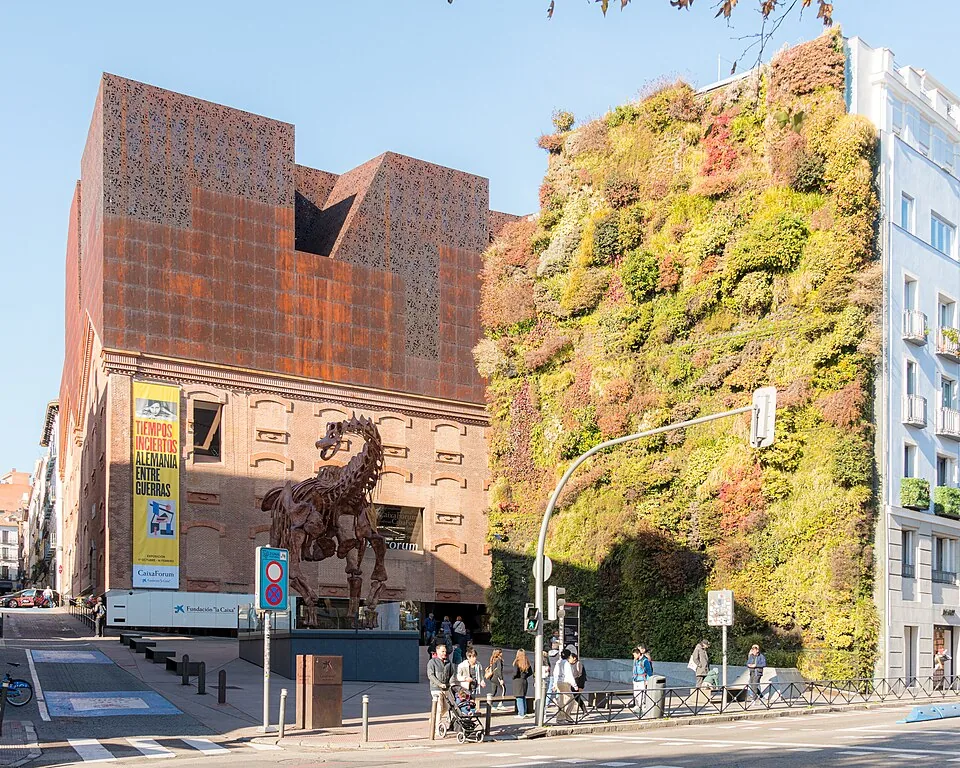
CaixaForum Madrid turns a former power station into a cultural center whose most striking feature is its apparent suspension above the street. Brickwork, a lifted base, and a living wall make the building itself an exhibit in urban reuse.
Campo del Moro Gardens
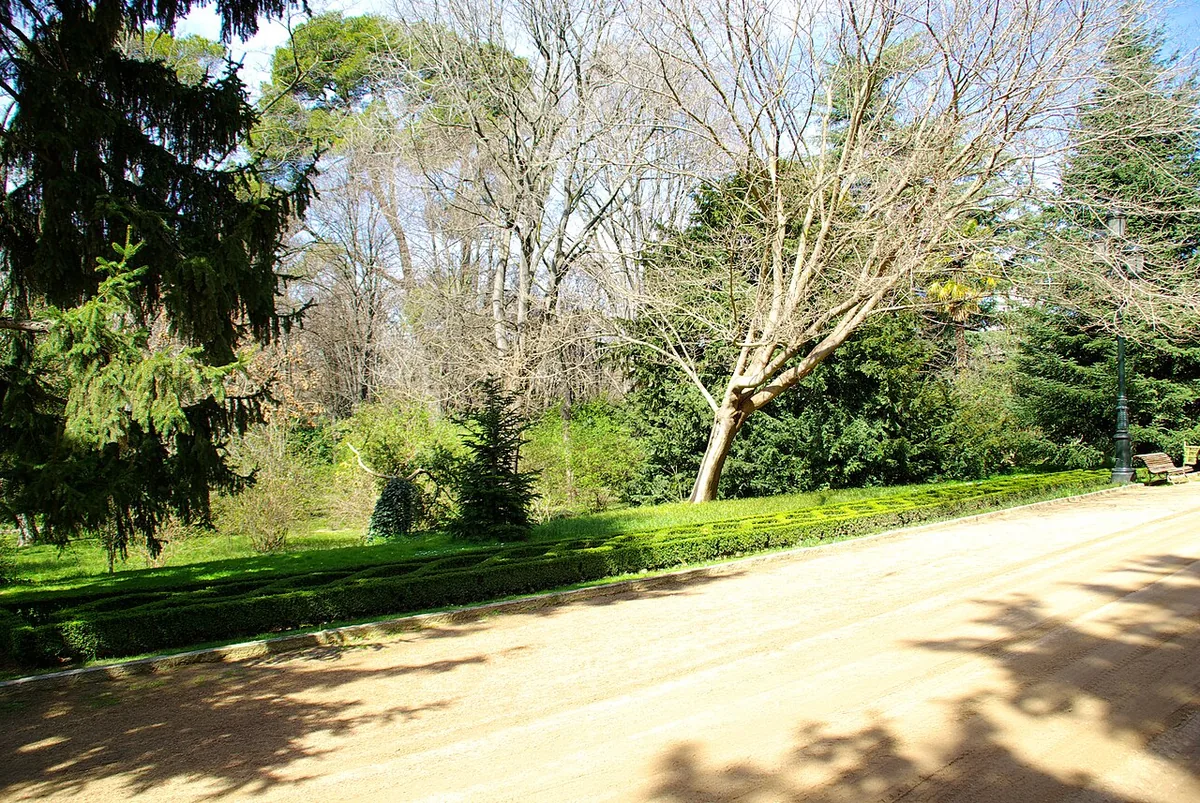
Campo del Moro’s broad landscape garden rises toward the Royal Palace, offering a softer counterpart to the geometric Sabatini Gardens. Its name recalls a medieval encampment tradition, while the garden visitors see was shaped centuries later under nineteenth-century royal patronage.
Casa de Campo
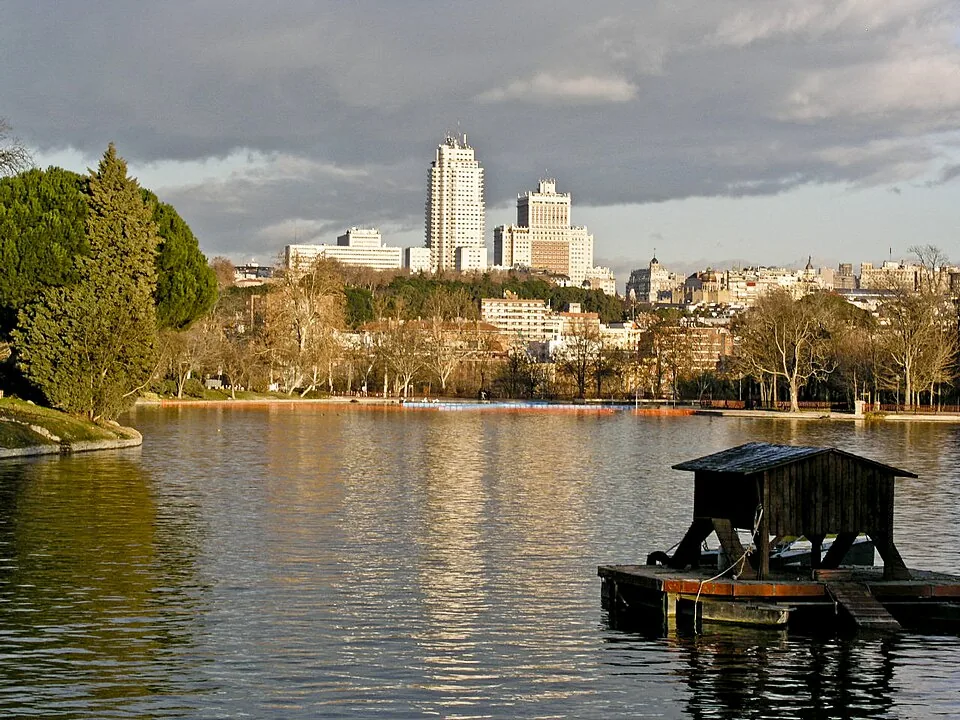
Casa de Campo began as royal hunting land and is now a vast public park on Madrid’s western edge. Its transition from Crown property to city land in 1931 transformed an exclusive landscape into shared space, while walls and bridges preserve earlier traces.
Casa de Campo Cable Car
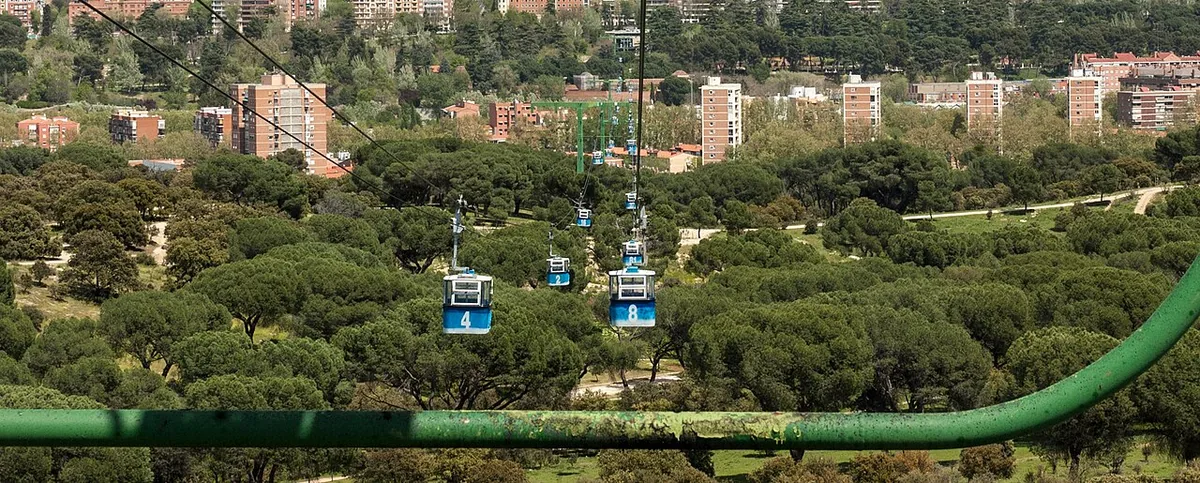
The Casa de Campo cable car was designed to turn a long urban crossing into a brief aerial passage between Madrid and its great park. Since its 1969 inauguration, the ride has offered a changing view of the city’s western landscape and the Casa de Campo beyond.